
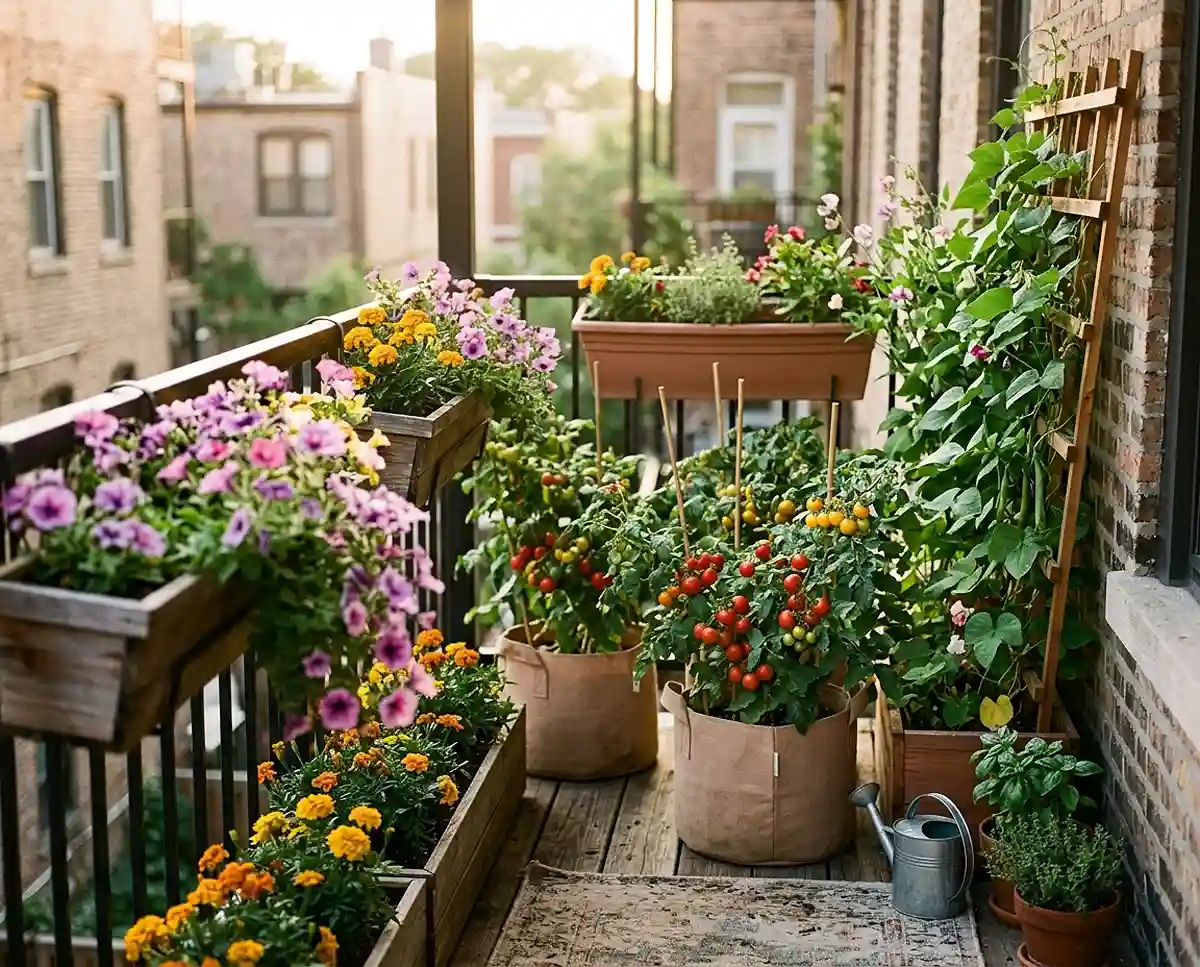
10 Small Space Gardening Ideas
Small space gardening ideas work — even if your entire “yard” is a 6-foot balcony. I’ve grown tomatoes, peppers, and herbs on a north-facing patio in zone 6b, and this summer I harvested more basil than I could use.
Tiny gardens aren’t a compromise. They’re just a different skill set. Here’s exactly how to make yours thrive.
Table of Contents
Why Tiny Spaces Can Still Grow a Thriving Summer Garden
Small doesn’t mean unproductive. A well-planned 4×6 balcony can yield cherry tomatoes, herbs, and flowers from June through September.
Urban gardening has pushed growers to get creative — vertical space, railing planters, and compact cultivars have changed what’s possible in tight spots.
Tiny garden ideas also come with real advantages: less weeding, lower water bills, easier pest control, and the ability to move everything indoors if a frost threatens.
Summer is the ideal time to start. Days are long, sun is plentiful, and most compact vegetables hit their stride in heat. You don’t need a yard. You need a plan.
Plan Your Tiny Summer Garden
Before you buy a single pot, spend a few days observing your space. Knowing your conditions saves money and prevents dead plants.
Assessing Light, Space, and Conditions
Track sunlight in hourly increments over two days. Mark where full sun (6+ hours), part sun (3-6 hours), and shade fall. This single step changes everything.
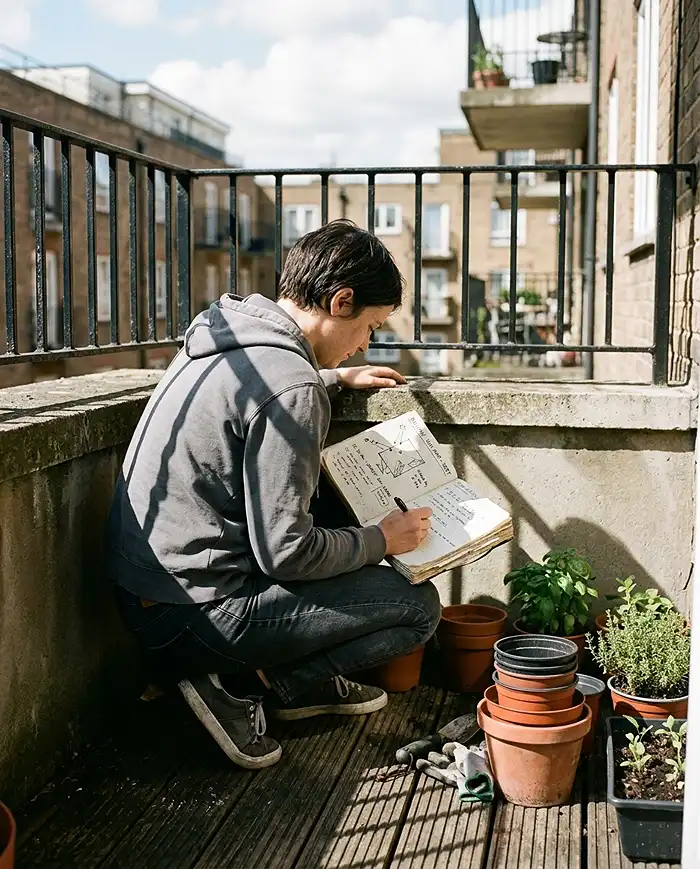
Measure your usable floor space, railing length, and wall height. Note wind exposure — high balconies dry out containers fast and can snap tall plants.
Check for heat traps. A south-facing concrete wall can push temps 10-15°F above ambient, which is great for peppers but deadly for lettuce in July.
Setting Goals: Food, Flowers, or Both
Be honest about what you’ll actually use. If you cook Italian, grow basil, cherry tomatoes, and peppers. If you want color, go with marigolds and trailing petunias.
Most small-space gardeners do best with a mix — a few edibles and a few flowers. Marigolds repel pests and fill gaps beautifully between veggie containers.
Pick 3-5 plants to start. Trying to grow 12 things in a tiny space leads to overcrowding and frustration. Nail a small list first, then expand next season.
10 Smart Ways to Garden in a Tiny Space
These strategies work individually or together. Mix and match based on your setup. Most cost under $30 to implement.
Vertical Gardening and Wall Planters
Growing upward is the single biggest multiplier for small space gardening. A 6-foot wall trellis can support cucumbers, pole beans, or climbing nasturtiums without using a single square foot of floor space.
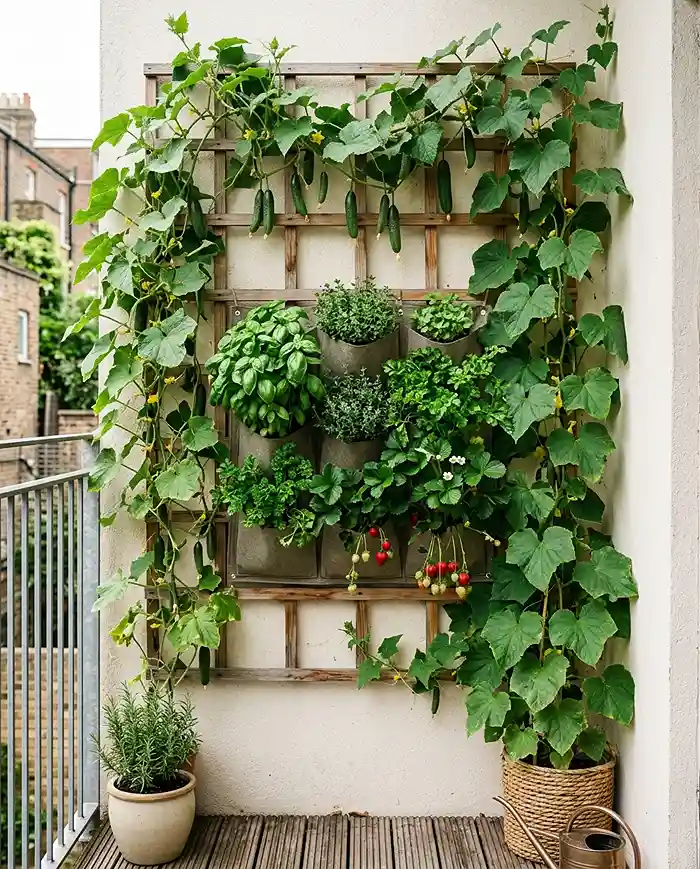
Pocket planters and wall-mounted systems work well for herbs and strawberries. Mount them at eye level for easy harvesting and watering.
In summer 2023, I added a cedar trellis to a blank fence section and grew ‘Spacemaster’ cucumbers vertically. I got 40+ cucumbers from a 2-foot square footprint.
Pro tip: Attach vertical systems to walls, not railings — railing-mounted trellises catch wind and can topple in summer storms.
Hanging Baskets and Railing Planters
Hanging baskets and railing planter ideas turn dead overhead and edge space into productive growing zones.
Use hanging baskets for trailing herbs like thyme and oregano, or for flowers like trailing petunias and calibrachoa that spill downward beautifully.
Railing planters work best for compact herbs, lettuce, and annual flowers. Look for self-watering versions — summer heat drains standard railing planters fast.
Pro tip: Line wire baskets with coconut coir liners, not plastic. Coir breathes, reduces root rot, and holds moisture longer in summer heat.
Container Clusters and Multi-Functional Furniture
Grouping pots creates a microclimate — plants shelter each other from wind and shade each other’s root zones, which reduces water loss significantly.
Storage ottomans with removable lids, raised planter benches, and side tables with built-in pot holders all double as seating and green space. Look for these at garden centers and home stores as of spring 2025.
For a full guide on arranging pots effectively, see this container garden layout with 5 pots.
Best Plants for Tiny Summer Gardens
The right plants make or break a small-space setup. Compact cultivars bred for container life outperform standard varieties every time.
Compact Vegetables and Herbs
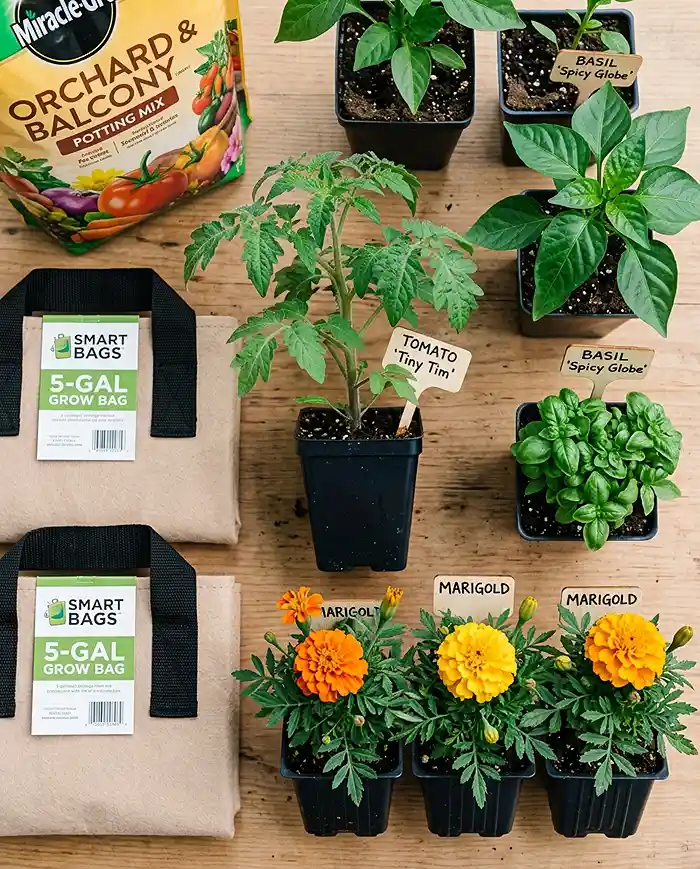
For summer container gardening, these are the workhorses:
- ‘Tumbling Tom’ cherry tomatoes — bred for hanging baskets, no staking needed, produces until frost
- ‘Lunchbox’ mini peppers — compact plants under 18 inches, prolific in heat, ideal for 5-gallon pots
- ‘Tom Thumb’ lettuce — matures in 45 days, tolerates partial shade, perfect for railing planters
- Basil ‘Spicy Globe’ — naturally compact, globe-shaped, no pinching required
- Bush beans — no staking, harvest in 50-55 days, grow well in 12-inch deep containers
Herbs are the best investment for tiny gardens. One 6-inch pot of basil delivers more value than almost any other plant per square inch.
Heat-Loving Flowers and Trailing Plants
Flowers aren’t just decorative — marigolds repel aphids and whiteflies, and calibrachoa attracts beneficial insects that protect your vegetables.
- Marigolds ‘Durango’ series — heat-tolerant, compact, blooms June through hard frost
- Trailing petunias ‘Wave’ series — spill beautifully from railing planters, deadhead-free
- Portulaca — thrives in blazing heat, almost impossible to kill, great for south-facing spots
- Lantana — butterfly magnet, heat-tolerant, works in zones 8-11 as a perennial
I lost a full flat of impatiens in a heat wave in 2022 — they’re not for summer container gardening in zones 6 and above. Stick with heat-lovers from the list above.
Tools and Materials You’ll Need
You don’t need much. Here’s what actually earns its space:
- Containers: Minimum 5 gallons for tomatoes and peppers; 1-2 gallons for herbs; self-watering pots for railing spots
- Potting mix: Never use garden soil — it compacts and kills drainage. Use a quality container mix with perlite
- Slow-release fertilizer: Work granules into the mix at planting; reduces weekly feeding chores
- Watering wand: A long-handled wand with a gentle rose head makes watering hanging baskets and back-of-cluster pots easy
- Velcro plant ties: Reusable, gentle on stems, far better than twist ties for trellising
Skip cheap plastic pots for long-term use — they crack by mid-summer in direct sun. Fabric grow bags or thick-walled resin pots hold up far better.
How to Set Up Your Tiny Summer Garden
Setup order matters. Get this right and maintenance becomes simple for the rest of the season.
Arranging for Light, Space, and Access
Place your tallest containers and vertical structures at the back or against the wall. Sun-lovers like tomatoes and peppers go in your brightest spots — full sun, south or west-facing.
Keep herbs and lettuce in part-shade positions where they’re protected from afternoon sun. This extends their productive season by 3-4 weeks in zones 6-8.
Leave 18 inches of walking space. You need to reach every pot to water, harvest, and check for pests. A garden you can’t access easily is a garden that gets neglected.
Planting and Spacing for Healthy Growth
Fill containers to within 2 inches of the rim. Add slow-release fertilizer granules per label directions — typically 1 tablespoon per gallon of pot volume.
Plant at the same depth the seedling was in its nursery pot. Tomatoes are the exception — bury them deeper to encourage stronger root systems.
Space plants at the tighter end of their recommended range for containers. One cherry tomato plant per 5-gallon pot. Three herb plants max per 8-inch pot.
Water thoroughly at planting until it drains from the bottom. This settles the mix and ensures even moisture throughout the root zone from day one.
Caring for Your Garden Through Summer Heat
Small containers are vulnerable in summer. The difference between a thriving garden and a wilted one comes down to two things: water and feeding.
Watering and Mulching in Hot Weather
In peak summer, most containers need water daily — sometimes twice for small pots in full sun. Stick your finger 2 inches into the soil. If it’s dry, water now.
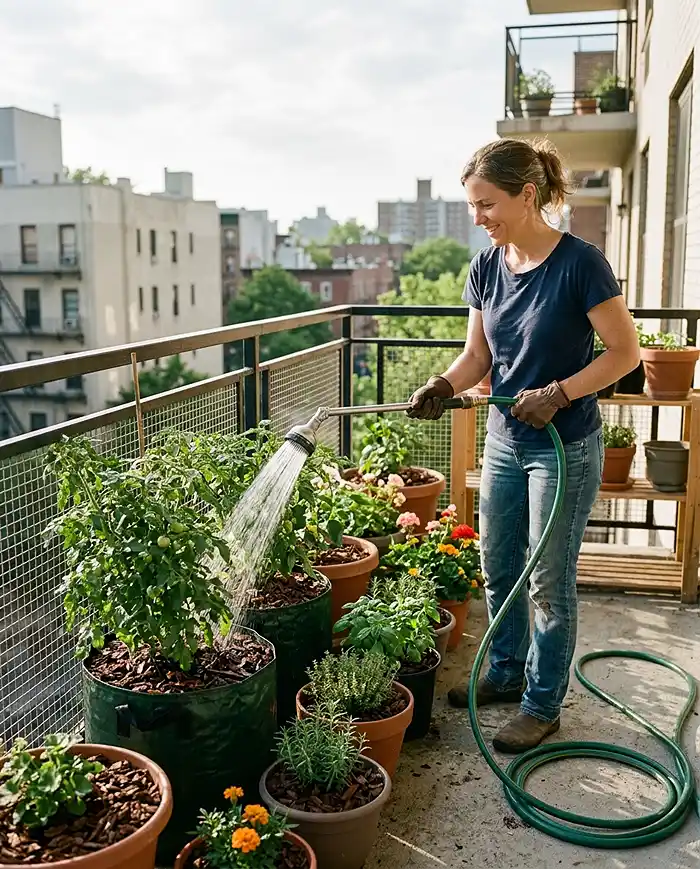
Add a 1-inch layer of mulch (shredded bark or coco coir) on top of container soil. This cuts moisture loss by up to 30% and keeps roots cooler on hot days.
Morning watering is best. Wet foliage overnight invites fungal disease. Water at the base, not over the top of the plant, whenever possible.
Feeding and Pruning for Continuous Growth
Container plants exhaust nutrients faster than in-ground plants. Start liquid feeding every 7-10 days once plants are established, around 2 weeks after planting.
Use a balanced fertilizer (10-10-10) for herbs and flowers. Switch to a low-nitrogen, high-phosphorus formula (5-10-10) for tomatoes and peppers once they flower.
Pinch back herbs like basil and mint regularly to prevent bolting. Deadheading [removing spent flowers] on marigolds and petunias triggers new blooms within a week.
Summer Maintenance and Late-Season Tips
A tiny garden is low-maintenance by design — but a few habits in mid-summer keep it productive right through September.
Beating Heat Stress and Succession Planting
When temperatures top 95°F for more than 3 consecutive days, move heat-sensitive containers to afternoon shade. Even tomatoes drop flowers above 95°F.
Use shade cloth (30-40% density) over railing planters during extreme heat weeks. It drops leaf temperature significantly without reducing light below useful levels.
Succession plant fast crops every 3-4 weeks. Lettuce, radishes, and bush beans mature in 45-55 days. Pull a finished plant, refresh the top inch of potting mix, and replant. One container can produce 3 rounds of lettuce from May to October.
For a full seasonal routine, this low-maintenance small-space gardening routine breaks it down month by month.
Common Problems and Solutions
Most tiny garden problems have simple fixes. Catch them early and they rarely become serious.
Plants Drying Out in Summer Heat
Quick Answer: Small containers dry out fast because the root-to-soil ratio is high. Move to 5-gallon or larger pots, add a coco coir mulch layer, and consider self-watering containers for any spot that gets full afternoon sun.
Overcrowding and Poor Airflow
Quick Answer: Crowded plants can’t breathe, and poor airflow is the number one cause of powdery mildew and fungal disease in container gardens. Space plants at recommended minimums, and prune any leaves touching the pot rim or neighboring containers.
Pests Like Aphids and Spider Mites
Quick Answer: Aphids and spider mites thrive in dry, hot conditions — exactly what summer containers provide. Spray affected plants with insecticidal soap solution (2 teaspoons per quart of water) every 5 days for 3 treatments. Neem oil works for persistent infestations and also deters fungal problems.
Check the University of Minnesota Extension’s guide to plant disease and pest management for additional organic control options backed by research.
small space gardening ideas FAQs
How do I start a garden in a small space?
Start by tracking sunlight in your space for two days, then measure usable floor, railing, and wall space. Choose 3-5 compact plants suited to your light conditions. Use containers with quality potting mix, add vertical structures to multiply growing space, and water consistently. One well-chosen container setup outperforms a crowded, poorly planned one every time.
What can I grow in a tiny garden in summer?
Cherry tomatoes like ‘Tumbling Tom’, mini peppers like ‘Lunchbox’, compact herbs like basil ‘Spicy Globe’ and thyme, and heat-loving flowers like marigolds and trailing petunias all thrive in small summer containers. Stick to compact cultivars bred for pots rather than standard garden varieties.
How do I keep small-space plants alive in summer heat?
Water daily during hot spells — check soil moisture 2 inches deep each morning. Add a 1-inch coco coir mulch layer on top of container soil to reduce moisture loss. Move heat-sensitive plants to afternoon shade when temperatures exceed 95°F for more than two consecutive days.
Key Takeaways
- Small space gardening ideas work best when you start with a light assessment and choose compact cultivars built for containers
- Vertical structures, railing planters, and hanging baskets multiply your growing space without adding floor footprint
- Water daily in summer heat and mulch container tops to cut moisture loss by up to 30%
- Succession planting fast crops like lettuce and bush beans keeps one container producing multiple harvests per season
- Start with 3-5 plants, nail your setup, then expand — tiny gardens reward focus over ambition