
Vertical Herb Ladder Ideas for Tiny Spaces
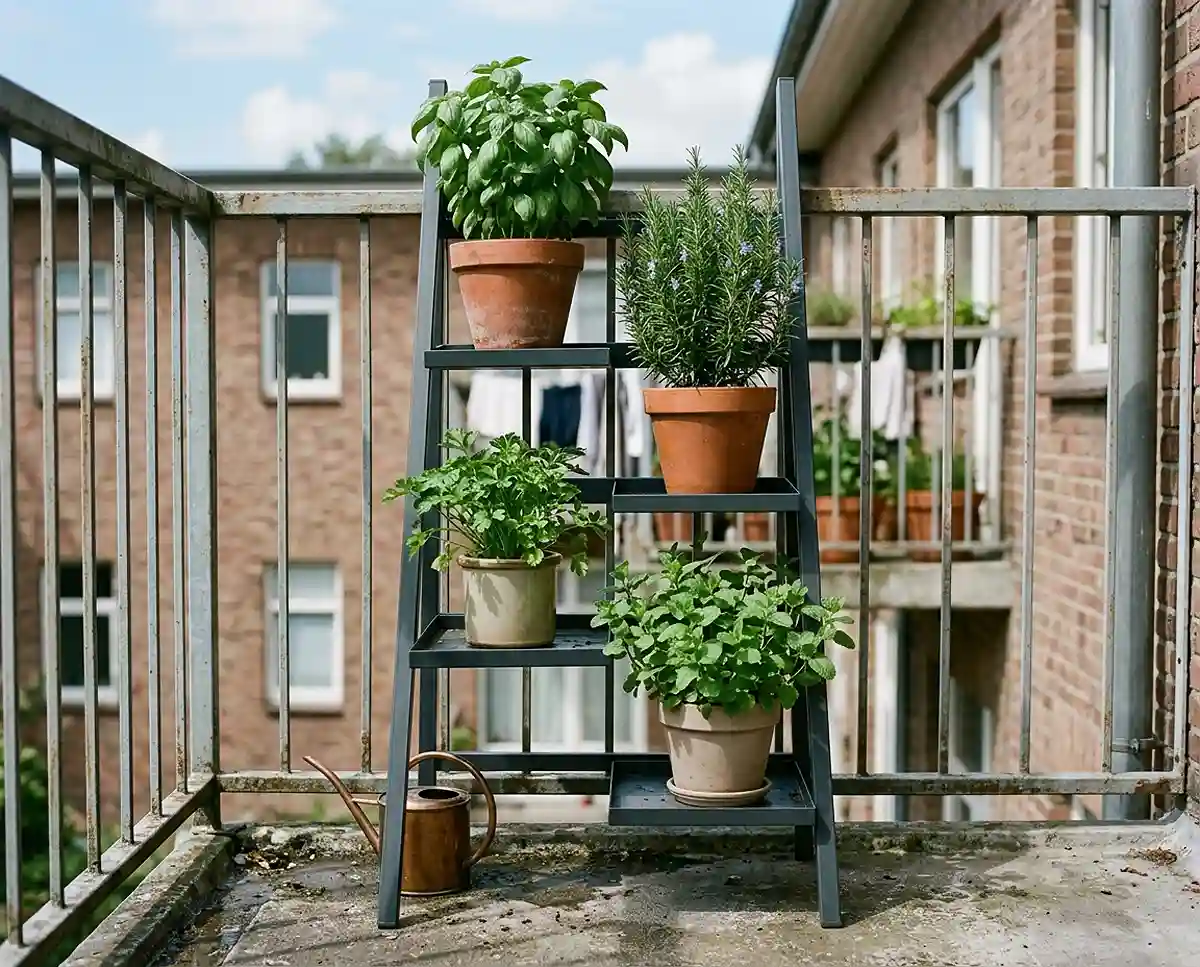
Vertical herb ladder ideas turn a bare balcony corner into a working herb garden, no floor space required. I run a balcony vertical garden on a leaning ladder in zone 6b, and it’s the single best upgrade I’ve made to my small space gardening setup.
Table of Contents
Why a Vertical Herb Ladder Is Ideal for Tiny Spaces
A herb ladder stacks pots on staggered rungs or shelves instead of spreading them across the ground. That’s the whole trick behind good vertical gardening: you grow up, not out.
On my 4×6-foot balcony, a 5-foot leaning ladder holds six pots in a footprint of about 18 inches by 24 inches. Try fitting six standalone pots in that same space and you’d be tripping over them by week two.
There’s a practical bonus too. Staggered shelves keep every plant at a slightly different height, which means less leaf-to-leaf shading and easier visual checks for pests. It also just looks good — a leaning ladder full of basil and thyme reads as intentional, not cluttered, which matters if your patio doubles as your only outdoor hangout spot.
Plan Your Herb Ladder Before You Build
Don’t grab the first ladder planter you see online. A few minutes of planning saves you from a wobbly setup or herbs that sulk in the wrong light.
Start by figuring out what you’re actually working with: how much sun hits the space, how much floor footprint you can spare, and whether the ladder needs to survive wind, pets, or curious toddlers. Then decide if it’s living indoors or out, because that changes which materials and herbs make sense.
Assessing Light, Space, and Stability
Quick Answer: Track your space for a full day to find your sunniest 3-4 hour window, measure a footprint of at least 18 by 24 inches for a standard ladder, and choose a base that’s wider than the ladder is tall.
I learned the stability lesson the hard way. My first ladder planter — a cheap bamboo one — tipped in a gust during a spring storm and I lost two pots of chives. Now I only buy ladders with a base at least 16 inches wide, or I anchor mine to the railing with zip ties.
Pro Tip: Use a compass app or just watch your phone’s shadow at 9am, noon, and 3pm for one day — that’s enough to map your real light pattern without waiting a full week.
Choosing Indoor vs. Outdoor Placement
Quick Answer: Outdoor placement works best on a sunny balcony or patio corner getting 6+ hours of light; indoor placement needs a south-facing window or grow lights to match that intensity.
Outdoor ladders handle full sun herbs like rosemary without complaint. Indoors, even a bright window usually only delivers 3-4 hours of direct light, so basil and oregano tend to stretch and get leggy unless you add a small grow light.
If you’re tight on outdoor room, check out these apartment balcony garden ideas for layout inspiration before committing to a spot.
Types of Vertical Herb Ladder Ideas
There’s more than one way to build a herb ladder, and the right style depends on your budget, your DIY tolerance, and how permanent you want the setup to be.
| Style | Best For | Watch Out For |
|---|---|---|
| Leaning ladder with shelves | Renters, quick setup, balconies | Needs a wall or railing to lean against safely |
| Repurposed A-frame ladder | Rustic patios, upcyclers, free standing use | Old wood may need sealing against rot |
| Tiered freestanding stand | Patio corners, no wall available | Store-bought ones can be pricier per pot |
Leaning Ladder Planters With Shelves
These are the classic version: a slim ladder frame, usually 4-6 feet tall, leaned against a wall or railing with shelves or trays bolted across each rung.
They’re the easiest entry point for small space gardening because most ship flat and assemble in under an hour. My own ladder is a powder-coated metal version, 5 feet tall with four shelves, and it’s held up through two full summers outdoors.
Repurposed Wooden and A-Frame Ladders
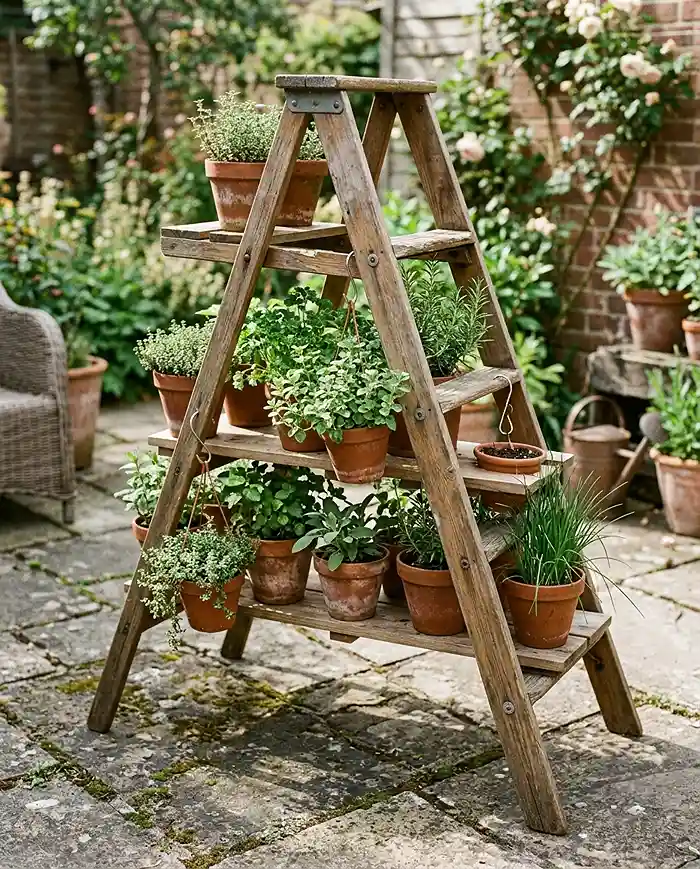
An old wooden A-frame ladder, the kind painters use, makes a surprisingly good rustic herb stand. Sand it down, seal the wood with an exterior-grade oil, then add small shelves or S-hooks for hanging pots between the rungs.
I picked one up at a yard sale for $8 and turned it into a six-pot stand. The only catch: untreated wood left outdoors will eventually rot, so reseal it every spring.
Tiered and Freestanding Ladder Stands
Store-bought tiered stands skip the leaning requirement entirely — they stand on their own four legs, which is handy if you don’t have a wall or railing to work with. Most run 3-4 tiers and fit comfortably on a small patio or balcony corner.
These tend to cost more per pot than a repurposed ladder, but you get a sturdier, more wind-resistant base in exchange.
Best Herbs for a Vertical Ladder Garden
Match your herbs to the light each shelf actually gets, not the light at ground level — upper shelves run hotter and brighter than the bottom ones.
Sun-Loving Herbs for Top Shelves
Quick Answer: Basil, rosemary, thyme, and oregano are the best vertical gardening picks for top shelves, since they want 6+ hours of direct sun and tolerate the faster-drying soil up high.
- Genovese basil — fast growing, needs consistent moisture even on a sunny top shelf
- Rosemary ‘Tuscan Blue’ — drought-tolerant, ideal for the driest spot on the ladder
- Thyme — compact and forgiving, handles heat reflected off railings well
- Greek oregano — spreads in the pot but stays low, won’t shade neighbors below
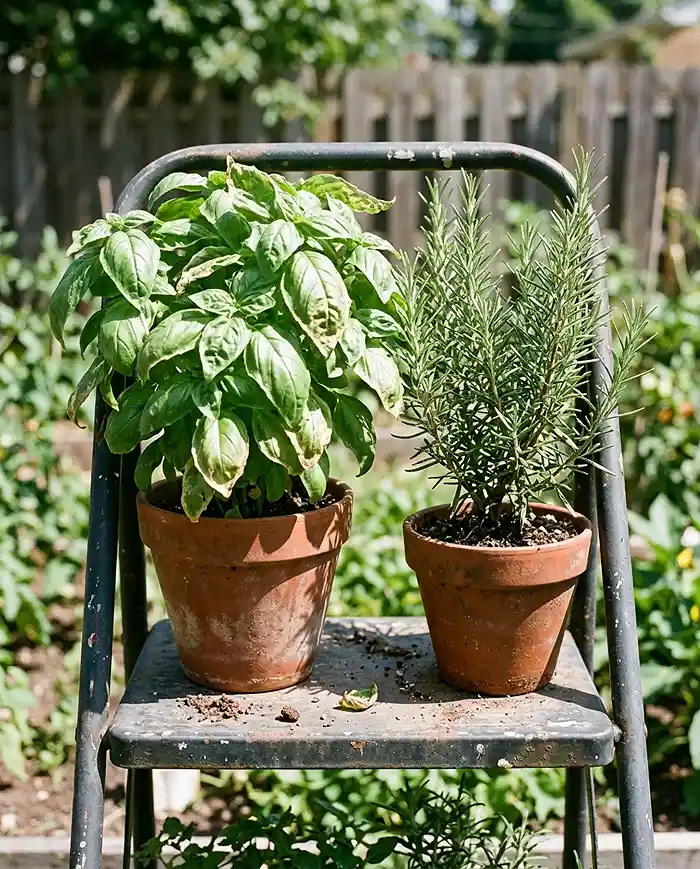
Real Example: I put Genovese basil on my top shelf last July and it bolted to flower within three weeks from the heat. Switching it down one shelf to partial afternoon shade fixed the problem completely.
Shade-Tolerant Herbs for Lower Shelves
Quick Answer: Mint, parsley, chives, and cilantro handle the dimmer, cooler conditions of lower shelves and actually prefer a break from intense afternoon sun.
- Spearmint — thrives in partial shade, plus keeping it contained in a pot stops it from taking over
- Flat-leaf parsley — bolts fast in full heat, so a lower shelf extends its harvest window
- Chives — tolerant of low light and cool spring temperatures
- Cilantro — bolts quickest of all four, lower shelf shade buys you another week or two of leaves
These herb garden ideas also pair well with companion plants if you’ve got room for a few extra containers nearby — see these companion plants for containers for combinations that help each other thrive.
Want extra color trailing off the edges? These summer flowers for container edges work well tucked alongside the bottom shelf.
Tools and Materials You’ll Need
Keep the shopping list simple. Here’s what actually matters:
- Ladder or ladder-style stand (metal resists rot better than untreated wood)
- 4-6 pots, 6-8 inches in diameter, one per herb
- Well-draining potting mix, not garden soil — it compacts and holds too much water in containers
- L-brackets or small shelf hardware if building shelves yourself
- Drill, screws, and a level for stability checks
How to Build or Set Up an Herb Ladder
Whether you’re assembling a kit or repurposing an old ladder, the process follows the same basic order.
Building or Preparing the Ladder Frame
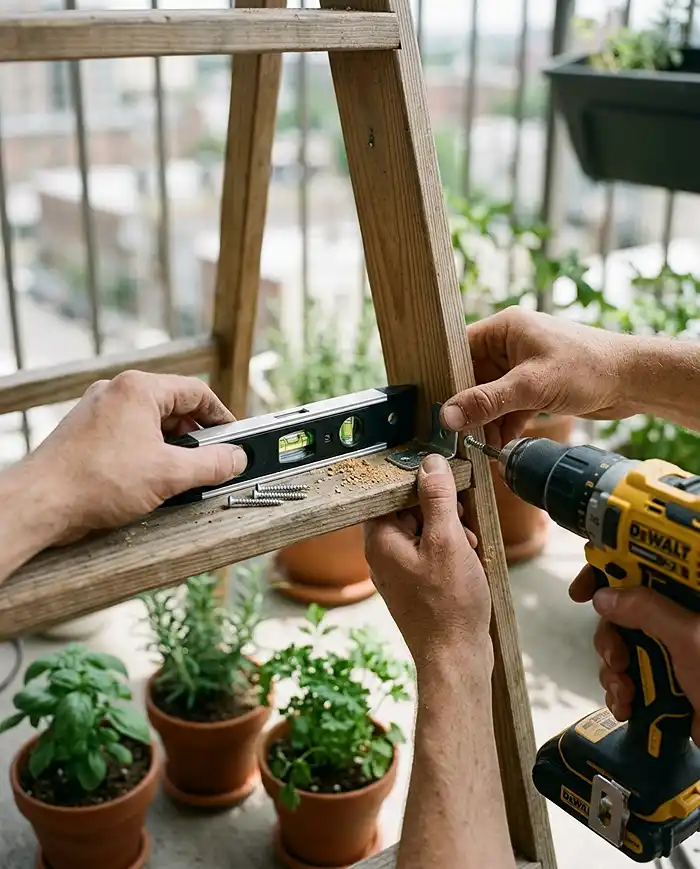
If you’re repurposing a wooden ladder, sand off any rough or splintering spots first, then seal it with an exterior wood oil and let it cure for 24 hours before adding shelves. Secure shelves with L-brackets at each rung, checking with a level as you go so pots won’t sit lopsided.
For metal kits, just follow the included hardware — but double-check every bolt is tight before loading pots on, since flat-pack hardware loosens with vibration.
Planting Herbs in the Ladder Pots
Start with drainage: every pot needs a hole, and a thin layer of gravel underneath helps water move through fast. Fill with a quality potting mix, never garden soil, since potting mix stays light enough for shallow herb roots and drains properly in a contained pot.
Plant sun-lovers on the top 1-2 shelves and shade-tolerant herbs lower down, based on what you mapped during your light assessment. Leave an inch of space below the pot rim so watering doesn’t overflow the sides.
Watering and Caring for a Ladder Herb Garden
Ladder setups have one quirk regular gardens don’t: water runs downhill, literally, through your tiers.
Watering Tiers Evenly Without Drips
Quick Answer: Water each shelf individually from the top down, using saucers under top pots to stop drips from overwatering the herbs below.
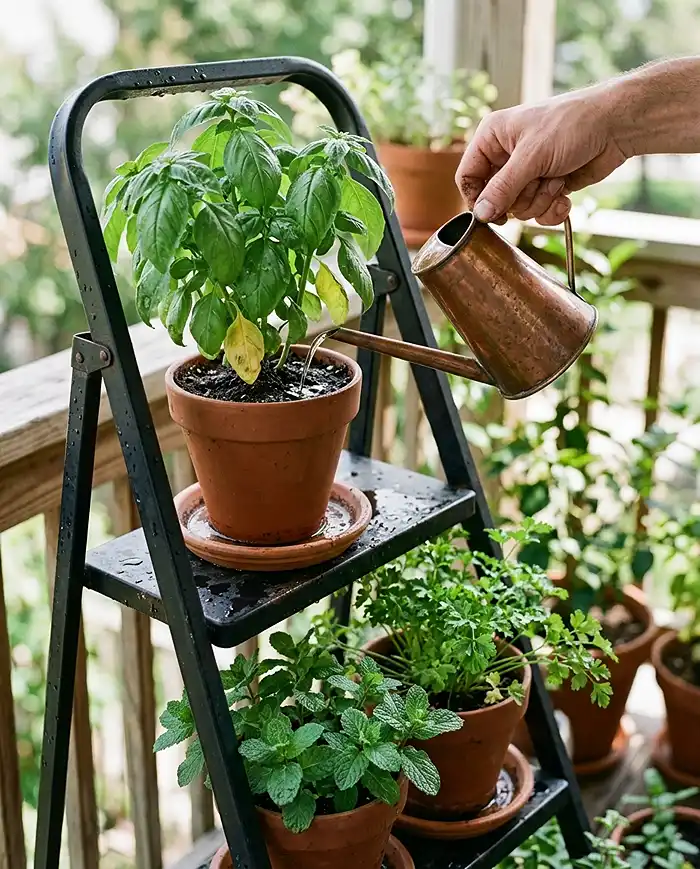
I water top to bottom, checking soil moisture at each shelf before adding water rather than assuming the top pot’s schedule applies everywhere. A 2-inch lip on the saucers catches runoff before it lands in the pot below.
Pro Tip: Top shelves dry out roughly twice as fast as bottom ones in full sun — check them daily during summer, every 2-3 days for the lower tier.
Feeding, Pruning, and Harvesting
Feed lightly with a diluted liquid fertilizer every 3-4 weeks during active growth — herbs in small pots run out of nutrients faster than garden-grown ones. Pinch growing tips regularly to keep plants bushy instead of tall and thin.
Harvest often. Snipping basil and mint every week or two actually pushes more growth, so frequent light harvesting beats one big cut at the end of the season.
Seasonal Care for Your Herb Ladder
A herb ladder isn’t a one-season project if you plan ahead for the cold months.
Moving Indoors and Winter Protection
Tender herbs like basil won’t survive frost, so plan to bring those pots indoors once nights dip toward 50°F — usually mid-October in zone 6b. Hardier herbs like thyme, oregano, and chives can often stay outside through a light frost.
If you’re moving pots indoors, set them near your brightest window and add a small grow light if that window doesn’t get at least 4 hours of direct sun. I lost a rosemary plant two winters ago by leaving it outdoors past the first hard freeze — now I move it in by late September every year as of fall 2025.
Common Problems & Solutions
A few issues show up again and again with ladder setups. Here’s how to handle them.
Top Shelves Drying Out Fast
Top pots catch more direct sun and wind, so they lose moisture faster than lower shelves. Switch to a slightly larger pot up top, or add a layer of mulch on the soil surface to slow evaporation.
Ladder Tipping or Wobbling
A top-heavy ladder with full pots on every shelf is a tipping risk in wind. Anchor the base to a wall or railing with brackets or zip ties, and put your heaviest pots on the bottom shelves to lower the center of gravity.
Leggy or Uneven Herb Growth
Leggy, stretched stems almost always mean not enough light. Rotate pots a quarter turn every few days so growth doesn’t lean toward one light source, and pinch tips regularly to encourage bushier growth instead of upward reaching.
If you’re planning out a full layout with herbs alongside vegetables, this small patio garden layout for vegetables and herbs guide is worth a look.
The University of Minnesota Extension also has a solid vertical gardening overview if you want more general plant-selection guidance beyond herbs.
Frequently Asked Questions
What herbs grow best on a vertical ladder?
Sun-loving herbs like basil, rosemary, thyme, and oregano do best on top shelves with 6+ hours of light. Shade-tolerant herbs like mint, parsley, chives, and cilantro do better on lower, cooler shelves.
How do I keep a herb ladder from tipping over?
Anchor the ladder to a wall or railing with brackets or zip ties, choose a base at least 16 inches wide, and keep your heaviest pots on the bottom shelves to lower the center of gravity.
Can I make a herb ladder from an old ladder?
Yes. Sand down any rough wood, seal it with an exterior-grade wood oil, then add shelves or S-hooks between the rungs to hold pots securely.
How often should I water a vertical herb ladder?
Check top shelves daily in summer since they dry out fastest, and lower shelves every 2-3 days. Always water from the top down and use saucers to catch drips.
How much sun does a vertical herb ladder need?
Most culinary herbs want at least 6 hours of direct sun for the top shelves. If your space gets less, stick to shade-tolerant herbs like mint and parsley on every tier.
What size pots work best for a herb ladder?
Pots between 6 and 8 inches in diameter fit most standard ladder shelves while giving herb roots enough room to grow without overcrowding the tier above or below.
Key Takeaways
- Vertical herb ladder ideas let you grow 4-6 herbs in an 18×24 inch footprint, perfect for balconies and patios
- Match herbs to shelf height: sun-lovers like basil and rosemary up top, shade-tolerant mint and parsley down low
- Anchor the base and weight the bottom shelves heaviest to prevent tipping in wind
- Water top-down with saucers, since upper shelves dry out roughly twice as fast as lower ones
- Bring tender herbs indoors before the first frost to keep your ladder productive through winter