
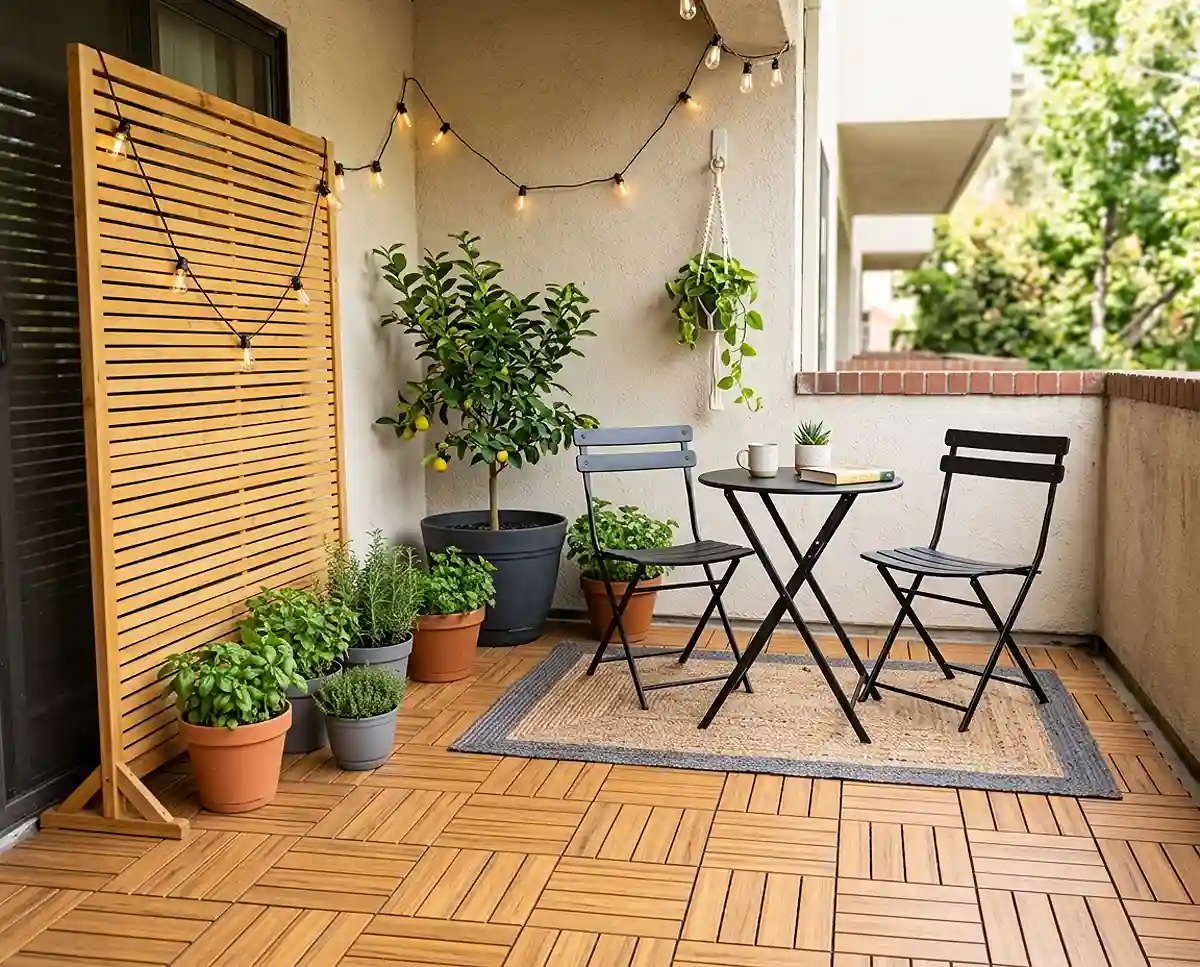
Renter Friendly Patio Garden Ideas
Renter friendly patio garden ideas let you transform a dull rental outdoor space into something beautiful — no drilling, no damage, no lost deposit. Here’s how to do it right.
Table of Contents
Why Renter-Friendly Patio Gardens Are Worth It
Renting doesn’t mean settling for a bare concrete slab. A small patio garden or small balcony garden adds real value to your daily life — fresh herbs at arm’s reach, a relaxing spot after work, and a space that actually feels like yours.
The key is keeping everything portable and non-destructive. No screws in walls, no permanent structures, no changes your landlord will flag. When moving day comes, your entire garden packs up and comes with you.
Apartment gardening done right means you never leave plants behind. Every pot, every trellis, every tile goes in the moving truck. And your deposit stays intact.
Plan Before You Makeover Your Rental Patio
Jumping in without a plan is how renters end up violating lease terms or buying plants that die in two weeks. Spend 30 minutes planning before spending a single dollar.
Checking Lease Rules and Landlord Limits
Quick Answer: Read your lease before buying anything. Most leases restrict drilling, painting, and permanent structures — but portable setups are usually fair game.
Pull out your lease and look for clauses about “alterations,” “modifications,” or “outdoor spaces.” Note what’s explicitly banned.
When in doubt, text your landlord. A quick “Can I put some potted plants and removable floor tiles on the patio?” almost always gets a yes — and gives you written proof.
Pro Tip: Screenshot your landlord’s approval text and save it with your lease documents.
Assessing Light, Space, and Surfaces
Quick Answer: Track sun exposure for one full day before choosing plants. A north-facing balcony needs shade lovers; a south-facing patio can handle almost anything.
Measure your space in feet: width, depth, and railing height if applicable. Note whether the floor is concrete, wood decking, or tile — this affects which flooring solutions work best.
- Full sun (6+ hours): herbs, tomatoes, peppers, lavender
- Part sun (3–6 hours): ferns, impatiens, mint, coleus
- Shade (under 3 hours): peace lily, cast iron plant, hostas
Pro Tip: Use a free sun tracker app like Sun Seeker to map light movement across your patio before buying a single plant.
Damage-Free Design Foundations
The bones of your renter friendly patio garden ideas have to be 100% removable. That means no adhesive hooks rated over 5 lbs on rental walls, no paint, no permanent anchors.
Temporary Flooring: Interlocking Tiles and Rugs
Quick Answer: Snap-together deck tiles and outdoor rugs instantly upgrade ugly concrete — and lift right out when you move.
Interlocking wood or composite deck tiles (12″x12″) sit directly on concrete with no adhesive. Brands like Flexi-Tile and IKEA’s RUNNEN tiles cost $2–$5 per tile and cover a 6×8 ft patio for under $100.
Layer an outdoor rug on top for warmth and color. Look for polypropylene rugs — they’re UV-resistant, mold-resistant, and hose-clean.
- Deck tiles: best for full patio coverage, durable, look high-end
- Outdoor rugs: best for defining zones, easy to swap seasonally
- Grow mats: best under planters to protect the original floor surface
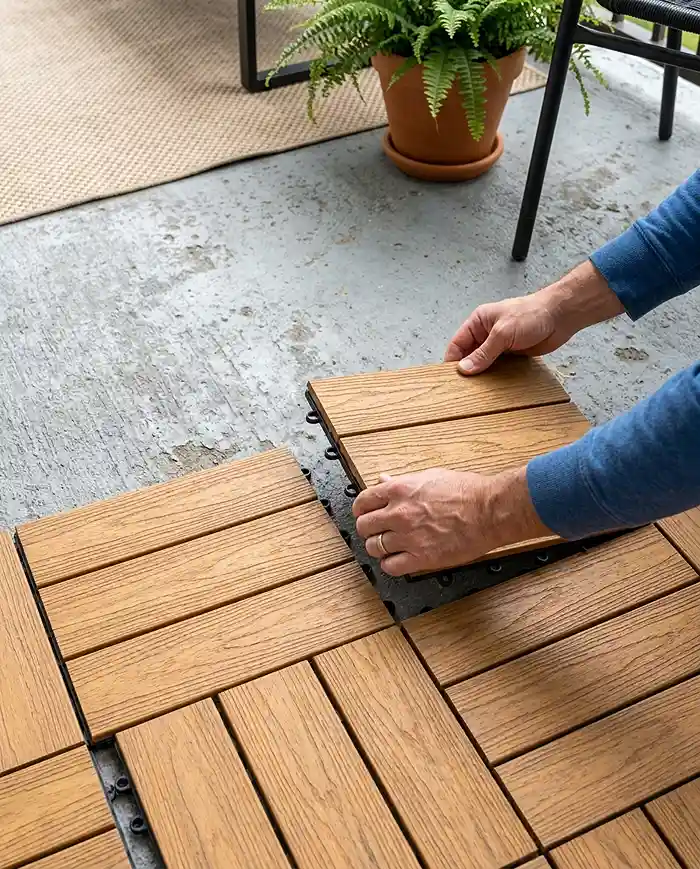
Pro Tip: Put rubber furniture pads under deck tiles to prevent any moisture buildup between tile and concrete.
No-Drill Privacy and Vertical Solutions
Quick Answer: Freestanding screens, tension rods, and standing trellises create privacy and vertical growing space without a single wall hole.
Freestanding bamboo or metal privacy screens (available in 4–6 ft heights) block sightlines and add structure. They’re weighted at the base and need no wall contact.
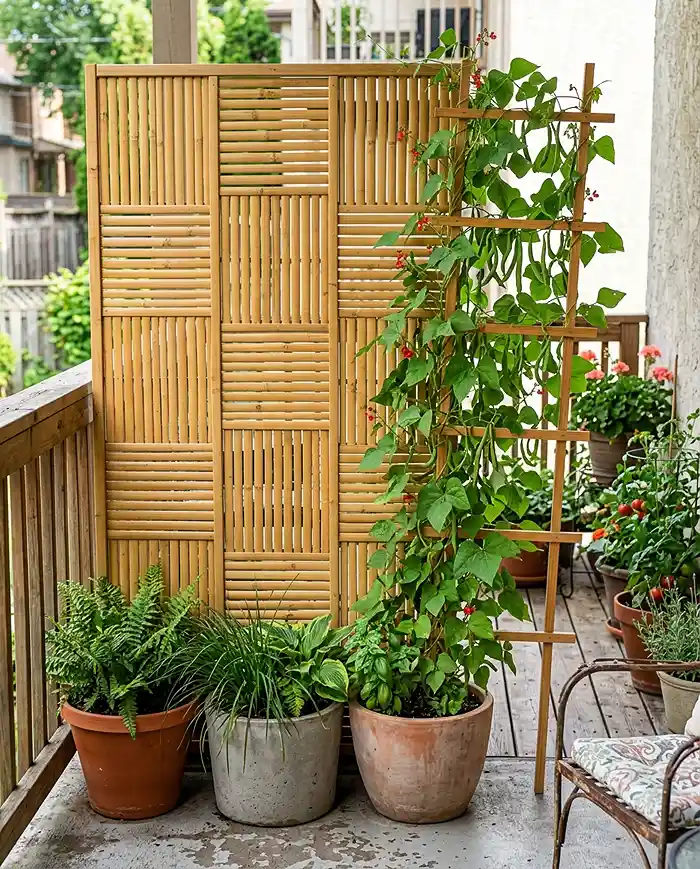
For renter-friendly vertical garden ideas, a freestanding ladder trellis planted with climbing beans or sweet peas creates a living wall effect with zero damage.
Pro Tip: Place heavier planters around the base of freestanding screens to anchor them against wind.
Choosing Portable Plants and Containers
The best small patio garden plants are ones you genuinely want to take with you. Think of your containers as furniture — portable, functional, and worth moving.
Container Plants That Move Easily
Quick Answer: Stick to compact varieties in manageable pot sizes. A 5-gallon container is the sweet spot — big enough to support healthy plants, light enough to carry solo.
Check out these balcony garden ideas with herbs and flowers for combinations that work beautifully in containers.
| Plant Type | Best Container Size | Light Needed |
|---|---|---|
| Basil, parsley, chives | 6–8 inch pots | Full sun |
| Dwarf tomatoes (Tumbling Tom) | 5-gallon | Full sun |
| Lavender, marigolds | 1-gallon | Full sun |
| Ferns, peace lily | 6–10 inch pots | Part shade |
| Mint (keep isolated) | 5-gallon minimum | Part sun |
I grew Tumbling Tom tomatoes on my apartment balcony in USDA Zone 7b one summer. Two 5-gallon pots gave me fresh tomatoes from June through September, and both pots fit in my car when I moved.
Lightweight Pots, Grow Bags, and Wheeled Planters
Quick Answer: Fabric grow bags and resin planters weigh a fraction of ceramic or terracotta — and wheeled caddies make moving them a one-person job.
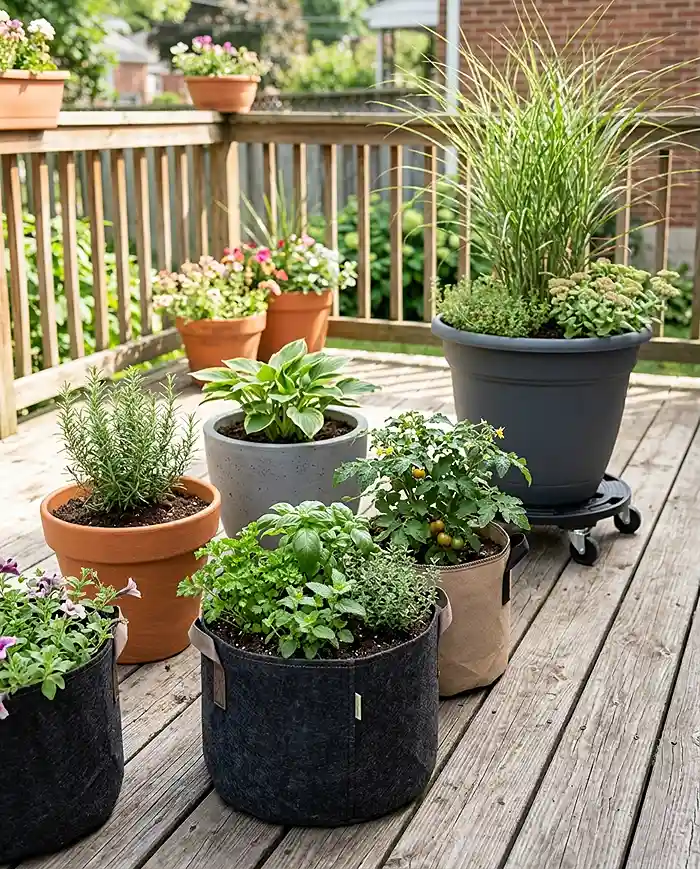
Fabric grow bags (5–25 gallon) are collapsible, breathable for roots, and cost $5–$15 each. They’re the ultimate renter-friendly container because they fold flat when empty.
- Resin planters: look like ceramic, weigh 80% less, frost-resistant
- Fabric grow bags: best root health, folds flat, very affordable
- Wheeled plant caddies: roll heavy pots easily, protect floors from scratches
- Hanging planters with tension rod: no hooks in walls needed
For more ideas on what thrives in containers, see these low-maintenance balcony plants that suit renters perfectly.
Pro Tip: Put felt pads under wheeled caddies on wood decking to prevent surface scratches the landlord might notice.
Tools and Materials You’ll Need
You don’t need much to pull off a great small balcony garden or patio transformation. Here’s what actually earns its keep:
- Lightweight containers: resin pots, fabric grow bags in 1, 5, and 10-gallon sizes
- Wheeled plant caddies (one per heavy planter)
- High-quality potting mix — never garden soil in containers
- Slow-release granular fertilizer (Osmocote is reliable)
- Interlocking deck tiles or outdoor rug for flooring
- Freestanding trellis or privacy screen
- Solar or battery string lights
- Command strips (3M) rated under 5 lbs for very light decor only
- Watering can or compact hose with spray nozzle
Total startup cost for a basic apartment gardening setup runs $150–$300 depending on pot quantity. Most of it comes with you when you move.
Step-by-Step Patio Garden Makeover
Follow this sequence and your small patio garden comes together in a single weekend.
Cleaning and Laying the Foundation
Quick Answer: Clean the surface first, then lay flooring, then zone the space before a single plant goes down.
Sweep and scrub the existing floor. If there’s old grime, a pressure washer (or stiff brush and soapy water) reveals the true surface condition — and protects you from deposit disputes later.
Lay your interlocking deck tiles or outdoor rug. Work from one corner outward. Leave a 2-inch gap at walls or railings for airflow and moisture drainage.
Zone the space mentally before placing anything: one area for plants, one for seating, one transitional path between them. Even a 6×8 ft balcony benefits from this structure.
Pro Tip: Take “before” photos of the original floor on move-in day — it protects you from deposit disputes down the road.
Arranging Plants, Furniture, and Decor
Quick Answer: Tallest elements go at the back or corners. Seating anchors the center. Plants fill in around the edges and vertical spaces.
Start with your largest freestanding piece — a privacy screen, tall planter, or shelving unit. This anchors the layout. Then add seating (folding bistro chairs work brilliantly for small spaces).
Place plant groupings at different heights: a tall plant on a stand, medium pots on the ground, trailing plants in a railing planter or hanging pot. This layering creates a lush feel even with limited square footage.
See more arrangement inspiration in these small patio garden ideas for renters worth bookmarking.
Pro Tip: Leave 18 inches of walking clearance between any furniture and plant groupings so the space doesn’t feel cramped.
Adding Style, Comfort, and Atmosphere
This is where renter friendly patio garden ideas go from practical to genuinely inviting. The finishing layer costs little and moves with you.
Lighting, Textiles, and Cozy Accents
Quick Answer: Solar and battery-powered string lights add ambiance with zero wiring. Throw cushions and a weather-resistant rug do the rest.
Solar string lights (look for warm white, IP65 waterproof rated) drape over freestanding screens, wrap around trellis uprights, or hang on tension wire strung between two plant stands.
- Outdoor throw cushions: look for polyester fill and removable covers
- Lanterns with LED candles: zero fire risk, move anywhere
- Small side table: folding bamboo models store flat when not in use
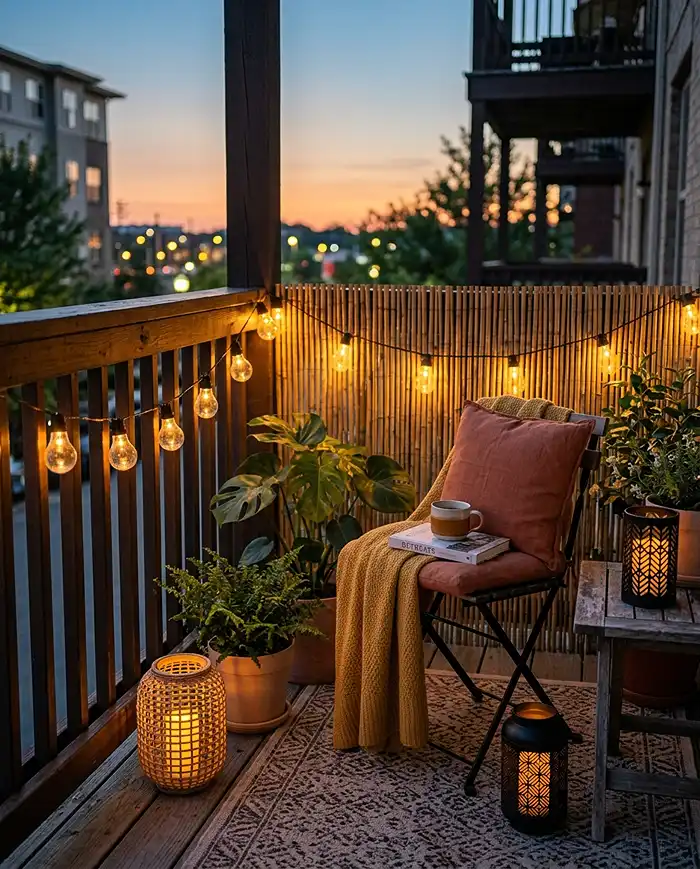
Pro Tip: A single scented candle lantern (citronella or eucalyptus) does double duty — ambiance and pest deterrence.
Freestanding Greenery and Focal Points
Quick Answer: One tall plant in a statement pot anchors the whole space. Everything else arranges around it.
A 4–5 ft olive tree, bay laurel, or ornamental grass in a large resin urn creates a genuine focal point. This single choice elevates a small balcony garden from “some pots” to a designed outdoor room.
Use balcony garden ideas for more ways to create visual interest at different heights without permanent installations.
Pro Tip: A plant stand trio (tall, medium, short) lets you display three plants at staggered heights for under $40.
Caring for a Portable Patio Garden
Container plants need more attention than in-ground plants — but not that much more. These basics keep your apartment gardening setup healthy all season.
Watering and Feeding Container Plants
Quick Answer: Containers dry out 2–3x faster than garden beds. Water when the top inch of soil feels dry. Feed every 4–6 weeks during growing season.
- Small pots (under 1 gallon): check daily in summer heat
- 5-gallon pots: check every 2–3 days
- Grow bags: check daily — fabric dries faster than plastic
- Self-watering inserts: worth the $10–$15 investment for herbs
Use a balanced liquid fertilizer (10-10-10) diluted to half strength every 4 weeks, or mix slow-release granules into potting mix at planting time.
Pro Tip: Stick your finger 2 inches into the soil — if it’s dry at that depth, water thoroughly until it drains from the bottom.
Keeping Plants Move-Ready
Quick Answer: Group pots on wheeled caddies from day one. It makes watering easier now and moving day stress-free later.
Keep all containers under 30 lbs when watered — anything heavier becomes a two-person lift. If a plant outgrows its pot mid-lease, pot up only one size at a time.
- Use wheeled caddies for anything over 10 lbs
- Group 3–5 small pots on a single rolling tray for easy batch moves
- Keep larger pots near the exit point of the patio, not tucked in corners
Pro Tip: Take photos of your plant arrangement twice a year — helpful reference if you move to a similar-sized space.
Seasonal Care and Moving Tips
A renter friendly patio garden lives through seasons and survives moves. Here’s how to handle both without losing your plants.
Overwintering and Relocating Your Garden
Quick Answer: Most container plants need protection below 32°F. Move frost-sensitive plants indoors or insulate pots with burlap before first frost.
In USDA Zones 5–7, move tender plants (herbs, tropicals) indoors by mid-October. Hardy perennials in containers can stay outside if pots are rated for freeze-thaw cycles — thin plastic cracks.
When your lease ends, water plants 2 days before moving day (not the day of — heavy and messy). Wrap pots in moving blankets or old towels.
- Wrap large pots in bubble wrap to prevent cracking in transit
- Box small herb pots for car transport — they tip less
- Label all pots with plant name and sun requirement before moving
- Reserve the last moving truck space for plants — they go in last, come out first
Pro Tip: Prune plants by one-third before a move — less foliage means less stress on roots during transport.
Common Problems and Solutions
Every small patio garden has hiccups. Here’s what renters run into most — and the quick fix for each.
Ugly Concrete or Worn Flooring
Quick Answer: Cover it with removable solutions — no excuses needed.
Interlocking deck tiles, outdoor rugs, or rubber grow mats cover stained or cracked concrete instantly. All lift off without residue. A 6×8 ft patio takes about 45 minutes to tile.
Limited Privacy Without Drilling
Quick Answer: You don’t need walls to create privacy.
A freestanding bamboo screen, tall planters with climbing plants, or outdoor curtains on a tension rod between two plant stands all create visual barriers. No landlord conversation required.
Wind Knocking Over Pots
Quick Answer: Weight, grouping, and positioning solve 90% of wind problems.
Group lightweight pots together so they shelter each other. Place heavy resin or concrete-look pots at exposed corners. On high-rise balconies, keep tall plants near the railing base — not centered where wind catches them.
The Balcony Garden Ideas guide covers wind-resistant layouts in more detail.
renter friendly patio garden ideas FAQs
How can I decorate a rental patio without damage?
Use no-drill solutions throughout: interlocking deck tiles or rugs for flooring, freestanding screens for privacy, and portable planters on wheeled caddies. Battery or solar lights wrap around trellises and screens without any wall contact. Everything is removable on moving day.
What plants are best for a renter’s patio?
Compact, portable plants in lightweight containers work best. Herbs like basil, parsley, and chives thrive in 6-inch pots. Dwarf tomatoes, lavender, and marigolds suit 1 to 5-gallon containers. Stick to varieties that don’t outgrow their pots mid-season and choose low-maintenance options if you travel.
How do I add privacy to a rental patio?
Freestanding bamboo or metal privacy screens require no drilling and anchor with weighted bases. Tall potted plants — think ornamental grasses or dwarf trees — create natural screening. Outdoor curtains hung on a tension rod strung between two plant stands add a softer privacy layer.
Can I have a garden on an apartment balcony?
Absolutely. Apartment gardening works well in containers on balconies of any size. Focus on lightweight pots, compact plant varieties, and vertical growing solutions like freestanding ladder trellises. Check your lease for any weight restrictions on balconies — most allow up to 30-50 lbs per square foot.
Will I lose my deposit over a patio garden?
Not if you stick to removable, non-damaging setups. No drilling, no adhesives on surfaces, no paint. Take before and after photos of the patio. Portable containers, removable tiles, and freestanding structures leave zero trace and give your landlord nothing to flag.
Key Takeaways
- Renter friendly patio garden ideas rely on three principles: portable, removable, and damage-free — your deposit stays safe and your plants come with you.
- Read your lease first, then plan your layout around actual light conditions before spending anything.
- Fabric grow bags, resin planters, and wheeled caddies make apartment gardening easy to manage and even easier to move.
- One focal point plant, layered lighting, and a covered floor transforms even a plain concrete slab into a real outdoor room.
- Container plants need consistent watering and feeding — check soil moisture every 1–3 days in warm weather and fertilize monthly during the growing season.