
Apartment gardening for beginners
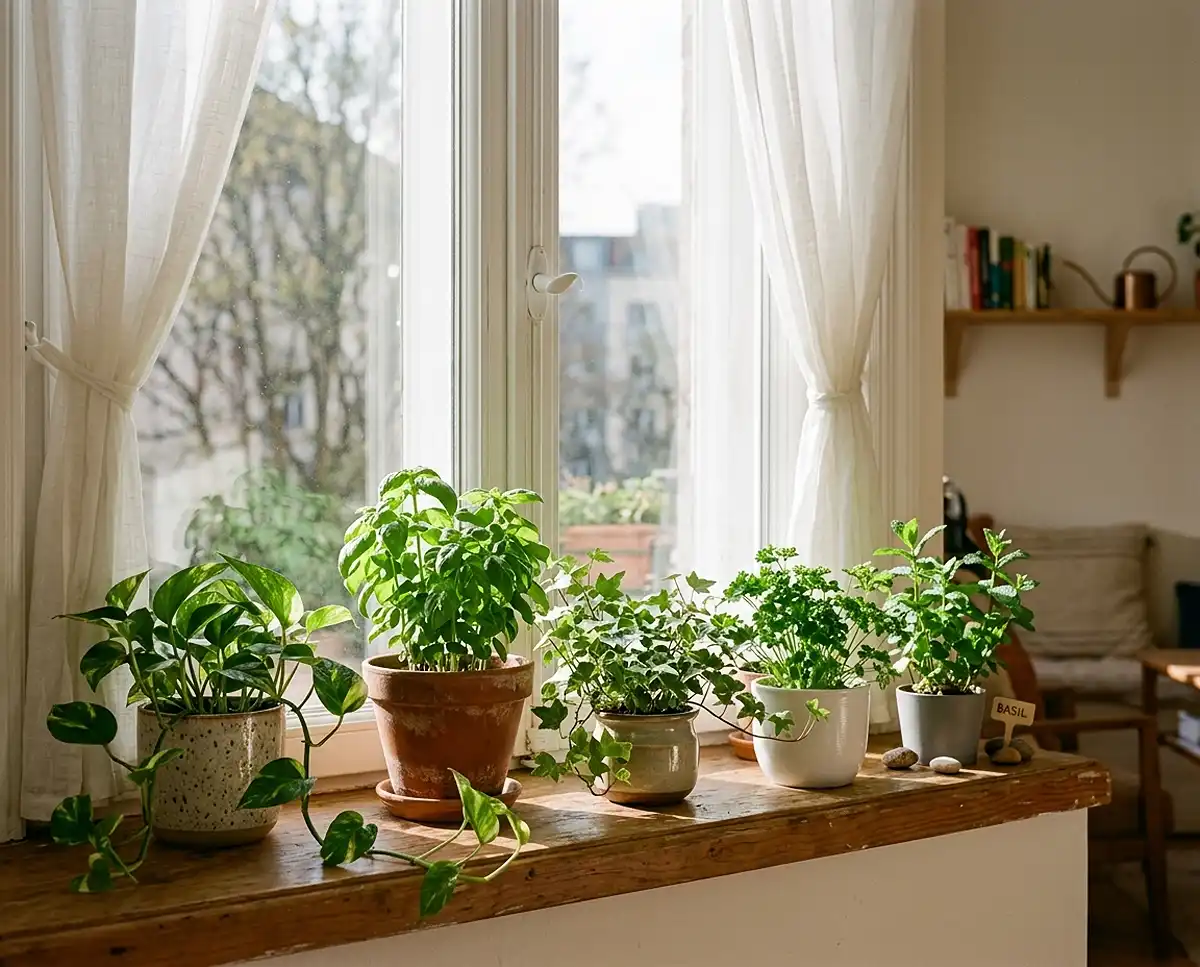
Apartment gardening for beginners is more doable than you think — even with one sunny window. These small space gardening tips will have you growing herbs, greens, and houseplants fast.
Table of Contents
Why Apartment Gardening Is Easier Than You Think
Most beginners assume urban gardening requires a yard, a truck full of supplies, and some kind of inherited green thumb. None of that’s true.
A windowsill, a $5 pot, and a packet of seeds are enough to get started. Apartment gardening for beginners works because you control the environment — no weather surprises, no pests digging up your beds overnight.
Beyond fresh food, plants genuinely clean your indoor air. Studies from NASA’s clean air research show certain houseplants reduce indoor toxins.
They also reduce stress. Tending something living — even a pot of basil — gives your brain a small daily win. That’s the real hook for tiny garden ideas: the return on investment is way bigger than the footprint.
Getting Started: Assess Your Apartment Space
Before you buy a single plant, spend five minutes looking at your space with fresh eyes. The biggest beginner mistake is buying plants first and asking questions later.
You need to know two things: where your light comes from, and where you actually have room. Everything else comes after.
Understanding Your Light Conditions
Quick Answer: Face a window and check which direction it faces. South-facing gets the most sun (6+ hours). East and west get moderate light. North-facing is low light territory.
Track sunlight in that spot for one day. Count the hours of direct sun hitting the surface where you’d put a plant. That number tells you what will grow there.
- 6+ hours direct sun: South-facing window — grow tomatoes, basil, peppers, herbs
- 3–6 hours: East or west window — lettuce, mint, pothos, spider plants
- Under 3 hours: North-facing or shaded — snake plant, ZZ plant, cast iron plant
Pro Tip: Light intensity drops off fast — a plant sitting 3 feet from a window gets roughly half the light of one sitting right on the sill.
Finding Space: Windowsills, Balconies, and Corners
Quick Answer: Your apartment has more growing space than you think. Look up, not just out.
Spots most beginners overlook in small space gardening:
- Windowsills (even narrow ones fit herb pots)
- Balcony railings with railing planters
- Tops of bookshelves near windows
- Vertical wall space for mounted planters
- Cabinet tops in kitchens with skylights
Check out these small balcony layout ideas to see how much you can fit in even a tiny outdoor space.
Pro Tip: A tiered plant stand near one good window can triple your growing spots without taking up extra floor space.
Easiest Plants for Apartment Beginners
Start with plants that forgive mistakes. You’ll kill a few plants — every gardener does. The goal is to pick ones that bounce back before you even notice a problem.
Apartment gardening for beginners works best when your first picks build confidence, not frustration.
Low-Maintenance Houseplants
Quick Answer: These four plants survive neglect, low light, and inconsistent watering. Start here.
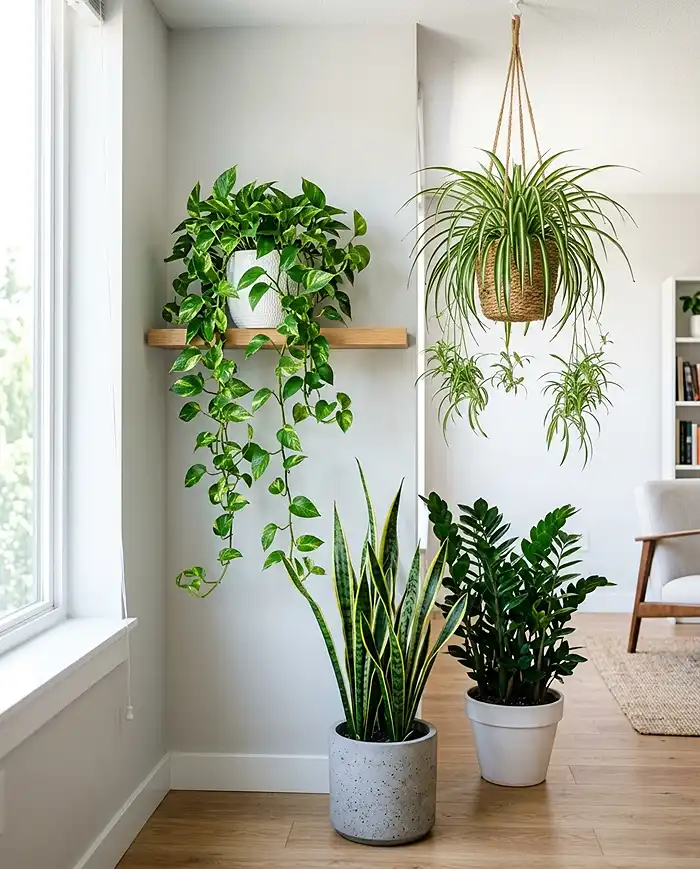
| Plant | Light Needed | Water Frequency | Best Spot |
|---|---|---|---|
| Pothos | Low to medium | Every 7–10 days | Any room |
| Snake Plant | Low to bright indirect | Every 2–4 weeks | Bedroom, hallway |
| Spider Plant | Medium indirect | Every 7 days | Hanging basket |
| ZZ Plant | Low light | Every 2–3 weeks | Dark corner |
Real Example: I kept a pothos in a north-facing bathroom for two years with almost zero care. It trailed 4 feet down from a shelf. That plant converted me into an apartment gardener.
Easy Edibles and Herbs
Quick Answer: These edibles grow fast indoors or on a balcony, and you’ll actually use what you harvest.
- Mint: Grows aggressively in any moist soil — keep it in its own pot
- Basil: Needs 6+ hours of light; a south window works perfectly
- Green onions: Regrow cut bottoms in a jar of water — zero cost
- Lettuce: Prefers cooler temps; harvest outer leaves and it keeps growing
- Chili peppers: Compact plants that thrive in containers on a sunny balcony
For herb-specific urban gardening ideas, this hanging herb garden guide for kitchens has smart setups worth copying.
Pro Tip: Grow mint in a pot inside a larger pot — it spreads underground and will take over if you let it roam free.
Essential Tools and Supplies for Beginners
You don’t need much. The gardening industry loves to sell you things you don’t need. Here’s the honest list for small space gardening on a budget.
| Item | Budget Pick | Why You Need It |
|---|---|---|
| Containers | Dollar store pots, repurposed cans | Holds your plants and soil |
| Potting mix | Generic indoor potting mix (~$8/bag) | Drains properly, unlike garden soil |
| Watering can | Small 1-liter can with long spout | Precise watering without overflow |
| Drainage tray | Any plate or tray | Protects floors and furniture |
| Liquid fertilizer | Balanced 10-10-10, diluted half-strength | Feeds plants in containers monthly |
Pro Tip: Skip the fancy soil mixes until you know what you’re doing. A basic indoor potting mix works for 90% of beginner plants.
Choosing the Right Containers and Soil
Quick Answer: Any container works as long as it has drainage holes. Waterlogged roots kill more apartment plants than any other cause.
If a pot you love has no drainage hole, add one with a drill, or use it as a decorative outer pot with a plain nursery pot inside.
Never use outdoor garden soil indoors — it compacts in containers, cutting off root oxygen. A good indoor potting mix stays loose and drains fast.
- Herbs: 4–6 inch pots with drainage
- Lettuce and greens: Wide, shallow containers (6–8 inches deep)
- Tomatoes and peppers: Minimum 5-gallon containers
- Houseplants: Match pot size to root ball — 1–2 inches of space around roots
Pro Tip: Terracotta pots breathe and dry out faster than plastic — great for herbs, not ideal for moisture-loving tropical plants.
How to Plant Your First Apartment Garden
Apartment gardening for beginners doesn’t require a complicated process. Here’s exactly what to do the first time.
Preparing Pots and Potting Mix
Quick Answer: Check for drainage, fill with mix, and moisten before planting. Takes under 10 minutes per pot.
- Confirm the pot has at least one drainage hole
- Place a small piece of mesh or a coffee filter over the hole to stop soil escaping
- Fill pot with fresh indoor potting mix to about 1 inch below the rim
- Water the mix until it’s evenly moist but not dripping — squeeze a handful; it should hold shape
- Let it sit for 5 minutes before planting so roots hit damp soil immediately
Real Example: My first herb pot had no mesh over the drainage hole. Soil washed straight out every time I watered. A coffee filter fixed it completely.
Planting and Initial Watering
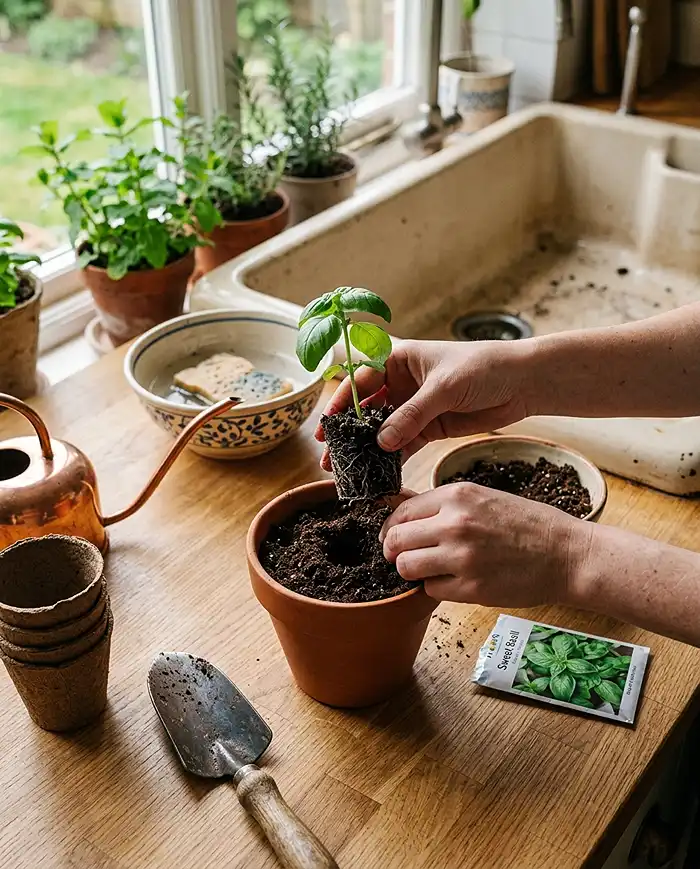
Quick Answer: Dig a hole, set the plant at the same depth it grew before, firm the soil, water in, and place in the right light immediately.
- Make a hole in the center of your moistened mix, sized to fit the root ball
- Remove the plant from its nursery pot gently, loosening roots slightly if they’re circling
- Set plant in the hole at the same soil level it was growing at before
- Firm soil around the roots with your fingers — no air pockets
- Water slowly until water runs from the drainage hole
- Move to the right light spot immediately — don’t leave it in low light “just for now”
Pro Tip: After planting, skip fertilizer for 4–6 weeks. Fresh potting mix has nutrients built in; adding more stresses new roots.
Daily and Weekly Plant Care Basics
Plants don’t need much daily attention. What they need is consistent attention. Quick checks beat occasional heroic watering sessions every time.
Watering Without Overdoing It
Quick Answer: Check the soil before you water, not the calendar. Stick your finger 1 inch into the soil — if it’s still damp, wait.
Overwatering is the most common cause of plant death in urban gardening. More plants die from too much water than too little.
- Water deeply when you do water — until it drains from the bottom
- Empty drainage trays 30 minutes after watering so roots don’t sit in water
- In winter, most plants need water half as often as in summer
- Pots dry out faster near heaters and in direct sun
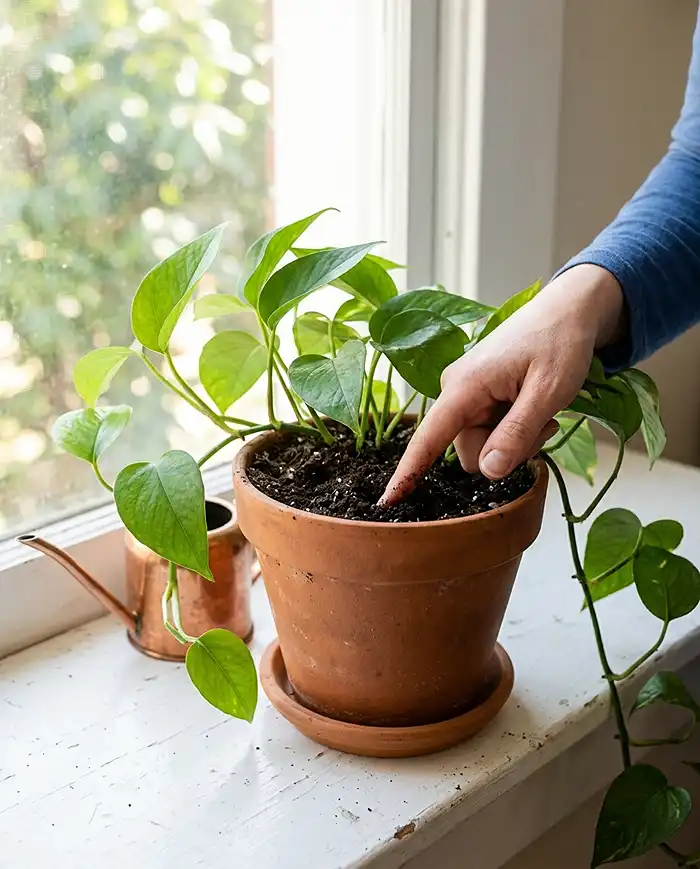
Pro Tip: Lift the pot before and after watering. A light pot is dry. Once you know the weight difference, you’ll rarely need to dig your finger in the soil again.
Light, Feeding, and Cleaning Leaves
Quick Answer: Rotate plants weekly, feed monthly during spring and summer, and wipe dusty leaves with a damp cloth.
Plants always lean toward light. Rotating them a quarter turn each week keeps growth even and prevents lopsided stems.
- Feed with a balanced liquid fertilizer diluted to half-strength, once a month during spring and summer
- Stop feeding entirely from October through February — plants rest in low light
- Dust on leaves blocks light absorption — wipe them gently with a damp cloth every few weeks
Pro Tip: Yellowing lower leaves during feeding season usually means the plant wants food. Yellowing in winter usually means it’s getting too much water.
Maximizing Small Spaces With Vertical Gardening
Vertical gardening is the secret weapon of small space gardening. When floor space runs out, you grow up.
Shelves, Hanging Planters, and Wall Systems
Quick Answer: Tiered shelves, hanging baskets, and wall-mounted planters multiply your growing space without using a single extra square foot of floor.
Options that work well in apartments:
- Tiered plant stands: Stack 3–5 plants in the footprint of one — great near south windows
- Hanging baskets: Perfect for trailing plants like pothos or strawberries on balconies
- Wall-mounted pocket planters: Felt or fabric pockets hold herbs flat against a wall
- Over-door organizers: Repurpose shoe organizers for small herb pots on sunny doors
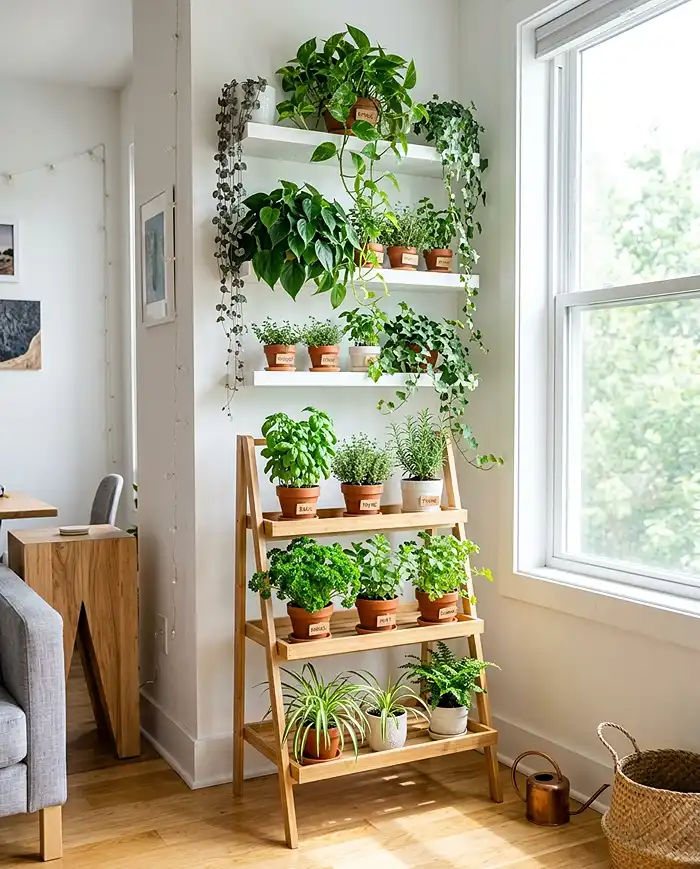
This herb garden layout for balconies shows how to combine vertical layers for maximum yield in minimal space.
Real Example: I installed three floating shelves across my kitchen window. That one move gave me space for 12 herb pots where I’d had zero before.
Pro Tip: Place taller, light-hungry plants on the top shelf and shade-tolerant plants lower — they’ll each get the light they actually need.
Seasonal Care Through the Year
Apartment gardening for beginners gets easier once you understand that plants shift with the seasons — even indoors. Light drops in winter. Growth slows. Care routines need to shift too.
Adjusting for Winter and Low Light
Quick Answer: Water less, add a grow light if needed, and keep plants away from cold drafts and heating vents.
- Reduce watering by 30–50% from November through February
- Move plants closer to windows as winter sun angles change
- Add an affordable LED grow light (full-spectrum, 20–30W) if plants start stretching or losing color
- Keep plants at least 12 inches from heating vents — dry heat damages leaves fast
- Keep them away from drafty windowsills in USDA zones 3–6 where glass gets very cold
For a fresh take on balcony aesthetics that also works in winter, browse these black and white balcony garden ideas — evergreen design that looks great year-round.
Pro Tip: A $15 LED grow light on a 12-hour timer keeps herbs producing through even the darkest winter months.
Common Problems and Solutions
Problems in urban gardening are normal. Here’s how to spot the most common ones fast and fix them before they get worse.
Yellowing Leaves and Overwatering
Quick Answer: Yellow leaves with soggy soil = overwatering. Let soil dry out completely, check for root rot, and cut back your watering schedule.
Pull the plant out and look at the roots. Healthy roots are white or tan. Rotting roots are brown, mushy, and smell bad. Trim rotted roots, repot in fresh dry mix, and water less going forward.
Leggy or Stretching Plants
Quick Answer: Stretched, leggy stems with wide gaps between leaves means your plant isn’t getting enough light. Move it closer to a window or add a grow light.
Leggy growth won’t fix itself if you leave the plant in the same spot. Prune the stretched stems back to a node [the bump where leaves attach], and move the plant to brighter light before it regrows.
Pests Like Fungus Gnats and Spider Mites
Quick Answer: Fungus gnats breed in wet soil — let the top 2 inches dry out between waterings to break their cycle. Spider mites hate humidity — mist leaves and use insecticidal soap.
- Fungus gnats: Yellow sticky traps catch adults; letting soil dry kills larvae
- Spider mites: Look for fine webbing under leaves; spray with diluted neem oil or insecticidal soap
Pro Tip: Isolate any plant showing pests immediately. One infested plant can spread to your entire collection within two weeks.
Frequently Asked Questions
What plants are best for apartment beginners?
Start with pothos, snake plant, spider plant, or ZZ plant for low-maintenance houseplants. For edibles, mint, basil, green onions, and lettuce are forgiving and fast-growing. These picks work well in small space gardening setups with limited light.
How do I grow plants with little sunlight?
Choose low-light plants like pothos, ZZ plant, or snake plant. If you want to grow herbs or edibles in a dim apartment, add an affordable full-spectrum LED grow light on a 12-hour timer. Urban gardening with grow lights works surprisingly well year-round.
How often should I water apartment plants?
Check the soil before every watering — don’t follow a fixed schedule. Stick your finger 1 inch into the soil. If it’s damp, wait. If it’s dry, water thoroughly until it drains from the bottom. Most apartment plants need water every 7–14 days.
Do I need special soil for container gardening?
Yes. Always use indoor potting mix, not outdoor garden soil. Garden soil compacts in containers, blocking oxygen to roots. A good potting mix drains freely and stays loose, which is essential for healthy apartment gardening for beginners.
Can I grow vegetables in an apartment with no balcony?
Absolutely. Lettuce, green onions, herbs, and cherry tomatoes all grow indoors in containers. You’ll need a south-facing window or a grow light for fruiting plants like tomatoes. Tiny garden ideas like windowsill planters and wall pockets make it very doable.
Key Takeaways
- Apartment gardening for beginners starts with assessing your light — south-facing windows give you the most growing options
- Small space gardening works best when you go vertical: shelves, hanging baskets, and wall planters multiply your space fast
- Overwatering kills more apartment plants than anything else — always check soil moisture before watering
- Start with forgiving plants like pothos, snake plant, mint, and basil before moving to more demanding varieties
- Urban gardening indoors is a year-round pursuit — a basic LED grow light keeps herbs and greens producing through winter