
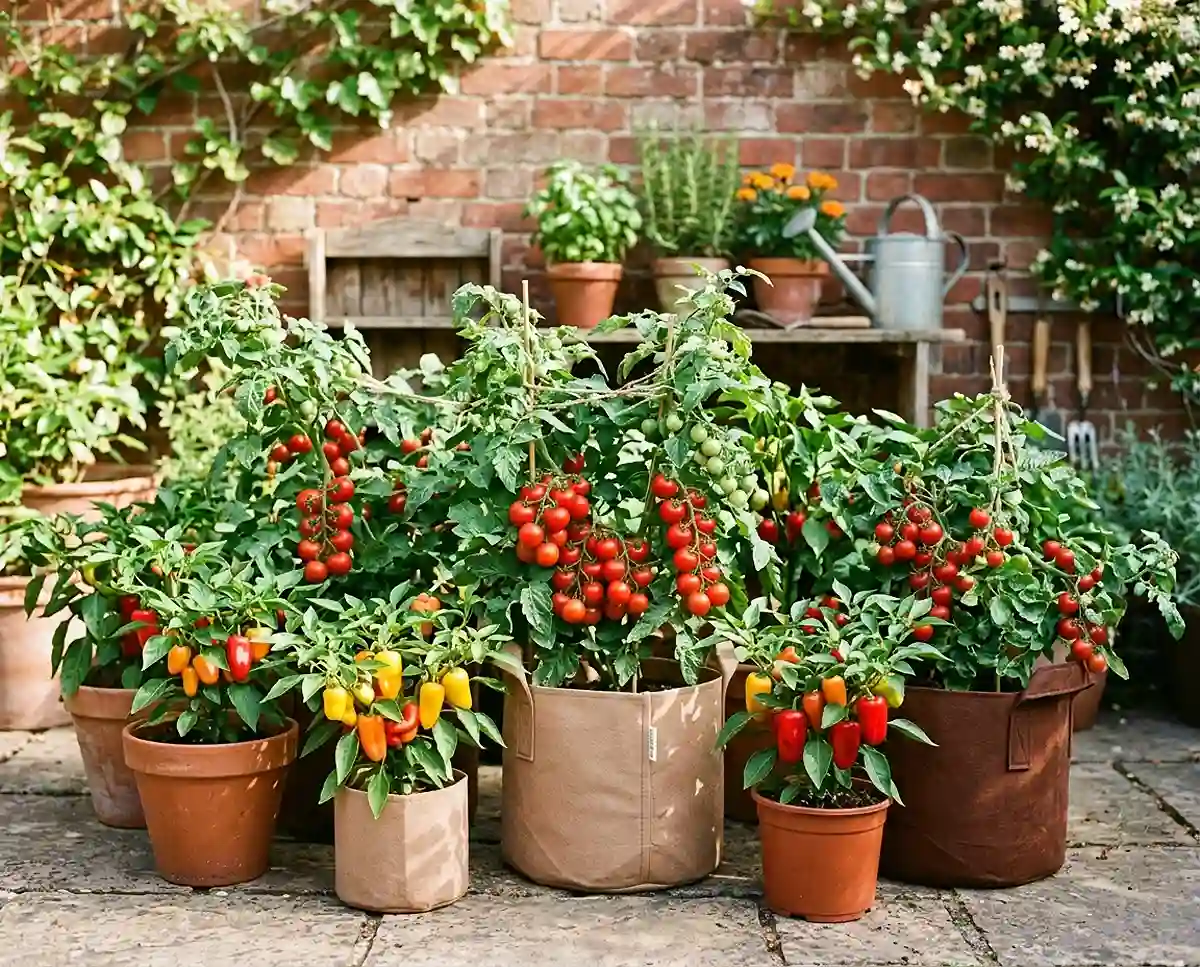
Dwarf Tomatoes and Peppers for Small Patios
Want real harvests from a tiny outdoor space? Dwarf tomatoes and peppers for small patios deliver full flavor without needing a full garden. The right varieties fit in pots, need no sprawling stakes, and produce heavily all season.
If you’ve tried standard tomato plants on a balcony and ended up with a jungle, this guide is for you. We’ll cover the best compact varieties, container setup, and care tips that actually work.
Table of Contents
Why Dwarf Tomatoes and Peppers Are Perfect for Patios
Standard tomato plants can hit 6 feet tall and wide. That’s not a small patio garden — that’s a full-on farm. Dwarf and compact varieties were bred specifically to max out around 18–24 inches.
They stay manageable, produce earlier, and don’t need massive cages or deep root systems. Peppers in containers behave similarly — compact varieties fruit reliably in 3–5 gallon pots.
The flavor isn’t a trade-off either. Varieties like Tiny Tim and Lunchbox peppers are genuinely delicious. You’re not settling — you’re just working smarter with your space.
Container vegetable gardening also gives you control. You move pots to chase sunlight. You adjust soil without digging. You bring plants indoors before frost. That flexibility is a real advantage.
Understanding Dwarf vs. Determinate vs. Patio Varieties
These three terms get mixed up constantly. They mean different things, and buying the wrong type is a common and frustrating mistake.
True dwarf varieties have a genetic mutation that limits internode length — the stems stay short. Plants cap out around 18 inches. Examples: Micro Tom, Tiny Tim.
Determinate varieties stop growing once they set a terminal flower cluster. They’re bushier than indeterminate types, but can still reach 3–4 feet. Not always small-patio-friendly.
Patio is a marketing label. It usually means compact and container-suitable, but always check the mature height on the seed packet before buying.
For true small patio gardens, prioritize genuine dwarf varieties or compact determinates with a listed height under 24 inches.
How Much Space Each Plant Actually Needs
Dwarf tomatoes need a minimum 2-gallon pot, though 5 gallons gives better yields. Space plants at least 12 inches apart if grouping multiple containers.
Dwarf peppers do well in 3–5 gallon containers. Give each plant its own pot for best results. In a pinch, two small pepper plants can share a 7-gallon container if you feed them well.
Best Dwarf Tomato Varieties for Containers
These varieties are proven performers for container vegetable gardening on patios, balconies, and small outdoor spaces.
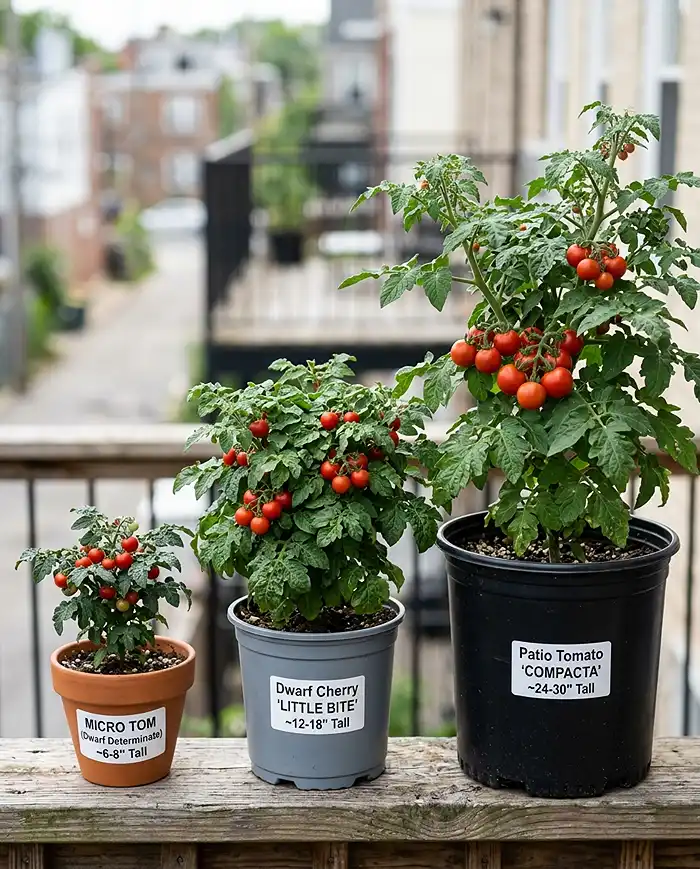
| Variety | Height | Fruit Type | Days to Harvest |
|---|---|---|---|
| Tiny Tim | 12–18 in | Cherry (3/4 in) | 45–60 days |
| Tumbling Tom | 12–20 in | Cherry (1 in) | 70–75 days |
| Micro Tom | 6–8 in | Cherry (tiny) | 60–70 days |
| Patio Princess | 18–24 in | Slicing (4 oz) | 68–75 days |
Tiny Tim is my go-to recommendation for beginners. It stays small, sets fruit fast, and produces reliably without much fuss. I grew three on a 4×4 ft balcony and had cherry tomatoes for two months straight.
Tumbling Tom works beautifully in hanging baskets — the vines cascade naturally. Micro Tom is almost ornamental at 6 inches tall. Patio Princess is your best bet if you want something closer to a full-size tomato.
Pro tip: Look for transplants labeled “determinate” at the nursery and verify the height tag. Don’t trust “patio” alone without checking the inches.
Cherry vs. Slicing Dwarf Tomatoes
Cherry tomatoes win on yield and speed. A single Tiny Tim plant can produce 50–100 fruits per season. They ripen 2–3 weeks faster than slicers and are more forgiving of inconsistent watering.
Slicing types like Patio Princess give you fewer, bigger fruits — better for sandwiches and cooking. They need slightly more space and consistent moisture to avoid blossom-end rot.
For a small patio garden, cherry types are the safer bet. Go slicer only if you specifically want that style of fruit and have at least a 5-gallon pot per plant.
Best Dwarf Pepper Varieties for Patios
Peppers in containers are often overlooked, but they’re fantastic for small patios. They’re lower-maintenance than tomatoes, rarely need staking, and the plants look great all season.
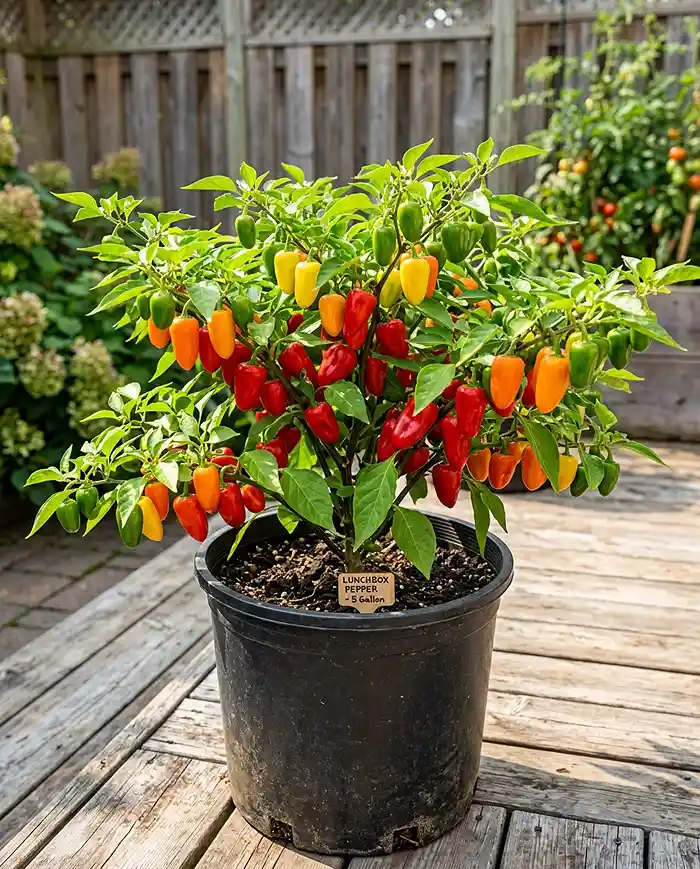
| Variety | Type | Heat Level | Height | Days to Harvest |
|---|---|---|---|---|
| Lunchbox | Sweet | None | 18–24 in | 70–75 days |
| Mohawk | Sweet | None | 14–16 in | 60–65 days |
| Apache | Hot | Medium-hot | 18 in | 80–90 days |
| Jalapeño Gigante | Hot | Medium | 24–30 in | 75–80 days |
Lunchbox peppers are snack-sized sweet peppers in red, yellow, and orange. They’re prolific and incredibly productive for their size. I picked over 40 peppers from one plant in a single season.
Mohawk is one of the most compact sweet peppers you’ll find — a genuine dwarf at under 16 inches. Apache is a hot pepper that stays tidy and fruits heavily. Both are excellent for small patio gardens.
Pro tip: Peppers need warmth to set fruit. If nighttime temps drop below 55°F, production stalls. Move pots indoors or against a warm wall during cold snaps.
Sweet vs. Hot Dwarf Peppers
Sweet peppers generally take 60–75 days to first harvest. Hot varieties average 75–90 days. If you have a short growing season, start hot peppers indoors 10–12 weeks before your last frost date.
Both types need the same care: full sun, consistent watering, and a potassium-rich fertilizer during fruiting. The difference is mostly in timing and culinary use, not in growing difficulty.
Containers, Soil, and Tools You’ll Need
Getting the container and soil right matters more than most people realize. Tomatoes in pots with poor drainage will stall out no matter how good the variety is.
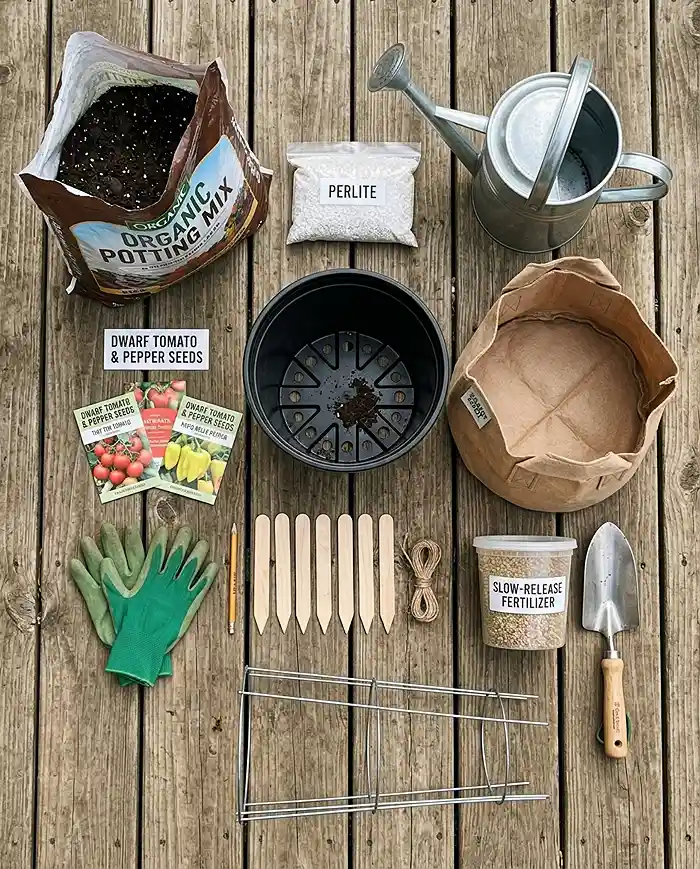
Here’s what you need before you plant:
- Containers: 5-gallon minimum for tomatoes, 3–5 gallon for peppers. Self-watering pots help a lot in summer heat.
- Drainage: Every pot must have drainage holes. No exceptions. Sitting water kills roots fast.
- Potting mix: Use quality container mix — never garden soil. Add 20–30% perlite for drainage.
- Fertilizer: Slow-release granules at planting, then liquid feed every 1–2 weeks once flowering starts.
- Stakes or cages: Even dwarf tomatoes benefit from a small cage or single stake for support.
- Watering can or drip system: Consistent moisture is essential for containers in summer.
For more on supporting tomatoes in containers, the tomato support guide at City Cultivator covers stakes, cages, and clips in detail.
If you’re considering fabric pots, check out this breakdown of grow bags for tomatoes — they drain better and stay cooler than plastic in summer.
Choosing the Right Pot Size and Material
Plastic pots are lightweight and retain moisture longer — good for hot climates. Terracotta looks beautiful but dries out fast and is heavy to move. Fabric grow bags offer excellent drainage and air pruning of roots.
For tomatoes in pots: 5 gallons is the workable minimum, 7–10 gallons is ideal for better yields. For peppers in containers: 3 gallons works for compact types, 5 gallons gives more room to thrive.
How to Plant Dwarf Tomatoes and Peppers Step by Step
Rushing the planting stage is the most common reason patio gardens underperform. Take 30 extra minutes here and you’ll avoid weeks of problems later.
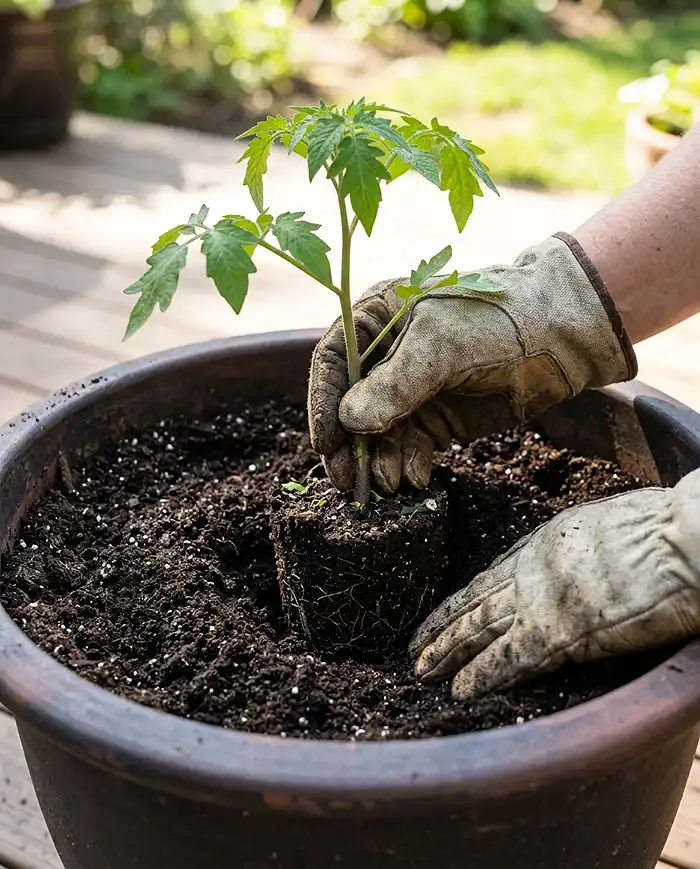
- Fill your container to within 2 inches of the rim with moistened potting mix.
- For tomatoes, bury the stem deep — up to the lowest set of leaves. Roots will form along the buried stem.
- For peppers, plant at the same depth as the nursery pot. Do not bury the stem.
- Water thoroughly until it drains from the bottom.
- Place in a sheltered spot for 3–5 days before moving to full sun.
- Apply a diluted balanced fertilizer (e.g., 10-10-10) one week after planting.
This balcony garden planning guide has smart ideas for arranging multiple containers and maximizing a small footprint.
Planting Timing and Hardening Off
Plant outdoors 2 weeks after your last frost date. For USDA Zones 5–7, that’s typically mid-May. Zones 8–10 can plant as early as March–April.
Hardening off prevents transplant shock. Move seedlings outside for 1–2 hours on day one, increasing by an hour each day over 7–10 days. Start in shade, gradually introduce direct sun.
Skip hardening off and you’ll see wilting, leaf scorch, and weeks of stunted growth. It’s not optional — it’s just 10 minutes a day for a week.
Watering, Feeding, and Ongoing Care
Container plants dry out faster than in-ground beds. In midsummer heat, a 5-gallon pot with a tomato plant may need watering once or twice daily. Stick your finger 2 inches into the soil — if it’s dry, water.
A consistent moisture level prevents blossom-end rot and fruit cracking. Self-watering containers are worth the investment for anyone who travels or works long hours.
For feeding, use a balanced fertilizer (like 10-10-10) until flowers appear. Then switch to a low-nitrogen, high-phosphorus and potassium formula to push fruit production instead of leafy growth.
Prune suckers on tomatoes (the shoots that grow between stem and branch) to keep airflow good. Peppers generally don’t need pruning — just remove dead or damaged leaves.
Maximizing Yield in Small Spaces
Position containers where they get at least 6–8 hours of direct sun daily. South-facing walls are ideal — they reflect heat and extend the growing day.
If fruit set is poor, help pollination by gently shaking flowering stems mid-morning. A soft paintbrush works too. This matters most indoors or on wind-sheltered patios.
Stack vertical space with a wall-mounted system. See these renter-friendly vertical garden ideas for solutions that don’t require drilling.
Seasonal and Regional Considerations
In Zones 9–11, you can grow peppers and tomatoes in pots nearly year-round. In Zones 5–7, your window is May through September. Know your last and first frost dates — the Old Farmer’s Almanac frost date tool gives exact dates by zip code.
Extend your season with row cover fleece when early fall frost threatens. A few degrees of protection can buy you 3–4 extra weeks of harvest.
Peppers can be overwintered indoors in Zones 7 and below. Cut back to 6 inches, bring inside before frost, and give them a bright window. They’ll re-sprout in spring and produce earlier than any transplant.
In hot climates (Zones 9+), afternoon shade cloth (30–40%) prevents blossom drop during peak summer heat above 95°F.
Common Problems and Solutions
Container plants face a specific set of challenges. Here are the most common issues and how to fix them fast.
Blossom Drop and No Fruit Setting
Quick Answer: Temps above 90°F or below 55°F at night cause flowers to drop before setting fruit. Pollination issues on sheltered patios are another cause.
- Move pots to a cooler or warmer spot depending on the season.
- Shake flowering stems gently each morning to distribute pollen.
- Avoid high-nitrogen fertilizer once plants are flowering — it pushes leaves over fruit.
Yellowing Leaves and Nutrient Issues
Quick Answer: Yellow leaves on container plants usually mean overwatering, nitrogen deficiency, or both. Check drainage first.
- If soil is soggy and smells musty: reduce watering, improve drainage.
- If soil is dry and leaves are pale yellow: feed with a balanced liquid fertilizer.
- Older leaves yellowing from the bottom up = normal leaf senescence, not a problem.
Pests and Diseases in Container Plants
Quick Answer: Aphids and whiteflies are the most common pests on patio plants. Blossom-end rot is the most common disease (actually a calcium deficiency from inconsistent watering).
- Aphids: Blast off with water, then spray with diluted neem oil.
- Whiteflies: Yellow sticky traps catch adults; neem oil handles larvae.
- Blossom-end rot: Water consistently and add a calcium spray if needed.
dwarf tomatoes and peppers for small patios FAQs
How Big a Pot Do Dwarf Tomatoes and Peppers Need?
Dwarf tomatoes need a minimum 5-gallon container for reliable yields. True micro varieties like Micro Tom can survive in 2 gallons but produce less. Dwarf peppers thrive in 3–5 gallon pots. Bigger is always better when space allows.
Can I Grow Dwarf Tomatoes and Peppers Indoors?
Yes, but they need at least 8 hours of bright light daily — a south-facing window or a grow light. Indoors, you’ll need to hand-pollinate by gently shaking flowering stems. Without wind or bees, fruit won’t set reliably on its own.
How Long Do Dwarf Tomatoes and Peppers Take to Harvest?
Dwarf cherry tomatoes typically reach harvest in 45–70 days from transplant. Dwarf peppers take longer: sweet types run 60–75 days, hot types 75–90 days. Count from transplant date, not from seeding.
Do Dwarf Tomatoes Need Staking or Pruning?
Most true dwarf tomatoes are self-supporting, but a small cage or single bamboo stake helps once fruit loads develop. Determinate types rarely need heavy pruning. Remove suckers below the first flower cluster to improve airflow and fruit size.
How Many Plants Can I Fit on a Small Patio?
On a 6×6 ft patio, you can realistically fit 4–6 containers with one plant each. Mix one or two tomato pots with two or three pepper pots. Leave walking room and ensure every pot gets direct sun — shading neighbors reduces yield significantly.
Key Takeaways
- Dwarf tomatoes and peppers for small patios deliver full-flavor harvests from containers as small as 3–5 gallons.
- Choose true dwarf or compact determinate varieties — confirm mature height before buying.
- Prioritize drainage, full sun (6–8 hours), and consistent watering for container vegetable gardening success.
- Cherry tomatoes (Tiny Tim, Tumbling Tom) and sweet peppers (Lunchbox, Mohawk) are the most reliable beginner choices.
- Harden off transplants over 7–10 days and plant only after your last frost date for your USDA zone.