
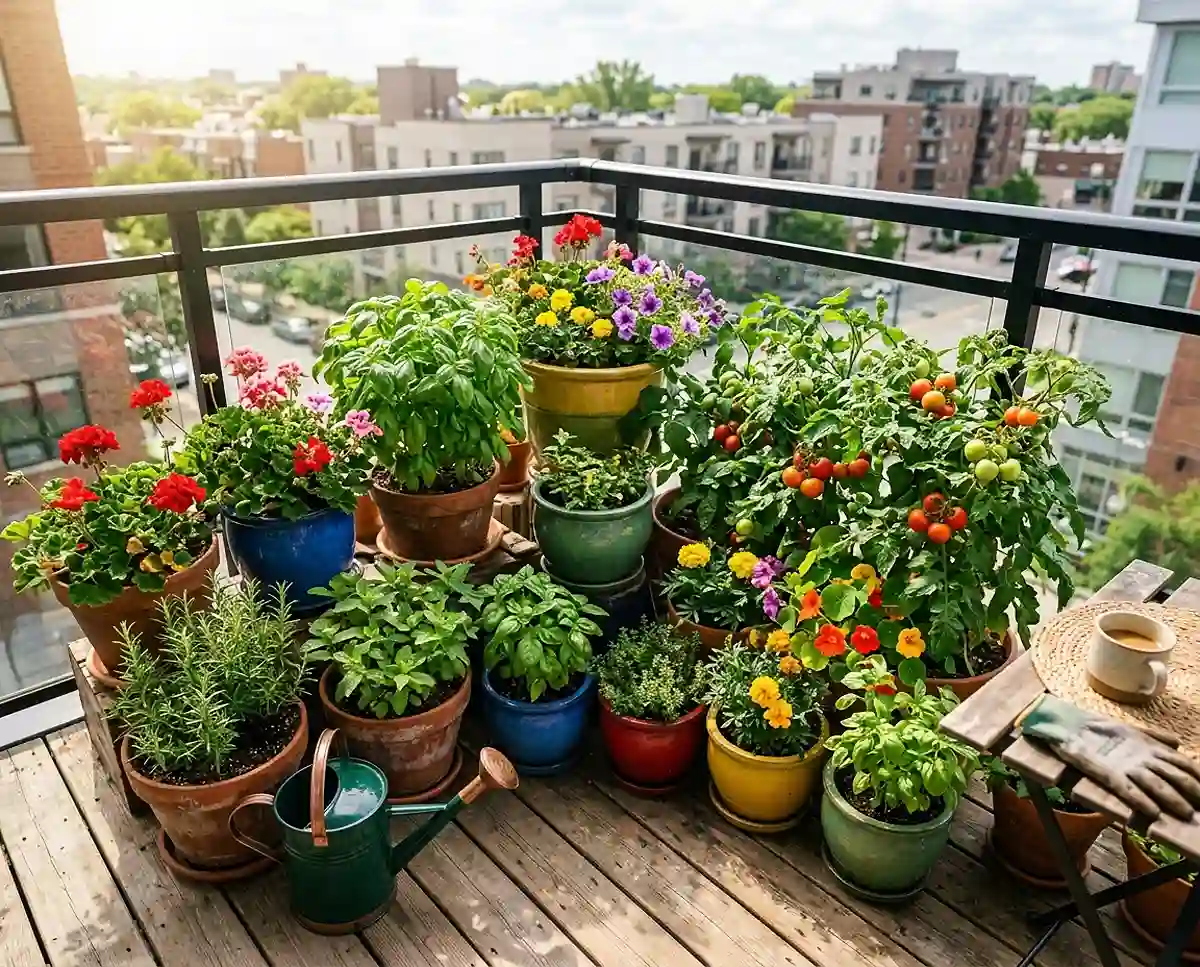
How to Keep Pots Moist in Summer Heat
If you’re figuring out how to keep pots moist in summer, you’re already ahead — because most container gardening advice skips straight to “water more” without fixing why pots dry out in the first place. These container watering tips tackle the real culprits: wrong pot materials, fast-draining soil, poor placement, and no mulch. Fix those, and your balcony or patio plants stop wilting before noon.
Table of Contents
Why Pots Dry Out So Fast in Summer Heat
Container gardening puts plants in a tough spot: limited soil volume, walls exposed to sun and wind on all sides, and no underground reservoir to draw from. In summer, that combo can drain a pot bone-dry in under 24 hours.
Here’s what’s actually happening:
- Small soil volume: A 6-inch pot holds maybe 1–2 quarts of soil. One hot afternoon evaporates a significant chunk of that.
- Container walls heat up: Terracotta, thin plastic, and dark-colored pots absorb heat and push it inward, cooking roots and accelerating moisture loss.
- Wind strips moisture fast: Exposed balconies or south-facing patios can double evaporation rates compared to sheltered spots.
- Porous materials wick water out: Unglazed terracotta loses moisture through its walls, not just the surface — sometimes faster than you’re watering in.
The sections below fix each of these one by one. You won’t need to water twice a day if you address the root causes.
Assessing Your Pots Before the Heat Hits
The best time to solve summer drying problems is late spring, before temperatures spike. A quick audit of your pots now saves you from scrambling in July.
Walk through your container gardening setup and ask three questions: Is this pot the right size? Is the material working against me? And is this spot going to bake in afternoon sun? If the answer to any is “probably not,” fix it before the heat arrives.
How Pot Size and Material Affect Moisture
Quick Answer: Bigger pots hold more soil and moisture. Porous pots like terracotta lose water through their walls. In summer heat, both factors matter a lot.
| Pot Type | Best For | Watch Out For |
|---|---|---|
| Terracotta (unglazed) | Succulents, herbs, good airflow | Dries out fast; needs daily watering in heat |
| Glazed ceramic | Most vegetables and flowers | Heavy; can crack in freeze-thaw cycles |
| Thick plastic / resin | Small space gardening, lightweight setups | Degrades in UV over years |
| Fabric grow bags | Tomatoes, peppers, air-pruning roots | Very fast drying; needs saucer + frequent watering |
| Self-watering planters | Any summer container gardening | Higher upfront cost |
Real Example: I switched my basil from a 4-inch terracotta to a 10-inch glazed pot in early June. It went from wilting every afternoon to only needing water every other day — same plant, same spot, just a better container.
Pro Tip: Line the inside of terracotta pots with a sheet of burlap or a plastic bag with drainage holes punched in it — it cuts moisture loss through the walls by roughly half without stopping airflow entirely.
Checking Your Soil’s Moisture Retention
Quick Answer: Stick your finger 2 inches into the soil. If it’s dry that deep, your mix drains too fast. Most bagged “potting mix” is mostly perlite and bark — great drainage, terrible retention.
Signs your soil mix isn’t holding moisture:
- Water runs straight through and out the drainage hole within seconds
- Soil pulls away from pot edges when dry, leaving a gap
- Lightweight, fluffy texture when dry — no clumping
- Surface dries out within a few hours of watering
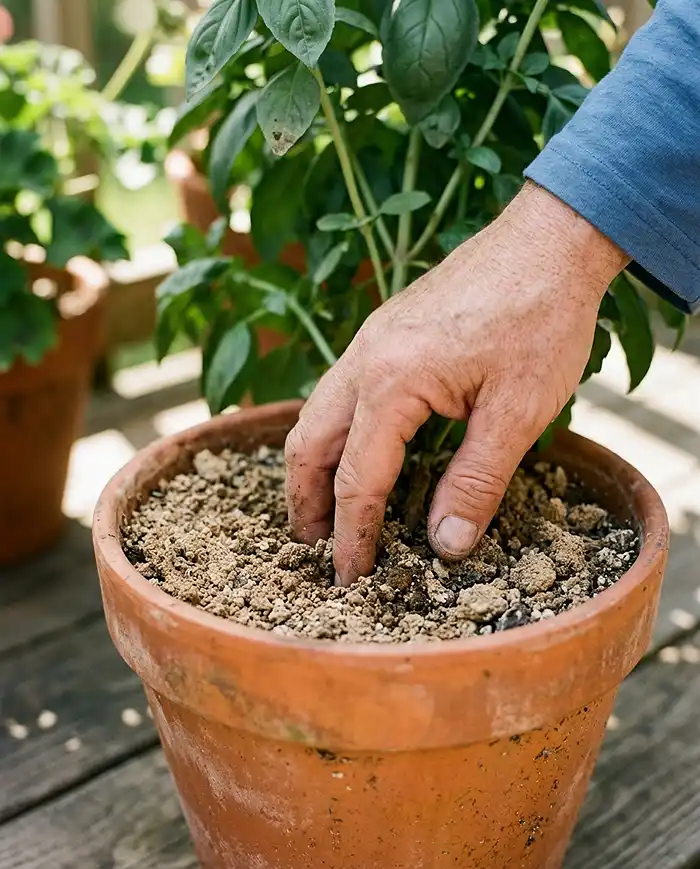
If you see these, the soil is the problem — not how often you water.
Pro Tip: The “lift test” works well: lift the pot right after watering, then again the next morning. If it feels nearly as light by morning, your soil isn’t retaining — it’s just conducting water straight to the drain hole.
Best Soil and Mix Strategies for Moisture Retention
The right soil mix is the single biggest lever for how to keep pots moist in summer. A well-amended mix can double or triple how long moisture stays available to roots compared to straight bagged potting mix.
The goal is balance: you want moisture retention without waterlogging. Most plants die from root rot faster than from drought, so don’t swing too far the other way.
A solid summer container mix:
- 60% quality potting soil (look for compost in the ingredients)
- 20% coco coir (holds 8–10x its weight in water)
- 10% compost (adds nutrients + water-holding capacity)
- 10% perlite (keeps drainage just enough to prevent rot)
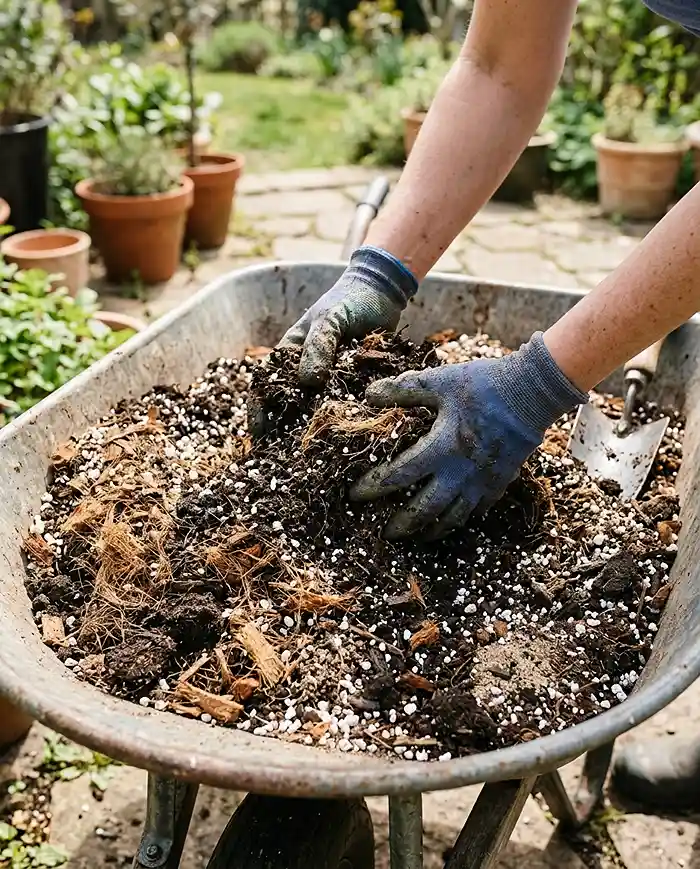
This mix works for most vegetables, herbs, and flowers in summer container gardening setups. For succulents, increase perlite to 30% and drop the coco coir to 10%.
Adding Coco Coir, Compost, and Water-Retaining Amendments
Quick Answer: Coco coir and compost are the two best amendments for moisture retention. Water crystals work but can cause problems if overused — stick to coir first.
| Amendment | How Much to Add | Best Use |
|---|---|---|
| Coco coir | 20–25% of total mix | All containers; especially summer heat |
| Compost | 10–20% of total mix | Vegetables, heavy feeders |
| Water-retaining crystals | 1 tsp per gallon of soil | Hanging baskets, small pots only |
| Biochar | 5–10% of total mix | Long-term soil health + moisture buffering |
Real Example: I added coco coir to my tomato containers mid-season one year by scratching it into the top 3 inches. It wasn’t perfect but it did reduce watering frequency from once to twice daily down to once a day — measurable difference even added mid-season.
Pro Tip: Hydrate coco coir bricks fully before mixing — they expand dramatically and dry coir can actually pull moisture away from roots if added to an existing container without soaking first.
Smart Watering Techniques for Hot Weather
Container watering tips aren’t just about frequency — technique makes the difference between water that actually reaches roots and water that evaporates off the surface or runs straight through hydrophobic dry soil.
In hot weather, how you water matters as much as when. Fast, shallow watering encourages shallow roots that dry out faster. Slow, deep watering pushes roots down and builds drought resilience over time.
Best Times and Methods to Water
Quick Answer: Water deeply in the early morning. This gets moisture to the roots before heat evaporates it and keeps foliage dry overnight to reduce disease.
- Morning watering (6–9am): Best timing for summer container gardening — cooler temps mean less immediate evaporation, and plants are hydrated before midday heat
- Deep watering: Water slowly until it runs from drainage holes, wait 10 minutes, then water again — this saturates the whole root zone, not just the top inch
- Bottom watering: Set pots in a tray of water for 30–60 minutes; soil wicks water up from below, ensuring even distribution — especially good for terracotta and root-dense pots
- Avoid evening watering: Wet foliage overnight invites fungal issues; if you must water late, aim at soil only
Pro Tip: A wooden chopstick works better than a finger for moisture-testing deep pots — push it 4 inches down and check for soil clinging to it when you pull it out.
Self-Watering and Drip Irrigation Options
Quick Answer: Self-watering pots and drip systems are the most reliable way to keep moisture consistent when you can’t water every day. Both pay off quickly in summer heat.
- Self-watering pots: Have a reservoir at the base; roots draw water as needed — ideal for small space gardening on balconies and patios
- Wicking systems: A cotton rope from a water bottle into the soil delivers slow, steady moisture — free DIY solution for vacations
- Ollas (buried clay pots): Unglazed terracotta buried in soil seeps water slowly to roots — old technique that works brilliantly in large containers
- Drip irrigation with timer: A basic timer + drip kit runs around $30–50 and can handle 8–12 pots — set it and forget it for weeks
For more setup ideas that work for tight spaces, check out these balcony railing planter ideas that pair well with drip systems.
Pro Tip: If you use a drip timer, add a rain sensor — it’ll skip watering on rainy days and prevent root rot from over-saturation.
Mulching and Covering the Soil Surface
Mulching containers is massively underused. In-ground gardeners mulch automatically, but container gardening gets forgotten. A 1–2 inch layer on top of your pot can cut evaporation by 25–50%, which is huge in peak summer heat.
Mulch keeps the soil surface cool, slows wind evaporation, and reduces the frequency you need to water. It’s one of the cheapest and most impactful container watering tips you can use.
Best Mulch Materials for Containers
Quick Answer: Fine bark mulch or compost are the best all-around choices for containers. Keep it 1–2 inches deep and leave a gap around the plant stem.
| Mulch Type | Best For | Notes |
|---|---|---|
| Fine bark / wood chips | Most pots, shrubs, perennials | Long-lasting; looks clean |
| Compost | Vegetables, heavy feeders | Feeds while it mulches; breaks down fast |
| Gravel / pebbles | Succulents, Mediterranean herbs | Doesn’t retain moisture itself but shades soil |
| Coco coir mat | Hanging baskets | Lightweight; also retains some moisture |
| Living mulch (low groundcover) | Large containers | Thyme, creeping Jenny reduce evaporation naturally |
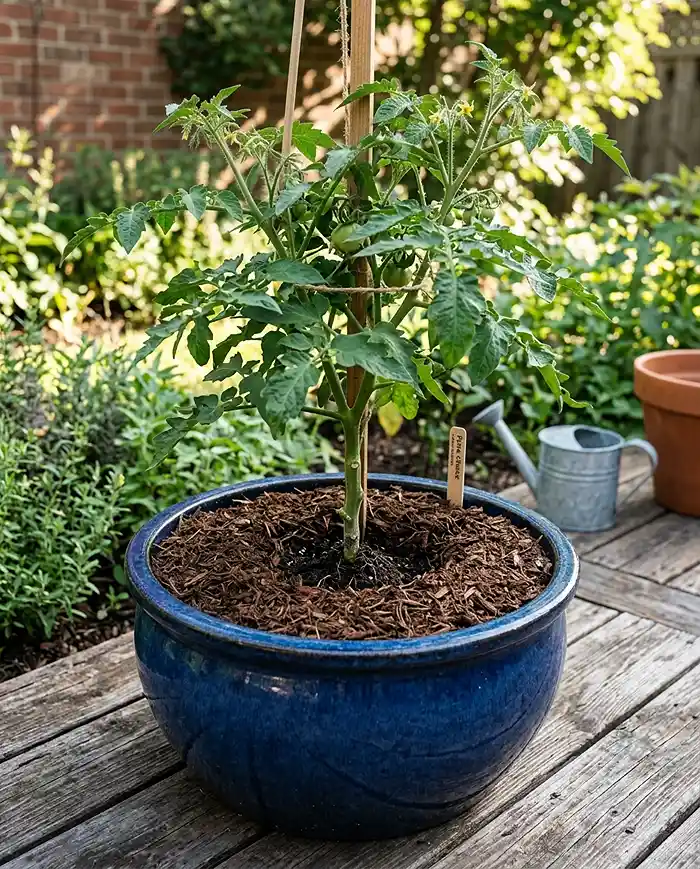
Real Example: I top-dressed my pepper containers with a 2-inch layer of compost in late June. Not only did the pots stay moist longer, the peppers got an unexpected mid-season nutrient boost that pushed a second flush of fruit.
Pro Tip: Don’t skip the stem gap — mulch piled against plant stems causes crown rot. Leave at least an inch of clearance around every stem.
Placement and Grouping Tricks to Reduce Drying
Where your pots sit matters more than most people realize. A pot in full afternoon sun on a reflective concrete surface can lose twice as much moisture as the same pot in partial shade with a bit of shelter from wind.
Strategic placement is free and often more effective than buying new equipment. It’s one of the most overlooked summer container gardening adjustments you can make.
Placement checklist for summer:
- Move heat-sensitive pots off dark surfaces (black gravel, dark tiles) — surface temps can hit 50°C+ on hot days
- Position large pots to act as windbreaks for smaller ones
- Elevate pots off hot concrete with pot feet or wooden boards to reduce radiant heat
- Use a wall or fence to block late afternoon western sun — that’s the most intense exposure
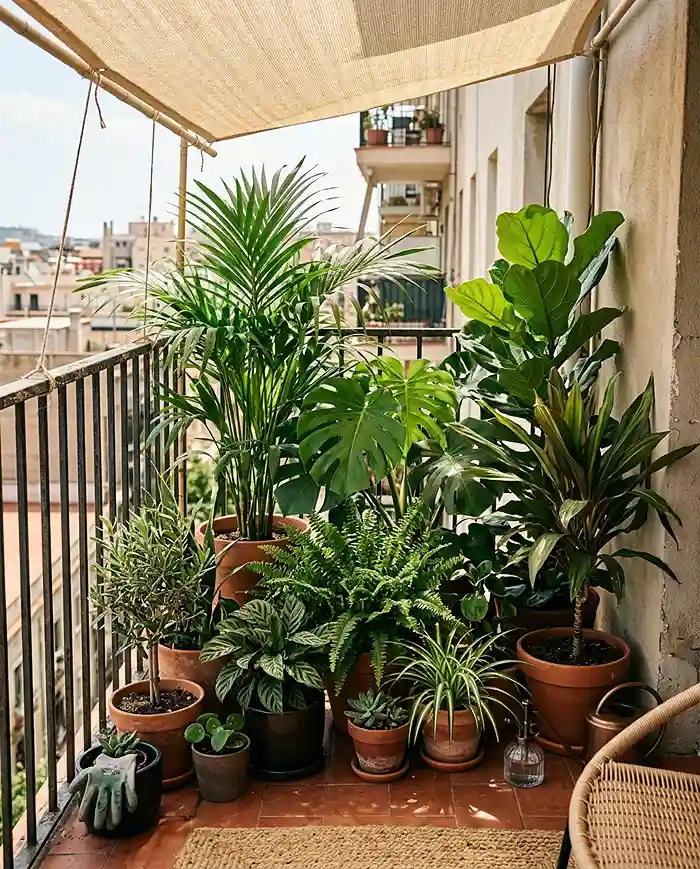
These tweaks also tie in well with ideas for vertical garden shelf setups that provide natural mutual shading.
Grouping Pots and Providing Afternoon Shade
Quick Answer: Group pots together so they shade each other’s sides and create a more humid microclimate. Block afternoon sun with shade cloth or taller plants.
- Cluster pots closely: Leaves touching or overlapping raises local humidity, which slows evaporation from all pots in the group
- Put thirstiest plants in the center: Center pots get more shade from surrounding ones and lose less moisture
- 30–40% shade cloth: A simple frame with shade cloth over a balcony or patio section can cut afternoon heat dramatically
- Taller plants as shaders: A tomato cage or tall ornamental grass can shade 3–4 smaller pots on its west side
Pro Tip: Grouping pots also makes vacation care easier — one person can water a cluster in 2 minutes versus hunting down 15 individual pots scattered across a balcony.
Tools and Materials Checklist
Here’s everything worth having on hand for keeping pots moist through summer:
- ✅ Coco coir brick (expand and mix into soil)
- ✅ Fine bark mulch or bagged compost (for top-dressing)
- ✅ Saucers for every pot (hold runoff for plants to reabsorb)
- ✅ Self-watering inserts or full self-watering pots
- ✅ Basic drip irrigation kit with timer (if you have 5+ pots)
- ✅ Water-retaining crystals (for hanging baskets only)
- ✅ Shade cloth (30–40% density)
- ✅ Pot feet or risers (lift pots off hot surfaces)
- ✅ Wooden chopstick (moisture testing)
You don’t need all of these. Start with better soil, a saucer, and mulch — that trio handles most drying problems on its own. For budget-friendly ideas on expanding your setup, see these budget small space garden ideas.
Going Away? Vacation Watering Solutions
A week without watering in July can wipe out a container garden. These solutions keep pots moist while you’re away — some cost nothing, some cost a little, all work reliably.
DIY options (free or near-free):
- Plastic bottle wicking: Fill a large plastic bottle with water, make a small hole in the cap, invert it into the soil — delivers slow drip for 2–3 days
- Bathtub soak: Fill your bathtub with 2–3 inches of water, stand pots in it before you leave — works for up to 5–7 days for larger pots
- Shade everything: Move all pots out of direct sun before leaving — this alone can double how long they stay moist
Bought solutions:
- Drip timer system: Most reliable for trips over 5 days; connects to any outdoor tap
- Terracotta ollas: Bury these water-filled clay stakes in large pots; they seep water slowly for days (see USU Extension’s olla research)
- Aqua spikes: Screw onto plastic bottles and push into soil — cheap, widely available, good for 3–5 days
For longer trips, combine a drip timer with mulching and shade placement. That trio keeps most container gardens alive for 2–3 weeks without human intervention.
Common Problems and Solutions
Soil Repelling Water and Running Off
Quick Answer: When dry soil repels water instead of absorbing it, it’s called hydrophobic soil. The fix is slow soaking, not faster pouring.
- Submerge the whole pot: Place in a bucket of water for 20–30 minutes until bubbles stop — forces full rehydration
- Use a wetting agent: A drop of dish soap in your watering can breaks surface tension and helps water penetrate (University of Wisconsin Extension covers this in detail)
- Switch to bottom watering temporarily: Lets soil rehydrate from below without runoff
- Prevent it next time: Never let pots dry completely — rehydrating hydrophobic soil is harder than preventing it
Pro Tip: Add a small amount of coco coir to the top inch of any pot prone to hydrophobia — it stays absorbent even when very dry, so water has an entry point.
Pots Drying Out Within Hours
Quick Answer: A pot that needs water twice a day or more is either too small, in too much sun, or using soil with zero retention. Fix at least two of those three.
- Upsize to a pot at least 2–3 inches larger in diameter
- Amend soil with coco coir and compost immediately (even by scratching it into the top layer)
- Add a saucer and move to a shadier afternoon position
- Apply mulch on top of soil right now — even a thin layer makes a difference
Wilting Despite Frequent Watering
Quick Answer: Wilting while the soil is already wet usually means root rot, compacted roots, or water running straight through without absorbing.
- Check for root rot: pull the plant gently — rotted roots are brown and mushy, not white and firm
- Check drainage holes aren’t blocked — pooled water suffocates roots fast
- If soil feels wet but plants wilt, ease off watering for 2–3 days and improve drainage before resuming
Frequently Asked Questions
How do I keep my potted plants from drying out in summer?
Use a combination of moisture-retentive soil (add coco coir and compost), top-dress with mulch, group pots together for humidity and shade, use saucers to catch and reabsorb runoff, and consider self-watering containers for the thirstiest plants. No single fix works as well as combining 3–4 of these strategies together.
How often should I water pots in hot weather?
Most pots in summer heat need watering every 1–2 days, and small pots in full sun may need daily attention. Use the finger test: push your finger or a chopstick 2 inches into the soil. Water when it’s dry at that depth. Don’t go by schedule alone — pot size, plant type, material, and placement all affect how fast moisture is lost. Larger pots (12 inches or more) in partial shade can often go 2–3 days between watering even in summer.
What can I add to soil to hold moisture longer?
Coco coir is the best single amendment — it holds 8–10 times its weight in water and stays loose enough not to cause waterlogging. Compost adds both moisture retention and nutrients. Water-retaining crystals work in hanging baskets but can cause problems in regular pots if overused. For most summer container gardening, a mix of 20% coco coir + 10–15% compost added to standard potting mix is the sweet spot.
How do I water my pots while on vacation?
For up to a week: combine plastic bottle wicking, full shade placement, and a bathtub soak before you leave. For 1–2 weeks: a basic drip timer connected to your outdoor tap is the most reliable option. For longer: add terracotta ollas or aqua spikes to the drip setup. Always mulch and move pots to shade before any trip — that alone significantly extends how long moisture lasts.
Key Takeaways
- Knowing how to keep pots moist in summer starts with the soil — amend with coco coir and compost before heat arrives, not after plants start struggling
- Pot material and size matter: terracotta and small pots dry fastest; switch to glazed, thick-walled, or self-watering containers for summer container gardening
- Mulch the surface of every pot with 1–2 inches of bark or compost to cut evaporation by up to 50%
- Group pots together and block afternoon sun — these free placement tweaks can match the impact of upgrading your soil or containers
- For vacations, combine drip timers, wicking systems, and shade placement — no single solution handles long trips as reliably as all three together