
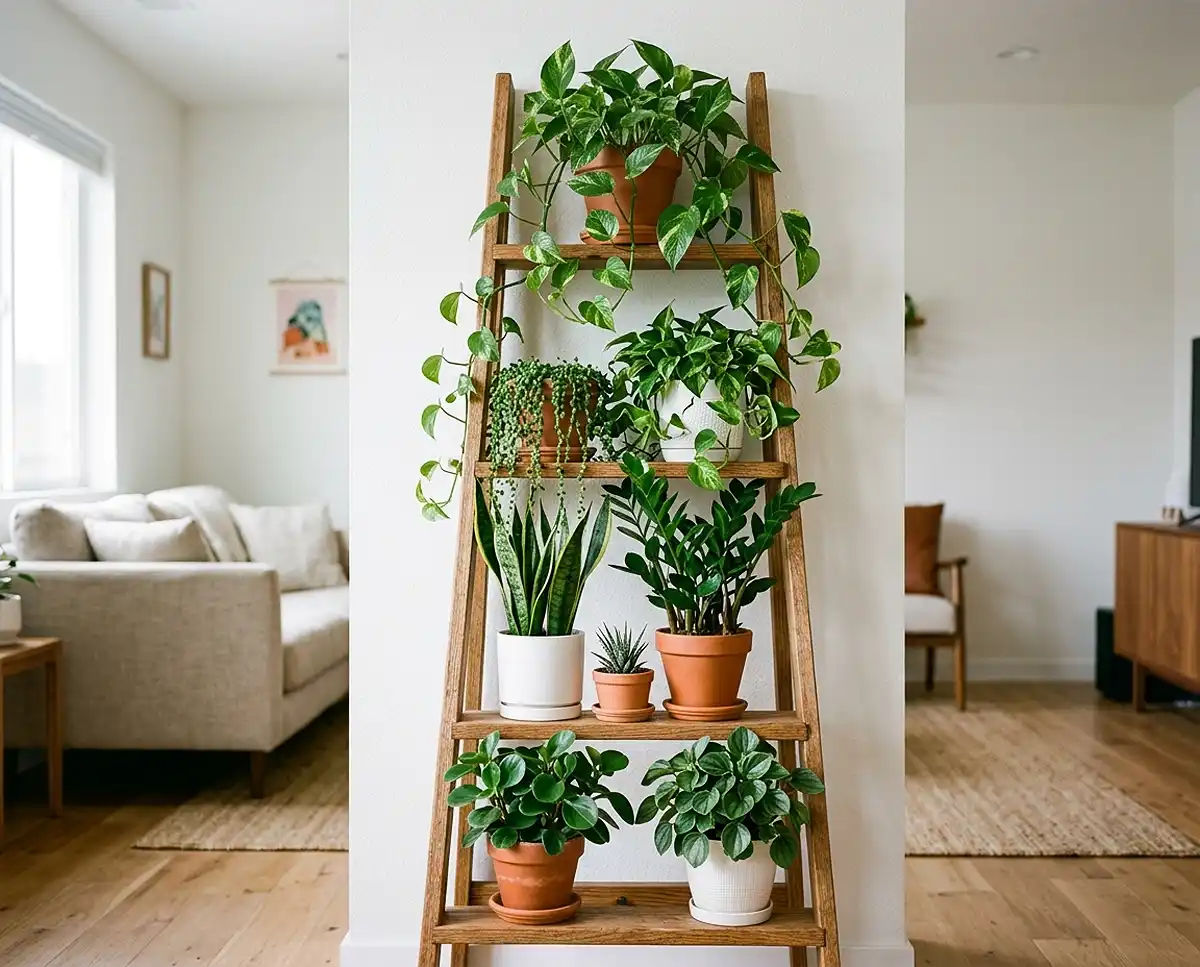
Vertical Garden Shelf Ideas
Looking for vertical garden shelf ideas that actually look styled? Here’s how to layer plants, mix textures, and turn any wall into a lush focal point — even on a tiny balcony or bare corner.
I’ve been styling plant shelves for over a decade across studio apartments, rentals, and one very windy rooftop. The tricks below are what actually works.
Table of Contents
Why a Vertical Garden Shelf Transforms Small Spaces
Quick Answer: A vertical garden shelf packs greenery upward instead of outward, freeing floor space while adding instant style. It turns blank walls into a living focal point — perfect for renters, balconies, and any room under 500 sq ft.
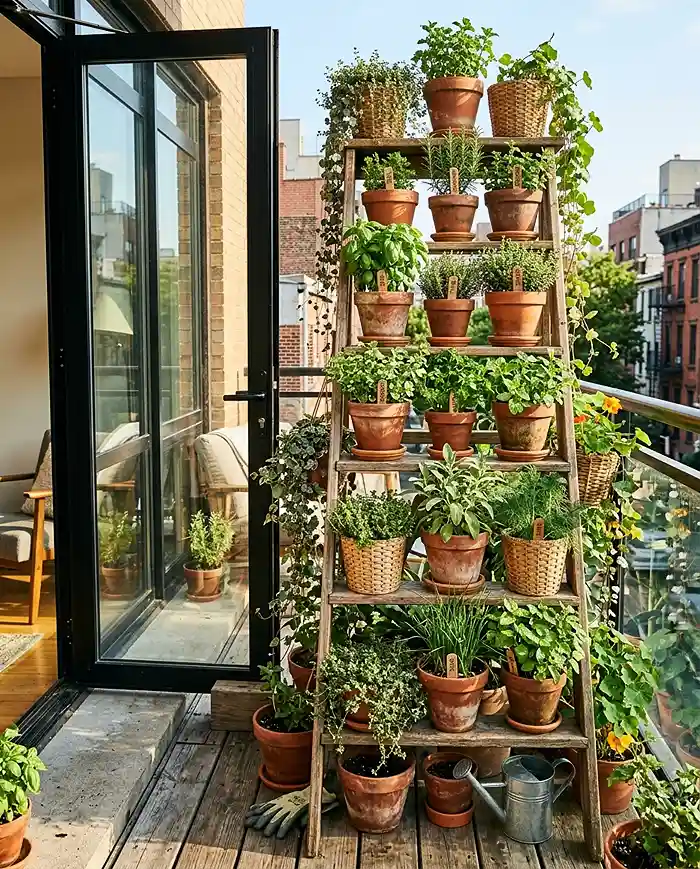
Vertical gardening is hands-down the best move for small space gardening. One 5-foot shelf can hold 12+ plants in roughly 2 square feet of floor space.
Here’s what a styled plant shelf does that scattered pots can’t:
- Creates a focal point — draws the eye up and makes ceilings feel taller
- Groups humidity-loving plants — clustered foliage raises local humidity 10-15%
- Doubles as decor — replaces the need for separate wall art
- Works anywhere — bathrooms, balconies, hallways, even rentals
Real Example: Last spring I added a 6-tier ladder shelf to my 4×8 balcony. I squeezed in 14 herbs and trailing plants where I previously had three sad pots on the floor.
Pro Tip: Place your shelf perpendicular to your strongest window — every plant gets at least partial light instead of one bright row and four shady ones.
Planning Your Vertical Garden Shelf
Quick Answer: Before you buy plants, lock in three things: shelf size, location light levels, and weight capacity. Skip this and you’ll end up with leggy plants, a wobbly unit, or both.
Most styling fails happen before a single plant goes on the shelf. Measure your wall, track light for two days, then shop.
Choosing the Right Shelf for Your Space and Light
Quick Answer: Match shelf material to location — metal and teak outdoors, wood or bamboo indoors. Size it to fit your wall with 6 inches of breathing room on each side.
| Shelf Type | Best For | Watch Out For |
|---|---|---|
| Ladder shelf | Bright corners, balconies | Tippy on uneven floors |
| Wall-mounted | Renters, narrow walls | Stud placement, weight limits |
| Etagere (open back) | Mid-light rooms | Lower shelves stay dim |
| Tiered plant stand | Bay windows, patios | Small footprint = fewer plants |
Pro Tip: Open-back shelves let light pass through to lower tiers — game-changing for shade-sensitive plants.
Assessing Weight Capacity and Stability
Quick Answer: A wet 6-inch terracotta pot weighs 5-7 pounds. Multiply by your pot count, then add 30% buffer. Anchor any shelf over 4 feet tall to a wall stud.
- Floor shelves: check the manufacturer’s per-shelf rating (usually 15-40 lbs)
- Wall shelves: use toggle bolts rated for 50+ lbs in drywall
- Balcony shelves: secure with bungee cord against wind gusts
Real Example: I once lost a whole shelf of succulents during a thunderstorm because I skipped the anchor strap. Lesson learned — now everything outdoors gets tied down.
Core Styling Principles for a Beautiful Plant Shelf
Quick Answer: Style your shelf like a still life — vary heights, repeat one element (color, pot, or plant), and leave breathing room. The rule of thirds and odd-numbered groupings do most of the heavy lifting.
The difference between a styled shelf and a plant graveyard? Editing. Most shelves look cluttered because every spot is filled equally.
Stick to these design rules and your shelf will look intentional, not chaotic.
Varying Heights, Textures, and Trailing Plants
Quick Answer: Mix three plant shapes on every shelf — upright (thrillers), mounding (fillers), and trailing (spillers). This layered triangle is the same formula florists use.
- Upright: snake plant, dracaena, ZZ plant — adds vertical drama
- Mounding: peperomia, calathea, small ferns — fills the middle
- Trailing: pothos, string of hearts, ivy — softens the edge
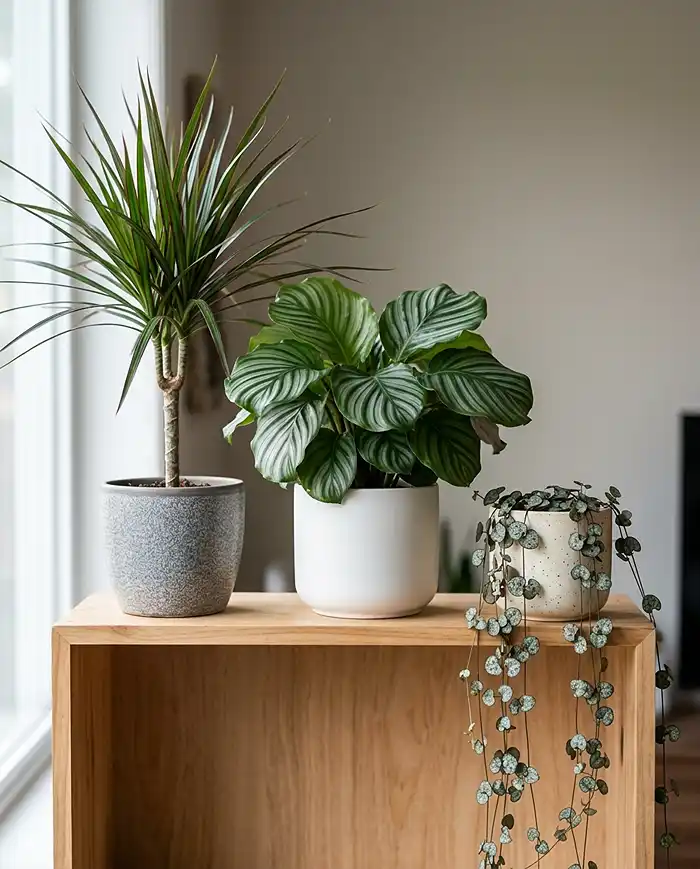
Pro Tip: Place trailers on the highest shelves so vines have room to cascade — a string of pearls dangling 3 feet is unbeatable.
The Rule of Thirds and Cohesive Containers
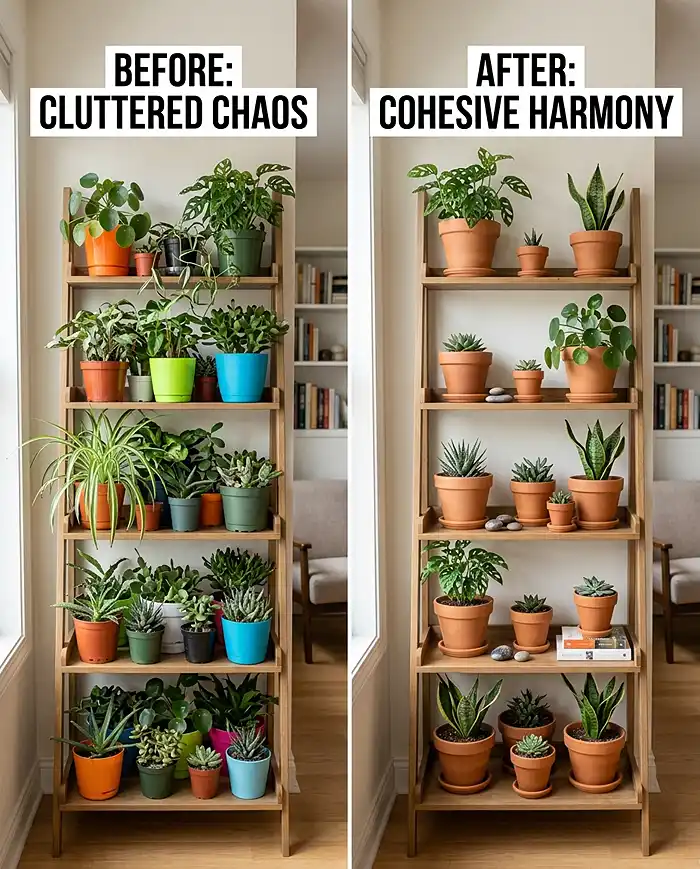
Quick Answer: Group plants in odd numbers (3 or 5), cluster on two-thirds of each shelf, and leave one-third empty. Stick to 2-3 pot colors max for a cohesive look.
I keep my entire collection in terracotta, white ceramic, and natural rattan. Plants change, the palette doesn’t.
Real Example: When I swapped 12 mismatched plastic pots for a unified terracotta set, my shelf went from “plant clutter” to “Pinterest-worthy” overnight.
Best Plants for a Vertical Garden Shelf
Quick Answer: Pick plants based on shelf position — trailers up top, compact uprights in the middle, shade-tolerant fillers down low. Match light needs to actual shelf brightness, not the room average.
The top shelf usually gets twice the light of the bottom shelf. Plan accordingly.
Trailing and Cascading Plants for Lower Shelves
Quick Answer: Trailing plants look best on top or middle shelves where vines have space to drape. Reserve true spillers like pothos and string of pearls for spots with at least 18 inches of clearance below.
| Plant | Light | Vine Length |
|---|---|---|
| Golden pothos | Low to bright indirect | 6-10 ft |
| String of pearls | Bright indirect | 2-3 ft |
| English ivy | Medium indirect | 4-8 ft |
| Heartleaf philodendron | Low to medium | 4-6 ft |
Pro Tip: Wipe trailing leaves monthly — dust on vines is way more visible at eye level.
Compact and Upright Plants for Tight Shelves
Quick Answer: For shelves with under 12 inches of vertical clearance, pick plants that stay under 10 inches tall and grow slowly. Compact varieties keep things tidy without constant pruning.
- Haworthia — 4-6 inches, loves bright light
- Peperomia obtusifolia — 8 inches, low-light tolerant
- Air plants (Tillandsia) — no soil, no pot, totally flexible
- Mini snake plant — under 10 inches, nearly unkillable
If you want more bulletproof picks, check out my list of low-maintenance balcony plants that handle neglect like champs.
Styling by Shelf Type and Location
Quick Answer: Indoor shelves prioritize drainage saucers and rotation; outdoor shelves prioritize weatherproof materials and wind anchoring. Adjust your styling — and plant picks — to match.
A balcony vertical garden has totally different needs than a living room shelf. Don’t copy-paste your strategy.
Indoor vs. Outdoor Shelf Considerations
Quick Answer: Indoors, protect floors with saucers and use lightweight ceramic. Outdoors, use UV-stable pots, ensure full drainage, and pick wind-tolerant plants on upper tiers.
| Factor | Indoor Shelf | Outdoor Shelf |
|---|---|---|
| Pots | Glazed ceramic, no holes okay with liner | Drainage holes required |
| Material | Wood, bamboo, MDF | Powder-coated metal, teak, cedar |
| Watering | Saucers mandatory | Let drain freely |
| Top shelf risk | Light bleaching | Wind, hail, sun scorch |
For balcony-specific setups, my guide to balcony railing planter ideas pairs perfectly with a vertical shelf for layered depth.
Tools and Materials Checklist
Grab these before you start styling so you’re not running back and forth:
- Vertical shelf (sized for your space)
- Pots in 2-3 cohesive colors with drainage holes
- Saucers or cork pads for every pot
- Plant liners or plastic trays (indoor only)
- Wall anchors or anti-tip straps
- Watering can with narrow spout (under 1L)
- Soft microfiber cloth for leaves
- Decorative accents: 2-3 small objects max
Step-by-Step: Styling Your Vertical Garden Shelf
Quick Answer: Start with your biggest “anchor” plant, layer in mid-sized fillers, finish with trailers, then edit ruthlessly. Step back every two plants to check balance.
- Place anchor plants first — your biggest 2-3 plants on opposite shelves, never side by side
- Add mid-height fillers — round, mounding plants soften the gaps
- Drape trailers from top tiers — let vines hang naturally, don’t tuck them in
- Step back 6 feet and squint — if one spot looks dense, remove a plant
- Add one or two accents — a small book or stone, never more
- Photograph it — the camera spots imbalance your eye misses
For inexpensive starter pieces, my budget small-space garden ideas roundup has shelves and pots under $30.
Adding Decorative Accents Without Clutter
Quick Answer: Limit non-plant objects to one accent per shelf, max three across the whole unit. Stick to natural materials — wood, stone, ceramic — that echo your pot palette.
- One small stack of books (max 3 books)
- A single river stone or geode
- A tiny watering can or brass mister
Pro Tip: If you can’t immediately name a reason for an object being there, it’s clutter — remove it.
Caring for Plants on a Vertical Shelf
Quick Answer: Water bottom-up when possible, rotate plants every 2 weeks, and check moisture levels weekly. Vertical shelves dry out top-down — upper plants need water more often.
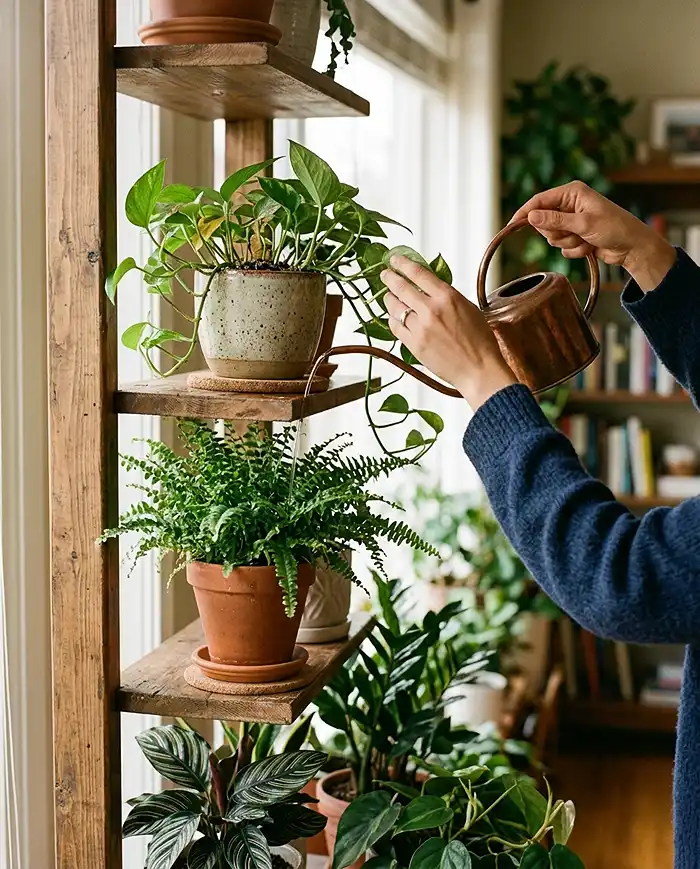
The top shelf bakes, the bottom shelf stagnates. Treat each tier like its own micro-climate.
- Watering: use a narrow-spout can or pull pots to the sink
- Rotation: turn every plant a quarter-turn every two weeks for even growth
- Drainage: double-pot indoors so excess water never touches your shelf
- Humidity: group plants closely and mist mid-shelf weekly
Real Example: My pothos on the top shelf needs water every 5 days; the identical pothos on the bottom shelf goes 10 days between waterings.
Seasonal Refresh and Restyling Tips
Quick Answer: Refresh your shelf every season — swap in seasonal blooms, rotate plants based on shifting light, and update accents. A 15-minute restyle keeps the display from feeling stale.
- Spring: add a flowering primrose or kalanchoe for color
- Summer: move sun-lovers like succulents to the brightest tier
- Fall: swap in dried grasses or a small ornamental pepper
- Winter: bring in a paperwhite or amaryllis bulb for indoor blooms
Want a fruity twist? A vertical strawberry planter next to your shelf adds edible summer color.
Common Problems and Solutions
Shelf Looking Cluttered or Unbalanced
Quick Answer: Remove a third of your plants. Seriously. Most shelves are 30% over-planted. Apply the rule of thirds and let one-third of each shelf stay empty.
Group your remaining plants in odd numbers and vary heights. Negative space is a styling element, not a flaw.
Lower Plants Not Getting Enough Light
Quick Answer: Rotate top and bottom plants monthly so no one gets stuck in the dark, or dedicate lower shelves to shade-tolerant picks like pothos, ferns, and ZZ plants.
You can also add a 9-watt LED grow bulb in a clamp lamp — most run quietly and cost under $20. The Old Farmer’s Almanac grow light guide breaks down what works.
Water Dripping or Damaging Shelves
Quick Answer: Use saucers under every pot, line shelves with cork or felt pads, and water in the sink when possible. Never set a freshly watered pot directly on wood.
Frequently Asked Questions
How do I style a vertical plant shelf?
Start with one anchor plant per shelf, then layer mid-height fillers and trailing plants for depth. Stick to 2-3 pot colors, use odd-numbered groupings, and leave one-third of each shelf empty. Step back and edit until it feels intentional, not crowded.
What plants are best for a plant shelf?
Trailing plants like pothos and string of pearls suit upper shelves. Compact plants like peperomia, haworthia, and mini snake plants fit tight spots. For low-light bottom shelves, pick ZZ plants, ferns, or heartleaf philodendron.
How do I water plants on a shelf without making a mess?
Use a narrow-spout watering can, add saucers under every pot, and line shelves with cork pads. For deep watering, pull pots off the shelf and water them in the sink, then let drain fully before replacing.
How do I keep my plant shelf from looking cluttered?
Remove about a third of your plants, group remaining ones in odd numbers, and stick to a tight pot palette. Limit decorative accents to one or two per unit, and always leave breathing room on each shelf.
Can I put a vertical garden shelf on a small balcony?
Absolutely — a vertical shelf is ideal for balcony vertical garden setups. Pick weatherproof materials like teak or powder-coated metal, anchor against wind, and use pots with drainage holes plus saucers to protect the floor below.
Key Takeaways
- The best vertical garden shelf ideas mix three plant shapes — uprights, mounders, and trailers — for depth and movement
- Cohesive pots beat fancy plants — stick to 2-3 colors and let foliage do the talking
- Light drops fast top to bottom — match plants to actual shelf brightness, not room average
- Edit ruthlessly — leave one-third of each shelf empty for a styled, not cluttered, look
- Refresh seasonally — small swaps keep the display feeling alive year-round