
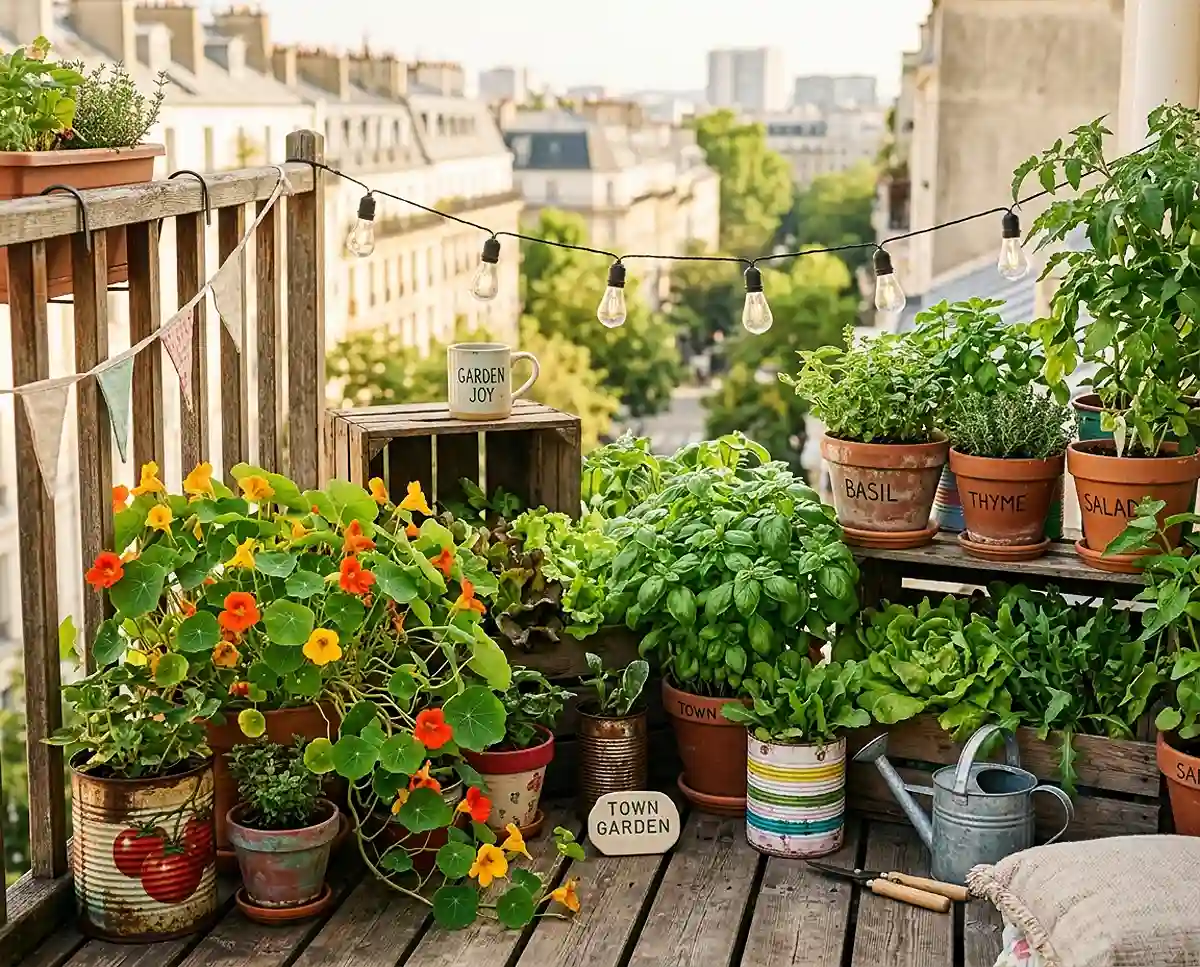
Budget Ideas for Small Space Garden
You don’t need deep pockets to grow a beautiful garden. The best budget ideas for small space garden setups focus on smart swaps, free plants, and upcycled containers that look intentional, not cheap.
If you’ve been putting off small space gardening because of cost, this guide will change that. We’re covering everything from free pots to DIY soil — so you can grow more and spend less.
Table of Contents
Gardening on a Budget in Small Spaces
Small gardens have a natural advantage: less space means less stuff to buy. A 6-foot balcony or a sunny windowsill is all you need to grow herbs, flowers, and even vegetables.
The key to urban gardening on a budget is knowing where to spend and where to skip. Soil quality matters. Fancy pots don’t.
In this guide you’ll find practical tiny garden ideas that cut costs at every stage — from planning and containers to plants and ongoing care. No filler, just what actually works.
Plan Smart to Save Money From the Start
Quick Answer: Planning before you buy prevents the #1 budget killer — impulse purchases that don’t suit your space or light conditions.
Most overspending in small space gardening happens in the first week. You walk into a garden centre excited and walk out with plants that won’t survive your conditions.
Before spending a cent, assess your light. South-facing? You can grow almost anything. North-facing? Stick to shade lovers like ferns, mint, and hostas. Matching plants to conditions means fewer failures and fewer replacements.
Pro Tip: Take photos of your space at 9am, 12pm, and 4pm on a clear day — this tells you exactly how many hours of direct sun you’re working with.
Assessing What You Already Have
Quick Answer: Walk your home before buying anything. You’ve almost certainly got usable containers, tools, and materials already.
Before spending on new gear, do a quick audit:
- Old colanders and metal buckets make excellent drainage-ready planters
- Wooden crates or wine boxes work perfectly for herbs when lined with landscape fabric
- Broken terracotta pots can be repurposed as drainage crocks at the base of other containers
- Kitchen scissors double as harvest snips for herbs and greens
I found an old galvanised wash tub in my shed last spring. Drilled six holes in the base, filled it with potting mix, and planted trailing nasturtiums and basil. It looked intentional and cost nothing.
Pro Tip: Check your kitchen for unused mason jars — they’re perfect for growing spring onions and herbs on a sunny windowsill.
Setting a Realistic Budget and Priorities
Quick Answer: Spend on soil and seeds. Save on containers and decor. That split makes the biggest difference to your garden’s success.
| Category | Worth Spending On | Safe to Go Cheap |
|---|---|---|
| Soil | Good quality potting mix | Decorative top dressing |
| Plants | One or two statement plants | Everything else — grow from seed |
| Containers | Drainage trays (prevents mess) | The pots themselves — upcycle |
| Tools | A good trowel and watering can | Fancy branded accessories |
Real Example: I set a firm £40 budget for my balcony one year. I spent £18 on quality potting mix, £6 on seeds, and used the rest for one trailing fuchsia as a focal point. That balcony looked full and lush all summer.
Cheap and Creative Container Ideas
Quick Answer: The container just needs to hold soil and have drainage — anything else is a bonus.
Container costs add up fast if you buy new. But urban gardening has a long tradition of creative repurposing. Some of the best-looking tiny garden ideas use materials that cost nothing.
The only real requirement for a plant container is a hole (or the ability to make one) and enough depth for the root system. Most herbs need 15–20cm depth. Tomatoes need 30–40cm. Lettuce can get away with just 10cm.
Upcycled and Repurposed Containers
Quick Answer: Tin cans, wooden pallets, old boots, colanders — almost anything can become a planter with a few drainage holes.
- Tin cans: Use a hammer and nail to punch drainage holes. Great for herbs and succulents.
- Plastic buckets: Drill 6–8 holes in the base. Deep enough for tomatoes or peppers.
- Wooden wine crates: Line with hessian or plastic with drainage cuts. Perfect for salad leaves.
- Old wellies or boots: Quirky and charming. Works well for trailing plants or annuals.
- Colanders: Already have drainage built in. Ideal for strawberries or herbs.
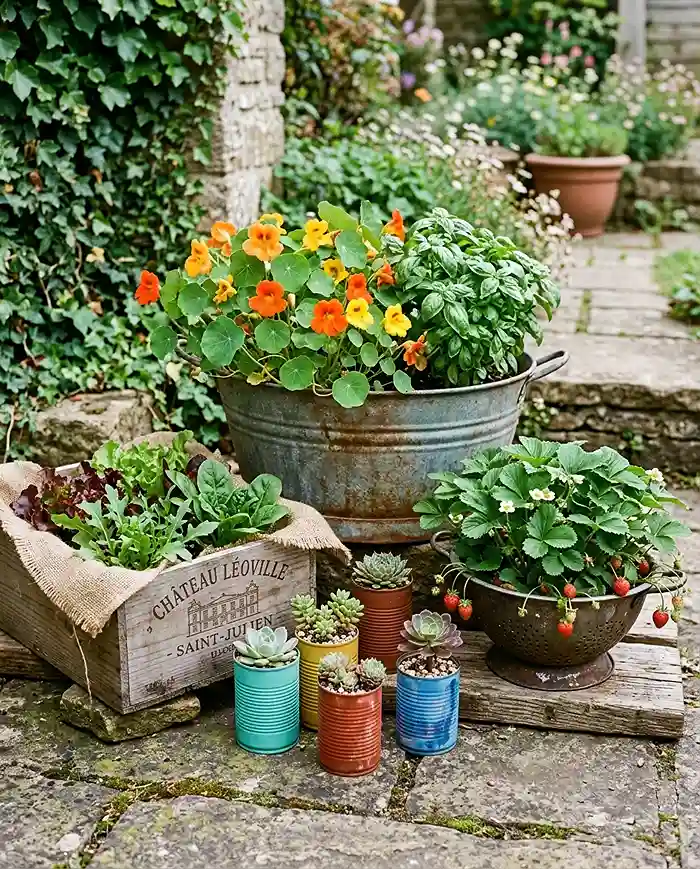
I once grew the best cherry tomatoes of my life in a black plastic builder’s bucket. £1 from a hardware store. The dark colour absorbed heat and the plants loved it.
Pro Tip: Paint upcycled tin cans with chalk paint for a cohesive look — it ties mismatched containers together beautifully.
Where to Find Free or Cheap Pots
Quick Answer: Free containers are everywhere if you know where to look — neighbours, online marketplaces, and local community groups are your best sources.
- Facebook Marketplace / Freecycle: Search “plant pots free” and you’ll usually find collections within a mile or two.
- Garden centre skips: Many centres discard cracked or chipped pots — just ask if you can take them.
- Nextdoor app: Neighbours clearing out sheds will often give away old containers for free.
- Community plant swaps: Bring a plant, take a pot (or vice versa).
- Charity shops / car boot sales: Ceramic and terracotta pots often sell for 50p–£2.
Pro Tip: Always wash secondhand pots with a diluted bleach solution (1 part bleach to 9 parts water) before use to prevent spreading soil-borne diseases.
Growing Plants for Less Money
The biggest cost in any budget ideas for small space garden plan is usually the plants themselves. But there are two ways to almost eliminate that cost: grow from seed and propagate from what you already have.
A single packet of basil seeds costs around £1.50 and contains 200+ seeds. One basil plant at a garden centre costs £2–3. The maths are obvious.
Check out our guide to common small space gardening mistakes to avoid wasting money on the wrong plants from the start.
Growing From Seed Instead of Buying Plants
Quick Answer: Seeds cost a fraction of plug plants and give you far more control. Start with easy varieties and build confidence.
| Plant | Ease of Seed Growing | Time to Harvest | Cost Saving vs. Buying |
|---|---|---|---|
| Radishes | Very easy | 25–30 days | High |
| Salad leaves | Very easy | 3–4 weeks | High |
| Basil | Easy | 6–8 weeks | Very high |
| Nasturtiums | Very easy | 8 weeks to flower | High |
| Courgette | Easy | 8–10 weeks | Very high |
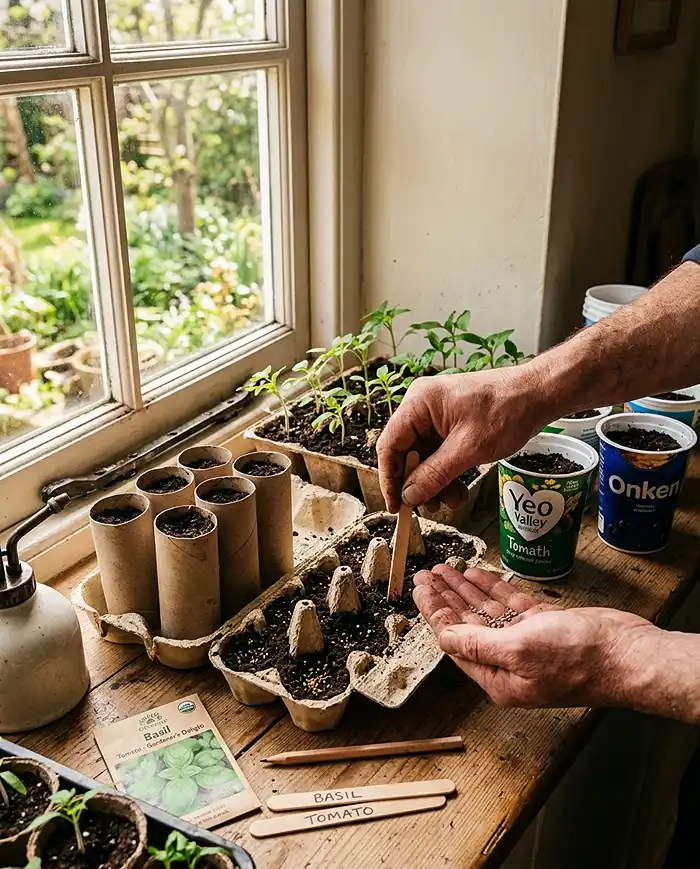
Use egg cartons, toilet roll tubes, or yoghurt pots as seed trays. No need to buy dedicated modules when starting out.
Pro Tip: Sow seeds in batches 2 weeks apart (called succession sowing) so you have continuous harvests instead of a glut all at once.
Propagating and Splitting Plants for Free
Quick Answer: Taking cuttings or dividing existing plants is the most cost-effective way to multiply your garden. One plant becomes five — for free.
- Stem cuttings: Mint, rosemary, lavender, and pelargoniums root easily in water or damp compost.
- Division: Perennials like hostas, sedums, and ornamental grasses can be split in spring or autumn.
- Offsets: Many succulents produce baby plants (offsets) around their base — just detach and pot up.
- Plant swaps: Trade cuttings with neighbours or join local gardening groups on Facebook.
Last autumn I divided a single hosta into four clumps. Each one is now a full-sized plant. That’s a £30 saving compared to buying four hostas from a nursery.
Pro Tip: Mint is so vigorous you can snap off a stem, drop it in a glass of water on a windowsill, and it’ll have roots within a week.
Budget-Friendly Soil and Fertilizer Hacks
Quick Answer: Good soil matters more than any other purchase. But you can stretch it further and feed plants for free with simple DIY methods.
Bags of premium compost get expensive fast, especially in small space gardening where you’re filling multiple containers. The trick is to bulk up your mix affordably.
- Mix 1 part sand or perlite into every 3 parts potting mix to improve drainage and make bags go further
- Add a handful of garden compost or well-rotted manure to each pot before planting
- Reuse potting mix year to year by refreshing with compost — don’t replace it entirely
For fertiliser, skip the expensive bottles. Liquid feeds made from kitchen scraps work just as well.
DIY Compost and Homemade Fertilizers
Quick Answer: Compost tea, banana peel fertiliser, and nettle feed are free, effective, and easy to make at home.
- Banana peel fertiliser: Soak 2–3 peels in 1 litre of water for 48 hours. Use the liquid to water plants — it’s rich in potassium, which boosts flowering.
- Nettle tea: Pack a bucket with nettles, cover with water, and leave for 2 weeks. Dilute 1:10 with water before using. Excellent nitrogen source for leafy plants.
- Compost tea: Add a handful of finished compost to a watering can, stir, and water plants with the liquid. Quick nutrient boost.
- Coffee grounds: Sprinkle around acid-loving plants like blueberries or hydrangeas as a slow-release feed.
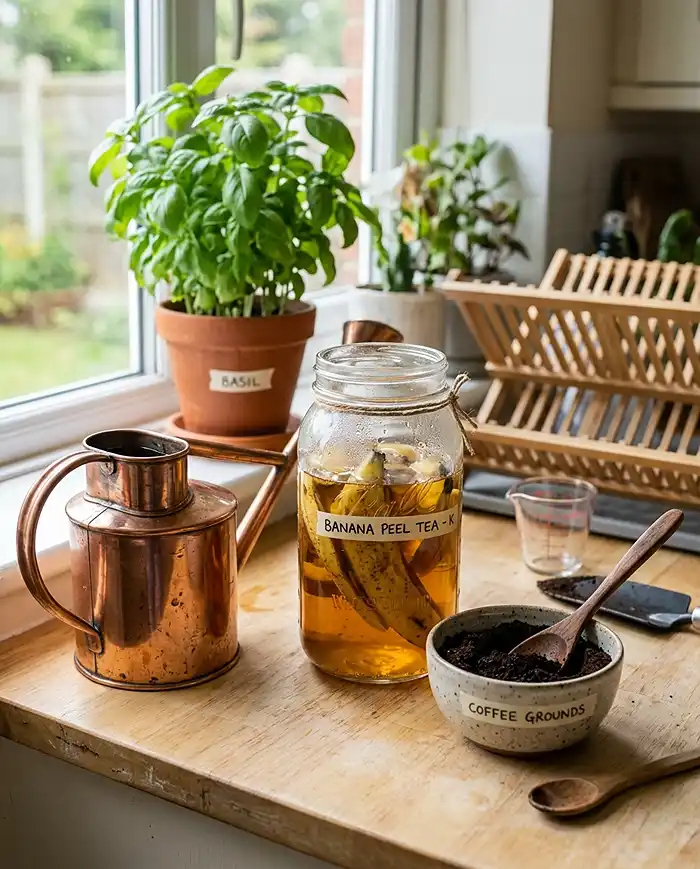
The Royal Horticultural Society’s guide to home composting is an excellent free resource if you want to set up a small compost system, even on a balcony.
Pro Tip: Even a small worm bin on a balcony produces incredibly rich liquid fertiliser — worm castings are more nutrient-dense than most store-bought feeds.
Affordable Vertical and Space-Saving Solutions
Quick Answer: Growing upwards is the best way to multiply your planting area without spending much. Pallets, hanging bottles, and tension rods all cost next to nothing.
Vertical growing is the cornerstone of good urban gardening — it lets you grow two or three times as much in the same footprint. And you don’t need expensive wall planters to do it.
- Wooden pallets: Sand, seal, line the back with landscaping fabric, and fill with compost. Lean against a wall and plant directly. Great for strawberries and herbs.
- Hanging plastic bottles: Cut a window in one side, fill with soil, and hang with wire. Cheap, lightweight, and surprisingly effective for herbs or lettuces.
- Tension rods and S-hooks: Run a tension rod across a balcony frame. Hang small pots using S-hooks. No drilling required.
- Trellis from bamboo canes: Lash bamboo canes together with twine to make a trellis for climbing beans, peas, or cucumbers.
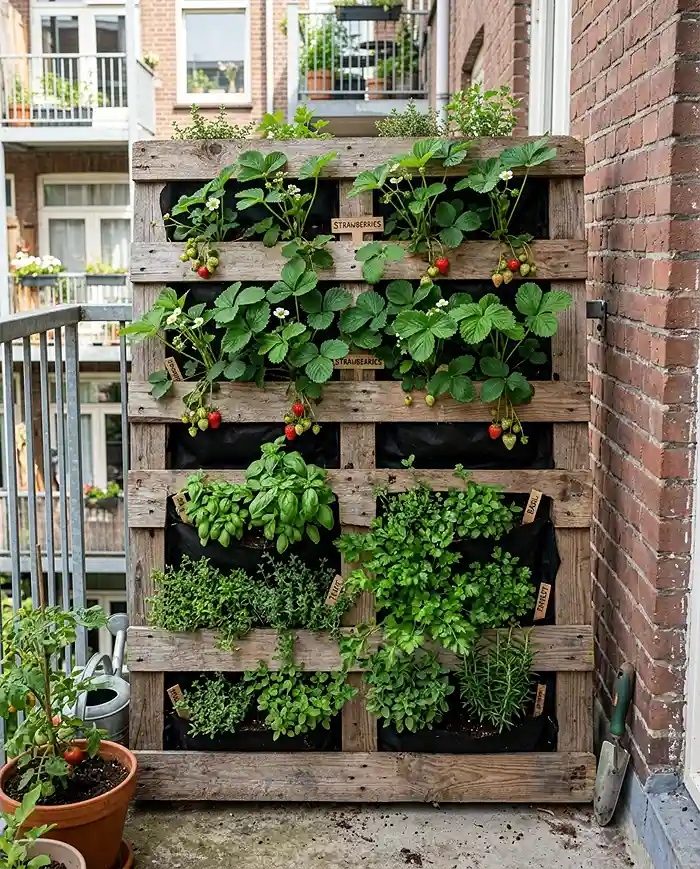
Our vertical strawberry planter guide walks you through exactly how to build one from a pallet for under £5.
Pro Tip: Always anchor vertical structures to a wall or railing — even a light pallet filled with soil gets surprisingly heavy when wet.
Tools and Materials Checklist
Quick Answer: You need far fewer tools than you think. Here’s the honest list of what’s worth buying and what to skip.
Worth buying (budget versions are fine):
- Hand trowel — essential for planting and repotting
- Watering can with a rose (diffuser) head — gentle for seedlings
- Hand fork — for loosening soil in containers
- Gloves — protects hands, improves grip
- Plant labels and a permanent marker — easy to overlook, always regretted when missing
Safe to skip or improvise:
- Dedicated seed trays — use egg boxes or yoghurt pots
- Expensive kneeling pads — fold an old towel
- Branded fertiliser — use homemade alternatives
- Gadget thermometers and moisture meters — use your finger
Decorating Your Garden on a Budget
Quick Answer: The best-looking budget gardens use consistency and colour, not expensive decor. Pick a two-tone palette and stick to it.
The cheapest styling upgrade for any tiny garden ideas project is paint. A tin of chalk spray paint costs about £5 and transforms mismatched containers into a cohesive set.
- Thrifted lanterns and candleholders: Add warmth and atmosphere for £1–2 from charity shops.
- DIY string lights: Solar-powered fairy lights from pound shops or discount stores. No wiring needed.
- Painted pebbles or stones: Free from a beach or park. Paint white for a clean, modern look.
- Repurposed furniture: An old step ladder makes a brilliant tiered plant stand.
For more design inspiration specifically built around small outdoor spaces, the minimalist balcony garden guide is worth a read.
Real Example: I painted six tin cans and three old terracotta pots the same matte sage green last summer. The whole balcony looked like a styled photoshoot. Total cost: one can of spray paint.
Pro Tip: Odd numbers of pots grouped together (3, 5, 7) always look more natural and intentional than symmetrical pairs.
Money-Saving Maintenance Tips
Quick Answer: The biggest ongoing costs in a container garden are water and replacement plants. Both are easy to reduce with a few simple habits.
- Mulch container surfaces: A thin layer of wood chip, gravel, or even torn-up cardboard slows moisture evaporation and reduces watering frequency.
- Water in the morning: Less evaporation than midday watering — plants get more of what you give them.
- Use saucers under pots: Catches overflow and lets plants absorb water from below during dry spells.
- Deadhead regularly: Removing spent flowers (deadheading) keeps plants producing more blooms for longer — extending the season without spending more.
- Save seeds: Let one or two plants bolt (go to seed) at the end of the season. Collect and dry the seeds for next year — basil, nasturtiums, and peas work brilliantly.
The University of Minnesota Extension’s container gardening resource has excellent free advice on watering and maintenance best practices.
Pro Tip: Group pots together during hot weather — they create a microclimate that retains humidity and reduces how often each plant needs watering.
Common Problems and Solutions
Cheap Containers Lacking Drainage
Quick Answer: Almost any container can be given drainage with the right tool. Don’t let a lack of holes stop you from using a great upcycled pot.
For metal cans and plastic buckets, use a hammer and a nail or a cordless drill with a 6–8mm bit. Make 6–10 holes across the base — more is better than fewer.
For ceramic or terracotta, use a masonry drill bit and apply gentle, steady pressure. Keep the surface wet while drilling to prevent cracking.
If drilling isn’t an option (say, on a rented balcony where you can’t make marks), use the container as a cachepot — place a draining inner pot inside and remove it to water.
Pro Tip: Add a layer of broken crocks or gravel at the base before filling with soil to prevent drainage holes from clogging.
Seeds Not Germinating
Quick Answer: Most germination failures come down to three things — wrong temperature, inconsistent moisture, or sowing too deep.
- Temperature: Most vegetable seeds germinate best at 18–22°C. A warm windowsill or airing cupboard works. Move to light as soon as they sprout.
- Moisture: Compost should feel like a wrung-out sponge. Too wet causes rot; too dry stops germination entirely.
- Depth: A good rule is to sow seeds at twice their own diameter. Very small seeds (like basil) are often just pressed onto the surface.
Pro Tip: Cover seed trays with a clear plastic bag or cling film until germination — it holds moisture and warmth without watering.
Plants Outgrowing Free or Small Pots
Quick Answer: Roots circling the drainage holes or plants wilting despite regular watering are signs it’s time to upsize.
Move plants up one container size at a time — jumping to a much larger pot can actually slow growth. When upsizing, use the opportunity to refresh the soil.
Cheap upsizing options include larger plastic buckets, fabric grow bags (very affordable online), or the wooden crate planters mentioned earlier.
Pro Tip: Fabric grow bags are often cheaper than rigid pots and actually produce healthier root systems through a process called air pruning.
Frequently Asked Questions
How can I start a garden cheaply?
Start with seeds instead of plants, use upcycled containers from around your home, and make your own compost or liquid fertiliser from kitchen scraps. Focus spending on good quality potting mix — everything else can be sourced for free or very cheaply through community swaps, charity shops, and online freecycle groups.
What can I use instead of expensive plant pots?
Tin cans, plastic buckets, wooden crates, old colanders, and even worn-out wellies all make excellent planters. The only requirement is drainage — drill or punch holes in the base. Check Facebook Marketplace, Freecycle, and your local Nextdoor app for free or very cheap secondhand pots.
What are the cheapest plants to grow in a small garden?
Radishes, salad leaves, nasturtiums, and basil are among the easiest and cheapest to grow from seed. Mint, rosemary, and pelargoniums propagate effortlessly from cuttings. Community plant swaps are also a great source of free perennials and shrubs that divide well.
How do I make cheap soil for my container garden?
Stretch premium potting mix by blending it with perlite or sharp sand (roughly 3:1 ratio). Top up existing compost rather than replacing it each year. Add homemade compost or well-rotted manure to boost nutrients without spending on fertiliser.
How do I water a small garden without wasting money?
Water in the morning to reduce evaporation, group pots together to retain humidity, and mulch container surfaces to slow moisture loss. Use saucers under pots to catch overflow — plants absorb water from below during dry spells, making every drop count.
Key Takeaways
- The best budget ideas for small space garden projects start with assessing what you already have — upcycled containers and repurposed tools cut costs before you spend a penny.
- Seeds cost a fraction of plug plants. Start with easy varieties like radishes, salad leaves, and basil for fast, cheap results.
- Good potting mix is worth paying for — stretch it with perlite and refresh annually rather than replacing it entirely.
- Vertical growing using pallets, hanging bottles, and tension rods doubles your planting area without doubling your budget.
- Free fertiliser from kitchen scraps (banana peels, nettles, compost tea) works just as well as expensive store-bought feeds for most container plants.