

Potting Mix vs Garden Soil
Potting mix vs garden soil — one quietly kills your plants, the other helps them thrive. Learn the science, recipes & pro fixes inside. Read now →
Here’s a confession: I once killed twelve beautiful tomato seedlings in a single weekend by scooping dirt straight from my backyard into pretty terracotta pots. They looked great for about a week. Then they sulked, yellowed, and gave up entirely.
That painful (and expensive) lesson is what this whole Potting Mix vs Garden Soil debate comes down to. After fifteen years of growing things in containers, raised beds, and the ground, I want to save you from making the same mistake I did.
Let’s get into it.
Quick Verdict (The 30-Second Answer)
If you’re in a rush, here’s the cheat sheet:
- Never dump 100% garden soil into a container. Just don’t.
- The best soil for containers is a proper potting mix — store-bought or homemade.
- Garden soil belongs in the ground or in raised beds, and even then, it usually wants some help.
Stick with those three rules and you’re already ahead of most beginners.
Potting Mix vs Garden Soil: The Real Comparison
Both bags say “soil” on them, but trust me, they’re about as similar as flour and concrete mix. Here’s how they actually stack up.
Key Differences at a Glance
| Feature | Potting Mix | Garden Soil |
|---|---|---|
| Structure | Light, fluffy, soilless | Dense, mineral-heavy |
| Drainage & aeration | Excellent | Awful in pots |
| Nutrients | Low–moderate (often added) | Naturally rich, but variable |
| Weight | Feather-light when dry | Heavy, especially wet |
| Sterility | Pasteurized, clean | Hidden weeds, bugs, pathogens |
| Cost | $$ – $$$ | Cheap or free |
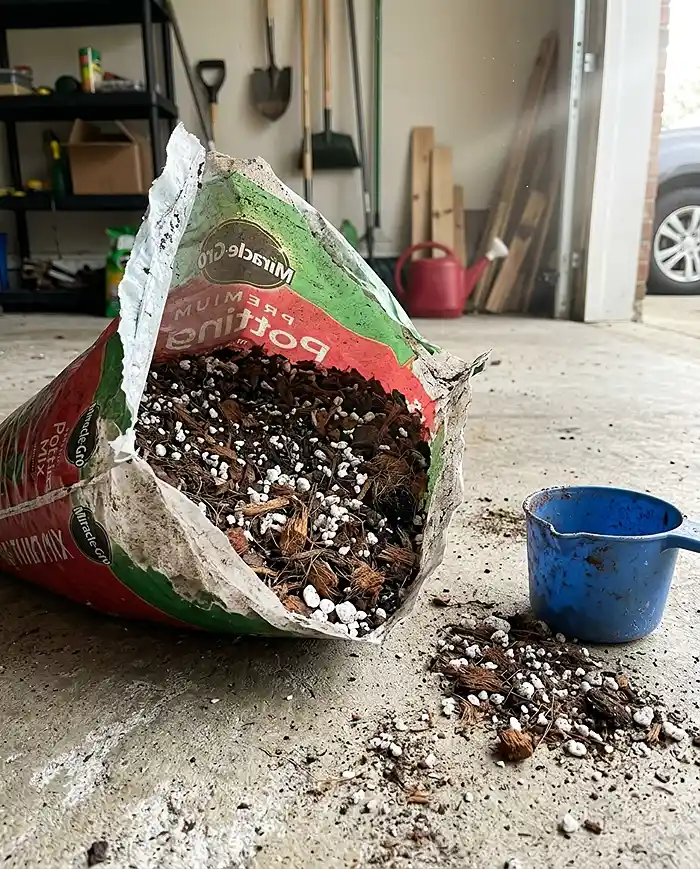
Why I Love Potting Mix (and Where It Falls Short)
The good stuff:
- Drains like a dream and lets roots actually breathe
- Light enough that your balcony won’t groan under the weight
- Sterile, so no surprise weeds popping up like uninvited guests
- Built specifically for life in a pot
The not-so-good:
- It’s pricey, especially the organic blends
- Dries out faster than you’d expect (hello, daily watering)
- Runs out of nutrients quickly, so you’ll need to feed your plants
Where Garden Soil Shines (and Where It Bombs)
The good:
- Free if you’ve got a yard
- Packed with natural minerals and microbes
- Brilliant for in-ground beds where it can do its thing
The bad:
- Turns into a brick inside a pot
- Drains poorly and rots roots fast
- Smuggles in weed seeds, bugs, and fungal diseases
- Ridiculously heavy for anything off the ground
The Real Cost (Spoiler: Cheap Isn’t Cheap)
A 20-quart bag of decent potting mix runs $15–$25. Bagged garden soil is $4–$8, and digging from your yard is free.
But here’s the thing nobody tells you: garden soil in containers fails roughly 80% of the time for vegetables. A dead tomato plant costs you the seedling, the fertilizer, the pot space, and a whole season of waiting. So that “free” dirt? It’s the most expensive option on the list.
Why Garden Soil Crashes and Burns in Containers
This isn’t gardener superstition. There’s actual science behind why your backyard dirt kills container plants.
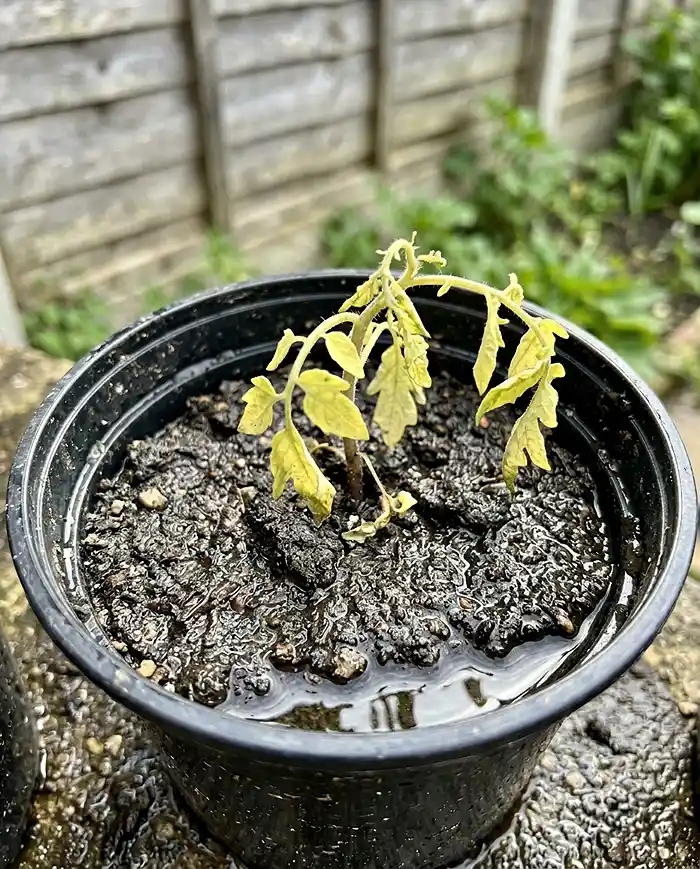
The Perched Water Table Problem
Every pot has something called a perched water table — basically a soggy zone of trapped water that sits at the bottom, held there by capillary action wherever soil meets air.
In a coarse potting mix, that wet zone is maybe an inch thick. In dense garden soil, it can swallow half your pot. Roots stuck in that swamp can’t get oxygen, and they drown.
This is why drilling more drainage holes won’t save you. Physics doesn’t care about your power drill. (If you want a deeper rabbit hole on this, Oregon State University Extension has a great breakdown of container drainage science.)
Bulk Density vs Porosity
Garden soil is heavy and packed tight, with hardly any pore space once it’s wet.
Potting mix is the opposite — light, fluffy, and full of tiny air pockets between the peat, coir, and perlite. Those pockets let roots breathe, and breathing roots are happy roots.
What’s Actually Inside a Bag of Potting Mix?
Once you can read an ingredient list, you can shop smarter (or skip the store entirely and DIY).
Peat Moss vs Coconut Coir
Both hold water beautifully, but they’re not interchangeable.
Peat moss is acidic (pH 3.5–4.5), holds moisture for ages, and has been the industry standard forever. The catch? Peat bogs are slow-growing carbon sinks, so harvesting them isn’t exactly eco-friendly.
Coconut coir is pH-neutral, rewets easily after drying out, and is a leftover from the coconut industry. I switched to coir years ago and honestly haven’t looked back.
Perlite vs Vermiculite
| Ingredient | Job | Best For |
|---|---|---|
| Perlite | Drainage and air | Most plants, herbs, succulents |
| Vermiculite | Holds moisture and nutrients | Seed starting, thirsty plants |
Perlite looks like little white styrofoam balls (it’s actually volcanic glass — neat, right?). Vermiculite has shiny, accordion-like flakes. Most quality mixes lean on perlite as the main aerator.
Sterility Is a Bigger Deal Than You Think
Commercial potting mix gets heat-pasteurized, which knocks out fungal spores, weed seeds, and insect eggs.
Garden soil? It can introduce damping-off disease, a fungal nightmare that wipes out seedlings literally overnight. I lost 72 pepper seedlings to it about a decade ago. Once was enough.
The Hybrid Sweet Spot: Best Soil for Raised Beds
Raised beds are where garden soil finally gets to play nicely with potting mix.
My Go-To Raised Bed Soil Mix Recipe (the 50/50 Rule)
For raised beds 12 inches or deeper, here’s my raised bed soil mix recipe:
- 50% screened topsoil or quality garden soil
- 30% finished compost
- 20% coarse perlite or coco coir
You get the microbial richness of real soil with the airy structure plants crave.
Budget Hack: Layer Like a Pro
For deep beds, borrow from hugelkultur and save serious cash:
- Bottom: rotting logs, branches, woody scraps
- Middle: leaves, grass clippings, kitchen scraps
- Top 12 inches: your 50/50 hybrid mix
Those bottom layers slowly decompose and feed your plants for years. Less soil to buy, better drainage, happy plants.
DIY Container Soil Recipes Worth Bookmarking
Once you’ve blown through a few premium bags, mixing your own starts looking very attractive.
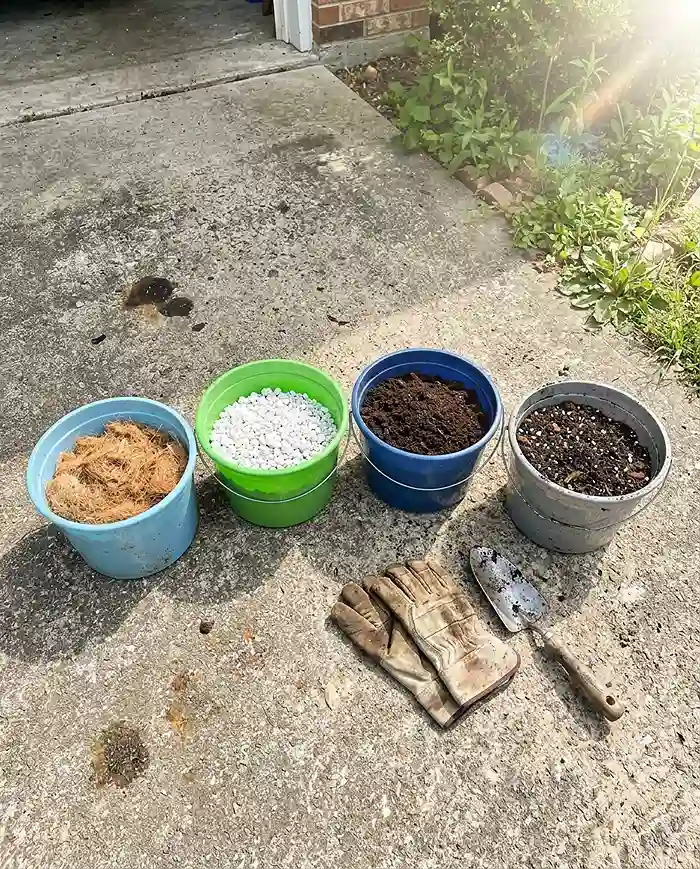
All-Purpose Container Mix
- 1 part coconut coir
- 1 part perlite
- 1 part finished compost
- A handful of slow-release organic fertilizer per 5 gallons
Seed Starting Mix (Keep It Gentle)
- 2 parts fine coco coir
- 1 part fine vermiculite
- 1 part perlite
Skip the fertilizer here — seedlings want a soft landing, not a buffet.
Long-Haul Mix for Trees and Shrubs
- 2 parts quality potting mix
- 1 part screened loam
- 1 part composted bark fines
Loam adds long-term structure that plain potting mix can’t sustain. Use this for anything you won’t repot for years, like dwarf fruit trees.
If you’re growing edibles specifically, my detailed guide on the best soil and fertilizer for container vegetable gardens walks through exactly what to feed your tomatoes, peppers, and leafy greens.
Maintenance: Don’t Toss That Soil Yet
Quality mix is too pricey to chuck after one season.
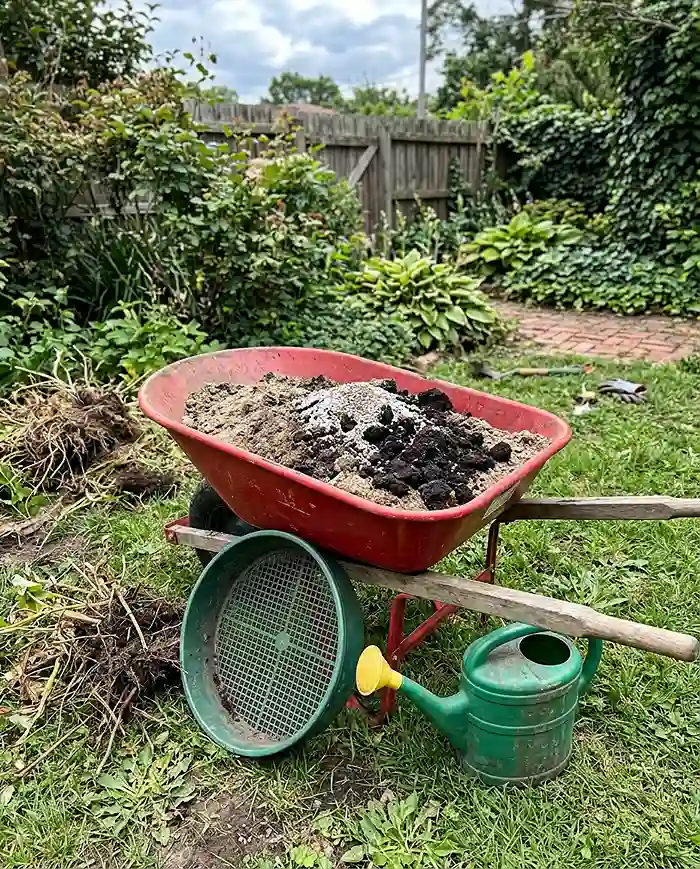
How to Reuse Potting Mix
- Dump the pot and pull out old roots
- Sift out chunks bigger than a grape
- Stir in 25% fresh compost
- Add slow-release fertilizer
- Optional: solarize in a black plastic bag in full sun for 4–6 weeks to kill anything sketchy
Fixing Hydrophobic Soil
Old mix sometimes refuses to absorb water. Here’s the rescue:
- Set the pot in a tub or deep saucer
- Add a drop of dish soap to a watering can of warm water
- Water slowly until the root ball soaks through
- Let it sit submerged for 30 minutes
- Drain and water normally going forward
When to Just Toss It
Compost or trash your mix if you see:
- Mold, white fungal threads, or obvious root disease
- A sour, swampy, or rotten smell
- Drainage that won’t improve no matter what you add
- Knotty galls on the previous plant’s roots (nematodes — yuck)
Quick Safety Tips
A few habits to protect your lungs and skin:
- Wet the mix before scooping — dry potting dust can carry Legionella and Aspergillus spores
- Wear gloves (your hands will thank you)
- Open fresh bags outside or in a well-ventilated spot
- Wash up before eating or touching your face
FAQ
Can I use garden soil in pots if I mix in sand?
Nope. Sand actually fills the few air pockets that exist and turns the whole mess into something resembling concrete. Skip it.
How often should I replace potting mix?
Refresh it every year with compost and fertilizer. Fully replace it every 12–18 months for veggies, every 2–3 years for perennials.
Is potting soil even real soil?
Technically? No. Most potting mixes are soilless growing media made from peat, coir, bark, and minerals. The word “soil” on the bag is mostly marketing.
What’s the best soil for containers?
A high-aeration potting mix with compost, perlite, and a balanced slow-release fertilizer. Look for “potting mix” on the label, not “potting soil” or “garden soil.”
What’s best for tomatoes in pots?
A nutrient-rich, well-draining mix. I use my all-purpose recipe plus a cup of worm castings and crushed eggshells for calcium (helps prevent blossom end rot — a tomato grower’s nightmare).
Final Verdict: Which One Wins?
Here’s the simple decision tree:
- Containers and pots → Potting mix, every single time
- Raised beds → Hybrid 50/50 mix with compost
- In-ground gardens → Garden soil, amended with compost
Match the soil to the situation, and your plants will reward you with vigorous growth, fewer headaches, and harvest baskets you’ll actually be proud of. Your wallet might cringe at the checkout, but trust me — your future tomato sandwiches are worth it.