
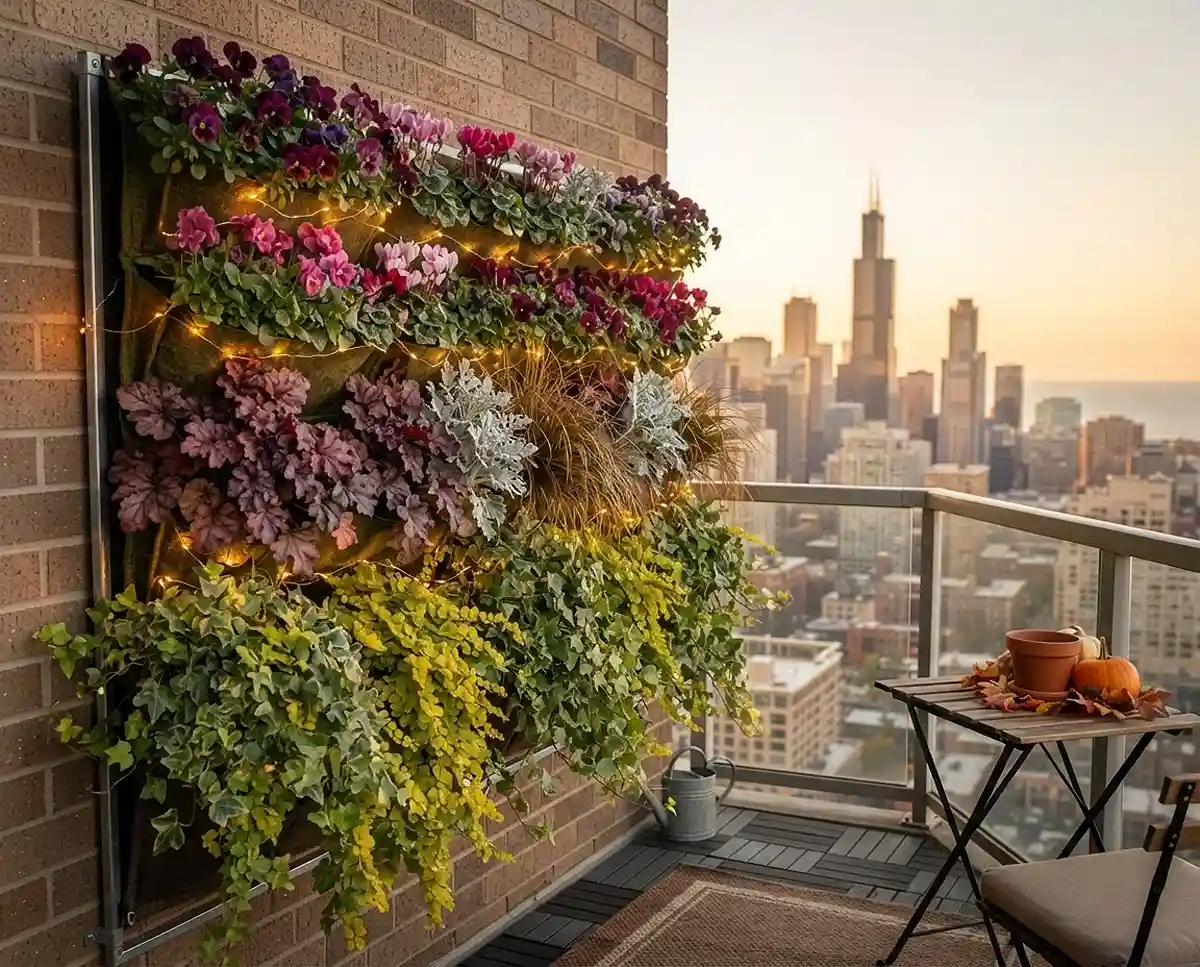
Fall Vertical Wall Planters: A Cool-Season Styling Guide
Fall vertical wall planters don’t have to go bare when summer annuals fade. With cold-hardy plants and a few styling swaps, your vertical gardening setup can look better in October than it did in July.
I grow a felt-pocket living wall on a north-facing balcony in Chicago, zone 6a, and every September I do the same reset. It takes about an hour and the wall stays full through Thanksgiving. Here’s exactly how I do it, plus what I learned the year I skipped a step and lost half a pocket to root freeze.
Table of Contents
Breathing New Life Into Vertical Planters for the Cooler Months
Pulling your leggy petunias and calling it done for the season is tempting, but it’s the wrong move. Vertical gardening for small spaces means every pocket is prime real estate, and cold-hardy plants will happily fill it through November and often into December.
Think of the fall reset as a second planting season, not a teardown. A wall planted with pansies, heuchera, and trailing ivy reads as intentional and lush, not like a garden that’s winding down.
Assessing Your Wall’s Cool-Weather Microclimate
Vertical wall planters lack the thermal mass of ground soil, so they swing colder and drier faster than an in-ground bed. Before you plant anything, spend a week just watching how your wall behaves as temperatures drop.
Tracking the Shifting Autumn Sun Angles
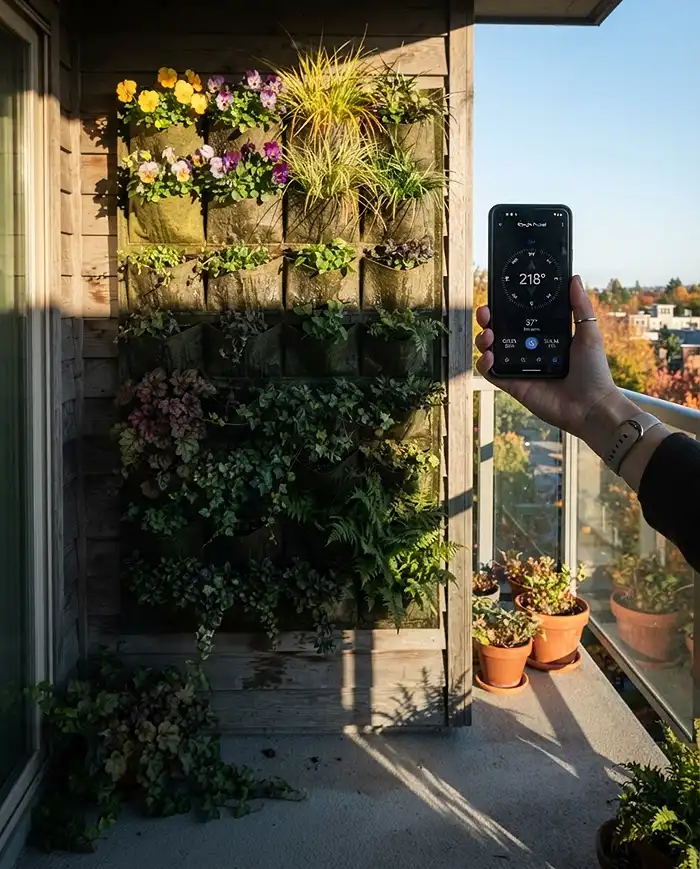
The sun sits much lower in fall, so light that used to hit your whole wall in July may now only reach the top third. I map this with a quick check at 10 a.m., noon, and 3 p.m. over a few days in late September.
Put sun-loving fall bloomers like pansies in the top pockets, where they’ll still catch the waning light. Save the shadier bottom rows for shade-tolerant foliage like heuchera, which won’t sulk without direct sun.
Wind Chill and Freezing Drafts on Elevated Roots
Elevated planters catch wind that ground beds never see, especially on balconies between buildings that funnel cold air. That wind strips moisture from leaves and can flash-freeze shallow root zones overnight, even when the air temperature alone wouldn’t be a problem.
Walk your space on a breezy evening and note where gusts pick up, usually corners and gaps between railings. Those spots need extra insulation or a repositioned planter before your first hard freeze.
Best Cold-Hardy Plants for a Fall Vertical Wall
A reliable fall wall mixes three plant roles: bloomers for color, foliage for texture, and trailers to soften the hardware. Here’s the lineup I come back to every year.
Vibrant Autumn Blooms: Pansies, Violas, and Cyclamen
Quick Answer: Pansies, violas, and cyclamen are the most reliable cold-weather flowers for vertical wall planters, tolerating light frost and blooming into the 30s and 40s Fahrenheit.
Plant these jewel-toned bloomers in your central and upper pockets, where they’ll get the most light. All three bounce back within a day or two of a light morning frost, which is more forgiving than most summer annuals.
Two Octobers ago, a surprise 28°F night flattened my pansies overnight. By 10 a.m., once the sun hit them, every plant had perked back up like nothing happened.
Textural Foliage: Heuchera, Carex, and Dusty Miller
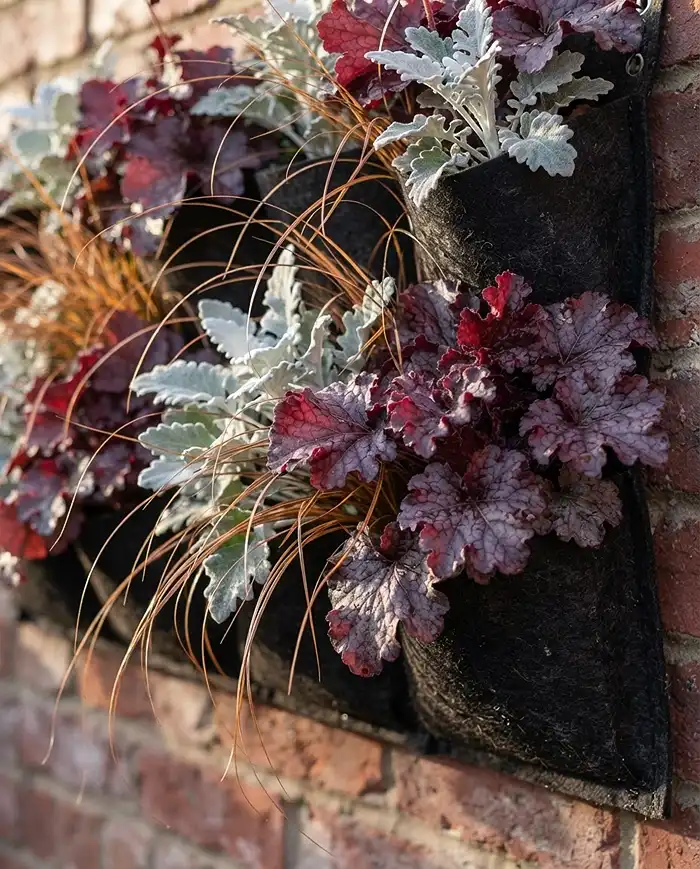
Quick Answer: Heuchera, Carex, and Dusty Miller add flower-free structure and color to a fall vertical wall, and all three tolerate temperatures well into the 20s Fahrenheit.
‘Coral Bells’ heuchera brings deep plum foliage that holds its color as temperatures drop. Bronze Hair Sedge (Carex) adds sweeping, grass-like movement, and ‘Dusty Miller’ contributes fuzzy, silvery leaves that catch low autumn light beautifully.
I lost a Carex clump my first year by planting it in a bottom pocket that stayed soggy after rain. Now I only use it in pockets with good drainage holes.
Cold-Tolerant Trailing Spillers: Creeping Jenny and Ivy
Quick Answer: English ivy and Creeping Jenny (Lysimachia) are the hardiest trailing plants for fall vertical wall planters, and both tolerate frost while draping down to hide planter hardware.
Place these in your lowest pockets and let them spill downward over several weeks. By late October mine have grown enough to fully hide the felt pocket seams and irrigation tubing underneath.
- English ivy: hardy to roughly USDA zone 5, evergreen through winter in milder zones
- Creeping Jenny: hardy to USDA zone 4, chartreuse color deepens as it cools
- Both root easily from cuttings if you want to fill gaps mid-season
| Plant | Cold Tolerance | Best Pocket Position |
|---|---|---|
| Pansies / Violas | Down to ~15°F briefly | Top, full sun |
| Cyclamen | Down to ~20°F | Upper-middle, bright shade |
| Heuchera | Hardy to zone 4 | Middle, part shade |
| Carex | Hardy to zone 5 | Middle, well-drained |
| Dusty Miller | Down to ~20°F | Middle-upper, sun |
| English Ivy / Creeping Jenny | Hardy to zone 4-5 | Bottom, trailing |
Styling Your Cool-Weather Vertical Garden
Once the plants are in, styling is what makes a vertical wall planter feel deliberate instead of like an afterthought. Two moves make the biggest difference: color palette and lighting.
Creating a Cohesive Autumn Color Palette
Skip the neon summer mix and build around three tones: burgundy, rust, and silver. Heuchera and Dusty Miller already give you two of those, so add one warm accent, like a rust-toned mum in a mid-level pocket, to tie it together.
My wall this year is almost entirely plum, silver, and deep orange. It reads as a single composition from across the balcony instead of a scattered mix of colors.
Incorporating Ambient Lighting for Early Sunsets
Sunset creeps earlier through fall, so a wall that looked great at 6 p.m. in August goes dark by 5:30 in November. Waterproof, warm-white copper LED fairy lights woven vertically through the grid solve this without looking like holiday decor.
I thread mine along the frame edges rather than through the foliage, so leaves don’t block the glow and I’m not fighting wet cords every time I water.
Step-by-Step Transition Guide for Wall Planters
Quick Answer: Transitioning a wall planter for fall means removing spent summer plants, refreshing the soil, planting cold-hardy plugs densely, and topping each pocket with mulch for insulation.
- Pull all exhausted summer annuals, roots and all, and compost what you can.
- Refresh each pocket with fresh potting mix cut with perlite for drainage and insulation.
- Plant cold-hardy plugs closer together than you would in summer, since fall growth is slow and you want instant fullness.
- Top-dress every pocket with a handful of shredded bark mulch to buffer root temperature swings.
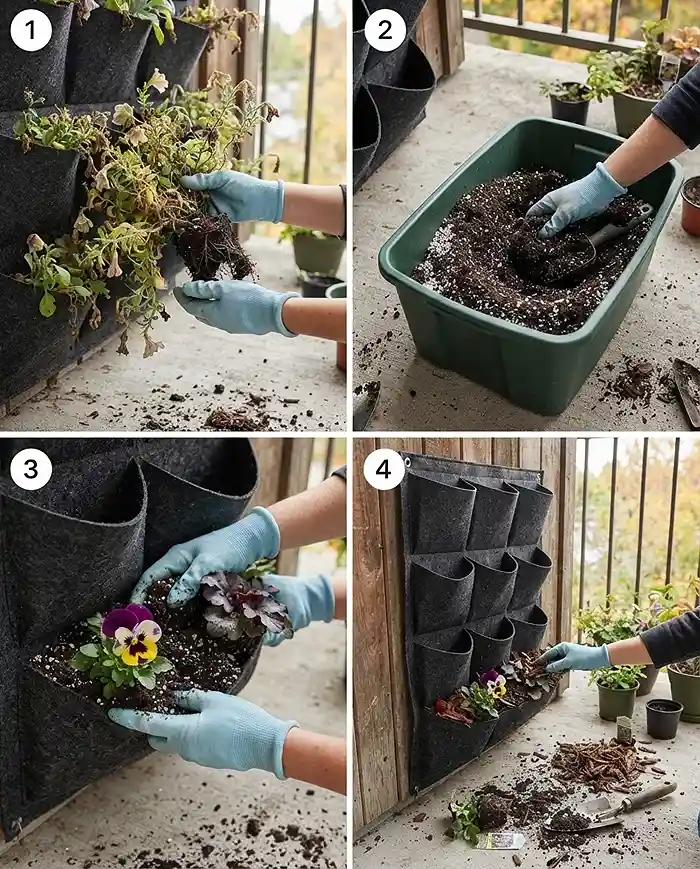
This whole process takes me about 45 minutes for a 6-foot-tall wall with 24 pockets, most of it spent packing plugs tightly enough that there’s no bare soil showing.
Maintenance and Care in Dropping Temperatures
Plants slow their metabolism as it cools, and your maintenance routine needs to slow down with them. The two biggest adjustments are watering and frost protection.
Modifying Watering Schedules for Slow Evaporation
Quick Answer: Water fall vertical wall planters only when the top inch of soil feels dry to the touch, and always water on mild mornings so roots aren’t sitting wet during a freeze.
Drop the daily summer soakings and switch to the finger test before every watering. Damp, cool air means evaporation slows dramatically, and overwatering now is a much bigger risk than underwatering.
Using Frost Covers for Sudden Deep Freezes
Quick Answer: Drape a breathable horticultural fleece over your entire vertical wall ahead of a hard freeze warning to trap radiant heat from the building and protect tender growth.
I keep a lightweight frost cloth folded on my balcony from October on, since surprise freeze warnings usually give less than a day’s notice. It goes on before sunset and comes off once temperatures climb back above freezing.
Common Problems and Solutions
Two issues show up again and again on elevated cool-weather setups: frozen roots and powdery mildew. Catching both early keeps your fall vertical ladder garden looking full instead of patchy.
Root Freeze in Shallow Wall Pockets
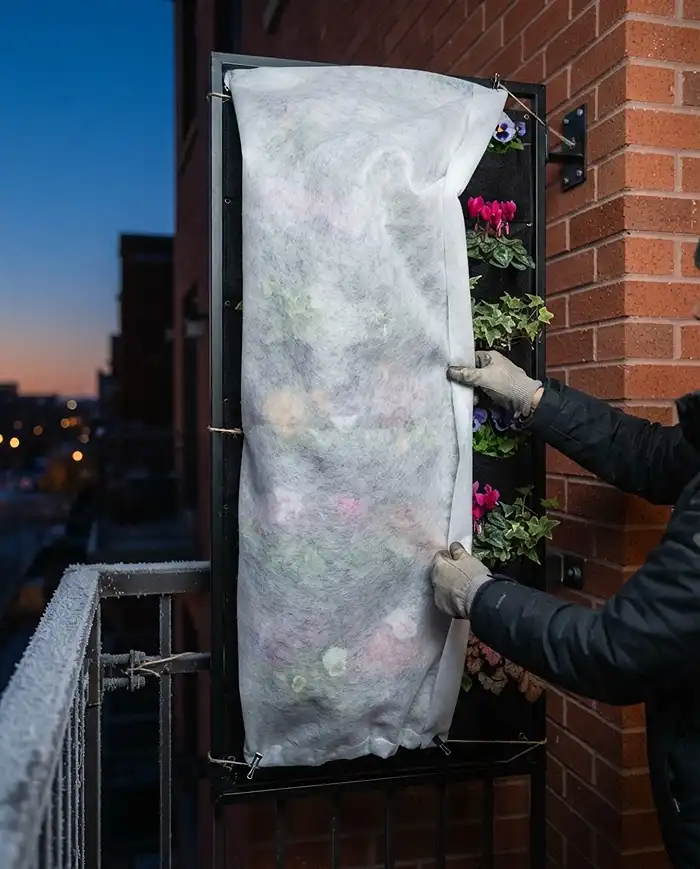
Shallow pocket soil freezes far faster than ground soil because there’s so little mass to hold heat. Add extra mulch the moment overnight lows approach freezing, and withhold water completely if a hard freeze is forecast, since wet soil freezes solid faster than dry soil.
Powdery Mildew in Damp, Stagnant Air
Cool temperatures plus fall rain is exactly the combination powdery mildew loves. A weekly spray of potassium bicarbonate mixed with water keeps it in check, and thinning overlapping foliage restores the airflow that prevents it from taking hold in the first place.
If you’re setting up a new vertical gardening area for cooler weather, our guides to fall railing planters and autumn balcony garden ideas cover container options beyond the wall itself.
Checking the USDA Plant Hardiness Zone Map for your exact zone before buying plants will save you from picking something that can’t handle your first frost date.
Frequently Asked Questions
Do I need to fertilize my fall wall planters?
Skip fast-acting, high-nitrogen liquid fertilizers once temperatures drop below 60°F. They push tender, watery growth that frost damages easily. The fresh compost added during your fall transition provides enough nutrition for the season.
Can my vertical garden stay outside all winter?
Only in USDA Zone 8 or higher. In colder zones, even cold-hardy perennials will suffer fatal root freeze in exposed, shallow wall pockets during deep winter. Treat plants as temporary autumn annuals or dismantle the wall before hard freezes set in.
Can I add small edible herbs to my fall wall planter?
Yes. Cool weather herbs for pots like creeping thyme, sage, and parsley thrive in autumn temperatures and add texture alongside ornamentals, while also giving you a functional harvest for fall cooking.
Conclusion
Fall vertical wall planters reward a little upfront effort with weeks of extra color and texture most gardeners miss out on. Swap your summer annuals for cold-hardy blooms and foliage, adjust your watering, and keep frost cloth on hand.
Do that, and your wall will likely outlast your patio furniture before winter finally shuts it down.