
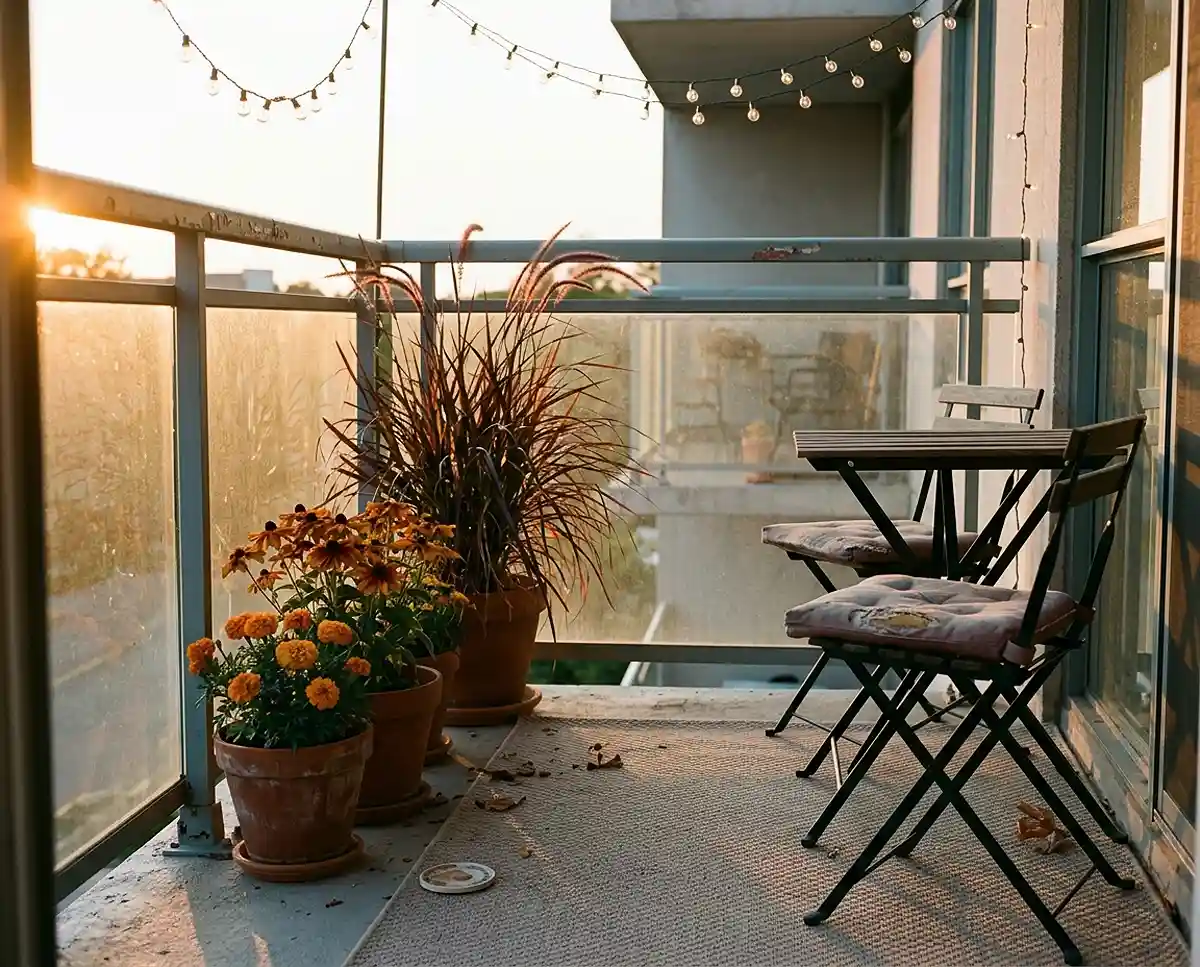
Dreamy Apartment Balcony Garden ideas at Sunset
The best apartment balcony garden ideas aren’t just about plants — they’re about creating a moment. Golden light, warm colors, and the right small balcony garden setup can turn even a 6×8 ft slab into your favorite place on earth.
I grow on a west-facing balcony in zone 6b, and I’ll be honest: it took me two full seasons to stop overthinking it. Once I started designing around the sunset instead of ignoring it, everything clicked.
Table of Contents
Why a Sunset Balcony Garden Feels So Magical
There’s a reason photographers chase the golden hour. That warm, low-angle light does something to a garden that midday sun simply can’t — it makes everything glow from within.
Amber and copper blooms seem to catch fire. Ornamental grasses turn translucent. Even a simple terracotta pot looks like it belongs in a Tuscan courtyard.
Add the sounds of a quiet evening, a cushioned chair angled west, and a glass of something cold — and you’ve built a retreat that costs nothing extra to maintain.
The magic isn’t accidental. It comes from choosing plants and arranging furniture intentionally around that 6–8 pm window when the light is at its most flattering.
Plan Your Dreamy Balcony Garden
Before you buy a single plant, spend ten minutes assessing your space. The decisions you make here shape everything else.
Knowing Your Balcony’s Direction and Light
Quick Answer: West-facing balconies get the richest sunset light, typically from 4–8 pm. South-facing balconies get long afternoon sun. East-facing spots miss most of the golden hour entirely.
Pull out a compass or check your phone. If you face west or southwest, you’re in the best position for apartment gardening around sunset.
South-facing works too — you’ll get strong afternoon warmth that transitions into a softer golden glow. North-facing balconies are trickier but not hopeless; shade-tolerant foliage plants like ferns and hostas still look beautiful backlit from an angle.
Measuring Space and Setting a Mood Goal
Quick Answer: Measure your balcony in feet, then subtract 2–3 ft for a walking path. Decide on a vibe — romantic, boho, or minimalist — before you shop. Your mood goal filters every purchase.
A 6×8 ft balcony gives you roughly 48 sq ft. In practice, you’ll use about 30 sq ft once you leave room to sit and move.
Pick your aesthetic now. Romantic leans into soft pinks, candles, and trailing vines. Boho mixes earthy terracotta, macrame, and wild grasses. Minimalist uses clean lines, one or two bold plants, and warm Edison bulbs.
Choosing Plants That Glow at Sunset
Not all plants perform equally in evening light. The ones that shine brightest share two traits: warm color tones and light-permeable foliage or petals.
Warm-Toned and Golden Bloomers
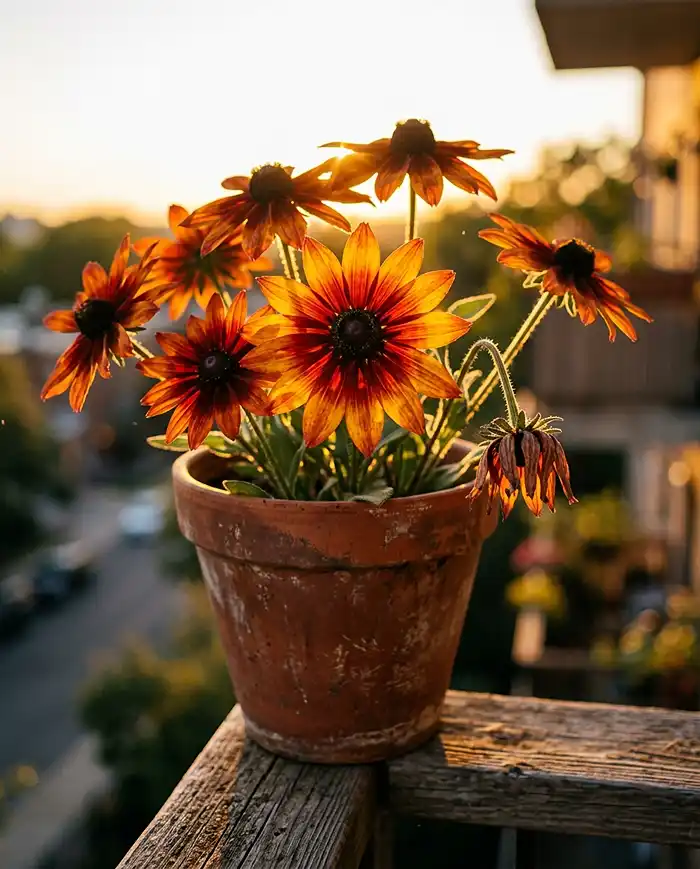
Quick Answer: Marigolds, rudbeckia, and calibrachoa in amber, gold, and burnt orange catch sunset light and seem to radiate it back. These are your front-row performers.
Here are the best warm-toned plants for a sunset balcony garden ideas setup, with container size and zone guidance:
| Plant | Best Colors | Container Size | USDA Zones |
|---|---|---|---|
| Marigold ‘Antigua Orange’ | Deep amber, gold | 8–10 in pot | Annual, all zones |
| Rudbeckia ‘Cherry Brandy’ | Russet, gold | 12 in pot | 3–9 |
| Calibrachoa ‘Superbells Tangerine’ | Bright tangerine | 10–12 in hanging basket | Annual, all zones |
| Coreopsis ‘Sunfire’ | Gold with red center | 10 in pot | 4–9 |
| Zinnia ‘Profusion Orange’ | Vivid orange | 10 in pot | Annual, all zones |
I grew ‘Cherry Brandy’ rudbeckia in a 12-inch terracotta pot on my west balcony last summer. By 7 pm in August, those russet petals looked like they were lit from behind with a candle. Best $4 I ever spent at the nursery.
Pro Tip: Deadhead [remove spent flowers] marigolds and zinnias every 3–4 days to keep new blooms coming all season long.
Backlit Foliage and Airy Grasses
Quick Answer: Ornamental grasses like Pennisetum ‘Rubrum’ and Japanese forest grass turn golden and translucent in low evening light. Thin, airy foliage catches the sun in a way dense leaves never will.
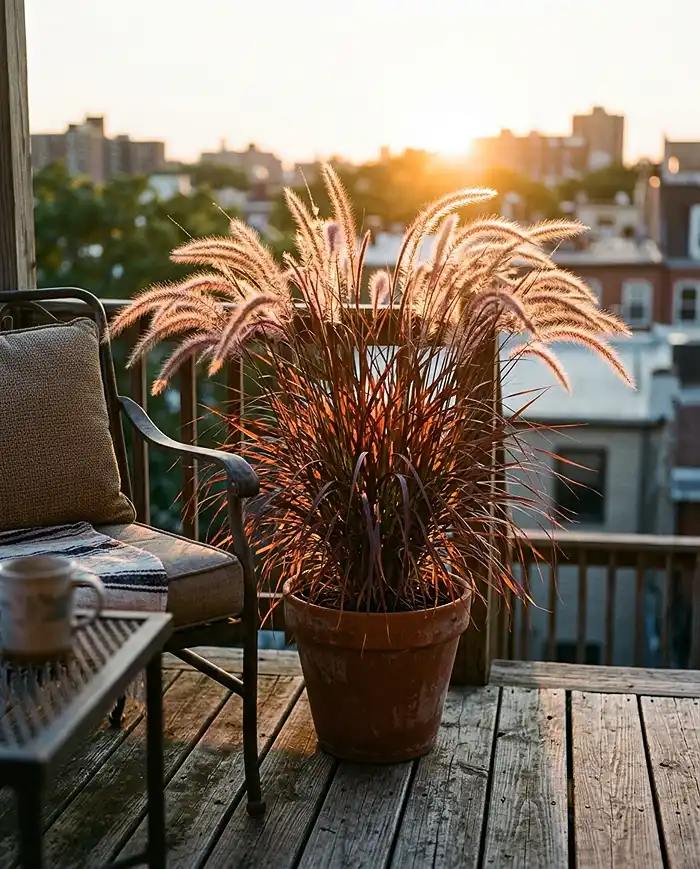
Place these directly in the light path — ideally between your seating area and the setting sun. When light passes through their blades, you get a natural lantern effect.
- Pennisetum ‘Rubrum’ (Purple Fountain Grass): Burgundy blades glow copper at sunset. Grows to 3 ft in a 14-inch pot. Zones 9–11, annual elsewhere.
- Hakonechloa macra ‘Aureola’ (Japanese Forest Grass): Chartreuse and gold variegation. Stunning in dappled light. Zones 5–9, needs partial shade.
- Stipa tenuissima (Mexican Feather Grass): Wispy silver threads that shimmer in any breeze. Zones 7–11, works in a 10-inch pot.
- Heuchera ‘Caramel’: Caramel-toned leaves with a bronze underside. Not a grass, but backlit it looks like hammered copper. Zones 4–9.
Designing for Ambiance and Comfort
A beautiful garden that isn’t comfortable to sit in is just a view. Design for both.
Cozy Seating and Layout
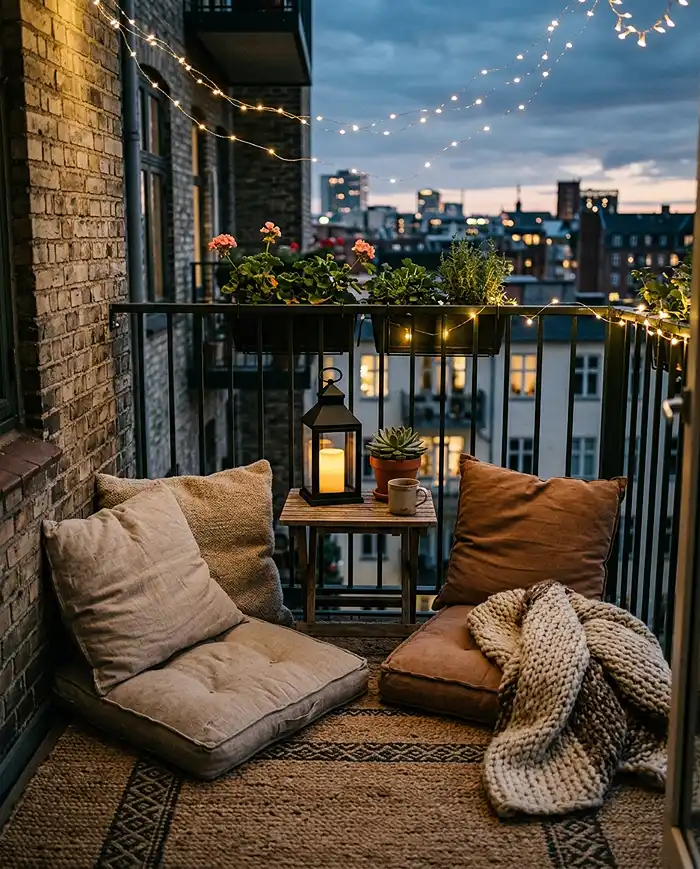
Quick Answer: Face seating west toward the sunset view. Use a bistro set or low floor cushions with a side table. Keep the primary sightline clear of tall planters.
On my 6×8 balcony, a folding bistro table with two chairs takes up about 18 sq ft. That leaves a strip along the railing for planters and a narrow path behind the chairs.
If you want something more relaxed, a floor cushion setup works beautifully for small balcony garden spaces. Low seating actually makes the space feel larger and puts you at plant-level — which is exactly where you want to be at golden hour.
Layering Plants for Depth and Glow
Quick Answer: Use three height levels — low (6–12 in), mid (18–24 in), and tall (30+ in). Place airy and translucent plants at the back where light passes through them toward your seating area.
Think of it like stage lighting. The sun is your spotlight. You want your most translucent plants — grasses, fennel, fine-leaved herbs — positioned between the light source and your eyes.
Dense, opaque plants like begonias and succulents work better in the foreground where their colors can reflect light rather than transmit it.
Tools and Materials You’ll Need
You don’t need much. Here’s what actually earns its place on a small balcony:
- Planters: Terracotta for a warm, natural look (heavy but worth it for west-facing spots). Lightweight resin pots for railings and hanging setups.
- Potting mix: Use a quality container mix with perlite — not garden soil, which compacts and drains poorly in pots.
- String lights: Warm white (2700K), not cool white. Difference is huge at night.
- Drip trays: Essential for balconies — you don’t want to waterlog your neighbor’s ceiling.
- Watering can with a long neck: Makes it easy to reach the back of railing planters without drenching your cushions.
- Soft textiles: One outdoor rug and two weather-resistant cushions transform the vibe instantly.
Step-by-Step: Creating Your Sunset Balcony
Follow this sequence to avoid the most common mistakes.
Arranging Plants and Furniture
Start with furniture, not plants. Get your seating in place first, facing west, with enough room to move behind the chairs.
Next, place your tallest plants — grasses or tall rudbeckia — along the back or sides where they catch backlight without blocking your view.
Mid-height bloomers like marigolds and zinnias go in the middle tier, in 10–12 inch pots on the floor or a small plant stand.
Trailing plants like calibrachoa or nasturtiums go in railing planters or hanging baskets at the front, where they spill toward the evening light.
Adding Lighting and Finishing Touches
String lights go up last — after plants and furniture are in position. Drape them along the ceiling, zigzag overhead, or weave them through a trellis behind your seating.
Add one or two lanterns with LED candles at floor level for depth. A small side table with a weather-resistant pillar candle and a single potted succulent pulls the whole vignette together.
Lay your outdoor rug under the seating area. This defines the “room” visually and makes the whole space feel intentional, not accidental.
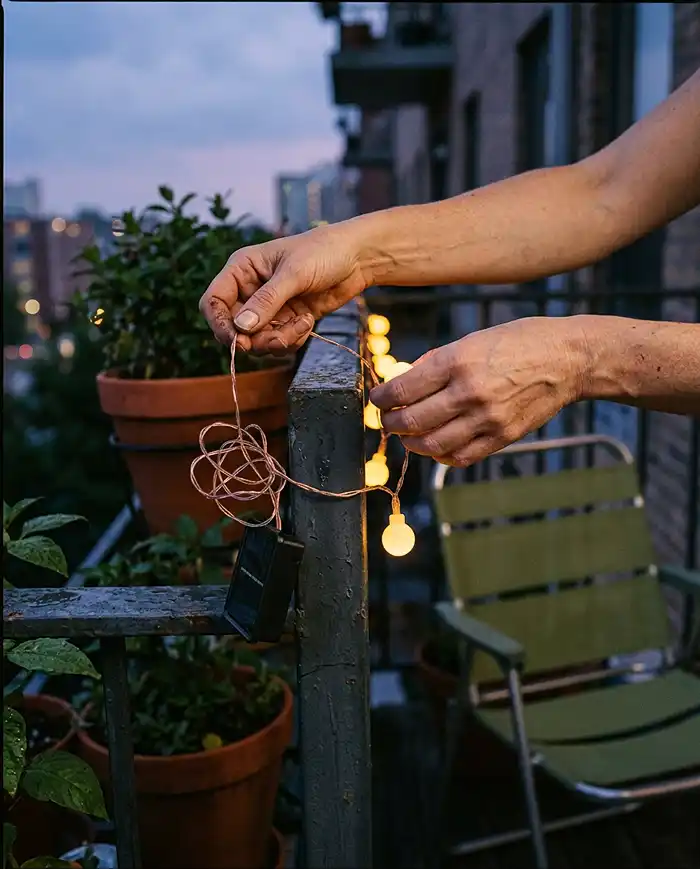
As of spring 2025, outdoor string lights with integrated solar panels have become genuinely good — no visible cords, warm 2700K output, and enough charge to run 6+ hours.
Lighting to Extend the Golden-Hour Glow
The sunset lasts maybe 45 minutes. Good lighting means the magic keeps going until you’re ready to go inside.
Warm String Lights and Lanterns
Quick Answer: Use warm-white (2700K) string lights overhead and lanterns at low level. Together they create depth — the same principle as layering plants. Avoid cool white or blue-tinted bulbs; they kill the warm atmosphere instantly.
Candles — real or LED — add flickering warmth that no fixed light source can replicate. Group three lanterns of different heights in a corner for a campfire-adjacent glow.
Solar and Battery Lighting Options
Quick Answer: Solar string lights and battery-powered lanterns require zero wiring and are perfect for rental balconies. Look for units rated IP44 or higher for outdoor use in rain.
I switched to solar string lights in 2024 and haven’t looked back. No extension cord snaking across the floor, no tripping hazard. A full day of sun gives about 8 hours of runtime — more than enough for any evening on the balcony.
Caring for Your Balcony Garden
A beautiful balcony stays beautiful with about 20 minutes of attention per week. Here’s how to stay on top of it without it feeling like a chore.
Watering, Feeding, and Pruning
Quick Answer: Container plants dry out 2–3x faster than in-ground plants. Check soil moisture daily in summer. Feed with a balanced slow-release fertilizer every 4–6 weeks.
Stick your finger 2 inches into the soil. If it’s dry, water deeply until it drains from the bottom. In peak summer heat, most balcony containers need water every 1–2 days.
Deadhead spent blooms weekly to encourage continuous flowering. Pinch back leggy stems on calibrachoa and petunias to keep them bushy and full through the season.
For a deeper dive into apartment gardening basics for beginners, that guide covers watering, feeding, and container selection in detail.
Keeping the Space Tidy and Cozy
Wipe down furniture weekly — dust and pollen build up fast. Shake out cushion covers every two weeks and bring them inside if heavy rain is forecast.
Pull any yellowed leaves or dead stems immediately. One scraggly plant drags down the whole aesthetic. If a plant is struggling, replace it — containers make that easy.
Seasonal Care and Refreshing the Look
Swapping Plants and Decor by Season
The best apartment balcony garden ideas work across all four seasons with a few strategic swaps.
In spring, lead with cool-season bloomers: pansies, snapdragons, and tulip bulbs in pots. Swap to heat-lovers like marigolds, zinnias, and grasses in late May once nights stay above 50F.
In fall, swap exhausted summer annuals for mums, ornamental kale, and ornamental peppers. These carry the warm sunset palette into October beautifully.
In winter, lean into evergreen structure: dwarf conifers, heucheras, and boxwoods in pots survive zone 5–6 winters with minimal protection. Add a chunky wool throw and switch to flickering lanterns for a moody, cozy vibe.
Update your textiles seasonally too — lighter linens in summer, heavier woven blankets and rust-toned cushions in fall. A $30 cushion cover swap can make the whole balcony feel brand new.
Common Problems and Solutions
Even a well-planned balcony runs into issues. Here’s how to fix the most common ones fast.
Harsh Sun Scorching Plants
Quick Answer: West-facing balconies can get brutal afternoon heat. If leaves are bleaching or crisping at the edges, add a shade cloth rated 30–40% and swap to heat-tolerant varieties like portulaca, celosia, and lantana.
I lost an entire pot of impatiens in July 2023 because I underestimated west-facing afternoon heat in zone 6b. Now I use a lightweight shade sail from 1–4 pm and reserve that spot for heat-lovers.
Windy Balcony Disrupting Plants and Decor
Quick Answer: Wind is the hidden enemy of high-rise balcony gardens. Use heavier ceramic or concrete pots, choose compact or low-growing plants, and anchor lightweight decor items with outdoor-rated adhesive strips.
If wind is severe, a bamboo or reed privacy screen along the railing reduces gusts significantly while adding a boho design element at the same time.
Space Feeling Cluttered or Dim
Quick Answer: Less is almost always more on a small balcony. If it feels crowded, remove one element — usually a planter or piece of decor — and reassess. If it feels dim, add a second layer of lighting at a lower level.
The rule I follow: if I can’t move through the space without turning sideways, I have too much in it. Edit ruthlessly and the remaining pieces look intentional rather than collected.
apartment balcony garden ideas FAQs
What plants look best at sunset on a balcony?
Warm-toned bloomers like marigolds, rudbeckia, and zinnias in amber and orange glow beautifully in evening light. Airy grasses like Pennisetum ‘Rubrum’ and Stipa tenuissima turn translucent and golden when backlit by the setting sun.
How do I make my balcony cozy in the evening?
Layer warm-white string lights overhead with lanterns at floor level. Add weather-resistant cushions and a soft outdoor rug to define the seating area. Facing your chair toward the sunset view completes the experience.
What lighting is best for a rental balcony?
Solar-powered string lights and battery-operated lanterns are ideal for rental balconies since they require no wiring or drilling. Look for units rated IP44 or higher for rain resistance. Warm white (2700K) output mimics golden-hour warmth.
Can I grow an edible garden on a balcony that looks beautiful too?
Absolutely. Herbs like bronze fennel, purple basil, and nasturtiums are both edible and visually stunning at sunset. Check out ideas for an edible balcony garden that doubles as a decorative display.
How do I protect balcony plants in winter?
Group pots together against the building wall, which holds heat better than open railing spots. Wrap terracotta pots in burlap to prevent freeze-thaw cracking. Dwarf conifers, heucheras, and ornamental kale can overwinter in zones 5-6 with minimal protection.
Key Takeaways
- The best apartment balcony garden ideas are designed around your sunset orientation — west and south-facing balconies have the biggest advantage.
- Choose warm-toned bloomers (marigolds, rudbeckia, zinnias) and airy grasses that glow or turn translucent in evening light.
- Layer plants at three heights and position translucent foliage between your seating and the setting sun for a natural lantern effect.
- Extend the golden-hour mood with warm-white (2700K) string lights and floor-level lanterns — solar and battery options work perfectly for renters.
- Keep the space edited and intentional: one fewer planter almost always looks better than one more.
Ready to start building? If you’re new to container growing, the apartment gardening beginner guide is a great first read. Want to add edibles to the mix? The edible balcony garden guide shows how to grow food that looks just as good as it tastes.
For fresh herb inspiration that works in small spaces, browse these hanging herb garden ideas and the full apartment herb garden setup guide — both translate beautifully to a sunset balcony aesthetic.