
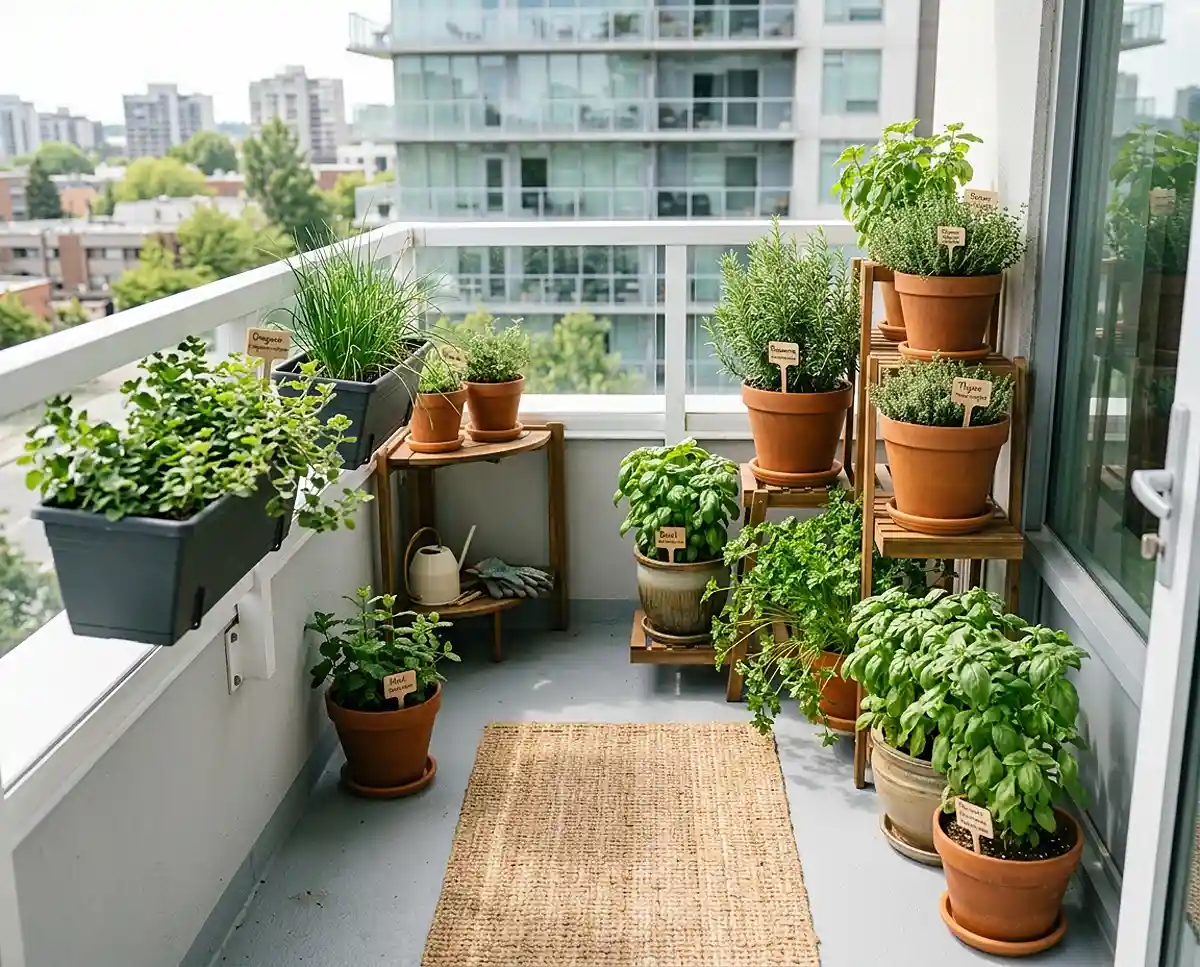
Smart Herb Garden Layout for Balcony
A smart herb garden layout for balcony spaces can turn even 30 square feet into a productive herb garden. Most balcony gardeners waste space by placing pots randomly — this guide shows you exactly how to fix that.
Table of Contents
Why a Good Herb Garden Layout Matters on Balconies and Patios
Balcony and patio space is limited. A thoughtful small garden layout groups herbs by their needs, which means less time running between pots with different watering cans.
When you plan your container herb garden properly, you also make harvesting faster. You’re not crawling over pots to reach the basil behind the rosemary.
A good herb garden layout for balcony setups also prevents common failures. Mint next to thyme is a disaster — one wants constant moisture, the other hates wet roots. Group them right from the start.
Even a narrow railing setup benefits from a plan. You’ll fit more varieties, keep plants healthier, and actually use what you grow.
Assess Your Space Before You Plan
Before you buy a single pot, spend one day observing your balcony or patio. Note where shadows fall in the morning, midday, and late afternoon. This single step changes everything.
A small patio garden that faces south in the northern hemisphere gets full sun. An east-facing balcony gets morning light only. Your herb garden ideas need to match what you actually have, not what you wish you had.
Tracking Sunlight and Shade Patterns
Quick Answer: Most culinary herbs need 6+ hours of direct sun daily. Check your space at 9 AM, noon, and 3 PM for three days before planning anything.
Mark shady corners with tape or a rock. These spots are for mint, parsley, and chives — herbs that tolerate partial shade.
- South-facing balcony: 8+ hours sun — ideal for Mediterranean herbs
- East-facing: 4-5 hours morning sun — best for leafy herbs like parsley and chives
- West-facing: afternoon sun only — works for basil and cilantro
- North-facing: under 3 hours — mint, chives, and parsley only
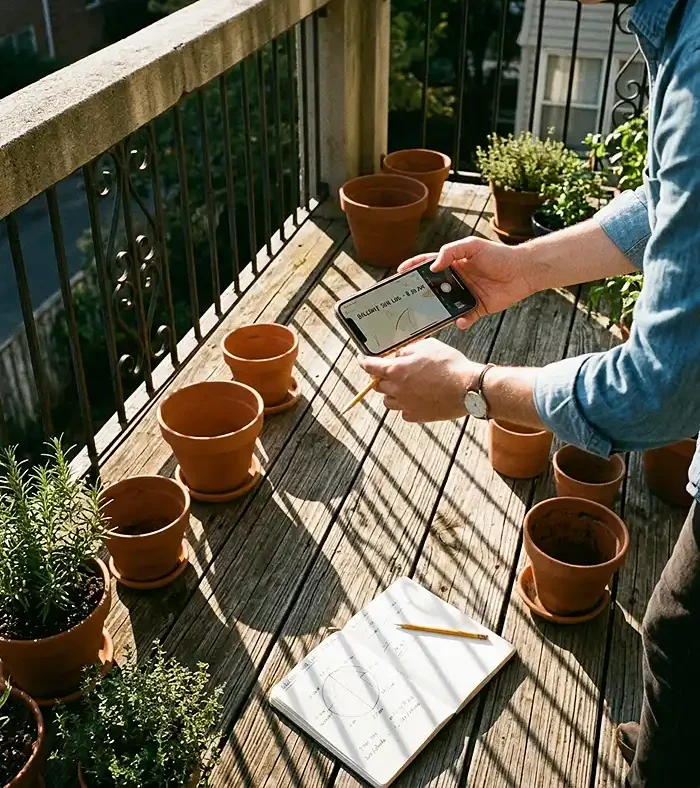
Pro Tip: Use a free sun-tracking app like Sun Seeker to map your balcony’s light without guessing.
Measuring Space, Wind, and Weight Limits
Quick Answer: Measure floor space in square feet, check railing width for boxes, and look up your building’s balcony weight limit before buying large planters.
Wind dries containers fast and snaps fragile stems. Check if your railing is exposed or sheltered.
- Measure floor area (length x width) and note any obstacles like chairs or HVAC units
- Standard railing planters fit railings 1.5 to 2 inches wide — measure yours first
- Typical balconies hold 50-100 lbs per square foot — wet soil adds significant weight
- Use lightweight perlite-heavy potting mix and plastic or fabric pots in windy spots
Pro Tip: A smart small balcony layout accounts for foot traffic — leave at least 24 inches of walking clearance.
Group Herbs by Their Growing Needs
The single biggest mistake in a container herb garden is mixing herbs with opposite needs in one pot or zone. Grouping by needs means one watering routine per zone, not one per plant.
Think of your herb garden layout for balcony spaces in two zones: a dry sunny zone and a moist semi-shaded zone. This small garden layout principle works even on a 6-foot balcony.
You’ll water the dry zone once every 2-3 days in summer. The moist zone gets water daily in heat. Never let these zones overlap or you’ll lose plants to either rot or drought.
Sun-Loving Mediterranean Herbs
Quick Answer: Rosemary, thyme, oregano, and sage all want 6-8 hours of full sun and lean, fast-draining soil. Group them in your sunniest, most exposed corner.
Details:
| Herb | Min. Pot Size | Watering | USDA Zones |
|---|---|---|---|
| Rosemary | 12-inch diameter | Every 3-4 days | 7-10 |
| Thyme | 6-inch diameter | Every 3-5 days | 5-9 |
| Oregano | 8-inch diameter | Every 3-4 days | 5-10 |
| Sage | 10-inch diameter | Every 4-5 days | 5-8 |
Real Example: Last summer I grouped rosemary, thyme, and oregano in terracotta pots on my south-facing railing. I watered them together every three days and never lost a plant to overwatering.
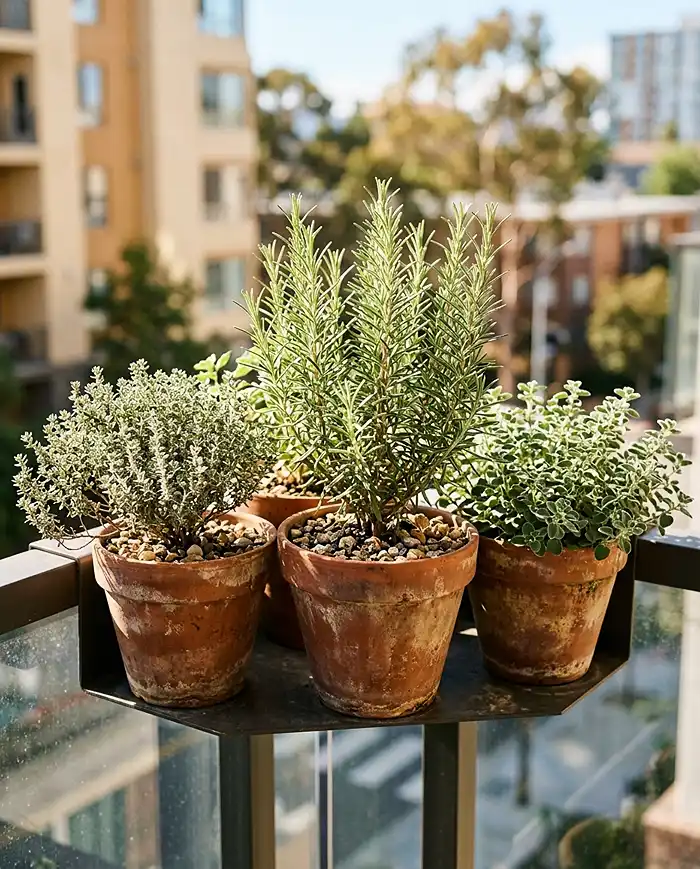
Pro Tip: Mix 30% coarse sand or perlite into potting mix for these herbs — standard bagged mix holds too much moisture for Mediterranean varieties.
Moisture-Loving and Shade-Tolerant Herbs
Quick Answer: Mint, parsley, chives, and cilantro prefer consistent moisture and can handle partial shade. Keep them in your least sunny spot and water more frequently.
Details:
- Mint: Always grow in its own pot — it spreads aggressively and will take over mixed planters
- Parsley: Needs 8-inch deep pot minimum for its taproot; water when top inch of soil feels dry
- Chives: Nearly indestructible; tolerates morning-sun-only spots and light frost
- Cilantro: Bolts fast in heat — grow in partial shade and succession-sow every 3 weeks
Real Example: I put my mint in a self-watering pot in the shadiest corner of my patio. It stayed productive all season without ever drying out between waterings.
Pro Tip: Add a thin layer of mulch on top of moisture-loving herb pots — check out the best mulch options for pots in hot weather to slow evaporation.
Easy Herb Garden Layout Ideas
Here are three ready-to-copy herb garden layouts based on balcony size and configuration. Pick the one that matches your space.
Tiered and Vertical Layouts
Quick Answer: A 3-tier plant stand or vertical wall planter can hold 9-15 herb pots in under 4 square feet of floor space. This is the best herb garden layout for balcony spaces under 8 feet wide.
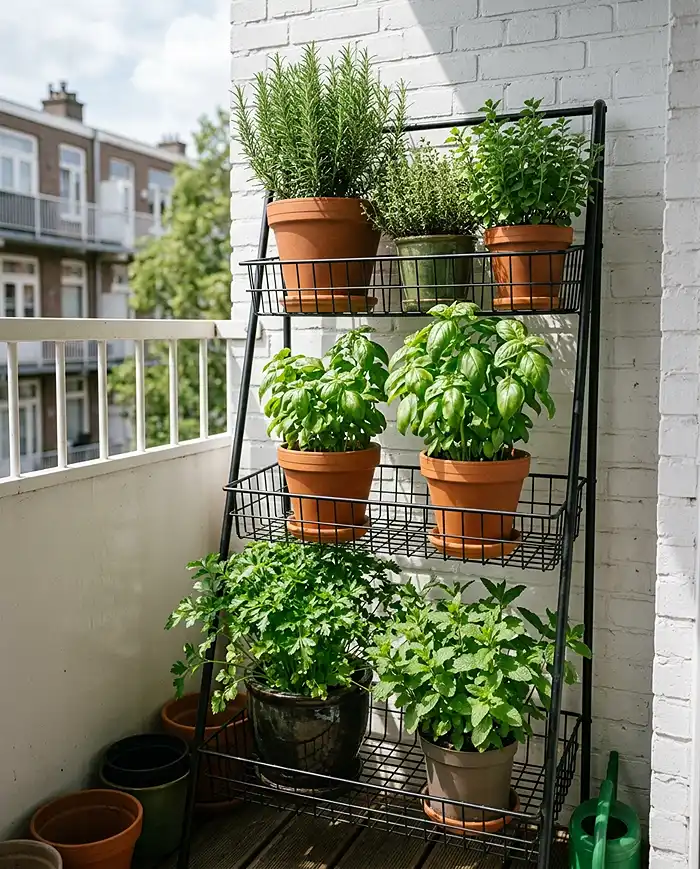
Place sun-lovers on the top tiers where light is strongest. Shade-tolerant herbs go on lower shelves where taller plants cast some shadow.
- Top tier: rosemary, thyme, oregano (full sun)
- Middle tier: basil, sage, marjoram (partial sun)
- Bottom tier: parsley, chives, mint (partial shade)
Pro Tip: Ladder-style plant stands let you slide pots out from any tier without disturbing others — much easier for harvesting than fixed shelving.
Railing and Wall-Mounted Layouts
Quick Answer: Railing boxes and wall-mounted fabric pockets keep herbs off the floor entirely, freeing walking space on narrow balconies under 5 feet deep.
Railing boxes typically hold 4-6 herbs in a row. Use them for frequently harvested herbs like basil, chives, and parsley so they’re always within arm’s reach.
- South railing: basil, thyme, oregano (highest sun exposure)
- Side railing: parsley, chives (morning or afternoon light)
- Wall pockets: cilantro, mint (protected from wind)
Pro Tip: Line railing boxes with burlap before adding potting mix — it improves drainage and stops soil from washing out through the drainage holes.
Grouped Container and Raised Bed Layouts
Quick Answer: If you have a patio with 10+ square feet, cluster pots by water needs into two distinct zones or use a compact raised planter to simplify watering.
A 2×4-foot raised planter on legs fits 8-10 herbs and makes watering and harvesting easier than bending to ground-level pots. It also improves drainage compared to floor-level containers.
- Zone A (dry): rosemary, thyme, sage, oregano — south or west side of patio
- Zone B (moist): mint (own pot), parsley, chives, cilantro — east or partially shaded side
Pro Tip: Group Zone A pots on a wheeled plant caddy so you can rotate them toward peak sun as the season changes without lifting heavy containers.
Choosing the Right Containers
The wrong container kills herbs before sun or water ever becomes a factor. Material and drainage matter more than how the pot looks.
Pot Size, Material, and Drainage
Quick Answer: Match pot depth to root needs. Shallow-rooted herbs (thyme, chives) need 6 inches. Deep-rooted herbs (parsley, rosemary) need 10-12 inches minimum.
| Material | Best For | Watch Out For |
|---|---|---|
| Terracotta | Mediterranean herbs, drainage | Heavy, dries fast in heat |
| Fabric grow bags | Air pruning roots, lightweight | Dries out quickly, less stable |
| Plastic | Moisture-lovers, budget setups | Can overheat in direct sun |
| Self-watering | Mint, parsley, chives | Not ideal for drought-tolerant herbs |
Pro Tip: Every container must have drainage holes. If yours don’t, drill them — sitting water causes root rot within days in a container herb garden.
Single Pots vs. Combination Planters
Quick Answer: Grow Mediterranean herbs together in one large pot. Keep mint, cilantro, and basil in their own pots — they either spread or bolt when stressed by competition.
- Works well combined: Rosemary + thyme + oregano (same soil and water needs)
- Keep separate: Mint (spreads), cilantro (bolts under competition stress), basil (needs more water than most combo-mates)
- A 12-inch pot comfortably holds 3 small Mediterranean herbs
Pro Tip: When combining herbs, put the tallest one in the center-back and trailing or compact herbs toward the edges for easier access and better light distribution.
Tools and Materials You’ll Need
Keep your kit minimal and functional. You don’t need much for a container herb garden.
- Pots: 6-inch, 8-inch, and 12-inch sizes cover almost every herb — buy multiples of each
- Potting mix: Use a quality container-specific mix, not garden soil (too heavy and compacts)
- Perlite: Mix in 20-30% for Mediterranean herbs to improve drainage
- Hand trowel and pruning snips: The only two tools you truly need for herb maintenance
- Watering can with a long spout: Essential for reaching pots on shelves without splashing foliage
- Plant labels: Seedlings look identical — label everything at planting time
- Liquid fertilizer: A balanced 10-10-10 or fish emulsion, applied every 2-3 weeks in the growing season
Step-by-Step: Setting Up Your Herb Layout
Follow this sequence for a clean, functional setup on the first try.
Arranging Containers for Light and Access
Quick Answer: Place sun-lovers in your brightest spot first, then work outward. Keep every pot within arm’s reach — if you have to climb over plants, you’ll skip harvesting.
Start by dry-placing empty pots in your planned layout before adding soil. This lets you adjust without lifting heavy containers.
- Sunniest spot: rosemary, thyme, oregano, basil
- Tallest herbs (rosemary, sage) go at the back or center to avoid shading shorter neighbors
- Leave 6-8 inches between pots for airflow — tight spacing encourages fungal issues
- Place most-used herbs (basil, chives, parsley) at the front within easy grabbing reach
Pro Tip: Take a photo of your empty layout before planting — you’ll reference it constantly when rearranging or adding new herbs later in the season.
Planting and Spacing Your Herbs
Quick Answer: Fill pots to 1 inch below the rim. Space herb seedlings according to their mature width — usually 6-12 inches apart depending on variety.
Use fresh potting mix each season. Old mix compacts and loses nutrients, which stunts herbs in containers more than in ground beds.
- Fill pot with moist (not wet) potting mix, firm it down gently to remove air pockets
- Dig a hole twice the width of the root ball and plant at the same depth as the nursery pot
- Water thoroughly after planting — until it drains from the bottom
- Group pots by water zone immediately: dry-zone herbs together, moisture-lovers together
Real Example: In spring I fill all my pots first, then plant all the Mediterranean herbs in one session and the moisture-lovers in a second session. Batching it makes the whole setup take under two hours.
Care and Maintenance for a Thriving Layout
A container herb garden needs more consistent attention than an in-ground garden. Containers dry out faster and nutrients wash out with watering.
Watering and Feeding Schedule
Quick Answer: Check soil moisture daily in summer. Stick your finger 1 inch into the soil — if it’s dry, water. Feed every 2-3 weeks with a diluted liquid fertilizer.
- Mediterranean herbs: Water when top 1-2 inches of soil are dry (every 3-5 days in summer)
- Moisture-loving herbs: Water when top inch is dry (every 1-2 days in peak heat)
- Feeding: Use half-strength liquid fertilizer every 2 weeks during the growing season
- Morning watering: Water in the morning so foliage dries by evening — wet leaves overnight invite disease
Pro Tip: Yellow leaves on Mediterranean herbs almost always mean overwatering, not nutrient deficiency — check drainage before reaching for fertilizer.
Pruning and Harvesting for Continuous Growth
Quick Answer: Harvest or pinch herbs regularly — at least every 1-2 weeks. This keeps them bushy, delays bolting, and gives you more to use.
- Never take more than one-third of any herb plant at one time
- Pinch basil tips as soon as flower buds appear to extend the harvest by weeks
- Cut thyme and oregano back by half in midsummer to encourage fresh compact growth
- Deadheading [removing spent flowers] on chives and cilantro slows bolting slightly
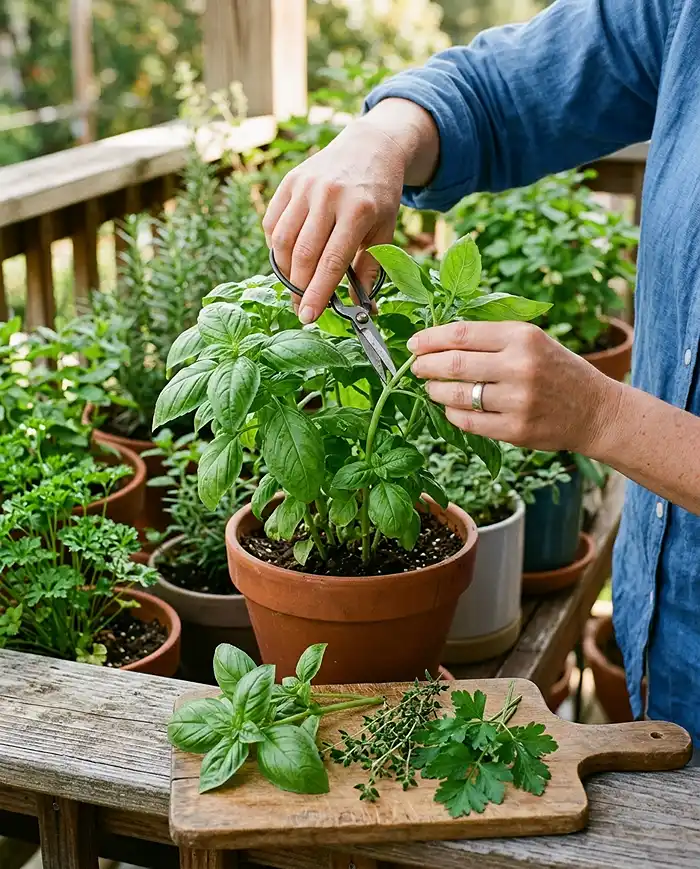
Real Example: I do a quick 10-minute harvest sweep every Sunday morning. Just pinching and snipping keeps everything tidy and gives me enough fresh herbs for the week.
Seasonal Adjustments for Your Herb Garden
Your herb garden layout for balcony setups doesn’t stay static all year. Each season needs a different approach.
Spring Setup and Winter Protection
Quick Answer: Start herbs outdoors after your last frost date. Move tender herbs indoors before the first fall frost — most die at temperatures below 32°F (0°C).
Spring (Zones 5-7): Start seeds indoors 6-8 weeks before last frost. Move seedlings outside after nighttime temps stay above 50°F consistently.
Summer: Increase watering frequency. Watch for heat stress (wilting in midday heat even in moist soil). Provide afternoon shade for cilantro and parsley if temperatures exceed 85°F (29°C) regularly.
Fall: Bring basil in first — it’s the most cold-sensitive, damaged by temps below 50°F. Rosemary, thyme, and oregano survive light frost in Zones 6+.
Winter: Overwinter rosemary and thyme indoors near a south-facing window or under a grow light. A hanging herb garden in your kitchen works perfectly for winter herb growing.
Common Problems and Solutions
Even a well-planned herb garden layout for balcony spaces runs into problems. Here’s how to fix the most common ones fast.
Overcrowded or Leggy Herbs
Quick Answer: Leggy herbs reach for light. Overcrowded herbs compete for space and nutrients. Fix both with thinning, pruning, or relocating to brighter spots.
- Thin seedlings so plants have their full mature spacing — crowding slows all of them down
- Move leggy plants immediately to your sunniest spot and cut them back by one-third
- If your sunniest spot is still low light, focus on shade-tolerant herbs and accept limits
Uneven Watering and Drainage Issues
Quick Answer: Soggy pots need better drainage. Consistently dry pots need bigger containers or more frequent watering. Group by water needs to simplify both problems.
- Soggy soil: add drainage holes, lift pot off the ground, mix in more perlite next repot
- Chronically dry pots: move to shade, add mulch to the surface, or switch to a self-watering container
- Use pot feet to ensure containers drain freely rather than sitting in standing water
Pests on Balcony Herbs
Quick Answer: Aphids and spider mites are the most common balcony herb pests. Treat immediately with neem oil spray or insecticidal soap before populations explode.
- Neem oil: effective against aphids, whitefly, and fungal issues — spray every 7 days until clear
- Insecticidal soap: fast knockdown on soft-bodied insects — safe for edible herbs when used correctly
- Good airflow: space pots 6+ inches apart and avoid overhead watering to reduce pest habitat
For more details on managing outdoor herb pests organically, the University of Maryland Extension pest management guide covers identification and treatment clearly.
Frequently Asked Questions
How do I arrange herbs on a small balcony?
Group herbs by light and water needs first. Place sun-lovers in your sunniest spot, shade-tolerant herbs in shadier corners. Then use vertical space with tiered stands or railing boxes to maximize what a small patio garden can hold.
Which herbs can be planted together?
Herbs with matching sun and water needs grow well together. Rosemary, thyme, and oregano make an ideal combination — all want full sun and lean, dry soil. Avoid planting mint with any other herb, as it spreads aggressively and takes over shared containers.
How much sun do balcony herbs need?
Most culinary herbs need at least 6 hours of direct sun daily. If your balcony gets less, focus on mint, parsley, chives, and cilantro — these four are your best options in a shadier herb garden layout for balcony spaces.
What is the best potting mix for a container herb garden?
Use a quality container-specific potting mix rather than garden soil. For Mediterranean herbs, mix in 20-30% perlite to improve drainage. For moisture-loving herbs, a standard container mix without added perlite works well.
Can I grow herbs on a shaded north-facing balcony?
Yes, but your options are limited. Stick to mint, chives, and parsley — the only common culinary herbs that produce reasonably well under 3 hours of light. Supplementing with a small grow light extends your options significantly.
Key Takeaways
- A herb garden layout for balcony spaces works best when herbs are grouped by light and water needs — not by what looks nice together
- Track sun patterns across your small patio garden for 2-3 days before placing any containers
- Vertical space (tiered stands, railing boxes, wall pockets) is your best tool for a small garden layout with limited floor area
- Mediterranean herbs (rosemary, thyme, oregano) and moisture-lovers (mint, parsley, chives) should always be in separate watering zones
- Harvest every 1-2 weeks to keep your container herb garden productive — neglected herbs bolt or get leggy fast