
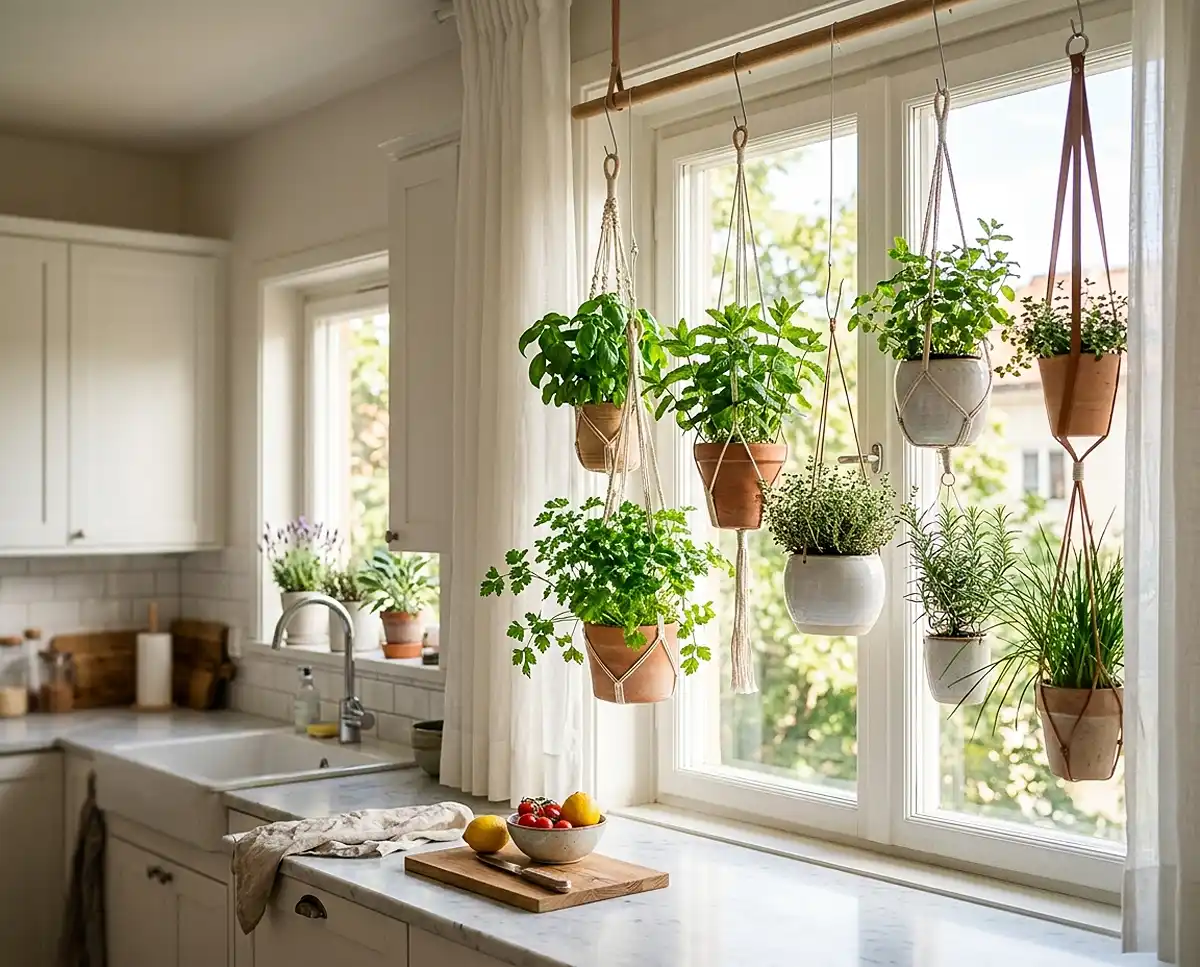
Hanging Herb Garden Ideas for Kitchens
The best hanging herb garden ideas for kitchen spaces let you grow fresh basil, mint, and parsley without giving up a single inch of counter space. If you’re in an apartment, this small space gardening fix is a game-changer.
Table of Contents
Why a Hanging Herb Garden Is Perfect for Apartment Kitchens
Counter space is gold in a small kitchen. A hanging herb garden reclaims your counters while keeping fresh herbs within arm’s reach while you cook.
Vertical gardening works especially well in rentals. You’re not digging up a yard or buying raised beds. A few hooks, some small containers, and the right herbs are all you need.
Beyond practicality, a wall of living greenery genuinely transforms a kitchen. It adds color, texture, and that satisfying feeling of growing your own food — even on the 12th floor.
These herb garden ideas also cost less than a grocery store herb habit. Fresh-cut supermarket herbs run $2–4 per bunch and go limp within days. A hanging kitchen garden pays for itself fast.
Choosing the Right Spot in Your Kitchen
Location is everything with hanging herb gardens. Get it wrong and your herbs stretch, yellow, and die. Get it right and they thrive for months with minimal effort.
Before you hang anything, spend a day watching where the light falls. Which walls get sun in the morning? Which stay dim all day? That observation saves a lot of dead plants.
Finding Adequate Light Near Windows
Quick Answer: South- and west-facing windows are your best bet. They deliver 4–6 hours of direct light — enough for most herbs. East-facing works for shade-tolerant picks.
Here’s how to assess your window light fast:
- South-facing: Bright all day — ideal for basil, thyme, oregano, rosemary
- West-facing: Strong afternoon sun — good for most herbs
- East-facing: Gentle morning light — suits mint, parsley, chives, cilantro
- North-facing: Low light — herbs struggle; a grow light is essential here
Mount your hanging herb garden within 12 inches of the window frame for best results. Every foot further from the glass cuts usable light significantly.
Avoiding Heat, Steam, and Awkward Reach Zones
Quick Answer: Keep herbs at least 3 feet from the stove. Steam and heat dry out foliage fast and can cook roots in small containers.
Other spots to avoid in your small space gardening setup:
- Directly above the stove or next to the oven vent
- Over the dishwasher (steam spikes humidity unpredictably)
- Any spot where you’d need to reach over a hot pan to harvest
- Near heating vents that blast dry air in winter
The over-the-sink area is a popular choice — good light in many kitchens, easy watering access, and no stove-heat risk. Check your window direction first before committing.
Best Herbs for a Hanging Kitchen Garden
Not every herb suits a hanging container. The winners are compact, fast-growing, and actually get used in cooking. Stick with these and you’ll harvest constantly.
| Herb | Light Needed | Pot Size | Harvest Speed |
|---|---|---|---|
| Basil | Bright (6+ hrs) | 6–8 inch | 3–4 weeks |
| Mint | Low–Medium | 6 inch minimum | 2–3 weeks |
| Chives | Medium | 4–6 inch | 3 weeks |
| Parsley | Low–Medium | 6–8 inch | 4–5 weeks |
| Thyme | Bright (6+ hrs) | 4–6 inch | 4 weeks |
| Cilantro | Medium | 6–8 inch | 3–4 weeks |
| Oregano | Bright (6+ hrs) | 6 inch | 4–6 weeks |
Easy Herbs for Low Light
Quick Answer: Mint, parsley, chives, and cilantro tolerate 3–4 hours of indirect light. They’re the go-to picks for east-facing windows or dimmer kitchens.
- Mint: Grows aggressively — keep it in its own container or it’ll take over. Prefers consistently moist soil.
- Parsley: Slow to start from seed; buy a transplant. Needs a deeper pot (6–8 inches) for its taproot.
- Chives: Nearly indestructible. Snip regularly to keep them bushy. Goes dormant below 50°F.
- Cilantro: Bolts quickly in heat. Keep it in the cooler part of the kitchen and succession-sow every 3–4 weeks.
Pro Tip: Plant cilantro densely — 6–8 seeds per 6-inch pot — and harvest as microgreens before it bolts.
Herbs That Need Bright Light
Quick Answer: Basil, thyme, oregano, and rosemary all need 6+ hours of direct sun or a quality LED grow light. South-facing windows are ideal for these.
- Basil: The most popular herb in a hanging kitchen garden. Pinch flowers immediately to extend the harvest by weeks.
- Thyme: Drought-tolerant — let the top inch of soil dry out between waterings. Great for forgetful waterers.
- Oregano: Spreads wide; use a 6-inch pot minimum. Harvest frequently to prevent woody stems.
- Rosemary: Needs excellent drainage and 6+ hours of sun. Struggles in dim apartments without supplemental light.
Pro Tip: A single 20W full-spectrum LED panel 12 inches above your bright-light herbs adds 4–6 hours of usable light — enough to grow basil in a north-facing kitchen.
Hanging Herb Garden Ideas and Styles
There’s no shortage of ways to set up a hanging herb garden for your kitchen. These are the most popular small space gardening styles, from budget DIY to sleek and modern.
The right style depends on your kitchen’s aesthetic, your wall situation (rentals vs. owned), and how much you want to spend upfront.
Mason Jar and Tin Can Wall Planters
Quick Answer: Mount mason jars or upcycled tin cans on a wood plank or metal rail for a budget-friendly, rustic herb wall that costs under $30 to build.
Drill a drainage hole in the bottom of each jar or can. Mount a 1×6 board to studs and attach hose clamps or pipe clamps to hold each container. Works with quart mason jars, coffee cans, or tomato tins.
Real Example: I built a three-jar basil and mint wall planter last spring using a reclaimed pallet board and pipe clamps from the hardware store. Total cost: $18. It’s held up through two full growing seasons.
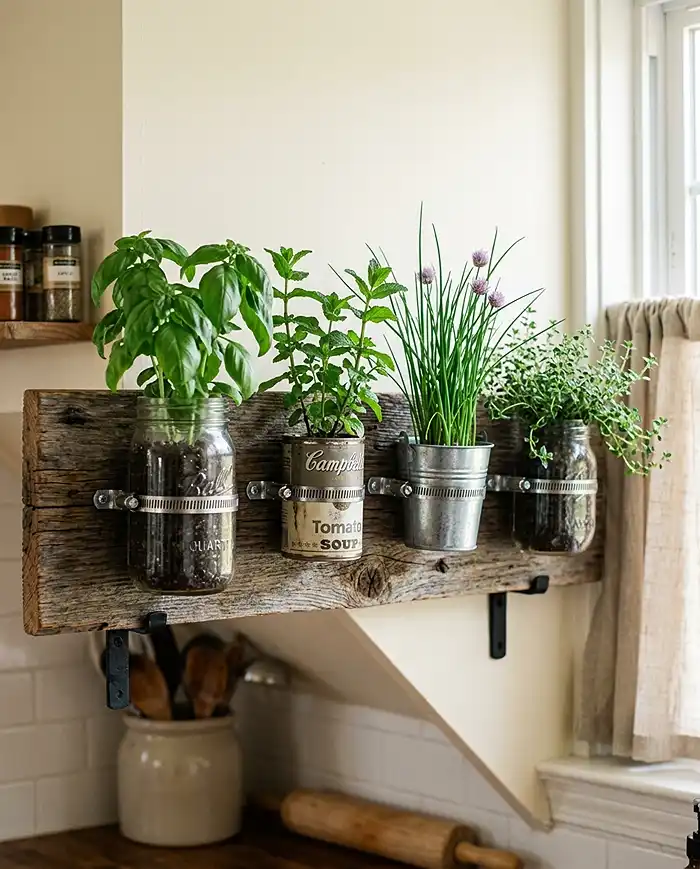
Pro Tip: Line tin cans with a thin plastic bag before adding soil to prevent rust from leaching into the mix.
Hanging Baskets, Macrame, and Tiered Holders
Quick Answer: Ceiling hooks with macrame hangers or tiered basket systems use vertical air space efficiently — great for kitchens with high ceilings and strong natural light from above.
Macrame hangers hold 4–6 inch pots and add a warm, textural look to the kitchen. Tiered hanging baskets (2–3 tiers) let you stack herbs vertically — put trailing herbs like thyme at the top, bushier ones like parsley below.
For renters, swag-hook adhesives rated for 15–20 lbs work for lightweight setups. For heavier tiered systems, screw into a ceiling stud.
Pro Tip: Rotate tiered baskets a quarter turn each week so all sides get even light exposure.
Rail, Rod, and Over-the-Sink Systems
Quick Answer: A tension rod in a window frame or S-hooks on a curtain rail creates a no-drill herb garden perfect for renters. Over-sink shelves add counter-adjacent storage.
Tension rods rated at 10–15 lbs fit most window frames. Hang small pots with S-hooks — space them 4–6 inches apart so leaves don’t crowd. This is one of the most practical herb garden ideas for renters who can’t drill walls.
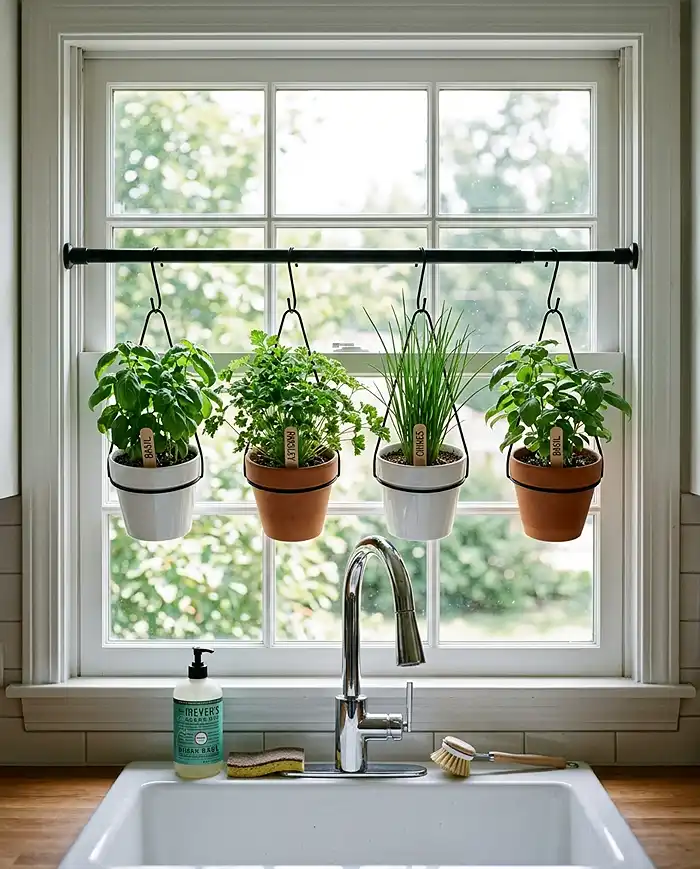
Over-the-sink systems use a single tension rod or a purpose-built caddy. The sink window usually gets decent light and the location makes watering mess-free.
Pro Tip: Use clip-style pot holders instead of wire baskets on tension rods — they grip the rim without needing the pot to have drainage hooks.
Tools and Materials You’ll Need
Here’s everything to gather before you start. You don’t need all of it — pick based on your chosen style.
| Item | What to Look For | Approx. Cost |
|---|---|---|
| Containers | 4–8 inch pots with drainage holes | $2–8 each |
| Hooks/hangers | Rated for at least 10 lbs per hook | $5–15 |
| Potting mix | Lightweight mix for containers; avoid garden soil | $8–15/bag |
| Drip trays | Sized to fit under each pot | $1–3 each |
| Perlite | Mix 20% into potting soil for drainage | $6–10/bag |
| Macrame or basket | Rated for your pot + soil weight (usually 3–5 lbs) | $10–25 |
| Stud finder | Magnetic type works fine for basic use | $10–20 |
For a renter-safe setup, also grab Command strips rated for 5+ lbs, a level, and a pencil for marking hook placement before you commit.
How to Set Up Your Hanging Herb Garden
Once you’ve picked your style and gathered materials, setup takes less than an afternoon. Here’s the exact process from bare wall to planted herbs.
Mounting Hooks and Hangers Securely
Quick Answer: Find a stud for heavy systems; use adhesive hooks rated for the weight for lightweight setups. Always test before hanging planted pots.
Steps for secure mounting:
- Use a stud finder to locate studs (typically 16 inches apart in most apartments)
- Mark stud centers with a pencil before drilling
- Use 2.5-inch wood screws with a hook attachment for stud-mounted systems
- For adhesive hooks, clean the wall with rubbing alcohol first and let cure 24 hours before loading
- Test each hook with 1.5x the expected weight before hanging plants
A 6-inch pot with moist soil typically weighs 3–5 lbs. A three-pot wall plank can hit 20+ lbs — always use studs for anything over 15 lbs total.
Pro Tip: Take a photo of your hook/screw locations before patching when you move out — renters thank themselves later.
Planting Herbs in Hanging Containers
Quick Answer: Use lightweight container mix, ensure drainage holes are clear, and don’t overfill pots — leave 1 inch of space at the top for watering.
Planting steps that matter most for hanging containers:
- Place a small piece of window screen over the drainage hole to prevent soil loss without blocking water
- Mix potting soil with 20% perlite for faster drainage (essential in small containers)
- Set herb transplants at the same soil depth they were in their nursery pot
- Space herbs in mixed planters at least 4 inches apart to allow air circulation
- Water thoroughly until it drains from the bottom before hanging
Don’t mix aggressive spreaders like mint with other herbs. Mint will win every time. Give it its own pot.
Watering and Care for Hanging Herbs
Hanging containers dry out faster than ground-level pots. The elevated position increases air exposure, and small containers have less soil volume to buffer moisture swings.
Plan to check soil moisture every 1–2 days in summer, every 3–4 days in winter. Stick your finger 1 inch into the soil — if it’s dry, water. If it’s still damp, wait.
Watering Without Drips and Spills
Quick Answer: Use drip trays under every pot, or bottom-water by taking pots down to the sink. Both methods protect your floors and counters from water damage.
- Drip trays: Non-negotiable for wall-mounted systems. Check and empty them after every watering.
- Removable liners: Plastic inner liners let you water in the sink and rehang — no mess, perfect drainage.
- Bottom watering: Set the pot in 2 inches of water for 20 minutes. The soil wicks up moisture from below — reduces surface evaporation.
- Squeeze bottles: A narrow-spout bottle lets you water precisely without splashing foliage.
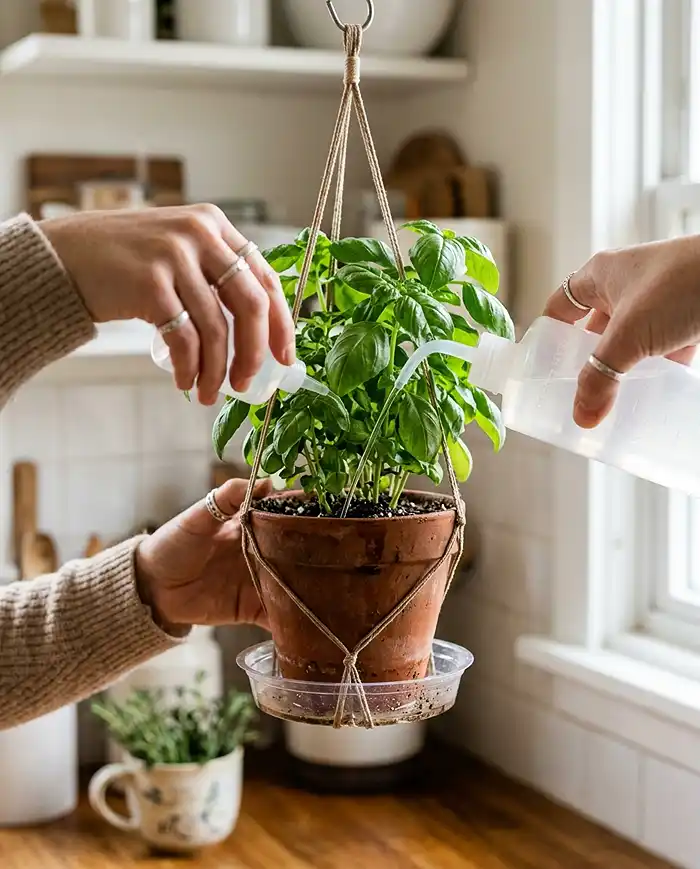
Pro Tip: Add a thin layer of pea gravel to the top of hanging pots to slow surface evaporation and reduce watering frequency by 30–40%.
Feeding, Pruning, and Harvesting
Quick Answer: Feed with a diluted liquid fertilizer every 2–3 weeks during active growth. Pinch regularly to keep herbs bushy and delay flowering.
Key care habits for a productive hanging herb garden:
- Fertilizing: Use a balanced liquid fertilizer (10-10-10) at half the label dose every 2–3 weeks. Overfeeding causes lush growth with less flavor.
- Pinching: Remove the growing tip above a leaf node to encourage branching. Do this every 1–2 weeks on basil.
- Harvesting: Always cut stems, not individual leaves. Take no more than one-third of the plant at once.
- Deadheading: Removing spent flowers [snipping off flower stalks before seeds form] redirects energy back to leaf production.
Seasonal Care and Year-Round Growing
Indoor herb gardens have a big advantage over outdoor ones: you’re not fighting frost or intense summer heat. But indoor light changes dramatically with the seasons, especially in apartments.
In summer, a south-facing window delivers up to 8 hours of strong direct light. By December in most of the US (USDA zones 4–7), that same window may drop to 3–4 hours of weak, low-angle light. Most herbs need a supplement.
Boosting Winter Light With Grow Lights
Quick Answer: Add a full-spectrum LED grow light from October through March to compensate for shorter days. Set it on a timer for 12–14 hours daily.
What actually works for winter herb gardening:
- Full-spectrum LEDs in the 4000–6500K range mimic natural daylight most closely
- Position the light 6–12 inches above the herb canopy for best results
- Set a timer — herbs need a dark period. 14 hours light, 10 hours dark is the sweet spot.
- Cut watering frequency by 30–40% in winter as growth slows naturally
- Stop fertilizing from November through January; resume in February as day length increases
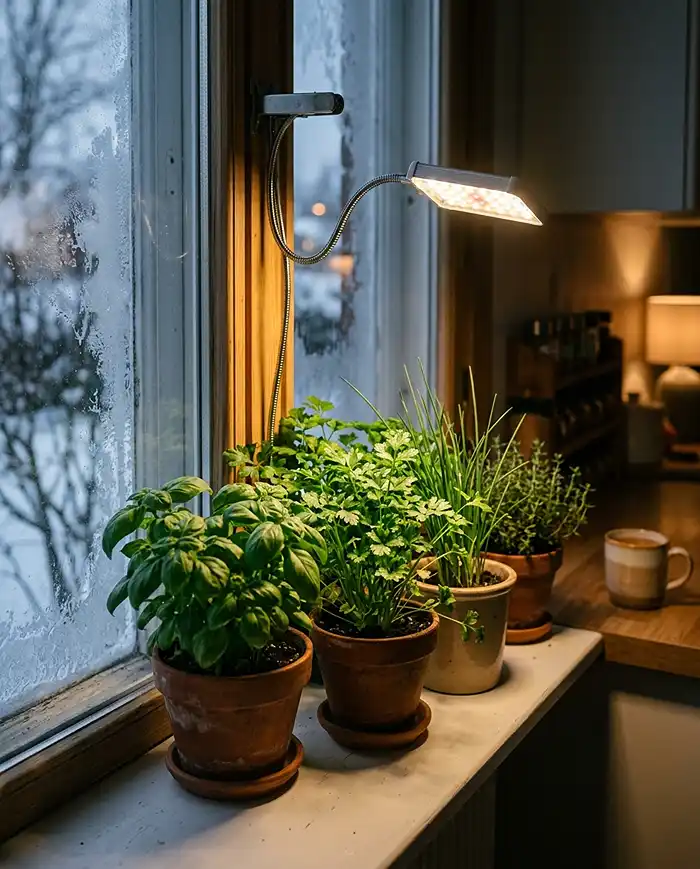
A clip-on LED grow light costs $15–30 and clips directly to a shelf or tension rod — no extra mounting needed. It’s one of the most practical upgrades for year-round small space gardening.
Check out the University of Maryland Extension’s guide on growing herbs indoors for detailed light requirement charts by herb variety.
Common Problems and Solutions
Most hanging herb garden problems come down to light, water, or pests. Here’s how to spot them fast and fix them before you lose the plant.
Leggy, Pale, or Stretching Herbs
Quick Answer: Leggy growth means insufficient light. The plant is stretching toward the nearest light source.
Move the pot within 6 inches of your brightest window, or add a grow light. Pinch back the stretched stems to encourage compact regrowth. If you’re already at the brightest spot in your kitchen, a grow light is the only real fix.
Wilting or Drying Out Too Fast
Quick Answer: Hanging pots lose moisture faster than floor-level containers. Check soil moisture daily in warm months.
Switch to larger containers (6–8 inch vs. 4 inch) to hold more moisture. Add water-retaining crystals to the potting mix. Self-watering inserts that create a reservoir at the bottom reduce watering frequency significantly for busy cooks. See how this pairs with choosing containers for challenging conditions for more container selection tips.
Pests Like Fungus Gnats and Aphids
Quick Answer: Fungus gnats come from overwatering; aphids spread from nearby plants. Both are controllable without harsh chemicals.
- Fungus gnats: Let the top 2 inches of soil dry completely between waterings. Use yellow sticky traps to catch adults. A layer of coarse sand on the soil surface disrupts their breeding cycle.
- Aphids: Spray with diluted insecticidal soap (1 tsp per quart of water) directly on affected leaves. Repeat every 5–7 days for 3 weeks.
hanging herb garden ideas for kitchen FAQs
What herbs grow best in a hanging kitchen garden?
Mint, basil, parsley, and chives are the best starting picks. They’re compact, fast-growing, and actually useful in everyday cooking. Basil and thyme need bright light; mint, parsley, and chives tolerate lower-light spots near east-facing windows.
How do I water hanging herbs without making a mess?
Use drip trays under every pot and empty them after each watering. For wall-mounted pots, a narrow-spout squeeze bottle gives you precise control. Bottom-watering in the sink once a week is the cleanest method — just soak for 20 minutes and rehang.
Can herbs grow indoors without much sunlight?
Low-light herbs like mint, parsley, chives, and cilantro manage on 3–4 hours of indirect light. For truly dim kitchens, a full-spectrum LED grow light set to 12–14 hours daily is the most reliable fix — it makes almost any herb variety workable indoors.
How do I keep renters from damaging walls when hanging herb planters?
Adhesive hooks rated for 5–10 lbs are your best option for lightweight setups. Clean the wall with rubbing alcohol before applying and let cure for 24 hours. For heavier systems, find studs and use proper screws — most landlords allow small screw holes that can be patched on move-out.
What potting mix should I use for hanging herb containers?
Use a lightweight potting mix specifically formulated for containers — not garden soil, which compacts and blocks drainage in small pots. Mix in 20% perlite to improve drainage further. Herbs in hanging containers need fast-draining soil to prevent root rot.
Key Takeaways
- The best hanging herb garden ideas for kitchen spaces prioritize light access first — assess your window direction before buying a single pot.
- Mint, parsley, chives, and cilantro thrive in lower-light conditions; basil, thyme, oregano, and rosemary need 6+ hours of bright light or a grow light supplement.
- Vertical gardening in a rental kitchen works best with tension rods, S-hooks, and adhesive hooks rated for the weight of your containers.
- Hanging containers dry out faster than floor-level pots — check soil moisture every 1–2 days in summer and use drip trays to protect floors.
- A $15–30 full-spectrum LED grow light extends your herb garden ideas through winter when natural light drops below usable levels. Explore more small space gardening ideas to keep growing year-round.