
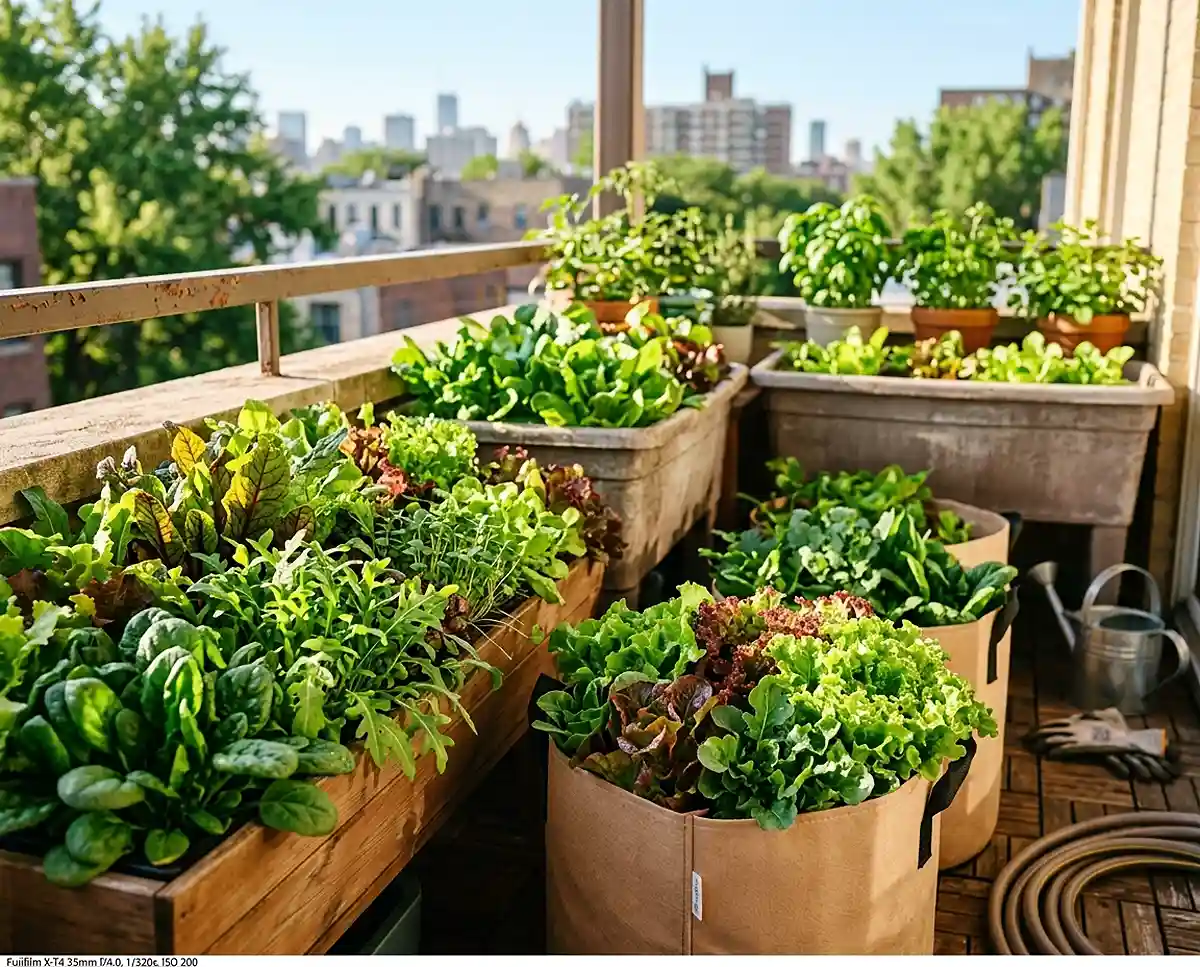
Container Salad Garden for Continuous Harvests
A container salad garden gives you fresh greens all season long — no yard required. With the right crops, containers, and a simple succession plan, you’ll never run out of salad again.
Table of Contents
Grow Endless Salads From a Few Containers
Most people plant a few lettuce seeds, harvest once, and wonder why the garden feels done. The secret to a container salad garden that keeps producing is combining two techniques: succession sowing and cut-and-come-again harvesting.
This guide walks you through everything — container choices, the best greens, soil setup, and a foolproof harvest method that works whether you’re working with a balcony vertical garden, a sunny windowsill, or a small patio.
Small space gardening doesn’t mean sacrificing variety. A few well-managed containers can outproduce a traditional raised bed when you work smarter, not bigger.
Planning Your Container Salad Garden
Good planning saves you from replanting mistakes and wasted containers. Start by choosing your location, then match your containers and crops to what actually grows well there.
Think in terms of batches, not a single planting. A container salad garden works best when you treat it like a rotating pantry — always something ready, always something coming up behind it.
Vertical gardening is worth considering if floor space is tight. A tiered planter setup stacks growing space without taking up more room on your balcony or patio.
Choosing the Right Containers and Depth
Quick Answer: Salad greens have shallow roots. You need at least 6 inches of depth, but 8–10 inches gives roots more room and dries out less fast.
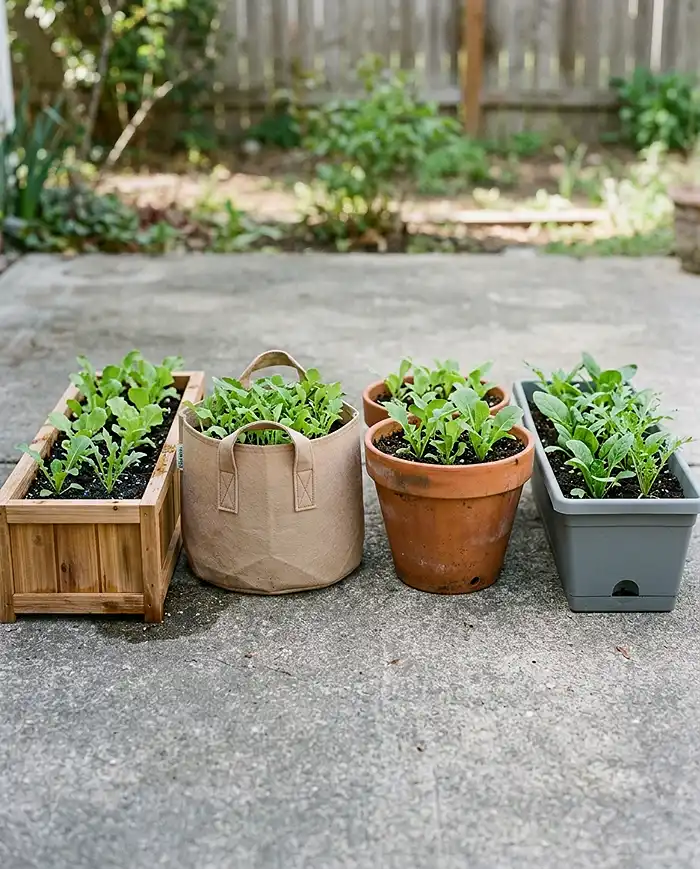
| Container Type | Best For | Watch Out For |
|---|---|---|
| Window box (8″ deep) | Loose-leaf lettuce, arugula | Dries out fast in heat |
| Fabric grow bag (7–10 gal) | Mixed greens, spinach | Needs more frequent watering |
| Terracotta pot (10–12″ wide) | Single variety per pot | Heavy, porous (dries fast) |
| Plastic trough (12″+ long) | Succession rows, baby kale | Less drainage if holes are small |
Real Example: I switched from terracotta to fabric grow bags one spring and immediately noticed the lettuce stayed moist longer between waterings — a game-changer in July heat.
Pro Tip: Drill extra drainage holes if your container only came with one or two — soggy roots kill greens faster than drought does.
Finding the Best Light for Greens
Quick Answer: Salad greens want 4–6 hours of sun. In summer, afternoon shade actually helps. Morning sun plus afternoon shade is the sweet spot.
- Spring and fall: full sun (6+ hours) speeds up growth
- Summer: 4 hours of morning sun prevents bolting and bitterness
- Partial shade works for spinach, arugula, and mache
- North-facing balconies can still grow greens — check our guide on plants that thrive in shade
Pro Tip: Move containers throughout the season — shade them with a taller pot or a simple cloth screen once temperatures hit 80°F consistently.
Best Salad Greens for Continuous Harvest
Not all greens work equally well in a container salad garden. You want varieties that either regrow after cutting or mature so quickly you can resow them constantly.
Mix both types in your containers: slow-but-steady cut-and-come-again greens alongside fast-turnaround crops. That combination keeps your salad bowl filled no matter the season.
Cut-and-Come-Again Lettuces and Leafy Greens
Quick Answer: These greens regrow from the base after you harvest outer leaves. One planting gives you 3–5 harvests before the plant bolts.
- Loose-leaf lettuce (varieties: ‘Black Seeded Simpson’, ‘Red Sails’) — ready in 45–50 days, regrows 3–4 times
- Spinach (‘Bloomsdale’, ‘Space’) — best in cool weather, harvest outer leaves from 40 days
- Swiss chard (‘Bright Lights’) — slower but lasts all season, harvest from 50–60 days
- Kale (‘Dwarf Siberian’) — cold-hardy, keeps producing well into fall
- Sorrel — perennial in zones 5–9, harvest all season once established
Pro Tip: Never cut more than one-third of the plant at once — taking too much slows regrowth significantly.
Fast-Growing Greens for Quick Harvests
Quick Answer: These are your gap-fillers. Sow them between slower crops to keep harvests coming every week.
- Arugula — ready in 21–30 days, sharp peppery flavor; bolt-resistant varieties like ‘Astro’ last longer
- Mizuna — feathery Japanese mustard green, ready in 21 days, mild and versatile
- Baby kale — harvest at 25–30 days for tender leaves; more heat-tolerant than lettuce
- Claytonia (miner’s lettuce) — loves cool weather, germinates in 7–10 days
- Radish microgreens — ready in 10–14 days, excellent for filling gaps between larger crops
Pro Tip: Arugula and mizuna are ideal for small space gardening — both grow densely in a 6-inch-wide strip and produce for weeks.
Soil and Setup Essentials
Greens are fast-growing and hungry. They need a light, moisture-retentive mix that drains well and delivers steady nutrients. Standard garden soil compacts in containers and chokes roots.
The goal is a mix that holds moisture between waterings but never stays waterlogged. Salad greens hate sitting in soggy soil — roots rot fast and flavor turns bitter.
Best Soil Mix for Leafy Greens
Quick Answer: Mix your own for best results. A 60/30/10 blend of potting mix, compost, and perlite hits the right balance of drainage and fertility.
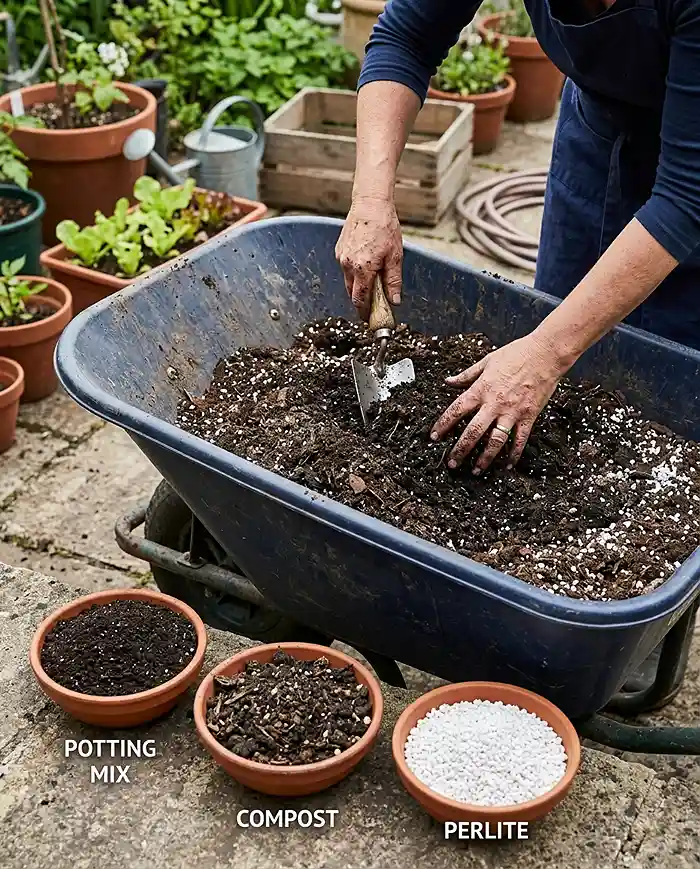
| Ingredient | Ratio | Purpose |
|---|---|---|
| Quality potting mix | 60% | Base structure and moisture retention |
| Compost (aged) | 30% | Nutrition and microbial activity |
| Perlite | 10% | Drainage, prevents compaction |
Real Example: I tried a straight bagged potting mix one season and the lettuce grew slowly with yellow leaves. Adding 30% homemade compost the next season turned the same variety into lush, dark green plants ready two weeks earlier.
Pro Tip: Add a slow-release granular fertilizer (5-5-5 or similar) to your mix at planting — it feeds greens for 6–8 weeks without any effort.
Tools and Materials Checklist
Keep it simple. A container salad garden doesn’t need much equipment — just the right basics ready before you sow your first seeds.
- Containers: window boxes, fabric grow bags, or plastic troughs (8–10″ deep minimum)
- Potting mix, aged compost, perlite
- Seeds: at least 2–3 varieties of greens for succession planting
- Watering can with a gentle rose head (avoids washing seeds out)
- Garden snips or scissors dedicated to harvesting
- Plant labels and a waterproof marker (track sow dates)
- Slow-release granular fertilizer (optional but recommended)
- Liquid seaweed or fish emulsion for mid-season feeding
Step-by-Step: Planting for Continuous Harvest
The biggest mistake container gardeners make is sowing everything at once. You get one big glut of salad and then nothing for weeks. The fix is succession sowing — small batches, staggered over time.
Combine that with the cut-and-come-again method and your container salad garden produces steadily from early spring through late fall in most climates (zones 4–9).
Succession Sowing for a Steady Supply
Quick Answer: Sow a small batch of seeds every 2 weeks. When the first batch is ready to harvest, the next is just germinating.
- Divide your container or set aside one small pot for each new sowing
- Start with fast growers (arugula, mizuna) on week 1
- Add loose-leaf lettuce on week 2, spinach on week 4
- Keep a sowing calendar — a simple notebook or phone note works fine
- In summer, skip heat-sensitive crops; switch to heat-tolerant varieties like New Zealand spinach
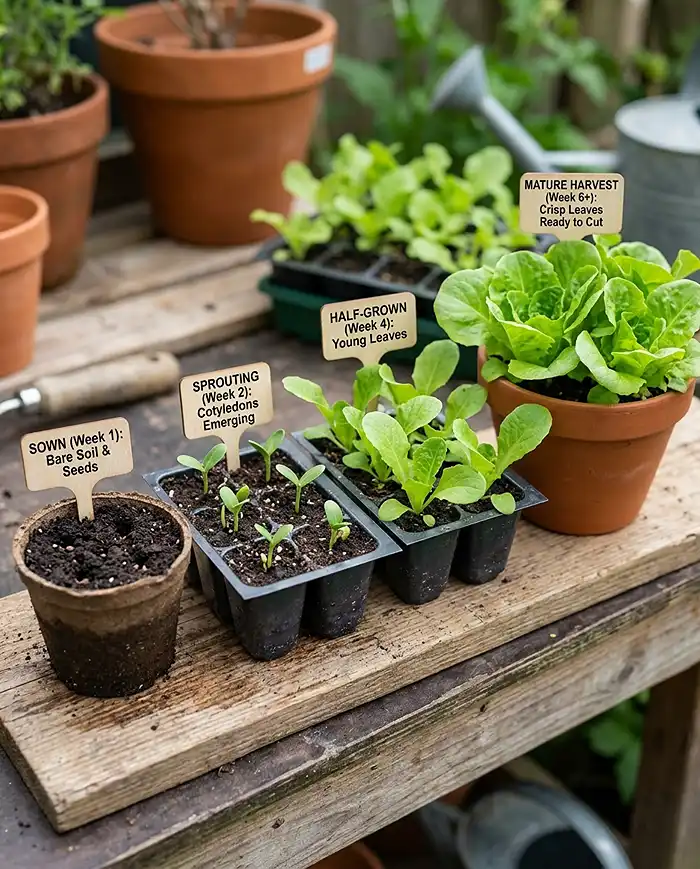
Real Example: Last spring, I started a window box of ‘Black Seeded Simpson’ lettuce every two weeks from March through May. By mid-April I was harvesting every other day without a single gap.
Pro Tip: Pre-sow your next batch in a small cell tray so it’s ready to transplant the moment you pull out a spent plant — no gap in production.
The Cut-and-Come-Again Technique
Quick Answer: Harvest outer leaves only, leaving the center growing point intact. The plant regrows from the center and gives you multiple harvests.
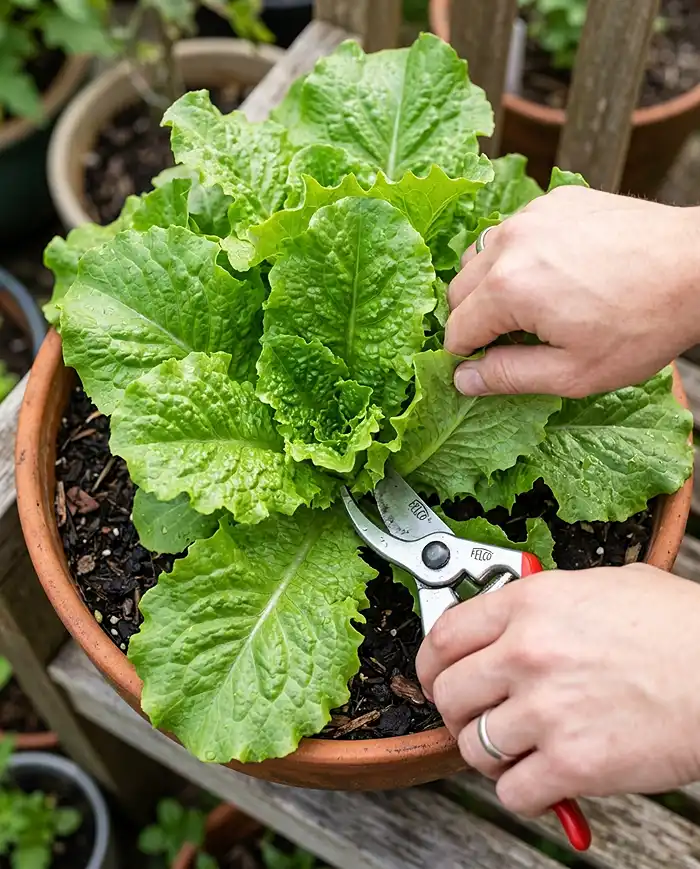
- Use sharp, clean scissors or garden snips — tearing damages the plant
- Cut leaves 1 inch above the soil surface on dense-sown patches
- For individual plants, take outer leaves and leave 3–4 inner leaves intact
- Harvest in the morning when leaves are crisp and fully hydrated
- After 3–4 harvests, plants will bolt — pull and resow that container spot
Pro Tip: Rinse your snips with rubbing alcohol between plants to avoid spreading disease, especially in humid weather.
Watering and Feeding for Tender Greens
Containers dry out much faster than garden beds, especially in summer heat. Salad greens stressed by irregular watering turn bitter and bolt early — consistent moisture is the single biggest factor in great-tasting greens.
Check soil moisture daily by pushing a finger 1–2 inches into the mix. If it’s dry, water. If it’s still damp, wait. Overwatering is just as damaging as drought for container greens.
- Water in the morning to reduce fungal risk
- Use a watering can with a gentle rose head to avoid disturbing young seedlings
- Self-watering containers are worth the investment for balcony gardens in heat
- Feed every 2–3 weeks with diluted liquid fish emulsion or seaweed fertilizer
- Cut fertilizer if leaves taste overly strong — excess nitrogen makes greens bitter
Keeping Greens From Turning Bitter
Quick Answer: Bitterness comes from heat and water stress. Keep roots cool and consistently moist, and your greens will stay sweet and mild.
- Mulch the soil surface with a thin layer of compost to retain moisture and lower soil temp
- Group containers together — they shade each other’s roots and retain more humidity
- Move pots to morning-sun-only positions once temps exceed 75°F
- Switch to slower-bolting varieties in summer: ‘Jericho’ romaine, ‘Slobolt’ leaf lettuce
Pro Tip: A single layer of shade cloth (30–40% block) draped over containers during a heat wave can extend your harvest by 2–3 weeks.
Seasonal Care: Growing Greens in Heat and Cool Weather
A container salad garden can produce almost year-round in most climates. The key is shifting your crop selection and management strategy with the seasons rather than fighting the weather.
Spring (zones 5–9): Start sowing 4–6 weeks before your last frost date. Lettuce, spinach, and arugula handle light frosts down to 28°F.
Summer: Focus on heat-tolerant crops — New Zealand spinach, Malabar spinach, and Swiss chard. Use shade cloth and group containers.
Fall: Resume cool-season sowing 8 weeks before first frost. Cover containers with floating row cover to extend harvest 4–6 weeks into cold weather.
Winter (zones 7–9): A cold frame over your containers keeps greens going through most winters. Even in zone 6, kale and mache survive with protection.
Common Problems and Solutions
Greens Bolting and Turning Bitter
Quick Answer: Bolting is triggered by heat and long days. Once it starts, the plant shifts energy to seed production and flavor drops fast.
- Switch to bolt-resistant varieties for summer (check seed packets for “slow to bolt” labels)
- Provide afternoon shade once daytime temps pass 75°F consistently
- Harvest frequently — the more you cut, the longer bolt is delayed
- When a plant bolts, pull it immediately and resow; bolted plants don’t recover
Slow or Leggy Growth
Quick Answer: Leggy, pale greens usually mean not enough light or not enough nitrogen. Both are easy to fix.
- Move containers to a brighter spot — 4 hours of direct sun minimum
- Feed with a nitrogen-rich liquid fertilizer (fish emulsion works well) every 2 weeks
- Check that roots aren’t circling the bottom of the pot — repot up one size if so
- Thin overcrowded seedlings to 4–6 inches apart for proper airflow and growth
Pests Like Aphids and Slugs
Quick Answer: Both are common but controllable without chemicals in a container salad garden.
- Aphids: Blast off with a strong water jet; apply diluted neem oil spray weekly if they return
- Slugs: Place containers on pot feet to reduce slug access; use copper tape around pot rims
- Inspect the undersides of leaves every few days — early detection makes control easy
Frequently Asked Questions
How do I grow lettuce for continuous harvest?
Use two methods together: succession sowing and cut-and-come-again harvesting. Sow small batches of seeds every two weeks so something is always maturing. Harvest outer leaves only, leaving the center intact so the plant regrows. One container can produce 3-5 harvests before it bolts.
What salad greens grow best in containers?
Loose-leaf lettuces, arugula, spinach, mizuna, and baby kale are the best choices for a container salad garden. They have shallow roots, grow quickly, and tolerate the confined space well. For year-round harvests, add Swiss chard and New Zealand spinach for summer and kale for fall.
How often should I water container salad greens?
Check daily and water when the top inch of soil feels dry. In summer, containers may need water every day. In cool spring or fall weather, every 2-3 days is typical. Consistent moisture is key — irregular watering causes bitterness and bolting faster than almost anything else.
Why do my lettuce plants turn bitter?
Heat and water stress are the two main causes. When temperatures rise above 75°F or soil dries out repeatedly, lettuce triggers bolting and taste turns sharp. Fix it by moving containers to morning sun only, watering consistently, and switching to heat-tolerant varieties like ‘Jericho’ romaine.
Key Takeaways
- A container salad garden produces all season when you combine succession sowing with cut-and-come-again harvesting
- Use containers at least 8 inches deep with a 60/30/10 potting mix, compost, and perlite blend
- Sow new batches every two weeks and harvest outer leaves only — never more than one-third of the plant at once
- Consistent watering and afternoon shade are your best tools against bitterness and bolting in summer
- Small space gardening and balcony vertical garden setups can be just as productive as larger gardens with the right crop rotation strategy — see how peppers and eggplant in containers can round out your edible container garden beyond greens