
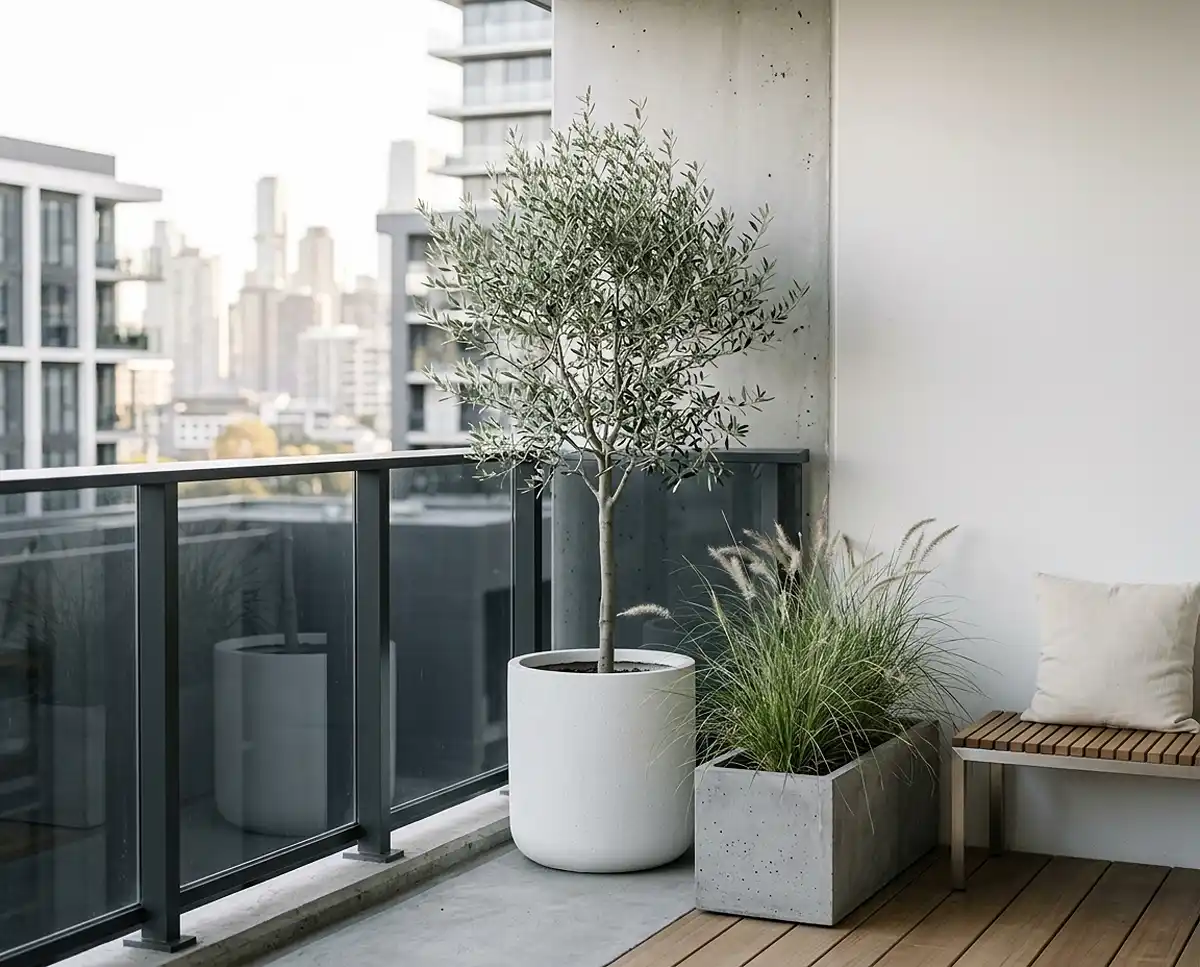
Minimalist Balcony Garden Inspiration
Your minimalist balcony garden doesn’t have to look bare — it just has to be intentional. With the right small balcony garden approach, even 40 square feet can feel like a calm, designed retreat.
Miss this and your apartment gardening space ends up looking like a cluttered plant nursery. Get it right, and it feels like an extension of your home.
Table of Contents
What Makes a Balcony Garden Minimalist
A minimalist balcony garden isn’t about having fewer plants — it’s about having the right ones, placed with purpose. The aesthetic is built on clean lines, intentional restraint, and deliberate negative space.
Think neutral tones: concrete grey, warm white, matte black, natural terracotta. No clashing colors, no impulse buys crammed into every corner.
The goal is visual calm. When you step onto your balcony, your eye should rest — not dart from pot to pot trying to process chaos. That’s the entire philosophy in one sentence.
Minimalist balcony garden design borrows from Japanese garden principles and Scandinavian interiors. Less is intentional. Space is a design element, not wasted real estate.
Planning Your Minimalist Balcony Garden
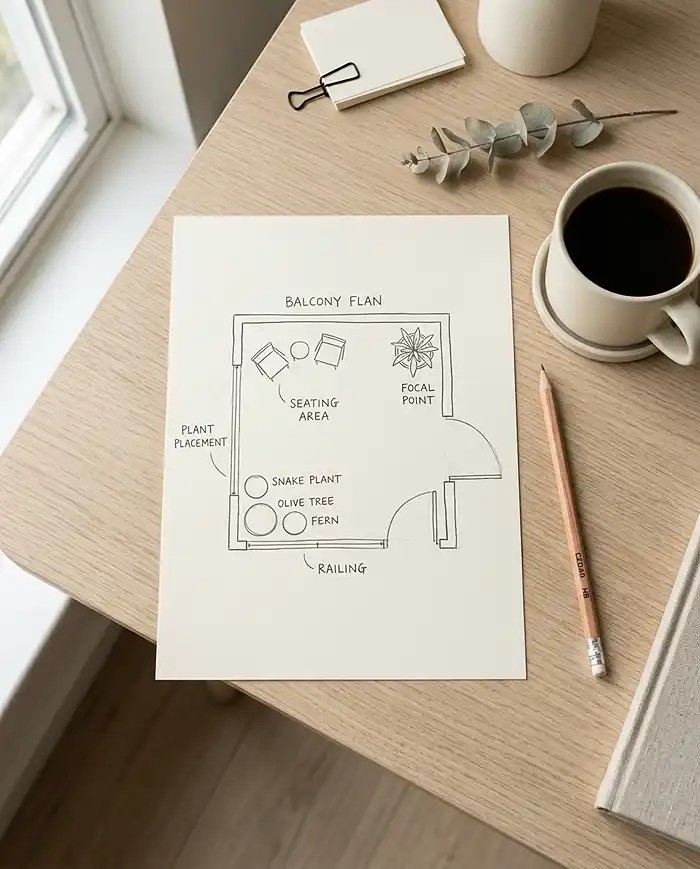
Before you buy a single pot, map your space on paper. Sketch your balcony’s dimensions, note where the door is, and mark where you want to sit. Planning prevents clutter before it starts.
Decide on one focal point — a statement plant, a small water feature, or a single dramatic container. Everything else supports that focal point. Resist the urge to have three focal points. That’s just chaos with good intentions.
Your palette and your plant list should be locked in before you order anything. Impulse buys are the enemy of a small balcony garden that actually looks designed.
Assessing Light, Space, and Sightlines
Quick Answer: Track sun exposure across your balcony for one full day before choosing plants. Most apartment balconies get 3–6 hours of direct light, which shapes every plant decision you make.
Stand at your doorway and look out. What’s the sightline? That’s your most important view — design for it. Keep the foreground clear so the eye travels to your focal point without obstruction.
South and west-facing balconies (USDA zones 5–9) get the most sun. North-facing ones need shade-tolerant plants like ferns or peace lilies. East-facing balconies are ideal for most herbs and grasses.
Pro Tip: Mark sun and shade zones on your sketch with a simple S/Sh notation — it’ll save you from buying the wrong plants entirely.
Choosing a Restrained Color Palette
Quick Answer: Stick to two or three tones max. Neutral base (concrete, white, or black pots) plus one plant color accent — green-only, or blue-green, or silver-grey foliage.
| Palette | Best For | Watch Out For |
|---|---|---|
| All-green + white pots | Crisp, modern look | Can look flat without texture variation |
| Grey-green + concrete | Industrial/urban aesthetic | Needs a warm accent (wood, linen) to soften |
| Black + dark foliage | Dramatic, editorial style | Can feel heavy on small balconies |
| Terracotta + warm greens | Mediterranean warmth | Easy to overload with too many pots |
Real Example: Last spring I switched my balcony from a mixed-color mess to all matte white pots with green-only plants. The difference was immediate — it looked twice as large and ten times more intentional.
Pro Tip: Buy one pot first, live with it for a week, then match everything else to it.
The Core Principles of Minimalist Garden Design
Good minimalist balcony garden design follows a short list of rules. Break one and the whole thing unravels. Follow them and even a $50 setup looks like a professional landscape job.
- Less is more: Five well-chosen plants beat fifteen random ones every time
- Repetition creates cohesion: Use the same pot style throughout — even two different shapes breaks the unity
- Quality over quantity: One large statement plant costs less than ten small ones and looks better
- Negative space is active design: Empty floor space, visible railing, bare wall — these are part of the composition, not gaps to fill
Embracing Negative Space and Simplicity
Quick Answer: Negative space — intentional emptiness — is what separates a minimalist balcony garden from a crowded one. It creates visual breathing room and makes everything else look more intentional.
Most people feel uncomfortable leaving space empty. That discomfort is the enemy of minimalism. Push through it. An empty corner with one architectural plant looks deliberate. That same corner crammed with four small pots looks like a sale rack.
Think of your railing as a frame and your empty floor as the matte in that frame. The plant is the art.
Pro Tip: If you feel the urge to add something, wait 48 hours first. That urge usually passes.
Repetition and Cohesive Containers
Quick Answer: Pick one pot style, buy multiples in two or three sizes, and use only those. Repetition is the fastest way to make a small balcony garden look professionally designed.
The same concept applies to plants. Three pots of the same ornamental grass in graduating sizes looks sculptural. Three different grasses in three different pots looks like indecision.
Real Example: I used four identical matte concrete cylinders — two large, two small — with the same variety of Japanese forest grass. Total cost: about $80. It looked like a hotel terrace.
Pro Tip: Odd numbers (3, 5) group more naturally than even numbers when arranging containers.
Best Plants for a Minimalist Balcony
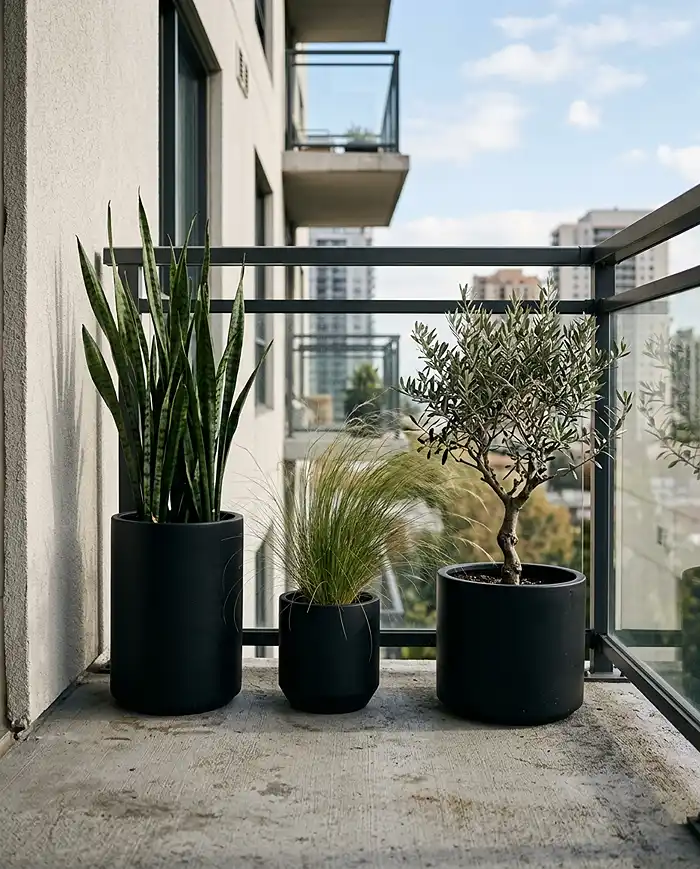
The best minimalist balcony garden plants have strong, simple forms. They don’t shout. They anchor. You want architectural shapes, not busy textures or distracting flower colors.
Low maintenance is non-negotiable here — a minimalist garden with dying plants isn’t minimal, it’s neglected. Stick to species that forgive missed waterings and don’t need constant deadheading [removing spent flowers].
For apartment gardening, weight matters too. Balconies typically support 40–80 lbs per square foot. Use lightweight fiberglass or fabric grow bags for heavier plantings to stay safe.
Structural and Architectural Plants
Quick Answer: Go for plants with strong silhouettes — grasses, succulents, and small trees. These are the anchors of a minimalist balcony garden design.
| Plant | Best Feature | USDA Zones | Light Needs |
|---|---|---|---|
| Snake Plant (Sansevieria) | Upright, graphic leaves | 9–11 (or indoors) | Low to bright indirect |
| Ornamental Grass (Miscanthus) | Movement, soft texture | 5–9 | Full sun |
| Dwarf Olive Tree | Mediterranean structure | 8–11 | Full sun, 6+ hours |
| Agave | Bold, sculptural rosette | 8–11 | Full sun |
| Phormium (New Zealand Flax) | Sword-shaped drama | 7–10 | Full to partial sun |
Pro Tip: A single dwarf olive in a large concrete pot does more for the space than six smaller plants combined — and it needs almost no care.
Low-Maintenance Greenery and Monochrome Foliage
Quick Answer: Green-only plants with interesting texture keep your palette calm without being boring. These are the supporting cast, not the stars.
- Japanese Forest Grass (Hakonechloa): Cascading, soft — zones 5–9, partial shade
- Boxwood (Buxus): Clippable into clean shapes — zones 5–8, full sun to partial shade
- Hostas: Bold leaves, zero fuss — zones 3–9, shade to partial shade
- Liriope (Lilyturf): Grass-like, ground-hugging — zones 5–10, adaptable light
- Blue Fescue (Festuca): Steel-blue clumps, drought tolerant — zones 4–8, full sun
These all pair well with each other and maintain that calm, monochrome look the minimalist balcony garden depends on.
Choosing Minimalist Containers and Materials
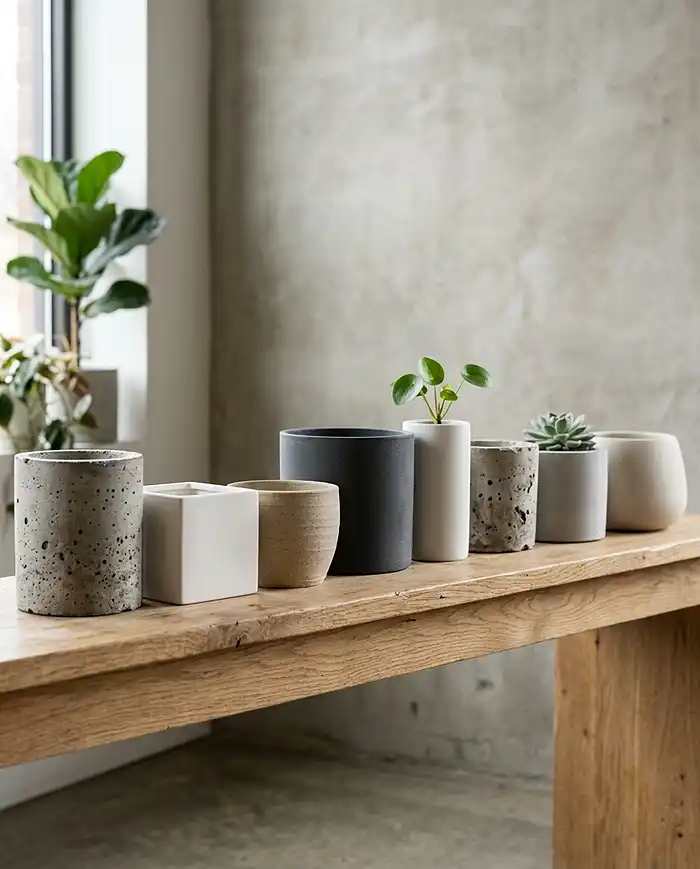
Your containers are the furniture of your small balcony garden. Get them wrong and no amount of great planting will save the look. Get them right and even basic plants look elevated.
The rule is simple: one material, one shape family, two or three sizes. Mixing terracotta, plastic, and ceramic in the same space kills the aesthetic before you’ve planted a thing.
According to Royal Horticultural Society container gardening guidelines, matching container materials across a small space is the single most effective way to create visual harmony.
Pot Shapes, Materials, and Finishes
Quick Answer: Clean-lined cylinders or tapered rounds in concrete, matte ceramic, or neutral fiberglass are your best options. Avoid ornate or patterned pots — they fight the minimalist aesthetic.
- Concrete: Heavy but beautiful — use only on load-bearing balconies; ideal for ground-level focal plants
- Matte ceramic: Lightweight, refined finish — perfect for mid-size plants and railing planters
- Neutral fiberglass: Lightweight, durable, mimics concrete at a fraction of the weight
- Matte black metal: Sleek for modern balconies, but can heat up in full sun
Real Example: I switched all my balcony pots to matte white fiberglass cylinders in spring. The space looked immediately cleaner — even before I changed a single plant.
Pro Tip: Check your balcony’s weight rating before buying concrete pots. Most apartment balconies cap at 50–75 lbs per square foot.
Tools and Materials Checklist
Keep this list lean. Minimalist apartment gardening means resisting the urge to over-equip.
- 3–5 matching containers in the same material (2 large, 2 medium, 1 small)
- Lightweight potting mix formulated for containers (not garden soil)
- Slow-release granular fertilizer (one application per season)
- Simple watering can — no hose attachments or elaborate systems
- One pair of clean, sharp pruning shears
- Saucers in matching material to catch drainage
- Small bag of pebbles or gravel for top-dressing (keeps soil tidy)
That’s it. A single shelf or small storage box handles all of it. No cluttered tool racks, no visible equipment.
Step-by-Step: Styling Your Minimalist Balcony
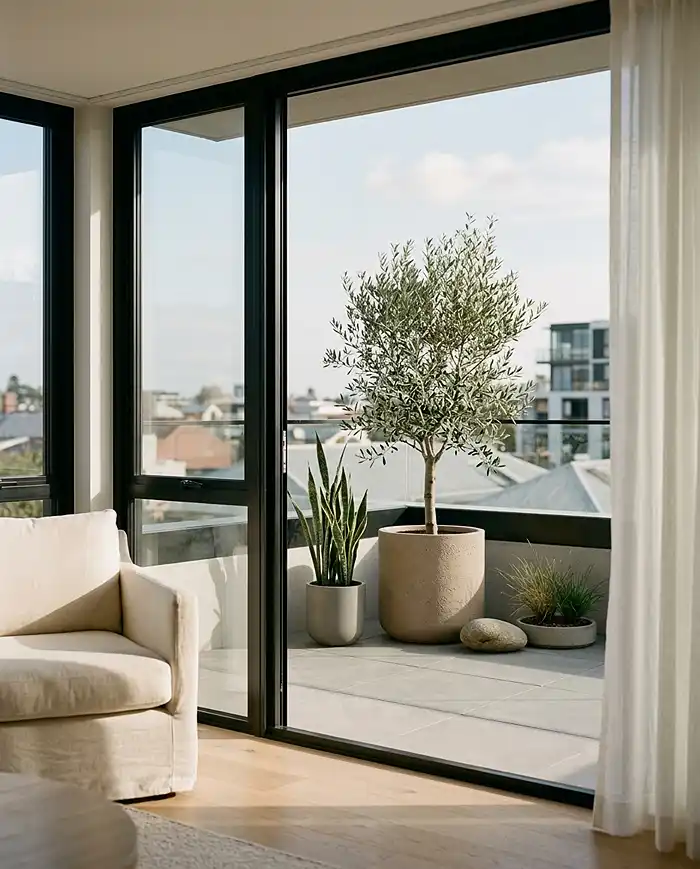
Follow this sequence and you’ll avoid the most common mistakes in small balcony garden styling.
Step 1 — Place your anchor plant first. This is your largest, most architectural plant. It defines the scale of everything else. Set it in the corner or against the wall with the best sightline from indoors.
Step 2 — Add mid-size plants next. These frame the anchor. Keep them at least 12 inches away so each plant has breathing room. Two is usually enough.
Step 3 — Add one small accent, maximum. A single low bowl of blue fescue or a compact succulent. Not three. One.
Step 4 — Step back and look from the doorway. This is your primary view. If anything pulls your eye away from the focal point, it needs to move or go.
Step 5 — Edit ruthlessly. Whatever’s left over goes back inside or gets donated. If it doesn’t serve the composition, it’s clutter.
For renter-friendly ideas that work with minimal permanent fixtures, check out these small patio garden ideas for renters that require no drilling or permanent changes.
Editing and Curating Your Final Look
Quick Answer: Use the “remove one thing” rule. Once you think you’re done, take one element away. If the space looks better, it was clutter. If it looks worse, put it back.
This rule comes from interior design and it works just as well outside. The best minimalist balcony garden setups have almost always had something removed at the final stage.
Check the space from multiple angles: from indoors through the glass door, from your seating position, and from the railing looking back. Each angle reveals something different.
Pro Tip: Take a photo after each editing pass. Comparing photos is far more objective than standing in the space and second-guessing yourself.
Furniture and Decor That Fit the Aesthetic
Furniture is part of your minimalist balcony garden composition. The wrong chairs undo everything the plants achieved. Keep it simple, keep it sleek, keep it to the minimum pieces you actually use.
One small bistro table and two chairs is enough for most balconies. Go for powder-coated steel, natural teak, or concrete — materials that match your container palette.
- Seating: Folding or stackable so you can clear space when not in use
- Rugs: One flat-weave outdoor rug in grey or natural linen tones — no patterns
- Lighting: One string of warm Edison bulbs or a single wall-mounted outdoor lamp
- Decor: Nothing with text, loud color, or ornate detailing — one smooth stone or a single ceramic object at most
Resist the Pinterest urge to add lanterns, multiple rugs, hanging macrame, and a side table. Pick one or two elements and leave it there.
Seasonal Care and Keeping It Minimal
A minimalist balcony garden only stays that way with consistent, light maintenance. The good news: most architectural plants need very little attention if you chose them well.
Spring: Refresh potting mix top layer, apply slow-release fertilizer, trim back any winter-damaged growth cleanly. This is when most plants push new structural growth.
Summer: Water deeply once or twice a week depending on heat. Check that saucers aren’t waterlogging roots. Prune any shoots breaking the plant’s shape — do it early before stems harden.
Autumn: Remove spent summer interest, pull any plants that don’t overwinter in your zone. Simplify down to your core structural plants. Autumn is when the minimalist garden looks its best.
Winter: Wrap frost-sensitive plants (zones 6 and below) in horticultural fleece. Move ceramics indoors if temps drop below freezing to prevent cracking.
For easy herbs that fit the minimal aesthetic, an apartment herb garden keeps things functional without adding visual noise.
Common Problems and Solutions
Balcony Looks Bare Instead of Minimalist
Quick Answer: Bare and minimal aren’t the same thing. Minimal has intention — strong plants, considered placement, visual weight. Bare just looks forgotten.
If your balcony feels empty rather than serene, the fix is usually one large architectural statement plant. A single olive tree or tall snake plant adds presence without clutter. Add texture too — a pebble top-dress, a rough-hewn wooden stool, a woven saucer.
According to Garden Design’s balcony planning guide, the most common mistake in minimal spaces is choosing plants that are too small for the scale of the container or balcony.
Clutter Creeping Back In
Quick Answer: Clutter returns when there’s no designated home for tools, extras, and seasonal items. A single covered storage box solves most of it.
- Do a monthly “one thing out” audit — remove one item that doesn’t belong
- Keep a small, lidded storage bench for tools, soil bags, and seasonal decor
- Apply the rule: if something new comes in, something old goes out
The minimalist balcony garden is a maintenance mindset as much as a design style.
Plants Looking Untidy or Overgrown
Quick Answer: Architectural plants only stay architectural with regular shaping. Prune little and often — don’t wait until they’re unruly.
For grasses, cut back to 3–4 inches in early spring before new growth emerges. For boxwood and other clippable shrubs, shear lightly every 6–8 weeks during growing season. For snake plants and agaves, remove any yellowed or damaged leaves at the base with clean cuts.
For a DIY approach to structural vertical growing, a DIY pallet garden can add height without sprawl.
Frequently Asked Questions
How do I make my balcony garden look minimalist?
Focus on restraint: stick to one pot style, one neutral color palette, and no more than five plants. Leave intentional empty space, place one statement anchor plant as a focal point, and remove anything that doesn’t serve the composition. Negative space is not wasted space — it’s essential to the look.
What plants are best for a minimalist garden?
Choose structural, low-maintenance plants with strong, simple forms: snake plants, ornamental grasses, dwarf olive trees, agave, phormium, and blue fescue. These anchor the design without needing constant care. Avoid busy flowering plants or anything with variegated or multi-colored foliage — they break the calm palette.
How do I keep a small balcony garden from looking cluttered?
Use repetition: the same pot, the same plant species, repeated in two or three sizes. Leave visible floor and railing space. Do a monthly edit — remove one thing that doesn’t belong. And resist the urge to add new plants just because they’re on sale. Every addition should earn its spot.
What colors work best for a minimalist balcony?
Neutral tones are your foundation: concrete grey, matte white, matte black, natural terracotta. For foliage, stay within a monochrome green palette or choose plants with silver-grey or blue-green leaves. Avoid bright flowers or multi-colored containers — one pop of color maximum if you want any at all.
Key Takeaways
- A minimalist balcony garden is defined by intentional restraint — not emptiness, but purposeful selection and placement
- Plan your layout, palette, and plant list before buying anything to prevent the clutter that kills the look
- Choose architectural, structural plants (grasses, snake plants, olive trees) that hold their form with minimal care
- Stick to one pot style, one material, and two or three neutral tones throughout your small balcony garden
- Edit ruthlessly: remove one thing at the end of styling, and do a monthly “one thing out” audit to keep the minimalist look long-term