
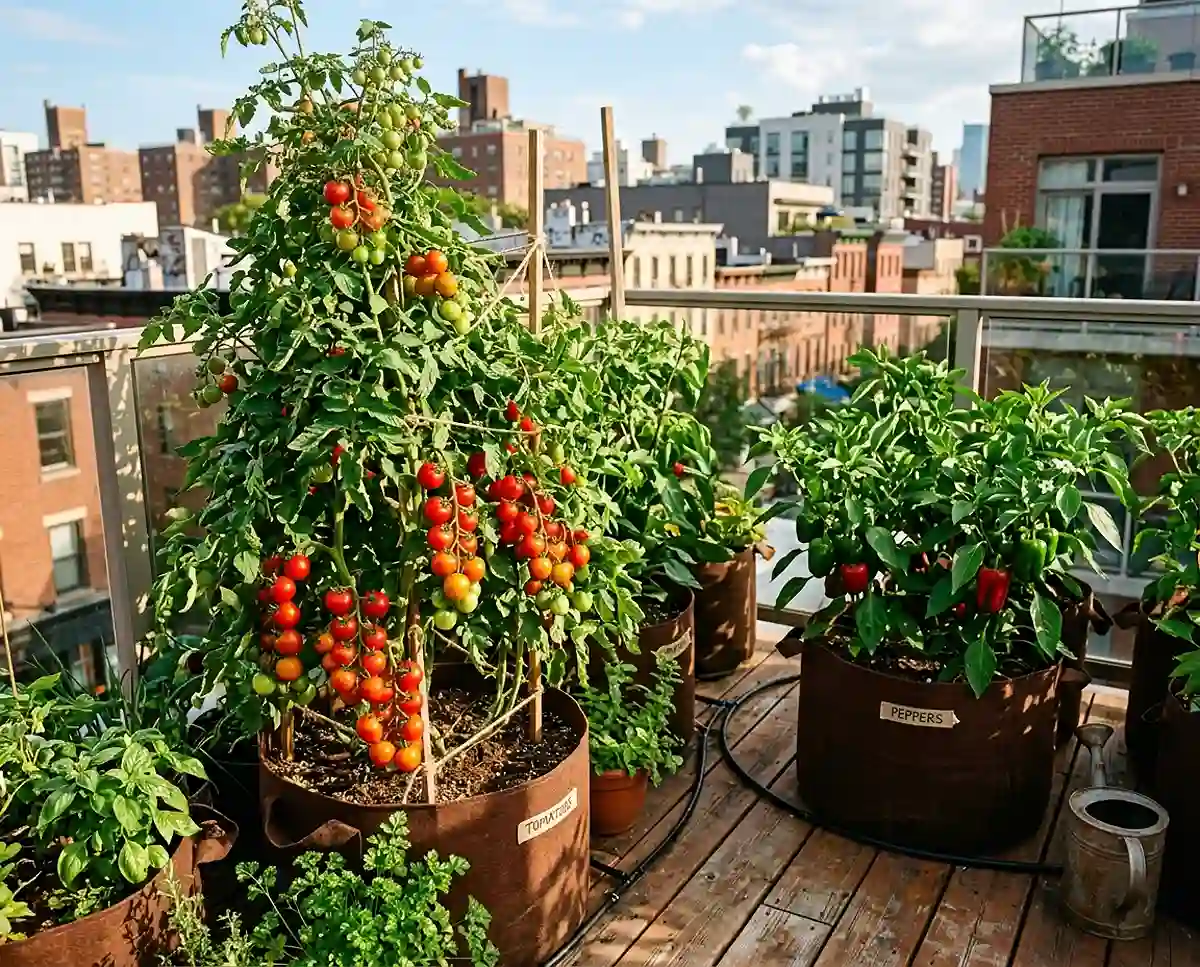
Grow Bags for Tomatoes and Peppers
If you’ve been struggling with soggy roots, compacted soil, or zero outdoor space, grow bags for tomatoes and peppers might be exactly what you need. They’re affordable, flexible, and they work — even on a tiny balcony.
This guide covers everything: bag sizes, soil mixes, placement, watering, feeding, and fixing common problems. Whether you’re doing container vegetable gardening for the first time or leveling up your setup, you’ll find something useful here.
Table of Contents
Why Grow Bags Are Ideal for Tomatoes and Peppers
Traditional pots trap water and compact roots over time. Grow bags for vegetable growing solve both problems at once.
Fabric bags breathe on all sides, so excess moisture escapes instead of sitting around roots. That alone cuts down on root rot significantly.
The bigger benefit is air pruning — when roots reach the bag wall, air naturally stops their growth. Instead of circling like in plastic pots, roots branch out and multiply. You get a denser, healthier root system that absorbs water and nutrients more efficiently.
Grow bags are also portable. You can move them to chase sunlight, bring them indoors before frost, or rearrange your whole setup in an afternoon. For anyone doing tomatoes in pots or peppers in containers on a balcony or patio, that flexibility is huge.
This guide walks through every step — from picking the right bag to end-of-season cleanup — so you can get the most out of your container vegetable gardening setup.
Choosing the Right Grow Bag Size and Material
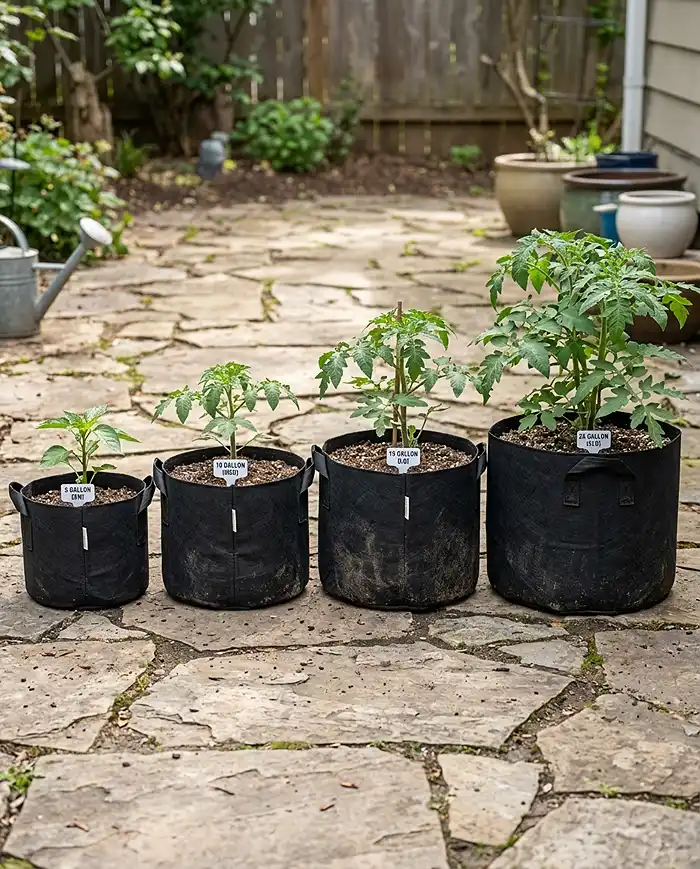
Size and material matter more than most people realize. Get these wrong and your plants will struggle no matter how well you water or feed them.
Too small a bag = stressed roots, reduced yields, and constant wilting. Too large = wasted soil, slower drying, and higher cost. Match the bag to the plant and you’re halfway there.
Best Bag Sizes for Tomatoes vs. Peppers
Quick Answer: Tomatoes need more root room than peppers. Go bigger for tomatoes — especially indeterminate varieties that keep growing all season.
| Plant Type | Minimum Size | Ideal Size |
|---|---|---|
| Determinate tomatoes | 10 gallons | 15 gallons |
| Indeterminate tomatoes | 15 gallons | 20–25 gallons |
| Sweet/bell peppers | 5 gallons | 7–10 gallons |
| Hot peppers (compact) | 3 gallons | 5 gallons |
Real Example: Last summer I planted a ‘Sungold’ cherry tomato in a 10-gallon bag. It got root-bound by July and yields dropped. Same variety in a 20-gallon bag the next year? Produced until first frost.
Pro Tip: When in doubt, go one size up — the extra soil acts as a buffer against heat and drought stress.
Fabric, Plastic, and Felt: Pros and Cons
Quick Answer: Fabric (non-woven geotextile) is the best all-around choice for grow bags for tomatoes and peppers. Plastic works but needs drainage holes. Felt is similar to fabric but wears out faster.
| Material | Best For | Watch Out For |
|---|---|---|
| Fabric (non-woven) | Air pruning, breathability, reuse | Dries out faster in heat |
| Felt | Budget option, light weight | Degrades after 2–3 seasons |
| Plastic | Retaining moisture longer | No air pruning, needs drainage |
Pro Tip: Look for 300g/m2 fabric weight or heavier — cheaper thin fabric collapses when wet and falls apart within one season.
Where to Place Your Grow Bags
Placement is the difference between thriving plants and barely-surviving ones. Tomatoes in pots and peppers in containers need serious sun — at least 6 hours, ideally 8.
The good news: grow bags let you move things around until you find the sweet spot. Spend a day tracking where the sun hits your space before you commit to a layout.
If you’re working with a small balcony or patio, check out these small patio garden ideas for renters — lots of creative ways to maximize limited space.
Maximizing Sun and Space With Smart Placement
Quick Answer: Face your bags south or west for maximum afternoon sun. Group them close together to reduce wind stress and make watering faster.
- Track sun patterns for a full day before placing bags permanently
- South-facing walls and railings reflect heat — great for peppers, watch for overheating in tomatoes
- Group bags within arm’s reach of a water source to keep watering manageable
- Leave 18–24 inches between tomato bags for airflow and to prevent disease spread
- Peppers can be grouped tighter — 12 inches is fine for smaller varieties
Pro Tip: Light-colored bags reflect heat and keep roots cooler — worth it in climates where summer temps regularly hit 90°F+.
Creative Grow Bag Arrangement Ideas
Quick Answer: Think vertically and use your walls. Tiered stands, railing planters, and rolling casters all expand your usable growing area.
- Tiered plant stands: stack smaller pepper bags on upper shelves, tomatoes on the ground
- Line bags along a sunny railing or fence for a productive “edible border”
- Add rolling plant caddies under large tomato bags — makes repositioning easy
- Use a DIY pallet garden setup as a backdrop to hang smaller bags
- Create a visual focal point by alternating tomato and pepper bags in a row
Pro Tip: Rolling casters are worth every penny for large 20-gallon bags — they’re brutally heavy once filled with wet soil.
Choosing the Best Soil Mix for Grow Bags
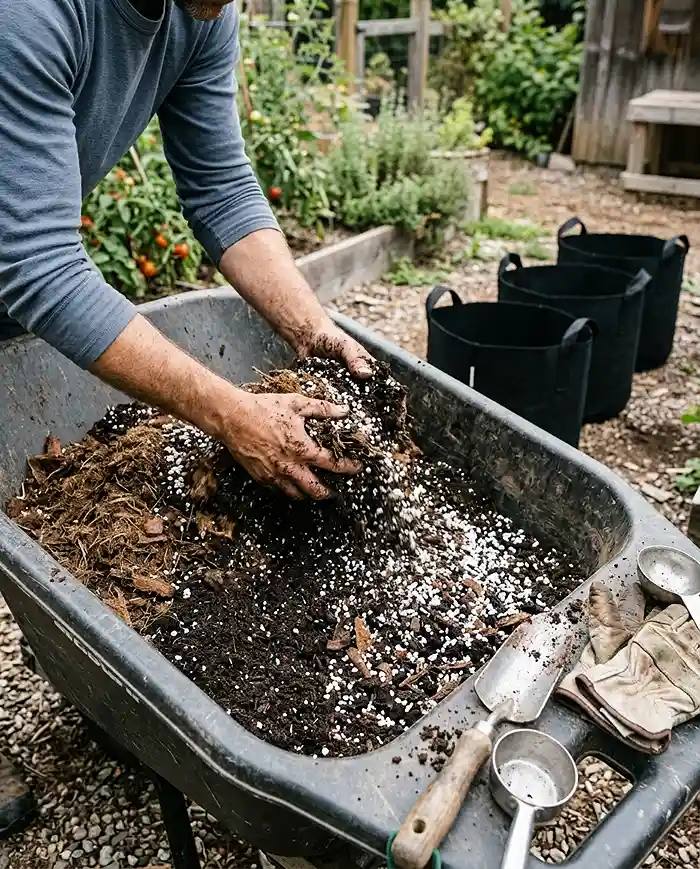
Regular garden soil is a hard no. It compacts in containers, drains poorly, and smothers roots. You need a mix that stays loose, drains fast, and holds enough nutrients to feed hungry fruiting plants.
Both tomatoes and peppers are heavy feeders. The soil needs to support them all season — often 3–5 months of continuous production in grow bags for vegetable growing.
Recommended Soil Recipe and Ratios
Quick Answer: Use a 3-part mix: quality potting soil + compost + aeration material. Never use straight potting soil — it compacts and drains poorly on its own.
- 40% quality potting mix — avoid the cheapest options; they compact fast
- 40% compost — homemade or bagged; this feeds plants and improves structure
- 20% perlite or coarse pumice — keeps the mix aerated and fast-draining
- Optional: add a handful of worm castings per bag for an extra nutrient boost at planting
- Avoid vermiculite as the sole aerator — it holds too much water for fruiting crops
Real Example: I switched from straight potting mix to this blend and saw noticeably faster early growth in my ‘California Wonder’ peppers — they were putting out flowers two weeks earlier than the previous year.
Pro Tip: Fill bags to about 2 inches below the rim — this prevents soil and water from spilling over during heavy watering sessions.
Tools and Materials You’ll Need
Before planting day, gather everything. There’s nothing worse than having seedlings ready and no cages to hand.
- Grow bags — sized appropriately (see chart above)
- Potting mix, compost, perlite — enough to fill all bags
- Tomato cages, stakes, or trellis — install at planting time
- Slow-release granular fertilizer — blend into soil before planting
- Liquid tomato/vegetable fertilizer — for regular feeding
- Saucers or drip trays — catch runoff and reduce watering frequency
- Watering can or drip irrigation — bags need more frequent watering than ground
- Rolling plant caddies — for large bags you’ll need to move
Step-by-Step: Planting Tomatoes and Peppers in Grow Bags
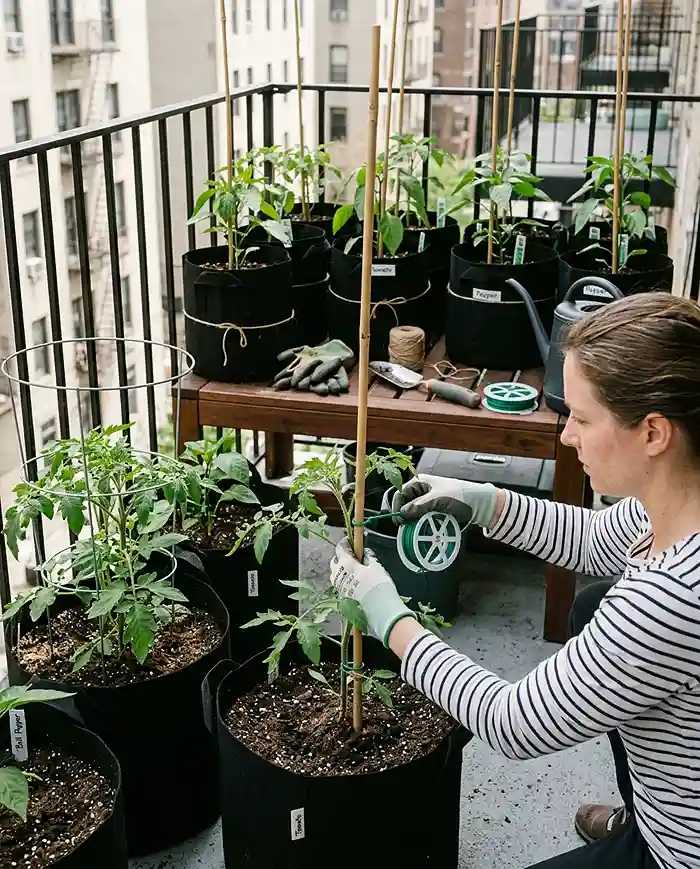
The planting process is straightforward, but a few details matter a lot — especially for tomatoes. Get the depth right and you’ll build a stronger root system from day one.
Start after your last frost date (check the Old Farmer’s Almanac planting calendar for your zone). Soil should be at least 60°F before transplanting.
Planting Depth and Spacing per Bag
Quick Answer: Plant tomatoes deeper than they grew in their nursery pot — bury up to 2/3 of the stem. Peppers go in at the same depth they were growing.
- Tomatoes: Remove lower leaves and bury 2/3 of the stem — every buried node grows roots, dramatically strengthening the plant
- Peppers: Plant at the same soil level as the nursery pot — burying the stem doesn’t benefit peppers
- One tomato per bag in most cases; in 20+ gallon bags, two compact determinates can coexist
- One pepper per 5-gallon bag; two compact hot pepper varieties in a 7-gallon bag work fine
- Water thoroughly immediately after planting to eliminate air pockets
Pro Tip: Add a layer of compost on top of the soil after planting — it acts as a slow-release fertilizer and keeps surface soil from drying and crusting.
Adding Support: Stakes, Cages, and Trellises
Quick Answer: Install supports at planting time, not after the plant is established. Pushing stakes into a full bag later risks damaging roots.
- Indeterminate tomatoes: Use a heavy-duty tomato cage (at least 5 feet tall) or a sturdy 6-foot stake — they’ll need it
- Determinate tomatoes: A standard 4-foot cage or two stakes is usually enough
- Peppers: One bamboo stake per plant is sufficient; tie loosely with garden twine as they grow
- For bags on a balcony, anchor cages to a railing or wall to prevent tipping in wind
Real Example: My neighbor skipped the cage on a ‘Big Boy’ tomato in a 15-gallon bag. By August, the plant had flopped over and snapped two main stems. Support early, every time.
Pro Tip: Use tomato clips instead of twine — they don’t cut into stems and are reusable for several seasons.
Watering and Feeding Grow Bag Plants
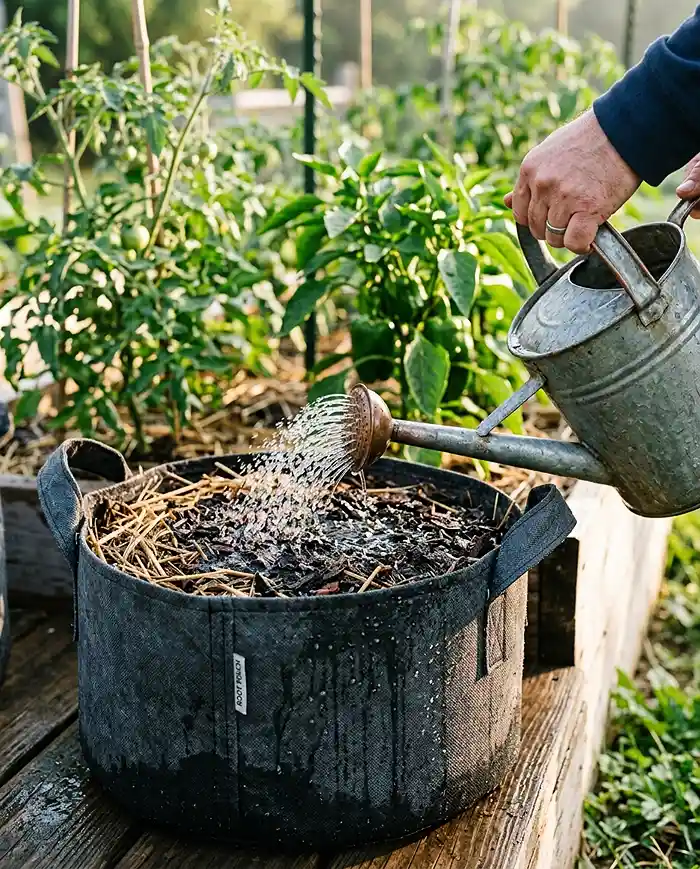
Here’s the hardest adjustment for new grow bags for tomatoes growers: bags dry out much faster than pots or ground beds. In peak summer heat, you may need to water twice a day.
Inconsistent watering is the top cause of problems like blossom end rot and fruit cracking. Build a routine and stick to it.
Watering Schedule and Self-Watering Tricks
Quick Answer: Check bags daily in summer. The finger test is your guide — if the top inch of soil is dry, water thoroughly until it drains from the bottom.
- Cool weather (under 70°F): Water every 2–3 days
- Warm weather (70–85°F): Water daily
- Hot weather (85°F+): Water twice daily, morning and evening
- Use saucers under bags to catch runoff — plants will wick up the extra moisture
- Add 1–2 inches of mulch on top of soil to slow evaporation significantly
- A basic drip irrigation setup can cut your watering time to near zero
Pro Tip: Water in the morning when possible — evening watering leaves foliage wet overnight, increasing fungal disease risk.
Feeding Heavy Feeders Through the Season
Quick Answer: Start with a slow-release fertilizer at planting. Switch to weekly liquid feeding once plants start flowering.
- At planting: Mix a slow-release granular fertilizer (balanced NPK like 10-10-10) into the soil
- Weeks 1–4: Let the slow-release do its job; no extra feeding needed
- At first flower: Switch to a tomato-specific liquid fertilizer high in potassium and phosphorus
- Through harvest: Feed every 7–10 days with liquid fertilizer
- If leaves are yellowing despite regular feeding, add a calcium-magnesium supplement
Pro Tip: Fish emulsion is one of the best budget liquid fertilizers for container vegetable gardening — it feeds fast and improves soil biology.
Seasonal Care and End-of-Season Tips
Grow bags need a bit of extra attention as seasons shift. A few simple habits keep plants healthy through summer heat and set you up for next year.
Summer heat protection: Move bags to partial afternoon shade if temps exceed 95°F consistently — even heat-loving peppers drop flowers above that threshold.
Pruning tomatoes: Remove suckers (side shoots growing at 45-degree angles between main stem and branch) weekly on indeterminate varieties. This directs energy to fruit production.
Harvesting regularly: Pick fruits as soon as they’re ripe. Leaving overripe fruit on the plant slows new production. For peppers, harvesting frequently encourages the plant to set more flowers.
End-of-season bag care: Dump old soil into a compost pile — don’t reuse it straight, as it’s depleted and may harbor disease. Wash bags with a 10% bleach solution, rinse thoroughly, and air dry completely before folding and storing.
For more compact growing ideas, this guide on how to arrange pots on a small balcony has solid layout tips that work just as well for grow bags.
Common Problems and Solutions
Grow Bags Drying Out Too Fast
Quick Answer: Fast drying is normal in fabric bags, especially in heat. The fix is a combination of mulching, saucers, and smarter watering habits.
- Add 2 inches of straw or wood chip mulch on top of soil surface
- Place saucers under bags to recapture drainage water
- Group bags together — they create a more humid microclimate
- In extreme heat, water twice daily and consider a shade cloth (30–40% shade) for afternoon coverage
Pro Tip: Double-bagging — placing a fabric bag inside a slightly larger plastic bag with drainage holes punched in — slows moisture loss significantly without losing all the air pruning benefit.
Blossom End Rot on Tomatoes and Peppers
Quick Answer: Blossom end rot looks like black, sunken patches on the bottom of fruit. It’s a calcium deficiency caused by inconsistent watering, not a lack of calcium in most cases.
- The main fix is consistent watering — calcium can’t move through dry soil
- Add crushed eggshells or a calcium-magnesium supplement to the soil if the problem persists
- Remove affected fruits immediately — they won’t recover, and keeping them drains plant energy
- Avoid over-fertilizing with nitrogen, which pushes leafy growth at the expense of fruit development
Plants Falling Over or Outgrowing Support
Quick Answer: Top-heavy plants in containers tip over easily. Prevention beats fixing — use heavier supports early and anchor bags to prevent tipping.
- Replace flimsy tomato cages with heavy-gauge steel or DIY rebar cages for indeterminate varieties
- Tie main stem to support every 8–10 inches as the plant grows
- For peppers, pinch growing tips once the plant reaches 12 inches to encourage bushy growth instead of leggy stems
- On windy balconies, zip-tie cages to railings or use bungee cords to wall anchors
grow bags for tomatoes FAQs
What size grow bag is best for tomatoes?
For determinate tomatoes, a 10–15 gallon bag is the minimum. Indeterminate varieties like ‘Sungold’ or ‘Brandywine’ really need 20–25 gallons to reach their full potential. Going smaller means root restriction, reduced yields, and constant wilting stress throughout summer.
How many peppers can I plant in one grow bag?
One pepper plant per 5-gallon bag is the standard. In a 7–10 gallon bag, you can fit two compact hot pepper varieties like jalapeños or serranos — but keep them to one plant if you’re growing large-fruited bell or sweet peppers that need more root room.
How often should I water grow bags in summer?
Daily watering is the baseline in warm weather. When temps climb above 85°F, check morning and evening — the top inch drying out means it’s time to water. Always water until you see drainage from the bottom of the bag, then let the saucer catch the runoff.
Can I reuse grow bags next year?
Yes, fabric bags can last 3–5 seasons with proper care. Empty spent soil into your compost pile at the end of the season. Wash the bag with a diluted bleach solution (1 part bleach to 9 parts water), rinse thoroughly, and allow to air-dry completely before folding for storage.
Key Takeaways
- Grow bags for tomatoes outperform traditional pots thanks to air pruning and superior drainage — use fabric bags at 300g/m2 or heavier for durability
- Size matters: indeterminate tomatoes need 20–25 gallons; peppers thrive in 5–10 gallons depending on variety
- Use a 40/40/20 soil mix (potting mix, compost, perlite) — never straight potting soil
- Water daily in summer heat and feed with liquid fertilizer weekly once flowering begins
- Install supports at planting time, not after — it protects roots and saves the plant later in the season
Ready to make the most of every square foot? These apartment herb garden tips pair perfectly with a grow bag vegetable setup — grow your herbs and your tomatoes side by side.