
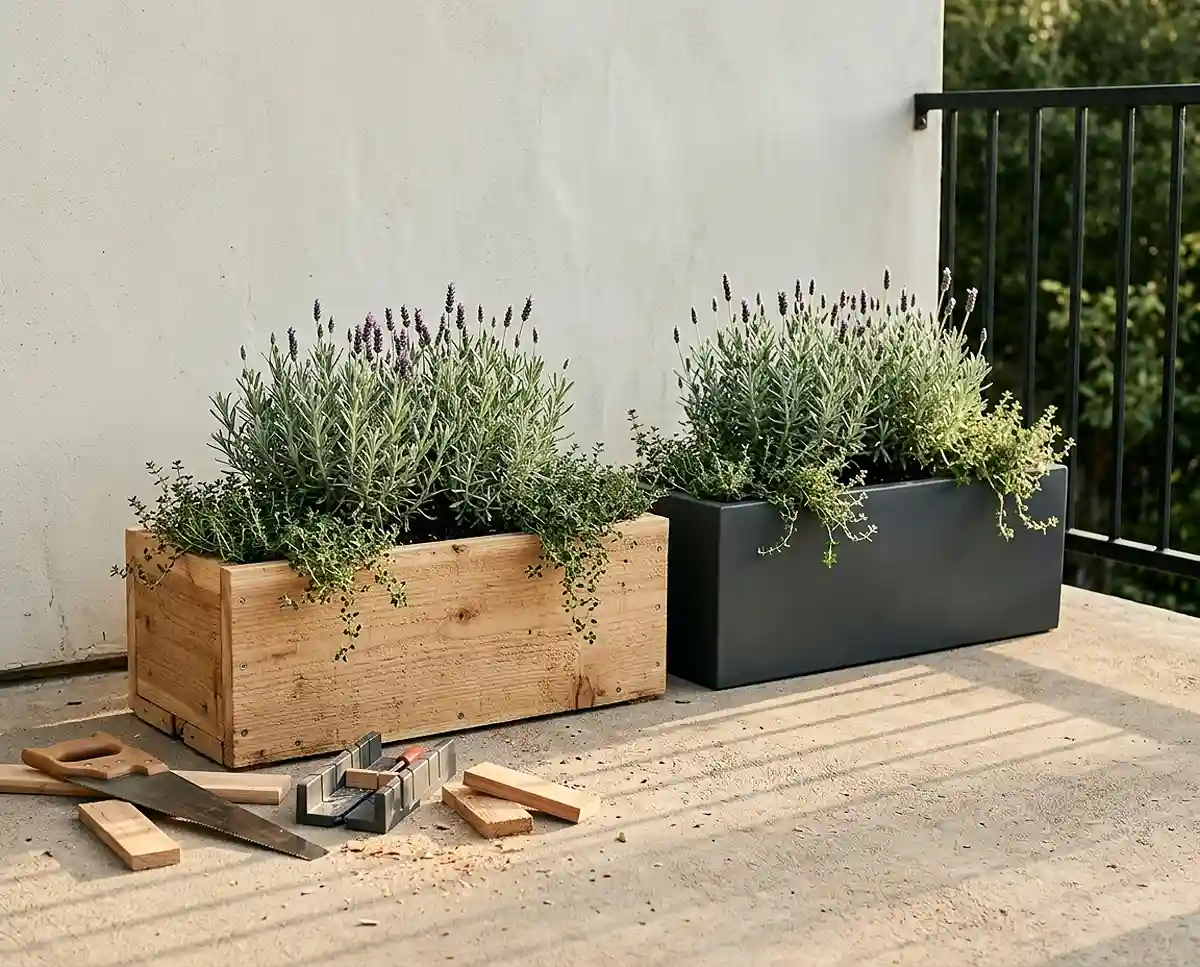
23 DIY Balcony Planters vs. Ready-Made
DIY balcony planters saved me up to 58% on big troughs but lost to $4 grow bags on small pots. Here’s which of 23 projects are worth building.
Test setup: a south-facing concrete patio in zone 8b that bakes like a balcony. I ran 14 containers from March 1 to October 31, 2026 (last frost: March 15). I built nine projects and priced the other 14 from listings.
Table of Contents
DIY vs. Ready-Made Balcony Planters: The Real-World Scorecard
Verdict: Buy anything under 14 inches. Build for odd corners, 30-inch troughs, and free upcycled planters. DIY wins on size and price at scale. It loses on weight and time.
| Reality check | DIY | Ready-made | Winner |
|---|---|---|---|
| All-in cost (lumber, liner, hardware) | $75 30-inch cedar trough; $8 bucket tub | $180 fiberglass trough; $3-$5 grow bag | Depends on size |
| Indoor sawdust mess | Low if you cut outside | None | Ready-made |
| Saturated weight | Empty cedar trough about 2x heavier; wet soil narrows the gap | Fiberglass and resin are lightest | Ready-made |
| Custom dimension fit | Any size, even a 31-inch alcove | Standard sizes only | DIY |
| 5-year weather lifespan | Lined cedar often 5+ years; MDF lasts months | Fiberglass and resin 5+ years | Tie |
When DIY Balcony Planters Win, and When Ready-Made Wins
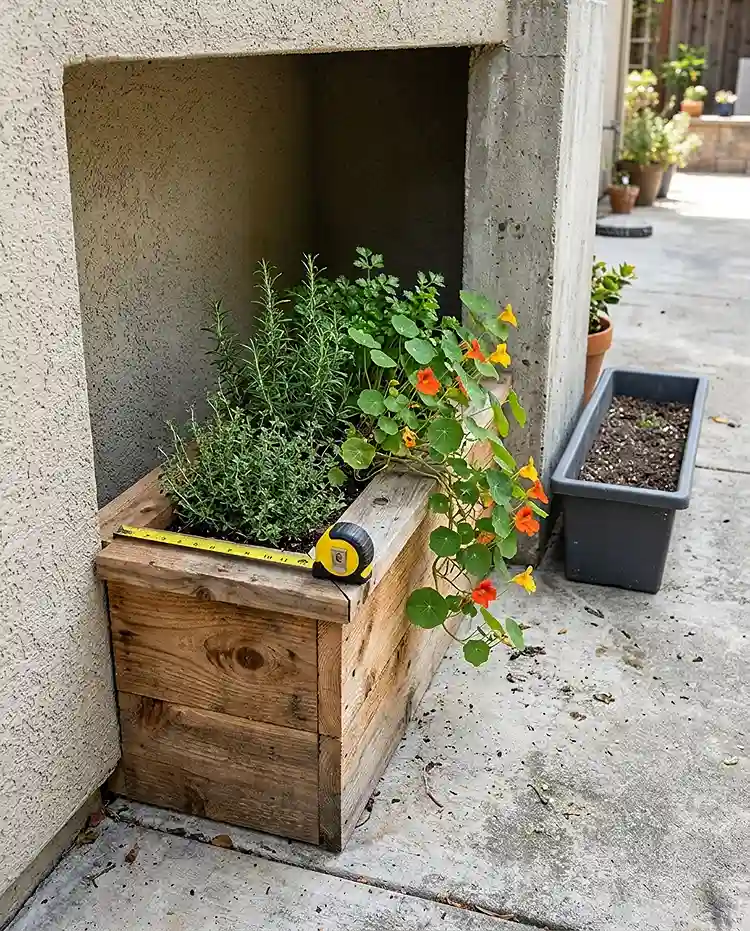
DIY wins on odd corners and free materials. A custom 30-inch cedar trough fit my 31-inch alcove.
Ready-made wins on small pots: grow bags ($3-$5) and rotomolded (spin-molded) resin pots ($12-$20) cost less than lumber.
Renters who can’t drill: try these renter-friendly planter solutions.
Prep: Food-Safe Materials, Apartment Tools, and Lightweight Soil
Verdict: Prep is the same for built or store-bought pots: food-safe plastic, rot-resistant wood, quiet hand tools, and a light mix.
- Plastic: #2 HDPE (a rigid food-safe plastic), #4 LDPE, or #5 PP only. Skip #3 PVC for edibles.
- Wood: cedar, redwood, or pallets stamped HT (heat-treated). Never MB (methyl bromide).
- Tools: handsaw, clamping miter box, step-drill bit, stainless deck screws.
Food-Safe Plastics, HT Wood, and the Featherweight Soil Recipe
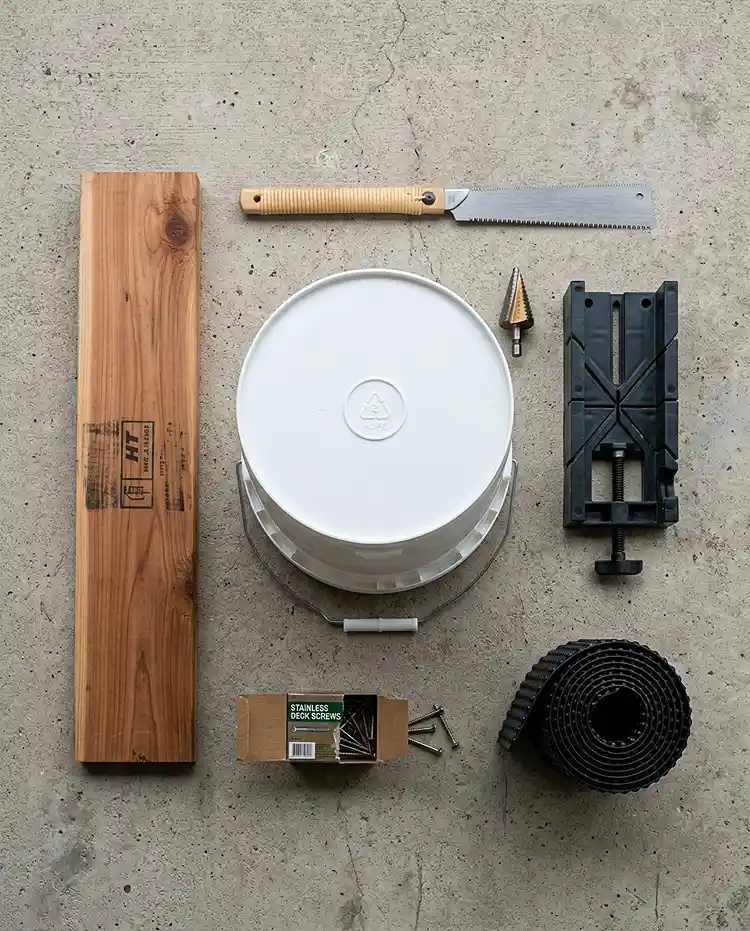
Check the recycling triangle on any upcycled tub. University of Maryland Extension lists buckets, crates, storage bins, and hypertufa troughs as reusable containers.
My mix, by volume: 2 parts coco coir, 1 part pine bark fines, 1 part perlite. It tested at pH 6.2. I feed a 4-4-4 granular (NPK, meaning nitrogen-phosphorus-potassium) every three weeks.
23 DIY Balcony Planter Projects vs. Their Ready-Made Alternatives
Verdict: DIY wins 13 of the 23 on cost or fit, ties 5, and loses 5. The losers are heavy, leaky, or dry out fast.
Project 1 (built, 2026): Cedar Trough vs. Fiberglass Trough
A $75 lined cedar trough (30 inches) versus a $180 fiberglass one. DIY saves 58% but weighs twice as much empty. Verdict: DIY.
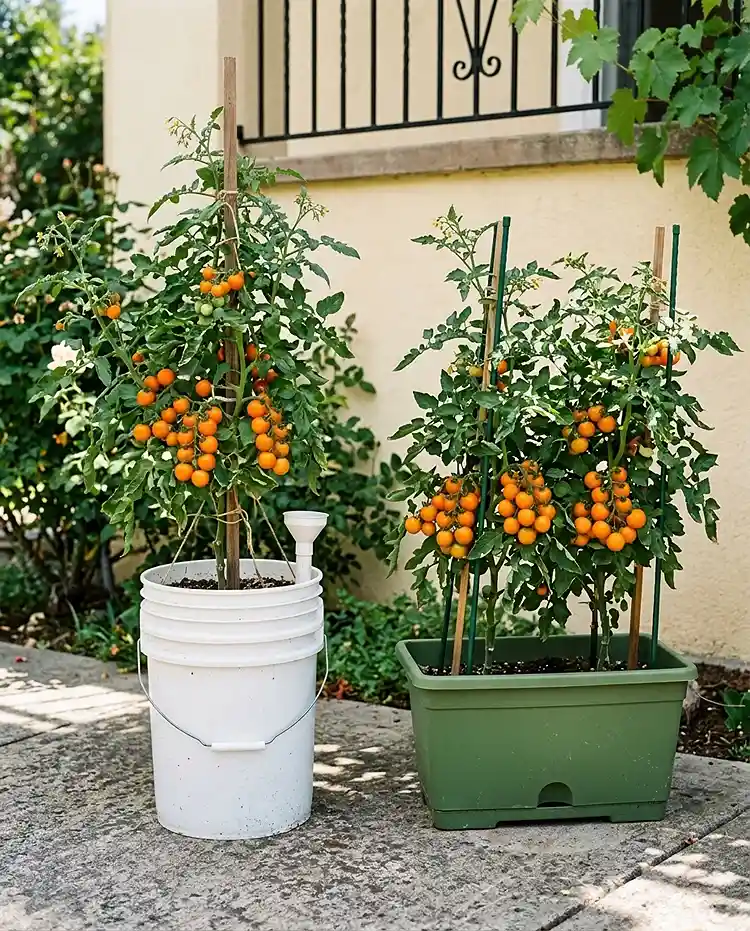
Project 2 (built, 2026): Dual-Bucket Tomato Planter vs. EarthBox
Two food-grade 5-gallon buckets, a fill pipe, and a wick cost $8. Sungold (planted April 8, 2026) yielded 9.1 lb versus 9.6 lb in a $60-$70 EarthBox (2026 price). Verdict: DIY.
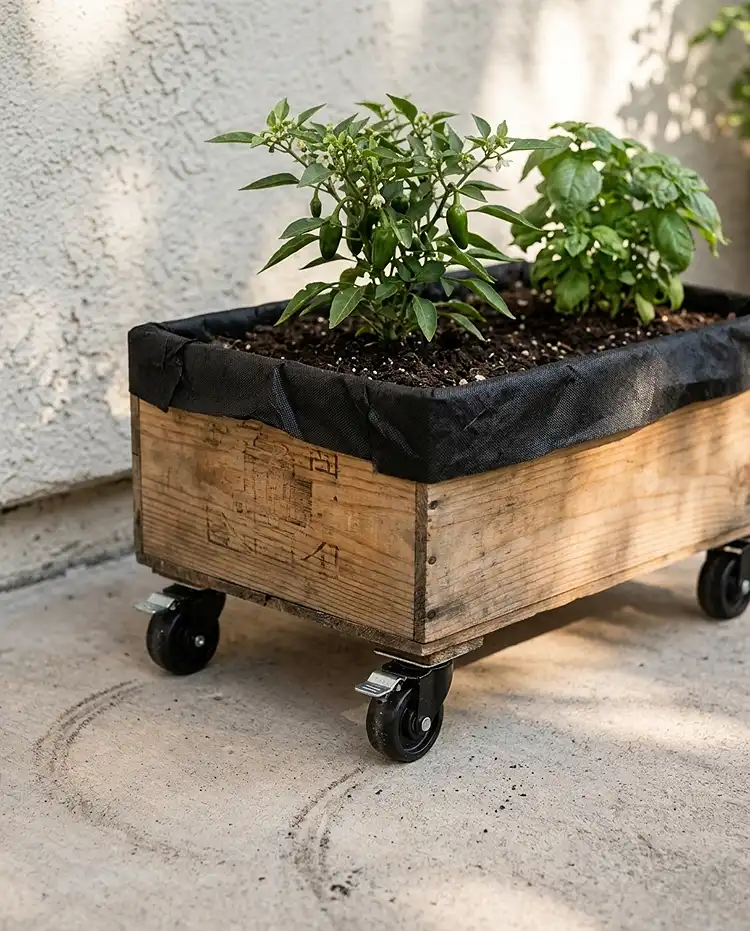
Project 3 (built, 2026): Wine Crate on Casters vs. Rolling Caddy
A $10 liquor crate lined with landscape fabric plus $8 locking casters beats a $65 rolling cart. Verdict: DIY.
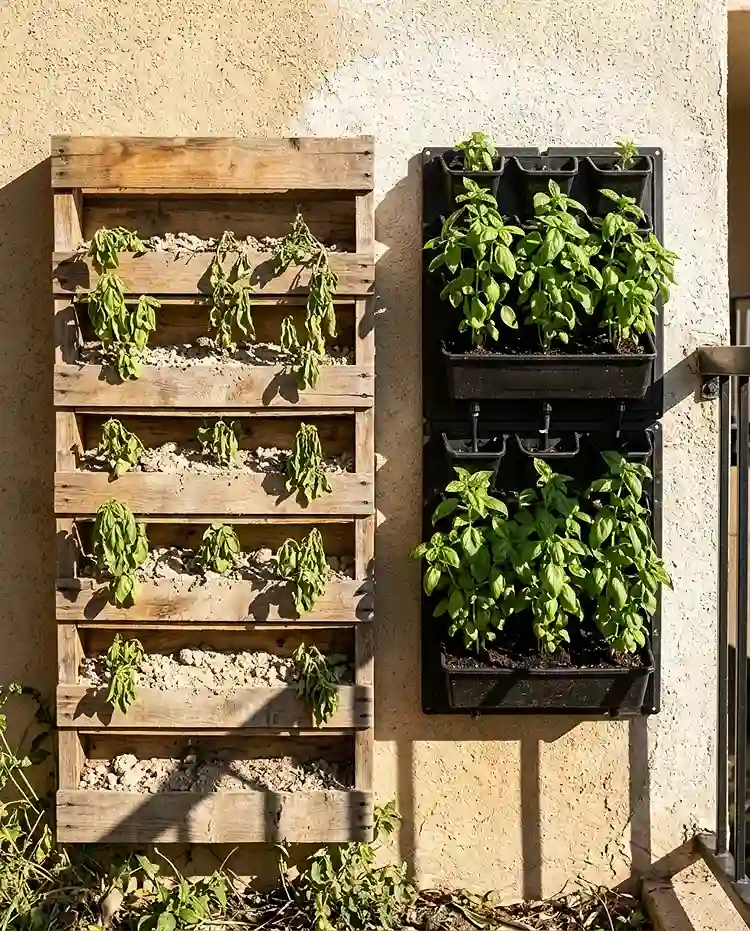
Project 4 (built, 2026): HT Pallet Herb Wall vs. Living Wall Panels
This one failed. Pallet pockets hold little water, so my Genovese basil wilted in two days at 95°F in July. Reservoir panels lasted four days in the same heat. See more balcony vertical garden layouts. Verdict: Lose.
Project 5 (priced): Rain-Gutter Tiers vs. Saddle Boxes
Three $6 gutters on steel cable hold lettuce spaced 6 inches apart. Vinyl is #3 PVC, so grow flowers or buy HDPE gutters. Verdict: Tie.
Project 6 (built, 2026): Faux-Stone Paint Pots vs. $80 Ceramic
Brush a 3:1 acrylic paint-to-baking-soda mix onto $3 plastic pots for a stone look. I haven’t tested the finish through a full season. Verdict: DIY.
Project 7 (priced): Cinder-Block Stand vs. A-Frame Shelf
Dry-stacked blocks and 2×8 boards shrug off wind, but each block weighs about 35 lb. A $50 foldable cedar shelf is safer. See balcony plant shelf ideas. Verdict: Lose.
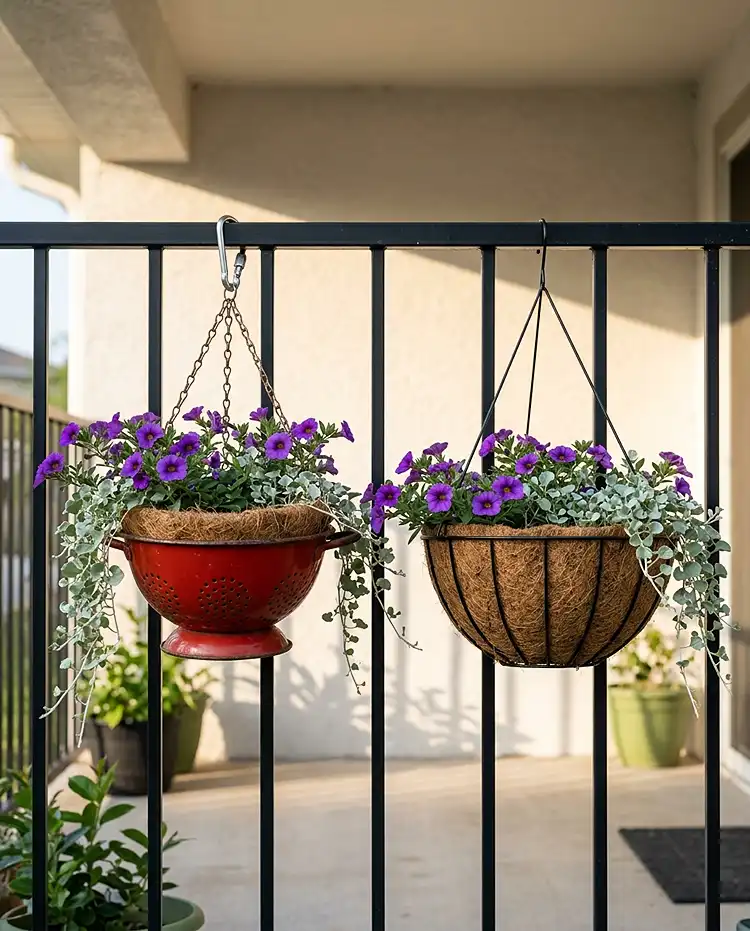
Project 8 (built, 2026): Colander Hanging Basket vs. Wire Basket
A $3 thrifted colander comes with drain holes and sturdy handles for S-hooks. Check for chipped enamel, which rusts. More hanging balcony planters here. Verdict: DIY.
Project 9 (priced): Shoe-Organizer Herb Wall vs. Felt Planter
A $7 canvas organizer needs grommets and a waterproof backing, or wet pockets grow wall mold. A $22 EPDM-lined felt bag skips that. Verdict: Lose.
Project 10 (priced): Rebar Clay Tower vs. Stackable Tower
Five tilted clay pots on a steel rod are heavy. A $35 polypropylene tower weighs far less. Verdict: Lose.
Project 11 (priced): Burlap-Lined Milk Crate vs. Grow Bag
Burlap in a rigid crate gives air-pruning (roots stop at the air gap) without floppy walls. A $4 bag still costs less. Verdict: Tie.
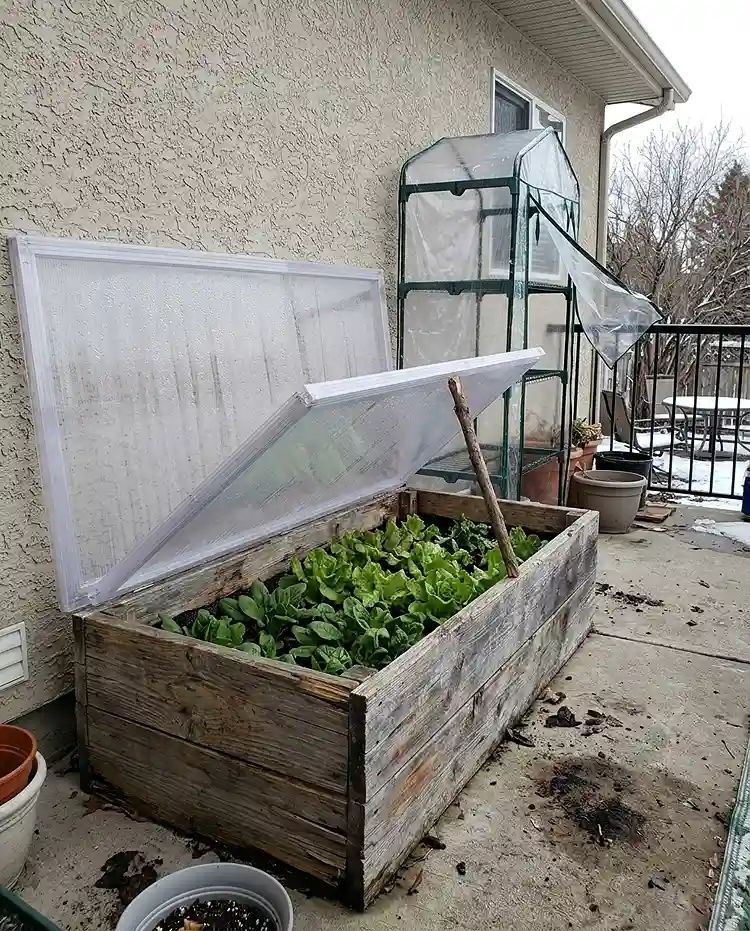
Project 12 (built, 2026): Polycarbonate Cold-Frame Lid vs. Zip Greenhouse
A twin-wall polycarbonate lid on a wooden trough held through spring 2026 gusts. A $40 zip-cover rack ripped. Verdict: DIY.
Project 13 (priced): Pipe Strawberry Column vs. Hydro-Tower
Cut slots with a 2-inch hole saw and add a perlite wick. A PVC column costs $18 versus $200+, but grow flowers in it. Use costlier HDPE pipe for strawberries, 8 inches apart. Never heat PVC. Verdict: DIY.
Project 14 (priced): Shutter Wall Grid vs. French-Cleat Wall
Stainless worm-gear clamps hold terracotta pelargonium pots on a thrifted shutter. Verdict: Tie.
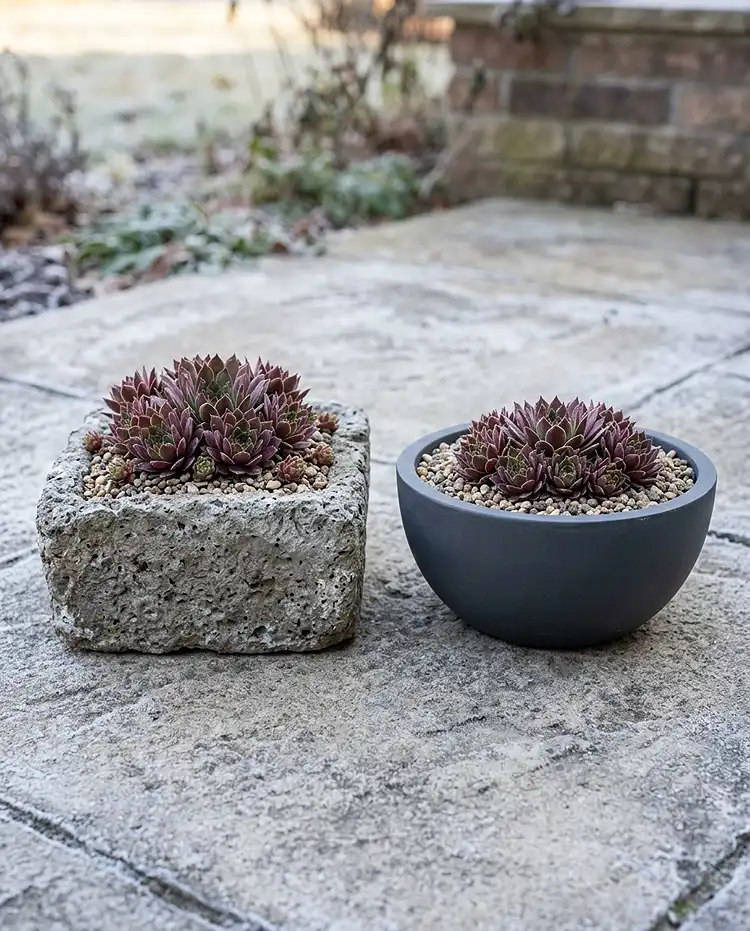
Project 15 (built, 2026): Hypertufa Trough vs. $90 Fiberstone Bowl
Hypertufa (cement, peat or coir, and perlite) is lighter than concrete. My Sempervivum ‘Red Beauty’ trough took a 24°F night in early March 2026 without cracking. Verdict: DIY.
Project 16 (priced): Olive-Oil Tin Rail Row vs. Hook Pots
Punch drain holes in vintage tins and zip-tie them to the rail. Line each with a plastic nursery cup, or it rusts. Verdict: Tie.
Project 17 (priced): Macramé Cedar Shelf vs. Tension-Pole Caddy
Drilled cedar boards on nylon cord cost $15 and fit any alcove width. They need a rated overhead hook; a $45 tension pole needs none. Verdict: DIY, if your lease allows a hook.
Project 18 (priced): Two-Cube Planter Bench vs. Storage Bench
Two 16-inch resin cubes run about $65-$80 each (2026 listings). Bridge them with three stained 2×6 cedar planks. I couldn’t price a matching store bench. Verdict: Tie.
Project 19 (priced): Cedar Succulent Frame vs. Propagation Grid
Staple 1/2-inch hardware mesh over a moss-stuffed cedar frame and pin Echeveria cuttings. Verdict: DIY.
Project 20 (priced): Basket Cachepot vs. Ceramic Urn
Slip a $3 nursery tub and saucer inside a $12 thrifted basket for a light dwarf fig. Verdict: DIY.
Project 21 (built, 2026): Buried Terracotta Olla vs. Sub-Irrigated Planter
An olla is an unglazed clay water reservoir. Silicone-seal a $3 pot’s drain hole and bury it in a 15-gallon tub. Verdict: DIY.
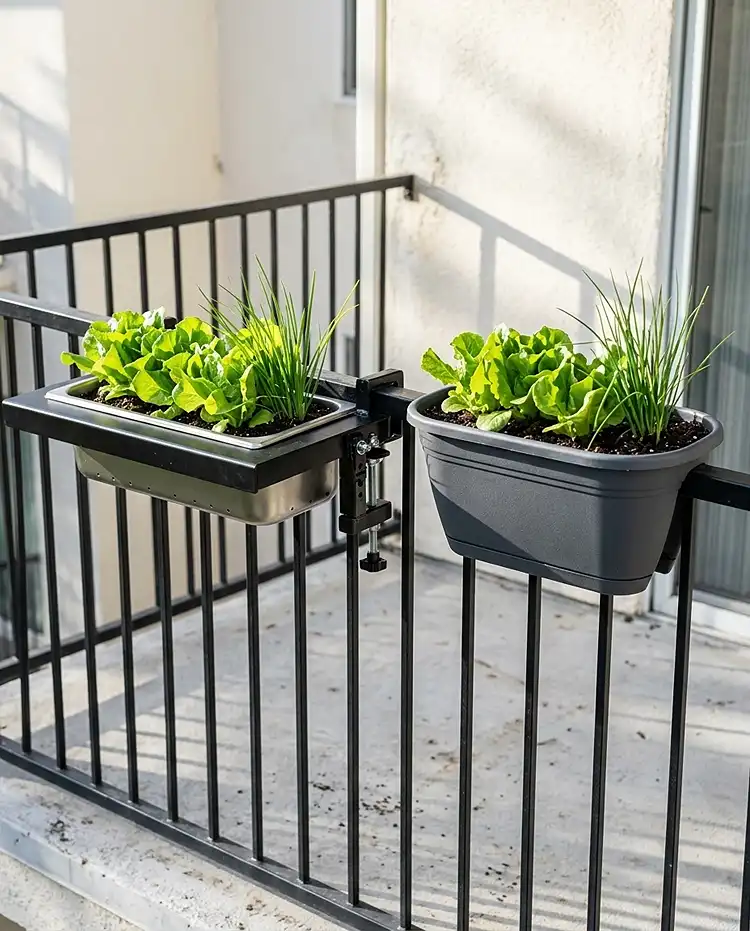
Project 22 (priced): Steam-Pan Railing Trough vs. Saddle Planter
Cut an opening in a clamp-on cedar ledge with a coping saw and drop in a drilled stainless steam-table pan. Verdict: DIY.
Project 23 (priced): Dresser-Drawer Pyramid vs. Cedar Ladder Stand
Particleboard and MDF drawers swell and fall apart after about three rainstorms. Only solid pine or oak sealed with marine spar urethane survives. Verdict: Lose.
DIY Planter Engineering: Drainage, Liners, and Winterizing
Verdict: Three rules make a 5-year planter: a drain hole per square foot, a liner between soil and wood, and feet. Skip one and the box rots.
Drainage Holes, Pond Liners, and Pot Feet
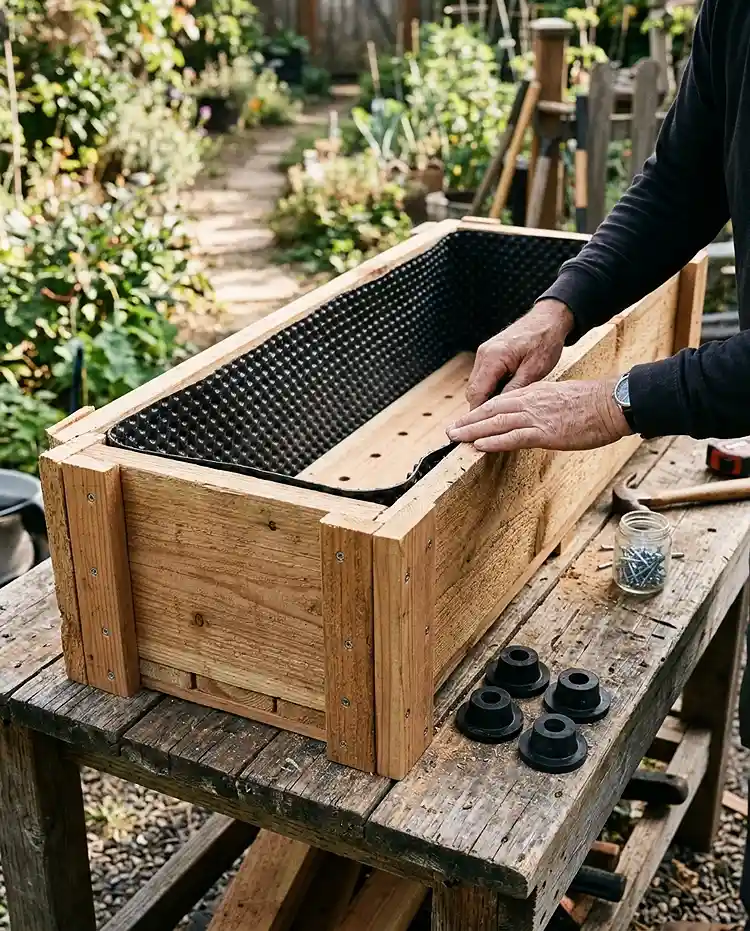
Drill at least one 1/2-inch hole per square foot of bottom area, as a minimum rule of thumb. Skip gravel layers; they don’t improve drainage. Line wooden walls with dimpled HDPE or pond liner, punctured at the bottom. Wet soil never touches the wood.
Add 1/2-inch rubber feet so water escapes. Before the first frost, around mid-November, lift clay pots and empty any olla.
Common Problems & Solutions
Verdict: Three failures show up most. Each has a cheap fix.
Wooden Planter Corners Splitting Apart
Swelling soil and freeze-thaw pressure pop pocket screws open. Fix: add 2×2 vertical corner cleats and stainless deck screws. Drywall screws are brittle and rust.
Plastic Totes Shattering After One Summer of UV
My $9 tote cracked by August 2026 in south sun. Maryland Extension warns that plastics not made for outdoor use turn brittle. Wrap them in burlap or reed screening, or paint them with bonding primer and exterior acrylic.
Chemicals Leaching From Treated Wood, Pallets, or Cans
Use only HT-stamped pallets, never MB. Line upcycled metal with a #2 or #4 plastic liner. I skip pressure-treated wood for edibles. UF/IFAS accepts ACQ (copper-treated) lumber for food beds, with a liner if unsure.
People Also Ask
Is it cheaper to build DIY balcony planters or buy ready-made?
Under 14 inches, buy: grow bags cost $3-$5 and resin pots $12-$20. My 30-inch cedar trough cost $75 versus $180.
How can I build wooden balcony planters in an apartment without a power saw?
Buy 1×6 cedar and ask your local Home Depot or Lowe’s for straight cuts; policies vary by store. Or use a miter box and pull saw.
What is the safest non-toxic wood sealer for vegetable and herb balcony boxes?
Use pure tung oil and let it cure fully, which takes a few weeks. Raw linseed oil is food-safe but feeds mildew. Skip boiled linseed and tung oil finish blends.
How do I stop soil from washing out of crate or pallet planters?
Staple non-woven geotextile (landscape fabric) over the walls and bottom before filling. It drains water and holds most fine soil. Skip woven weed barrier, which lets silt through.
How much weight can a balcony hold?
Most residential balconies are designed for 40 to 60 pounds per square foot of live load. A saturated 5-gallon bucket of mix weighed 38 lb on my scale. Spread containers out and ask your landlord.
The Short Version
- Under 14 inches, buy. Grow bags and resin pots cost less than lumber.
- DIY balcony planters win on odd corners, 30-inch troughs, bucket tubs, and upcycled planters.
- Use food-safe plastic, HT pallets, liners, and a light mix. Check your balcony’s load limit, typically 40-60 pounds per square foot.