
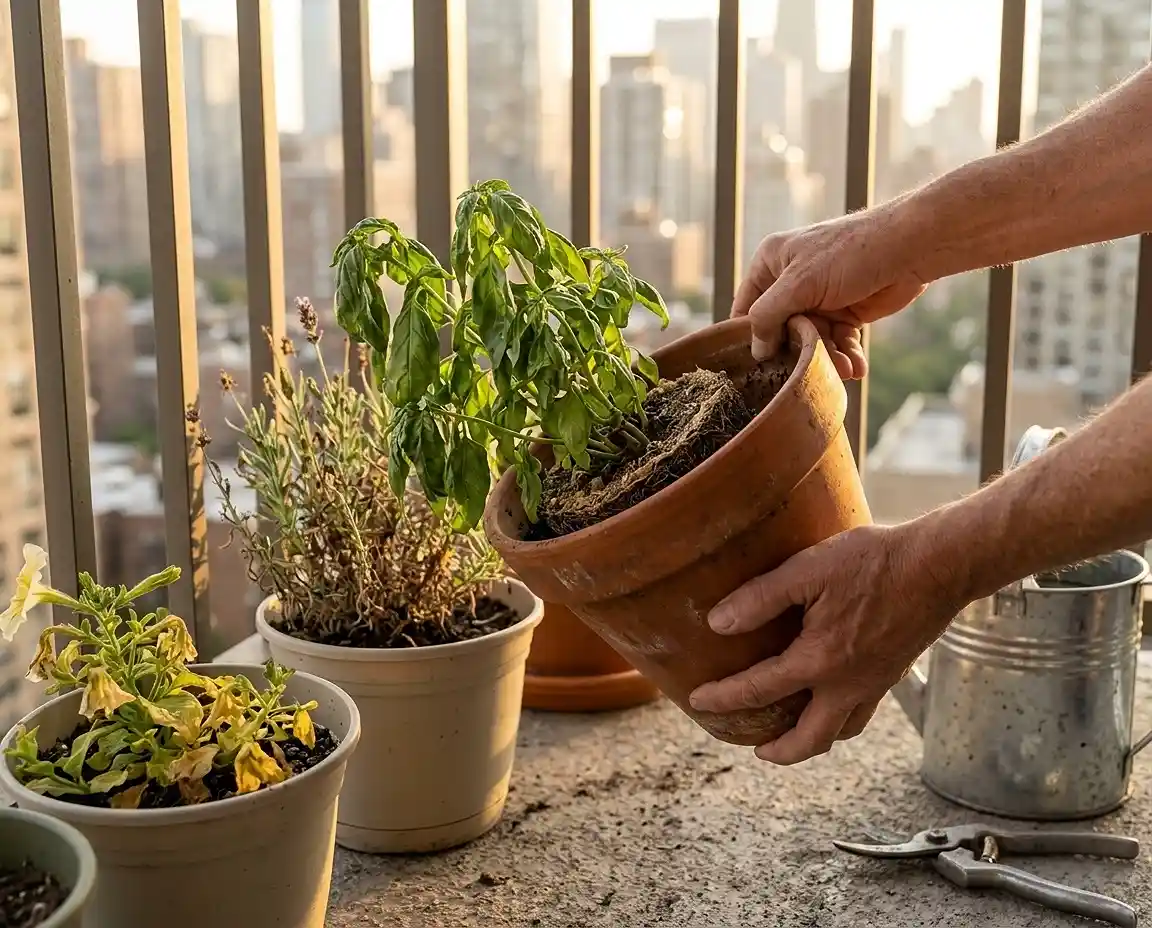
Why are my balcony plants dying?
Why are my balcony plants dying? Usually it’s one of a few balcony gardening mistakes, and you can spot the culprit in under 60 seconds. Here’s my checklist.
I garden on a west-facing, fifth-floor balcony in USDA zone 6b, and I’ve killed my share of plants up there. This list comes from those losses, plus extension research on dying container plants. It’s current as of the 2026 growing season.
Table of Contents
Why Are My Balcony Plants Dying? A 60-Second Diagnosis
A balcony isn’t a tiny backyard. It’s a microclimate with strong wind, reflected heat, and no ground soil to buffer the swings.
Triage top to bottom before you toss anything: leaves, then stems, then soil, then roots. Most plants give clear signals at each step.
The Scratch Test and Root-Ball Inspection
Scrape a sliver of outer bark with your thumbnail. Green cambium [the living layer under the bark] means the stem is alive. Brown and dry means test lower down.
Then slide the root ball out of the pot. Firm white or tan roots are healthy. Mushy, brown, smelly roots mean rot.

Essential Balcony Triage & Rescue Toolkit
You don’t need much to rescue stressed plants. Keep this small kit by the balcony door and most problems get fixed in one afternoon.
Soil Probes, Bypass Pruners, Surfactants, and Breathable Shade Cloths
- Unvarnished wooden dowel: push it 4 inches into the soil. Dark, damp wood means the mix is still wet.
- Bypass pruners: wipe the blades with rubbing alcohol between plants.
- Pure liquid castile soap: a few drops act as a surfactant [wetting agent] for hydrophobic soil.
- Perlite and pot feet: perlite loosens heavy mix, and feet keep pots out of standing water.
- 30% knitted shade cloth: it cuts afternoon heat without blocking airflow.
19 Things to Check When Your Balcony Plants Keep Dying
These run from microclimate shocks to hidden root-zone traps. Work down the list and stop when a symptom matches.
Check 1: Mismatched Sun Orientation vs. Plant Tag Requirements
Full-sun lavender like ‘Hidcote’ on a north balcony gets under 3 hours of light and rots. Ferns on a blazing south railing scorch within two weeks. I lost a $12 ‘Hidcote’ exactly this way. Match the tag to your real sun hours, or browse these balcony plants by light level.
Check 2: The “Concrete Oven” Radiant Heat Reflection Off Walls and Glass Doors
Brick walls, metal railings, and sliding glass doors bounce heat back at your plants. Leaf temperatures can run 20°F (11°C) above what your weather app reports. Move sensitive pots away, or hang shade cloth between them and the surface.

Check 3: High-Rise Wind Tunnels Ripping Moisture Out of Leaves (Desiccation)
Above the third floor, constant wind pulls water from leaves faster than roots can supply it. You’ll see crispy brown margins even in damp soil. Add a lattice or tall grasses as a windbreak, and keep pots low and clustered.
Check 4: Hydrophobic Peat Soil Channeling Water Straight Down the Pot Sides
Dry peat-based mix shrinks away from the pot wall. Water races down that gap into the saucer, so up to 90% bypasses the root ball. Bottom-soak the pot for 20 minutes with a drop of castile soap in the water.
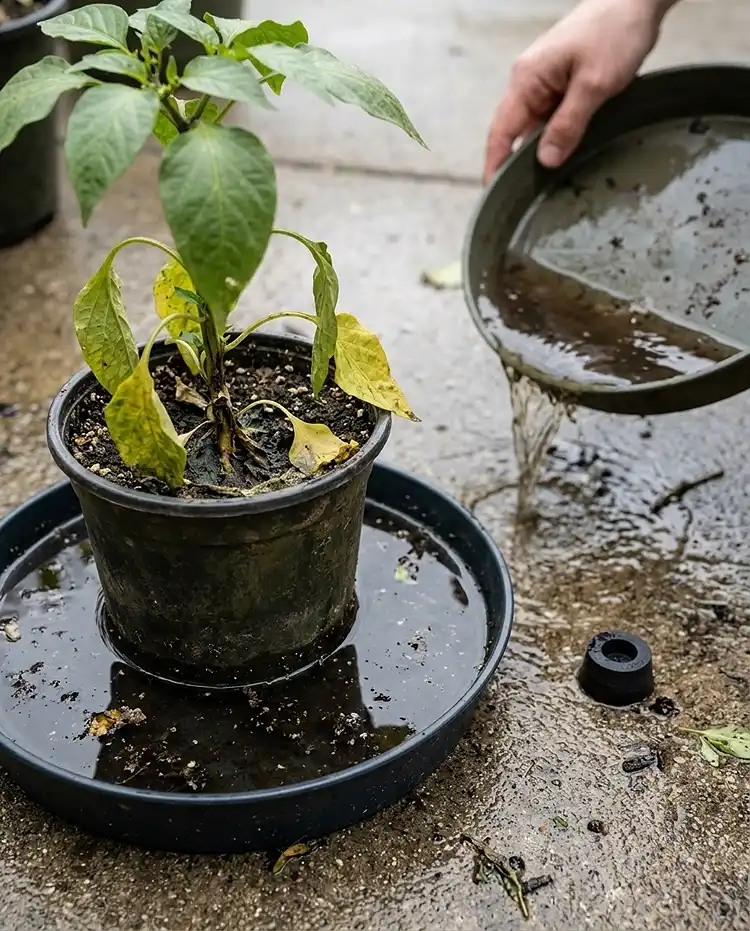
Check 5: Blocked Drainage Holes or Waterlogged Drip Saucers Suffocating Roots
A pot sitting in a flooded saucer for over 30 minutes drowns its root hairs in oxygen-free water. Lower leaves yellow, and Pythium root rot follows. It’s a top killer of container plants. Empty saucers after watering and clear blocked holes.
Check 6: Using Heavy “Garden Soil” or Topsoil Instead of Aerated Potting Mix
Bagged garden soil compacts into an airless, muddy brick inside a container. Roots need oxygen. Use a soil-less potting mix built from coco coir, pine bark, and perlite instead.
Check 7: Black Plastic or Metal Planters Literally Cooking Roots at 125°F (51.7°C)
Thin black pots and dark metal troughs soak up sun and can boil outer feeder roots on hot afternoons. NC State Extension’s container guide confirms dark containers absorb more heat.
I cooked a ‘Sungold’ tomato in a black nursery pot one July. It wilted by 3 PM daily until I moved it into a light-colored fabric pot.
Check 8: Undersized Pots Causing Root-Bound Strangulation by Mid-Summer
Large plants in 6-to-8-inch pots grow circling roots that use up all the moisture in about 4 hours. Jump to a 12-to-16-inch container, and tease the circling roots apart before repotting.

Check 9: Skipping the 7-Day “Hardening Off” Transition for Greenhouse Plants
Nursery plants grow in humid, filtered light. Put one straight onto a windy balcony and you’ll get white, papery sunscald within days. Harden off over 7 days: two hours of shade on day one, adding about an hour daily.
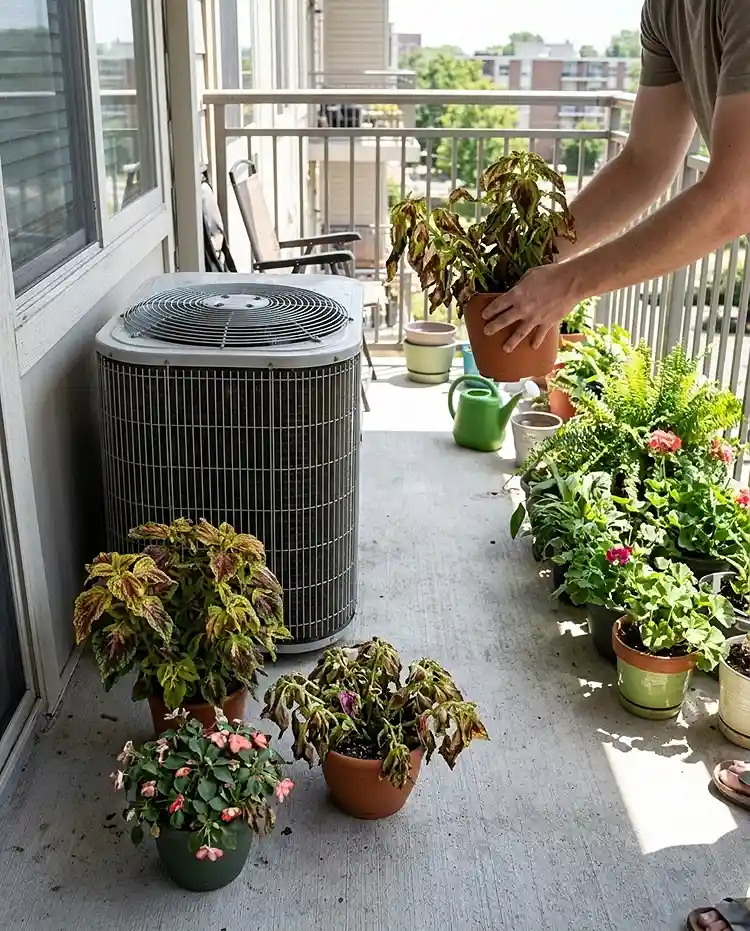
Check 10: Air Conditioner Condenser Exhaust Blowing Hot, Dry Air Across Pots
A quiet killer on apartment balconies: a condenser fan blasting 110°F (43.3°C) exhaust across your pots all summer. It dries leaves and soil fast. Move planters at least 3 feet out of the airflow.
Check 11: The “Gravel at the Bottom of the Pot” Myth Raising the Perched Water Table
Gravel in the pot bottom doesn’t improve drainage. It lifts the saturated zone higher into the root ball, where roots rot. Fill the pot with potting mix all the way down and let the drainage hole do the work.
Check 12: Nutrient Starvation After the 6-Week Potting Soil Charge Runs Out
Fresh potting mix holds roughly six weeks of nutrients. Daily balcony watering then flushes out nitrogen and potassium by June, leaving pale yellow leaves and stunted blooms. Start liquid feeding every two weeks at half label strength.
Check 13: Fertilizer Burn and Toxic Salt Crusting in Unflushed Containers
Over-applying synthetic blue plant food leaves a white mineral crust that burns root tips and crisps leaf edges. Flush the pot with plain water for a full minute until it runs out the bottom, then feed less.
Check 14: Ignoring the “Two-Zone Colder” Rule for Overwintering Perennials
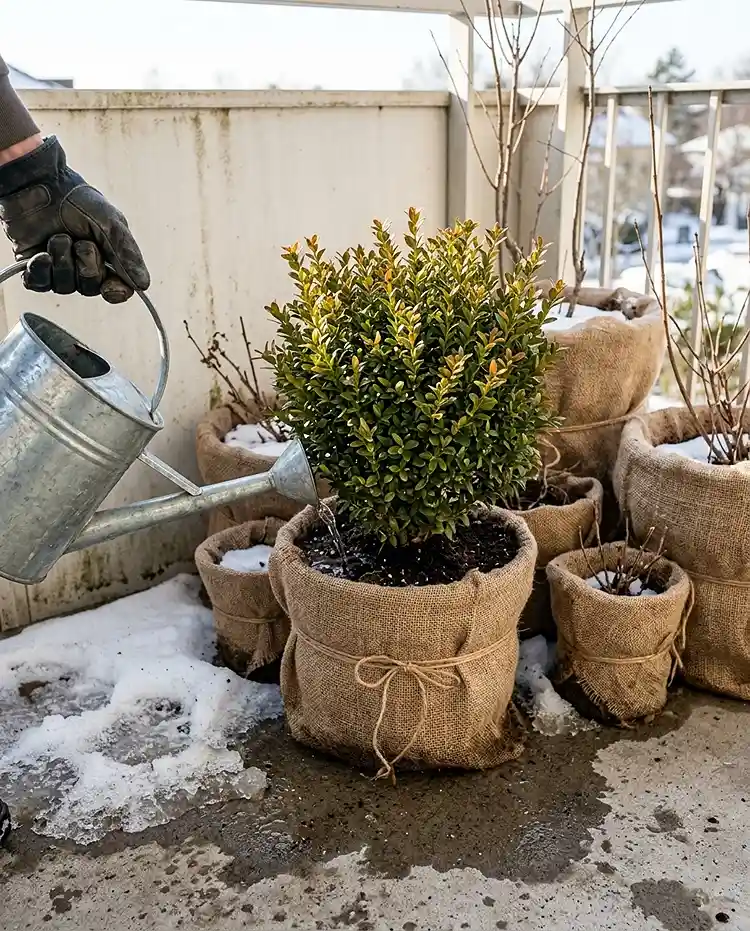
A Zone 6 perennial can die on a Zone 6 balcony because freezing air surrounds the whole pot. Choose plants hardy to Zone 4, or wrap pots in burlap and bubble wrap and cluster them against the wall.
Check 15: Winter Drought During Sunny Thaws When Gardeners Forget to Water
Evergreens like dwarf boxwood often die of dehydration, not cold. On a sunny 45°F (7.2°C) day, wind strips moisture from the needles. Water on thaw days, as long as the soil isn’t frozen solid.
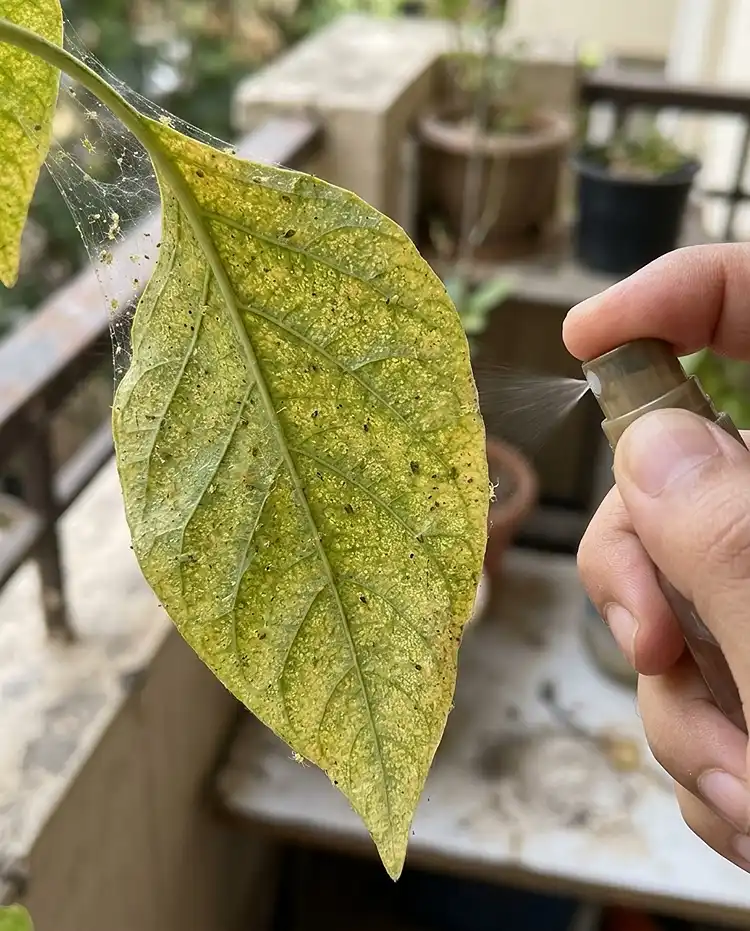
Check 16: Two-Spotted Spider Mites Thriving in Hot, Dusty Balcony Corners
Look under stippled, yellowing leaves for tiny specks and fine webbing. These mites explode on rain-sheltered, dusty balconies. Rinse leaf undersides weekly, and use insecticidal soap if webbing appears.
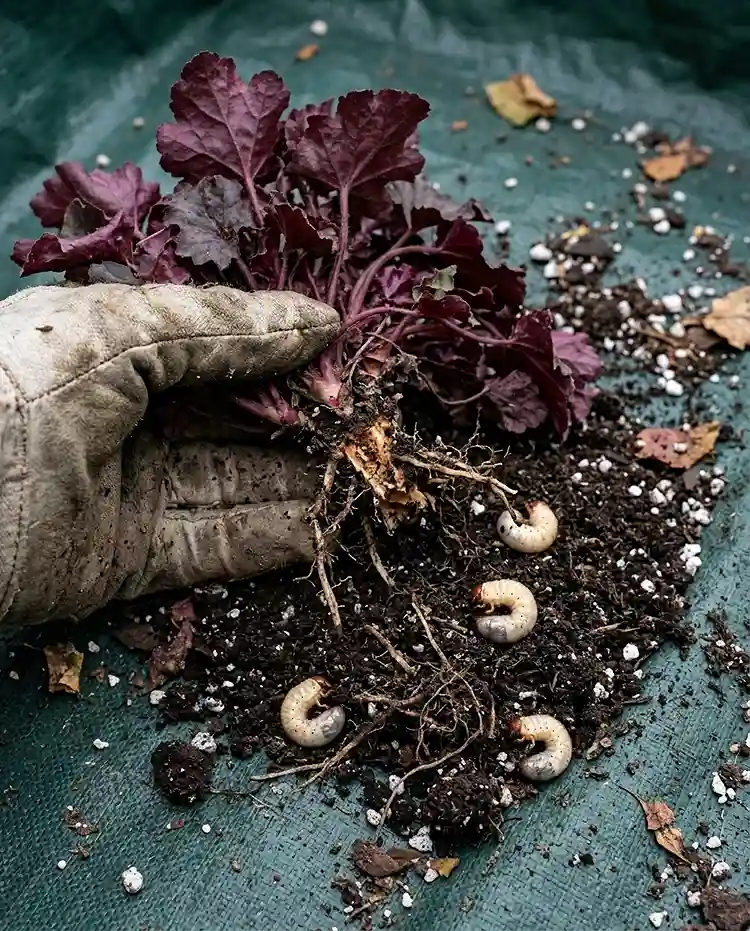
Check 17: Vine Weevil Grubs Secretly Eating Root Systems Underground
A healthy-looking Heuchera that collapses overnight likely has vine weevil grubs, C-shaped white larvae that chew the root crown off below the soil line. I lost a ‘Palace Purple’ in September this way. Repot into fresh mix and water in beneficial nematodes.
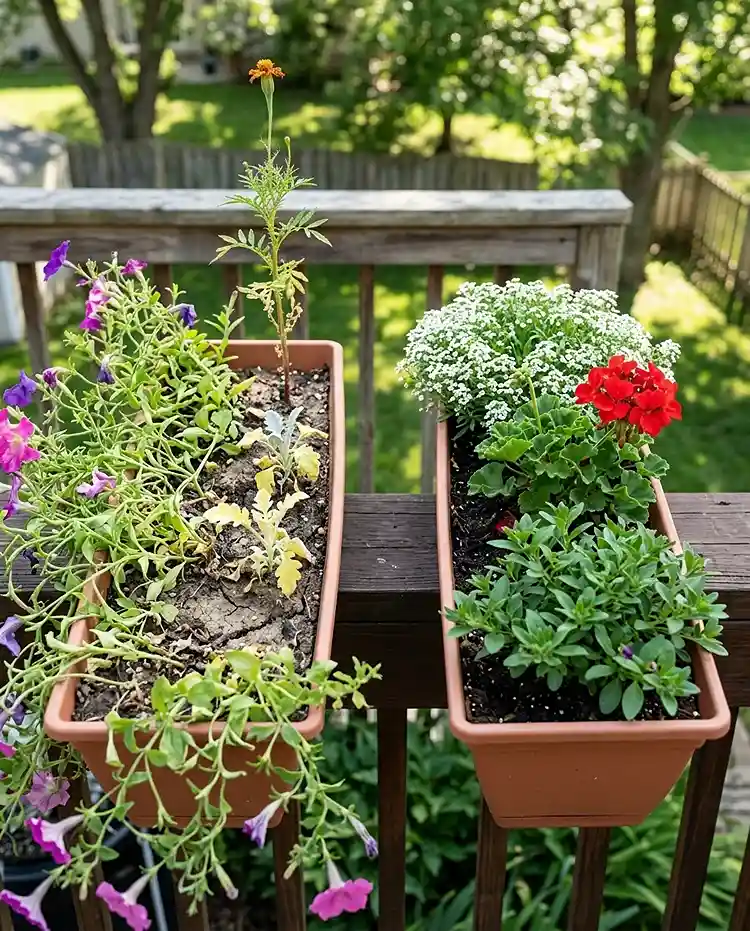
Check 18: Overcrowding 5 Starter Plants Into a Single Shallow Railing Trough
Five starters look cute in May. By July they’re fighting over water and nutrients, and the weaker ones die. Keep a 24-inch trough to three plants, or give one bigger plant its own pot.
Check 19: Wrong Watering Time (Midday Root Steaming vs. Fungal Night Soaking)
Watering hot soil at 2:00 PM steams roots, and soaking foliage at 10:00 PM invites fungus. The gold standard is 7:00 AM: aim at the soil and water deeply until it runs from the bottom.
Step-by-Step Emergency Plant Revival Protocol & Seasonal Prevention Calendar
Once you’ve found the cause, rescue the plant fast. Then use a seasonal schedule so the same problem doesn’t come back.
The 4-Step Emergency Rehab: Bottom-Soaking, Root Pruning, Repotting, and Shade Recovery
- Soak or trim: bottom-soak a bone-dry root ball in a surfactant bath for 20 minutes. For rot, cut off black roots and dust the cuts with cinnamon.
- Repot: use fresh, airy mix with perlite in a clean pot with drainage holes.
- Prune: remove about 30% of the damaged top growth.
- Rest: keep it in shade for 5 days, with no fertilizer.
I revived a crispy August rosemary this way. It showed new buds in 12 days.

Seasonal Balcony Survival Checklist (Spring Acclimation, Summer Heat Shielding, Winter Insulation)
| Season | Action | Why It Matters |
|---|---|---|
| Spring | Refresh the top 2 inches of soil; harden off new plants for 7 days | Restores nutrients and prevents sunscald |
| Summer | Add 2 inches of bark mulch; shade pots at midday; water at 7 AM | Cools roots and cuts evaporation |
| Autumn | Stop fertilizing about 6 weeks before first frost; check roots for grubs | Prevents tender new growth that frost kills |
| Winter | Cluster and wrap pots; water on thaw days | Protects roots from freezing and drought |
Common Problems & Solutions
Opposite mistakes often produce identical-looking plants. These three symptoms confuse people most.
Yellowing, Drooping Leaves: How to Tell Overwatering Apart from Underwatering Instantly
Lift the pot. Weight and soil tell you which problem you have.
- Overwatering: heavy pot, damp soil, soft limp yellow lower leaves, black stem base. Stop watering, improve drainage, and repot if roots are mushy.
- Underwatering: feather-light pot, dry soil pulling from the wall, crispy brown tips, whole-plant wilt. Bottom-soak, then water deeply.
Crispy Brown Leaf Tips and Edges on Shaded Balcony Plants
Brown margins come from wind burn, chlorine or fluoride buildup from tap water, or low humidity. Add a wind barrier, set pots on pebble humidity trays, and flush soil monthly with filtered or rested water.
Plants That Grow Tall and Green All Summer But Refuse to Flower or Fruit
Excess nitrogen, too few direct sun hours, or night temperatures above 75°F (23.9°C) can halt blooming. Switch to a high-potash tomato or bloom feed, and check that the plant gets at least 6 hours of direct sun.
Frequently Asked Questions
How do I know if my dried-out balcony plant is completely dead or can still be saved?
Bend the main stem: if it bends rather than snaps, it’s alive. Scrape the lower bark with a fingernail. If you see green underneath, or white roots in the soil, soak the pot and cut back dead leaves to trigger new buds.
Should I fertilize a dying or stressed balcony plant to help it recover?
No. Fertilizer salts burn compromised roots on a heat-stressed or wilted plant. Fix water and light first, and wait until new healthy green leaves appear. Until then, use only a mild liquid kelp.
Why do new plants from the garden center always die within a week on my balcony?
Nurseries grow plants in climate-controlled, shaded greenhouses, often in peat plugs that dry out fast. A windy, sunny balcony causes transplant and UV shock. Harden plants off over 7 days to avoid it.
What are the hardest-to-kill plants for a balcony where everything else has died?
For baking sunny balconies, try sedums, portulaca, zonal geraniums, and rosemary. For shady balconies, choose cast iron plant (Aspidistra), Heuchera, spotted laurel (Aucuba), and pothos.
How often should I water balcony plants in summer?
Check daily. Water when the top 1 to 2 inches of mix feels dry, until water runs out the drainage holes. Small pots in hot, windy spots may need water twice a day during heat waves.
Key Takeaways
- If you’re still asking why are my balcony plants dying, start with watering, pot heat, and drainage before anything else.
- Run the scratch test and root-ball check first. They tell you in 60 seconds whether a plant is savable.
- Use real potting mix, pots with drainage holes, and light-colored containers sized 12 to 16 inches for large plants.
- Water at 7:00 AM, feed lightly every two weeks, and never fertilize a stressed plant.
- Still struggling? Swap in tougher picks from these balcony plants.