
Native Plants for Pollinator Container Garden
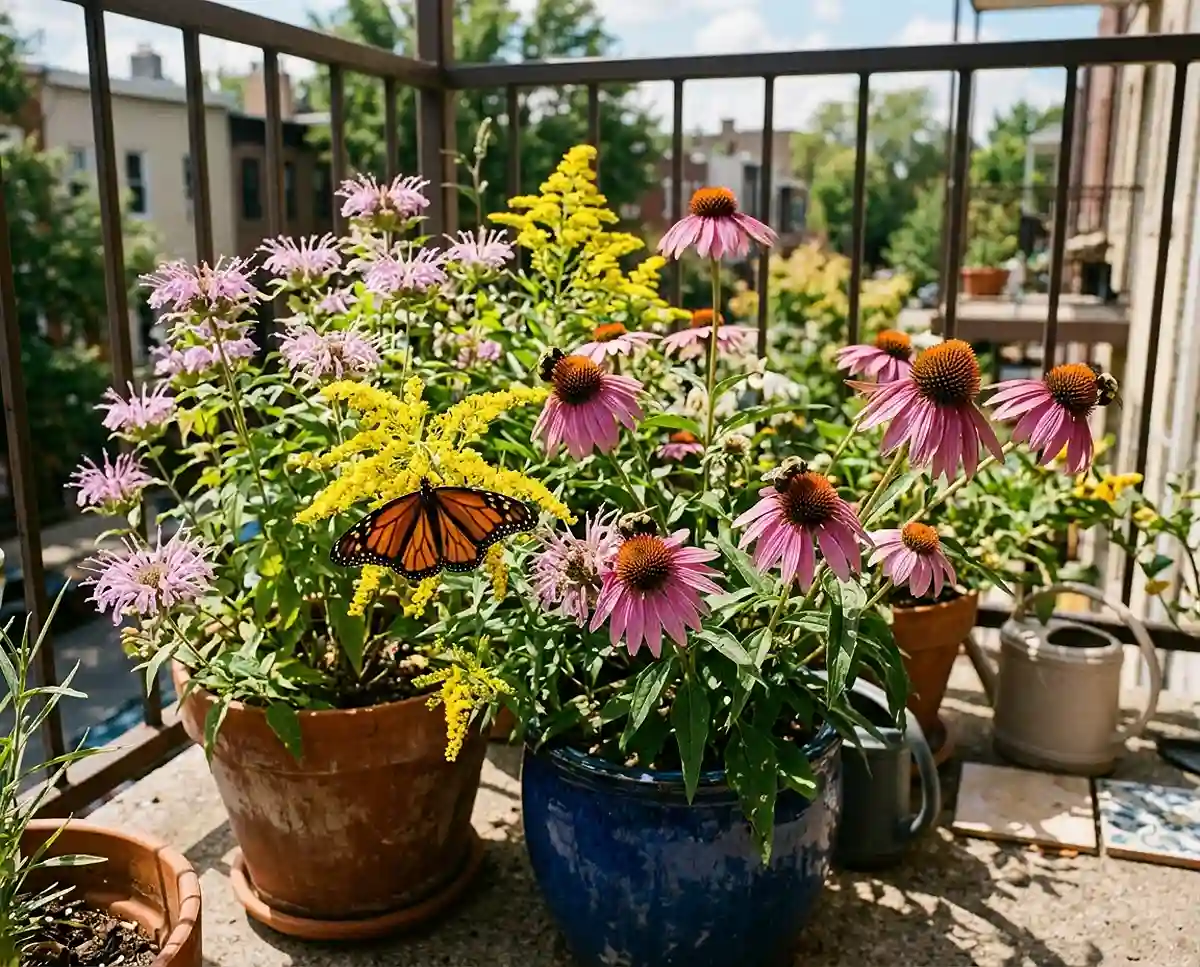
Turn a bare balcony into a buzzing habitat with native plants for pollinator container garden spaces. These native flowers feed local bees and butterflies far better than store-bought annuals ever will.
I’ve grown pollinator containers on my south-facing, 40-square-foot balcony in Kansas City (zone 6b) for six seasons now. What follows is what actually worked, what died, and what I’d do differently.
Table of Contents
Why Native Plants Matter for Balcony Pollinator Gardens
Quick Answer: Native plants co-evolved with local bees, butterflies, and moths over thousands of years, so their bloom timing, nectar chemistry, and flower shape match what regional pollinators actually need. Non-native ornamentals often look showy but offer little usable food.
A petunia might pump out color all summer, but most native bees can’t access its nectar or don’t recognize it as a food source at all. Purple coneflower (Echinacea purpurea), by contrast, is a landing pad and buffet in one.
Some native plants also serve as host plants, meaning caterpillars can actually eat the leaves and complete their life cycle. That’s a job no imported ornamental can do.
Understanding Your Region’s Native Pollinator Needs
Finding Native Plants Specific to Your Area
Quick Answer: Start with your state’s native plant society, your county extension office, or the Xerces Society’s regional plant lists to confirm a species is truly native to your specific area, not just “native to North America.”
- State native plant societies often publish free regional plant lists by ecoregion
- County extension offices know what thrives in your exact soil and rainfall pattern
- The National Wildlife Federation Native Plant Finder lets you search by zip code
I made the mistake early on of buying “native” milkweed from a big-box store that turned out to be tropical milkweed (Asclepias curassavica), which isn’t native to Missouri and can actually disrupt monarch migration timing.
Matching Plants to Local Pollinator Species
Quick Answer: Bees favor blue, purple, and yellow flowers with a landing platform; butterflies prefer flat clusters of small blooms; hummingbirds go for tubular red and orange flowers. Mixing shapes and colors pulls in a wider mix of visitors.
My container with bee balm (Monarda fistulosa) draws hummingbirds and bumblebees at the same time, while my flat-topped yarrow attracts small native bees and beneficial wasps I never used to notice.
Best Native Flowers for Container Pollinator Gardens
Native Perennials for Bees
Quick Answer: Purple coneflower, wild bergamot, and showy goldenrod are reliable bee magnets that adapt well to deep containers, as long as you give them at least 12 inches of soil depth.
| Plant | Container Notes | Bloom Time |
|---|---|---|
| Purple coneflower (Echinacea purpurea) | 16-inch pot minimum, full sun | Early summer to fall |
| Wild bergamot (Monarda fistulosa) | Spreads by rhizome, use a wide trough | Midsummer |
| Showy goldenrod (Solidago speciosa) | Clumping, not aggressive like tall goldenrod | Late summer to frost |
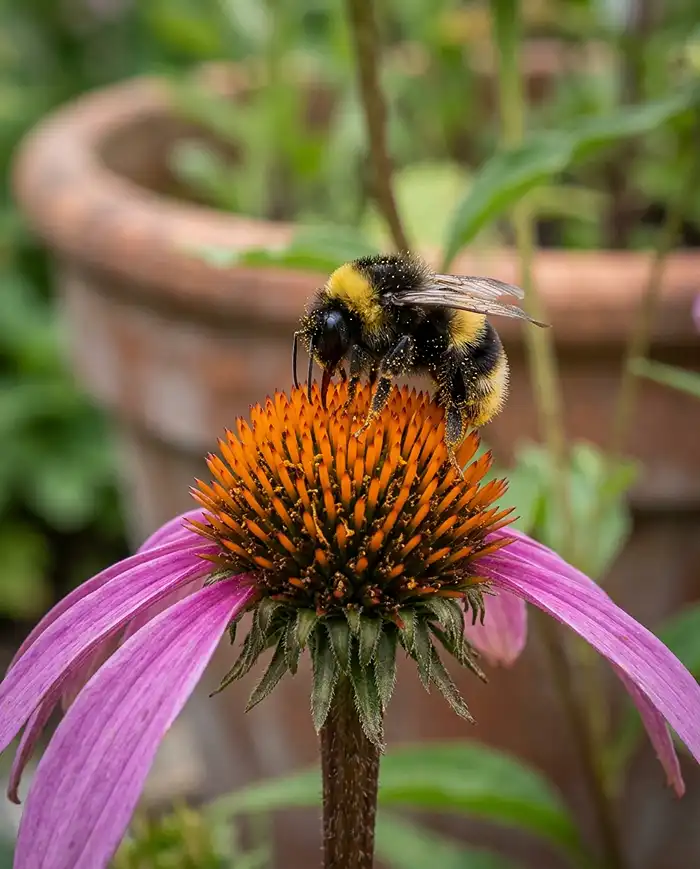
Real Example: My first coneflower went into a shallow 8-inch nursery pot and sulked all summer with three stunted blooms. The same plant, repotted into a 16-inch fabric grow bag the following spring, produced over 20 flowers.
Native Host Plants for Butterflies
Quick Answer: Nectar isn’t enough. Butterflies need host plants where caterpillars can actually feed, like common milkweed for monarchs or violets for fritillary butterflies.
- Butterfly weed (Asclepias tuberosa) needs a deep 14-inch pot for its taproot
- Common blue violet (Viola sororia) works well as a shady groundcover host
- Pearl crescent butterflies rely on native asters as both nectar and host plant
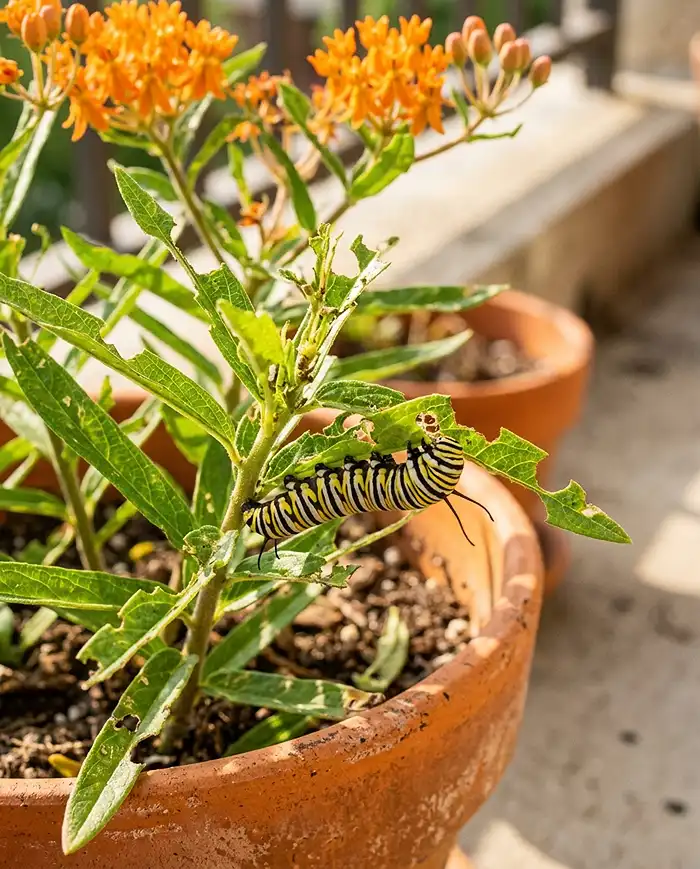
Pro Tip: Plant host species toward the back of the container so chewed, ragged leaves from caterpillars stay less visible from the front.
Compact Native Grasses and Fillers
Low native grasses aren’t just filler. Little bluestem (Schizachyrium scoparium) and prairie dropseed (Sporobolus heterolepis) give ground-nesting insects somewhere to shelter overnight and during storms.
I tuck a small clump of prairie dropseed at the edge of my largest trough. It softens the whole arrangement and hosts skipper butterfly larvae I’d otherwise never see.
Choosing the Right Containers for Native Pollinator Plants
Quick Answer: Deep-rooted natives like butterfly weed need at least 14 to 16 inches of soil depth, while shallow-rooted grasses and violets do fine in 8 to 10 inches. Unglazed terra cotta breathes but dries fast; glazed ceramic or thick plastic holds moisture longer and buffers root temperature swings.
On a hot, west-facing balcony, dark plastic pots can push soil temperatures well above what native prairie roots tolerate. I switched my sun-blasted containers to light-colored glazed ceramic and stopped losing plants to heat stress by midsummer.
Fabric grow bags are a solid middle ground for small balcony garden setups since they’re lightweight, drain well, and still hold enough soil volume for taprooted natives.
Soil and Planting Considerations for Native Species
Quick Answer: Skip rich commercial potting mix. Most prairie and meadow natives evolved in lean, fast-draining soil and actually flop over or rot when given too much fertility and moisture.
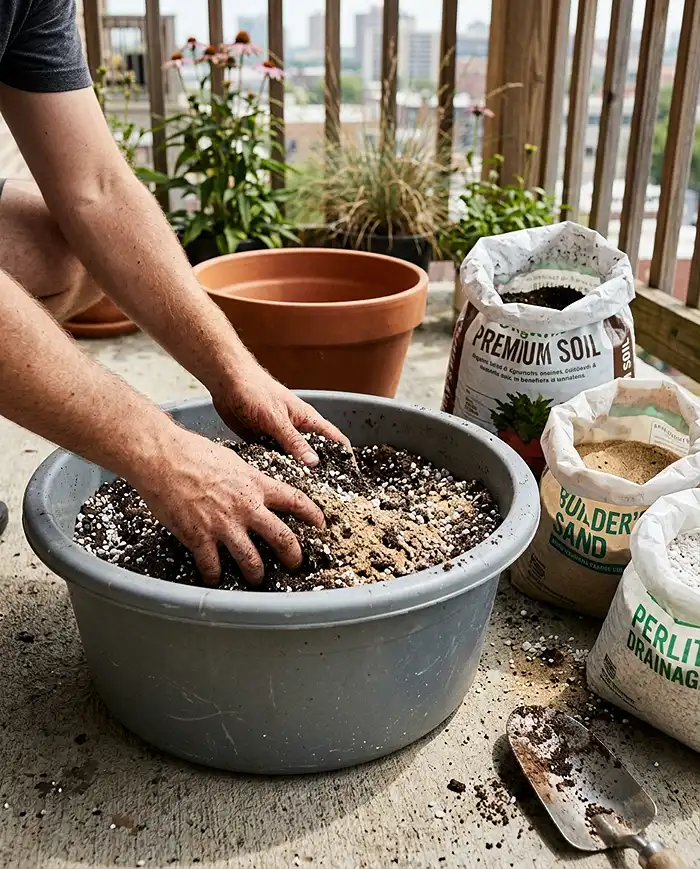
I mix one part standard potting soil, one part coarse sand, and one part perlite for my prairie natives. It mimics the lean, gritty soil these plants grew in for thousands of years before anyone put them in a pot.
Skip the slow-release fertilizer pellets, too. Overfed native perennials grow tall, floppy stems with fewer flowers, which is the opposite of what a pollinator garden needs.
Materials and Tools Checklist for Your Pollinator Container Garden
Here’s exactly what I keep on hand before planting day:
- Containers at least 12 to 16 inches deep, with drainage holes
- Regionally native seed mix or starts from a native plant nursery
- Lean, well-draining soil blend (potting soil, sand, perlite)
- Shredded bark or leaf mulch, 1 to 2 inches deep
- A shallow terra cotta saucer as a pollinator water dish, with pebbles for landing spots
- Weatherproof plant tags so you remember which cultivar is which
Step-by-Step: Designing and Planting Your Pollinator Container Garden
Step 1: Select a Diverse Bloom Sequence
Quick Answer: Choose at least one native that blooms in spring, one in summer, and one in fall so pollinators always have a food source, not just a three-week burst of color.
On my balcony that’s wild columbine in April, coneflower and bee balm through summer, and goldenrod into October. Bees show up from the first warm week straight through the first frost.
Step 2: Group Plants by Water and Light Needs
Cluster plants with matching thirst and sun requirements in the same container so you’re not overwatering drought-tolerant butterfly weed to keep a thirstier neighbor alive.
This is also the easiest way to simplify care in a small balcony garden pollinator container garden setup, since one watering schedule covers the whole pot.
Step 3: Add Pollinator-Support Features
A shallow water dish with pebbles gives bees a safe place to drink without drowning. A small patch of bare, undisturbed soil at the container’s edge gives ground-nesting native bees a place to burrow.
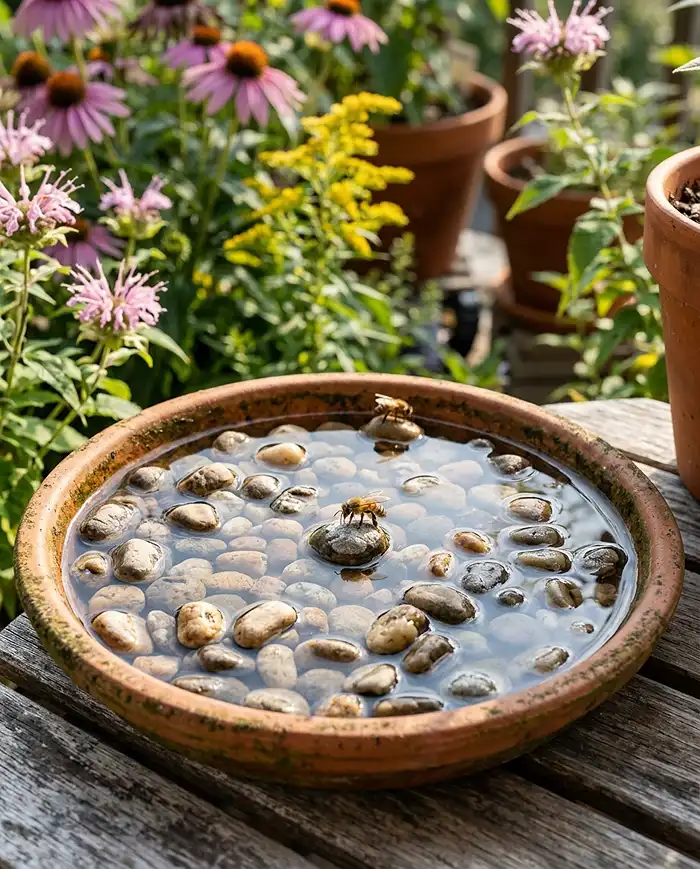
I also leave one corner of a large trough with a few dry twigs tucked under the mulch, which gives beneficial insects overwintering shelter.
Watering and Maintenance for Native Container Plants
Quick Answer: Established native perennials need noticeably less water than typical container annuals. Once roots settle in after the first season, most prairie natives only need watering when the top 2 inches of soil are fully dry.
My biggest early mistake was watering coneflower and butterfly weed on the same daily schedule as my herbs. Both developed root rot by midsummer. Now those containers get watered roughly once a week, sometimes less during a cool spell.
Seasonal Care for Year-Round Pollinator Support
Spring Planting and Early Bloom Establishment
Time new native plantings to when local pollinators start emerging, usually a few weeks after your last frost date. In my zone 6b location, that means mid to late April for most perennial starts.
Fall Cleanup and Overwintering Habitat
Leave seed heads and dried stems standing through winter instead of cutting everything back in October. Many native bee species overwinter inside hollow stems, and birds like goldfinches feed on the leftover seed heads.
Regional Considerations by Hardiness Zone
Quick Answer: The right native mix shifts a lot depending on whether you’re gardening in prairie, coastal, desert, or woodland ecosystems, so a plant list built for zone 6b Missouri won’t necessarily work in zone 9b Southern California.
| Region Type | USDA Zones (typical) | Example Natives |
|---|---|---|
| Midwest prairie | 5b to 7a | Coneflower, bee balm, little bluestem |
| Coastal Pacific | 8b to 10b | California poppy, seaside daisy, showy milkweed |
| Desert Southwest | 8a to 10a | Desert marigold, penstemon, brittlebush |
| Eastern woodland | 5a to 7b | Wild columbine, violets, foamflower |
As of the 2026 growing season, most native plant nurseries now sell region-tagged cultivars, so check the label for your specific ecoregion before you buy, not just your USDA zone number.
Common Problems and Solutions
Native Plants Struggling in Container Conditions
Some natives resist container life entirely, especially deep-taprooted prairie species. Choose naturally compact cultivars, like Echinacea purpurea ‘Kim’s Knee High,’ or size up to a deeper pot before giving up on a species.
Low Pollinator Visitation Despite Blooms
If flowers are open but nothing’s landing, check for pesticide residue on nursery starts, isolation from any other green space, or too little bloom diversity. A single species in bloom draws far fewer visitors than a mixed container.
Aggressive Native Spreaders Overtaking the Container
Some goldenrod and bee balm varieties spread fast even in pots. Divide crowded clumps every year or two, or use a buried root barrier collar to slow rhizomes down without removing the plant.
native plants for pollinator container garden FAQs
What native flowers are best for attracting bees to a balcony garden?
Purple coneflower, wild bergamot, and native asters are reliable, regionally adaptable choices that draw a wide range of native bee species to a balcony container garden.
Can native plants really thrive in containers instead of the ground?
Yes, most native perennials do well in containers as long as you match pot depth to root type, such as 14 to 16 inches for taprooted species, and use a lean, well-draining soil mix.
How do I find native plants specific to my area?
Check your state native plant society, local extension office, or the National Wildlife Federation Native Plant Finder to confirm a species is native to your specific ecoregion, not just your broader USDA zone.
Do native pollinator plants need special soil or fertilizer?
Most native plants prefer lean, unfertilized, fast-draining soil that mimics their natural habitat. Rich potting soil and regular fertilizer often cause floppy growth and fewer blooms.
Key Takeaways
- Native plants for a pollinator container garden give local bees and butterflies real nectar and host-plant support that non-native ornamentals can’t match
- Match container depth to root type: at least 14 to 16 inches for taprooted natives like butterfly weed
- Use lean, fast-draining soil rather than rich commercial potting mix
- Choose a bloom sequence spanning spring through fall, and leave stems standing over winter for overwintering insects
- For more balcony flowers and layout ideas, see our guides on apartment balcony garden ideas and herb garden layout for balconies, or revisit our full native flower balcony garden ideas guide