
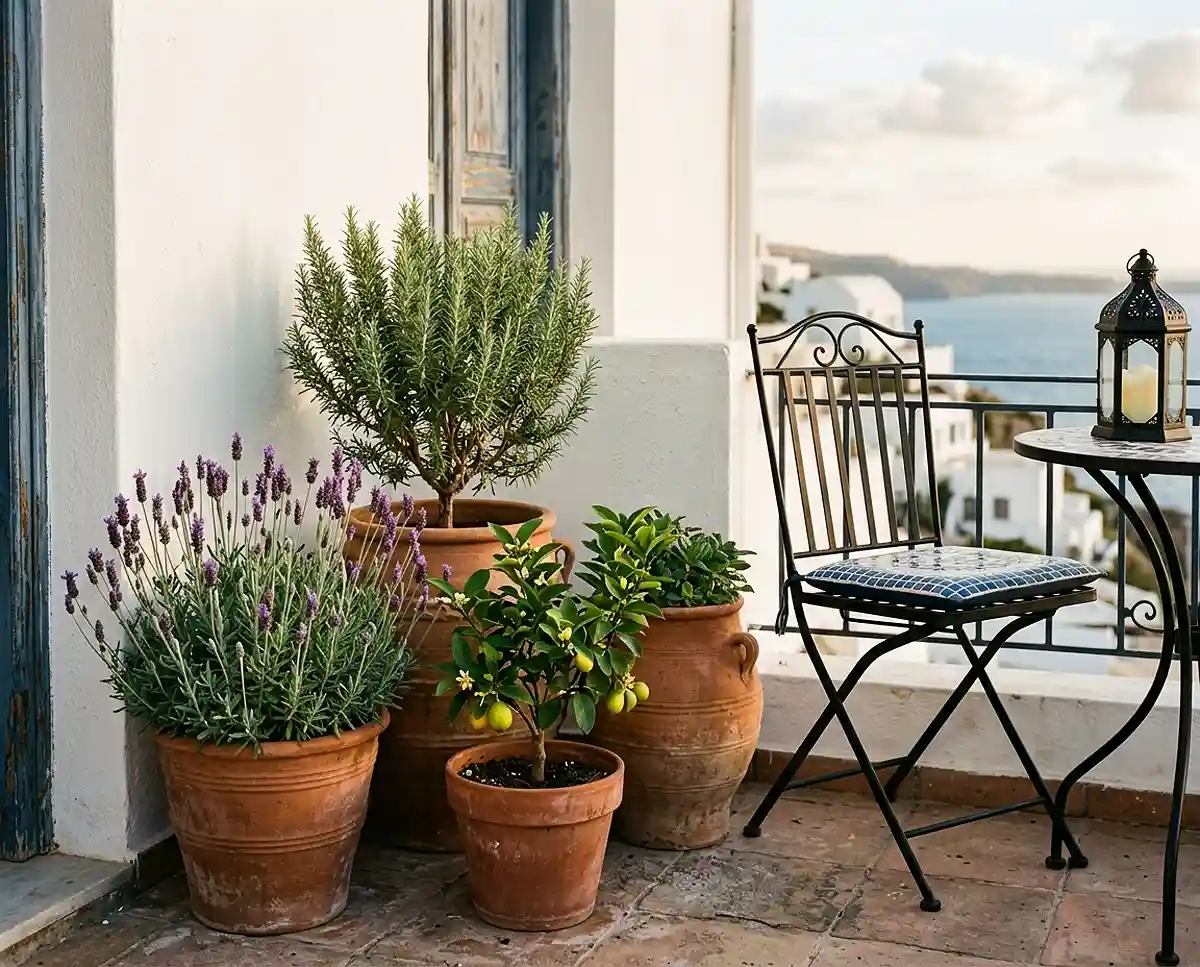
Mediterranean Balcony Garden Ideas With Terracotta Pots
Want mediterranean balcony garden ideas that actually survive a real summer? Terracotta pots, sun-loving herbs, and a warm color palette turn even a tiny apartment balcony into a Greek-island escape.
I grow rosemary, lavender, and a dwarf Meyer lemon on a south-facing 6×4 foot balcony in zone 7a. Every plant lives in terracotta. Here’s exactly how I built it, including what cracked, died, and came back better the second time.
Table of Contents
Why a Mediterranean Balcony Garden Feels Like a Getaway
There’s a reason hotels in Santorini and Tuscany lean so hard on terracotta and herbs. The warm clay, the dusty greens of olive and rosemary, the white-and-blue accents — it reads as vacation before you’ve even sat down.
A small balcony garden built around this look does double duty. You get a productive herb patch and a genuine retreat. I started mine after a trip to Sicily and a string of dead basil plants in plastic pots. The terracotta switch fixed more than I expected.
It works because Mediterranean plants actually want what most balconies offer: full sun, heat, and lean, fast-draining soil. You’re not fighting the conditions — you’re using them.
Plan Your Mediterranean Balcony
Before you buy a single pot, walk your balcony at three points in the day and take notes. The Mediterranean look only works if the plants underneath it are actually happy.
Assessing Sun, Heat, and Space
Quick Answer: Mediterranean balconies need 6+ hours of direct sun and good airflow. South or west-facing exposures in USDA zones 7-10 are ideal for apartment gardening with this style.
Measure your usable floor space and railing length in feet, not steps. My balcony is 24 square feet, and I lost a full third of it to a too-large olive pot the first year. Note any heat traps near brick or glass — those spots dry pots out fastest.
Defining the Mediterranean Look and Color Palette
Quick Answer: The classic palette is terracotta orange, whitewash, and sea blue, layered with silvery-green herb foliage and a few bursts of magenta or coral from flowering plants.
Keep hardscape (walls, furniture) in white or stone tones so the terracotta and greenery do the talking. For more direction on pairing colors with plants, check out this balcony color palette guide.
Why Terracotta Pots Are Perfect for This Style
Terracotta isn’t just the look — it’s functionally suited to Mediterranean plants in a way plastic and glazed ceramic aren’t.
Benefits of Terracotta for Plant Health
Quick Answer: Unglazed terracotta is porous, so it lets excess moisture evaporate through the walls instead of pooling around roots. That suits drought-tolerant herbs and Mediterranean natives that hate wet feet.
The trade-off is faster drying, which sounds bad until you realize it’s exactly what rosemary, thyme, and lavender evolved for. Terracotta also has thermal mass, buffering roots against sudden temperature swings.
Real Example: My first lavender lived in a glazed blue pot and rotted by August in zone 7a humidity. I moved the replacement plant into a plain terracotta pot the next spring — same balcony, same watering habits — and it’s still thriving three summers later.
Choosing and Arranging Terracotta Pots
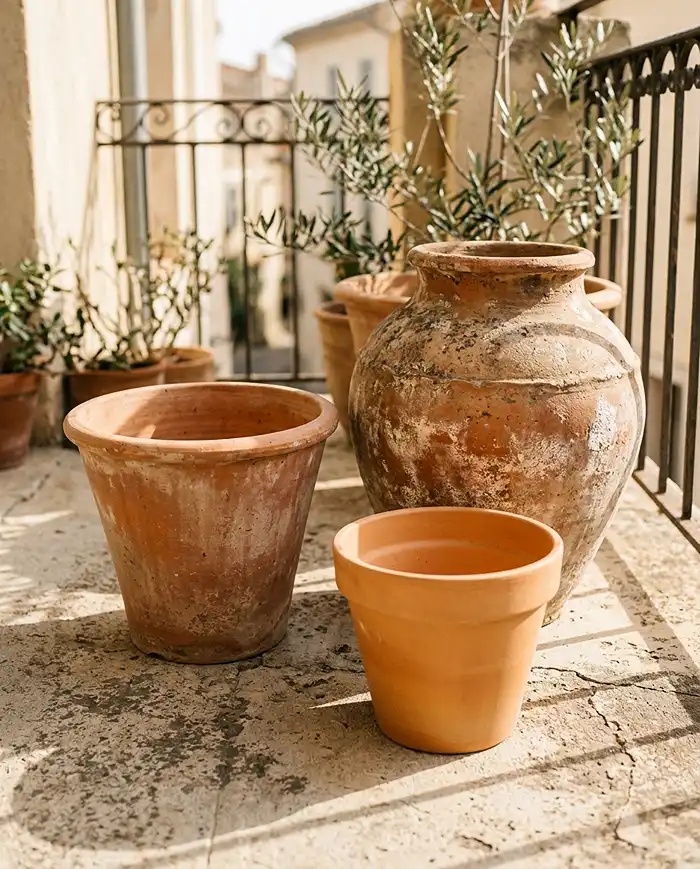
Quick Answer: Mix at least three pot sizes — 6-inch, 10-inch, and 14-16 inch — and stick to classic urn or tapered shapes for an authentic, collected-over-time look.
- Buy Italian or thick-walled terracotta where possible — it resists frost cracking better than thin imports
- Let a few pots weather naturally; uneven patina reads as authentic, not neglected
- Cluster odd numbers (3, 5, 7) rather than even pairs for a relaxed, organic arrangement
Best Plants for a Mediterranean Balcony
This is where the look comes together. Stick to genuinely sun-loving, drought-tolerant species and the garden basically maintains itself once established.
Mediterranean Herbs (Rosemary, Thyme, Lavender)
Quick Answer: Rosemary ‘Tuscan Blue’, creeping thyme, and English lavender ‘Munstead’ are the backbone of any Mediterranean balcony — fragrant, drought-tolerant, and happy in lean soil.
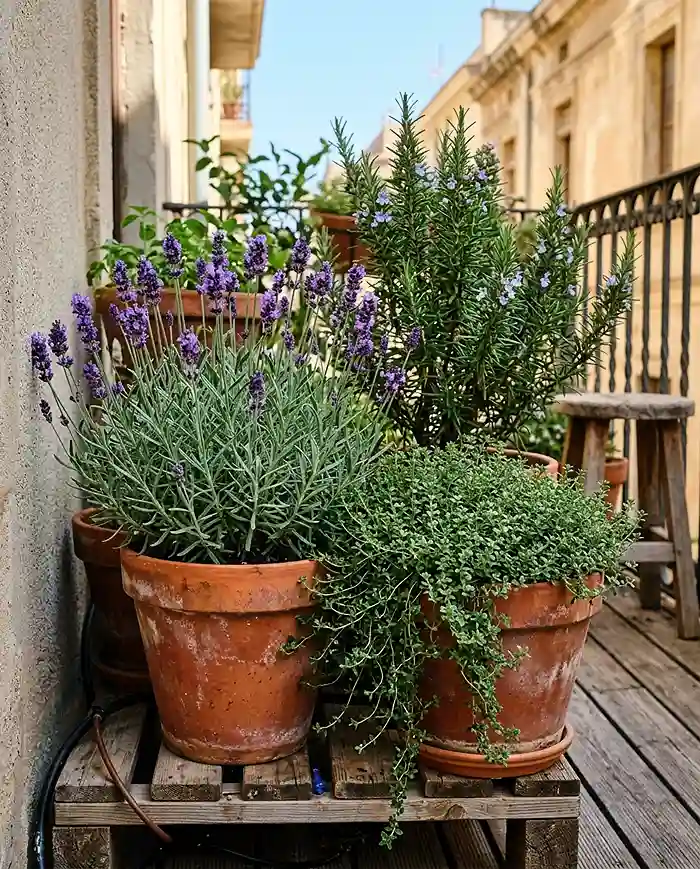
I plant ‘Munstead’ lavender because it stays compact at 12-18 inches, unlike some lavenders that sprawl past their pot. Thyme works well trailing over a pot’s rim, softening the terracotta edge.
Sun-Loving Flowers (Bougainvillea, Geraniums)
Quick Answer: Dwarf bougainvillea and zonal geraniums (Pelargonium) bring the magenta and coral pops that complete the Mediterranean color story, and both tolerate heat and irregular watering.
Bougainvillea needs a sturdy support and full sun to bloom hard. Mine sulked against a shaded railing for a season before I moved it — bloom production tripled once it got six straight hours of light.
Citrus, Olive, and Compact Trees
Quick Answer: A dwarf Meyer lemon or a potted olive tree (Olea europaea ‘Arbequina’) makes a strong focal point and stays manageable in an 18-20 inch terracotta container.
These are the vertical anchors of the design — place one per balcony rather than several, so it reads as a feature, not clutter.
Tools and Materials You’ll Need
Keep the shopping list simple. You don’t need much beyond good pots and the right soil.
- Terracotta pots in 3 sizes (6″, 10″, 14-16″)
- Well-draining potting mix (or potting soil plus perlite/coarse sand)
- Pea gravel for top-dressing and drainage trays
- Slow-release fertilizer formulated for herbs or citrus
- A trowel, hand pruners, and a watering can with a narrow spout
How to Plant a Mediterranean Balcony Garden
The planting process is simple, but two steps get skipped constantly and cause most of the early failures I see (and made myself).
Preparing Terracotta Pots and Soil
Quick Answer: Soak new terracotta pots in water for 30-60 minutes before planting, then fill with a gritty mix of two parts potting soil to one part coarse sand or perlite.
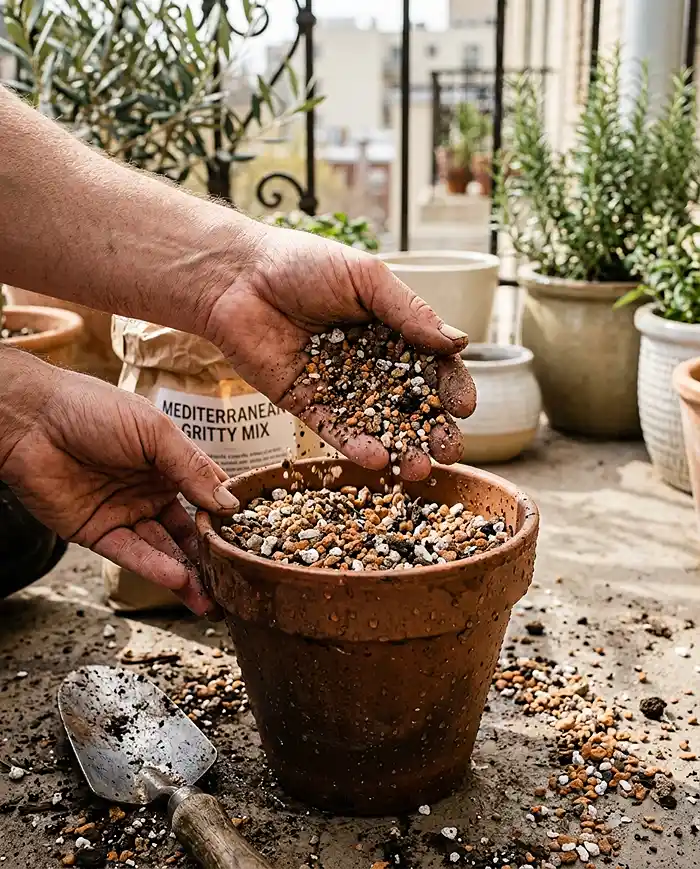
Skipping the soak means a dry pot pulls moisture straight out of your fresh soil within hours. A common myth says to layer gravel at the bottom for drainage — research from the UC Master Gardeners shows this actually raises the saturated layer instead of helping. Skip it and use a full depth of well-draining mix instead.
Planting and Grouping for Authentic Style
Quick Answer: Group pots by water needs — herbs and succulents together, citrus and flowering plants together — and cluster three to five pots at varying heights for a lush, layered look.
Leave 2-3 inches between pot rims when clustering so air can still move through. I learned this the hard way after powdery mildew showed up on basil crammed too tight against a lavender pot.
Caring for Plants in Terracotta Pots
Maintenance for this style is genuinely low once you adjust your watering habits to match the material.
Watering and Drainage in Terracotta
Quick Answer: Terracotta dries faster than plastic, so check soil moisture with a finger test every 1-2 days in summer and water deeply until it runs from the drainage hole.
Drought-tolerant Mediterranean herbs actually prefer this drying-and-soaking rhythm over constant dampness. Citrus and flowering annuals need more frequent checks since they’re less forgiving of fully dried soil.
Feeding, Pruning, and Mulching
Quick Answer: Feed lightly with a balanced slow-release fertilizer every 6-8 weeks, prune herbs after flowering to keep them compact, and top-dress with gravel mulch to slow evaporation.
Gravel mulch also reinforces the look — it hides bare soil and gives pots a finished, nursery-quality appearance for almost no cost.
Styling and Décor Finishing Touches
A few accents push the space from “balcony with plants” to genuinely Mediterranean.
Adding Tiles, Lanterns, and Textiles
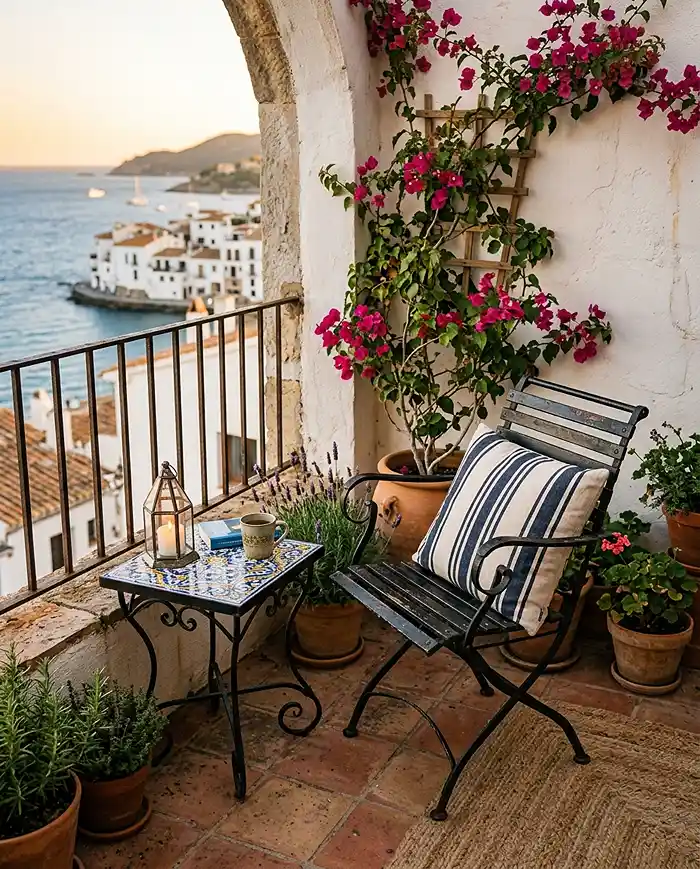
Quick Answer: A small mosaic-tile side table, a wrought-iron lantern, and a striped linen cushion cover are enough to anchor the Mediterranean theme without crowding a small space.
I found my lantern secondhand for under $15 — it doesn’t need to be expensive, just warm-toned and slightly weathered-looking.
Creating a Cozy Seating Nook
Quick Answer: A single café chair or a folded outdoor cushion in a corner, angled toward your tallest potted plant, creates an instant Mediterranean seating nook even in 24 square feet.
For more renter-friendly setup ideas that don’t require drilling or permanent fixtures, see this renter-friendly patio garden guide.
Seasonal Care for a Mediterranean Balcony
Overwintering Terracotta and Tender Plants
Quick Answer: Move citrus and tender flowering plants indoors or to a sheltered spot below 40°F, and empty or insulate terracotta pots you can’t move, since saturated clay cracks in hard freezes.
I lost two pots my first winter by leaving them full and exposed in a zone 7a cold snap. Now I bring the Meyer lemon inside by early November and wrap remaining pots in burlap if a freeze is forecast.
Common Problems & Solutions
Terracotta Cracking in Frost
Quick Answer: Terracotta cracks when trapped moisture inside the clay freezes and expands. Empty unused pots before winter, or move planted ones somewhere sheltered and unheated, like an enclosed stairwell.
Plants Drying Out Too Quickly
Quick Answer: Terracotta’s porous walls speed up evaporation. Add a 1-inch gravel mulch layer, group pots together for shared humidity, and size up your pot if you’re watering more than once a day.
White Salt Deposits on Pots
Quick Answer: Those white crusty patches are mineral salts from tap water and fertilizer wicking through the clay. Scrub with a vinegar-water solution and occasionally flush soil with extra water to clear excess salts.
| Problem | Cause | Fix |
|---|---|---|
| Cracking | Frozen moisture in clay | Empty or shelter pots in winter |
| Fast drying | Porous clay walls | Mulch, group pots, size up |
| White residue | Mineral salt buildup | Scrub with vinegar, flush soil |
For more layout inspiration before you commit to a final design, browse these apartment balcony garden ideas.
mediterranean balcony garden ideas FAQs
What plants work best in a Mediterranean balcony garden?
Rosemary, lavender, and thyme form the backbone, paired with geraniums or bougainvillea for color and a dwarf citrus or olive tree as a focal point. All thrive in full sun and lean, well-draining soil.
Are terracotta pots good for balconies?
Yes. Terracotta’s porous walls prevent root rot in sun-loving Mediterranean plants, though they dry faster than plastic and can crack in freezing temperatures if left full and unprotected.
How do I stop terracotta pots from drying out so fast?
Soak new pots before planting, top-dress with gravel mulch, group pots together, and move up one pot size if you’re watering more than once a day during summer.
Can I grow vegetables in pots on a Mediterranean balcony?
Yes. Cherry tomatoes, peppers, and bush basil all do well in terracotta alongside herbs, as long as pots are at least 12-14 inches wide and get six or more hours of direct sun.
How small can a Mediterranean balcony garden be?
Even a 4×6 foot balcony works well. Focus on three to five clustered terracotta pots of varying sizes rather than spreading plants thin across the whole space.
Conclusion
A mediterranean balcony garden comes together fast once you match terracotta pots to sun-loving plants instead of fighting your space. Start with three pots, real herbs, and let the rest grow from there.
Key Takeaways
- A mediterranean balcony garden works best with 6+ hours of direct sun and terracotta pots that match that drought-tolerant style
- Group plants in your small balcony garden by water needs, not just looks, to avoid root rot or constant wilting
- Vegetables in pots like cherry tomatoes and peppers can join herbs in terracotta as long as containers are at least 12-14 inches wide
- Soak new terracotta, use gritty soil, and skip the gravel-layer myth for healthier roots
- Protect terracotta from hard freezes by emptying or sheltering pots, since cracked clay is the most common apartment gardening loss