
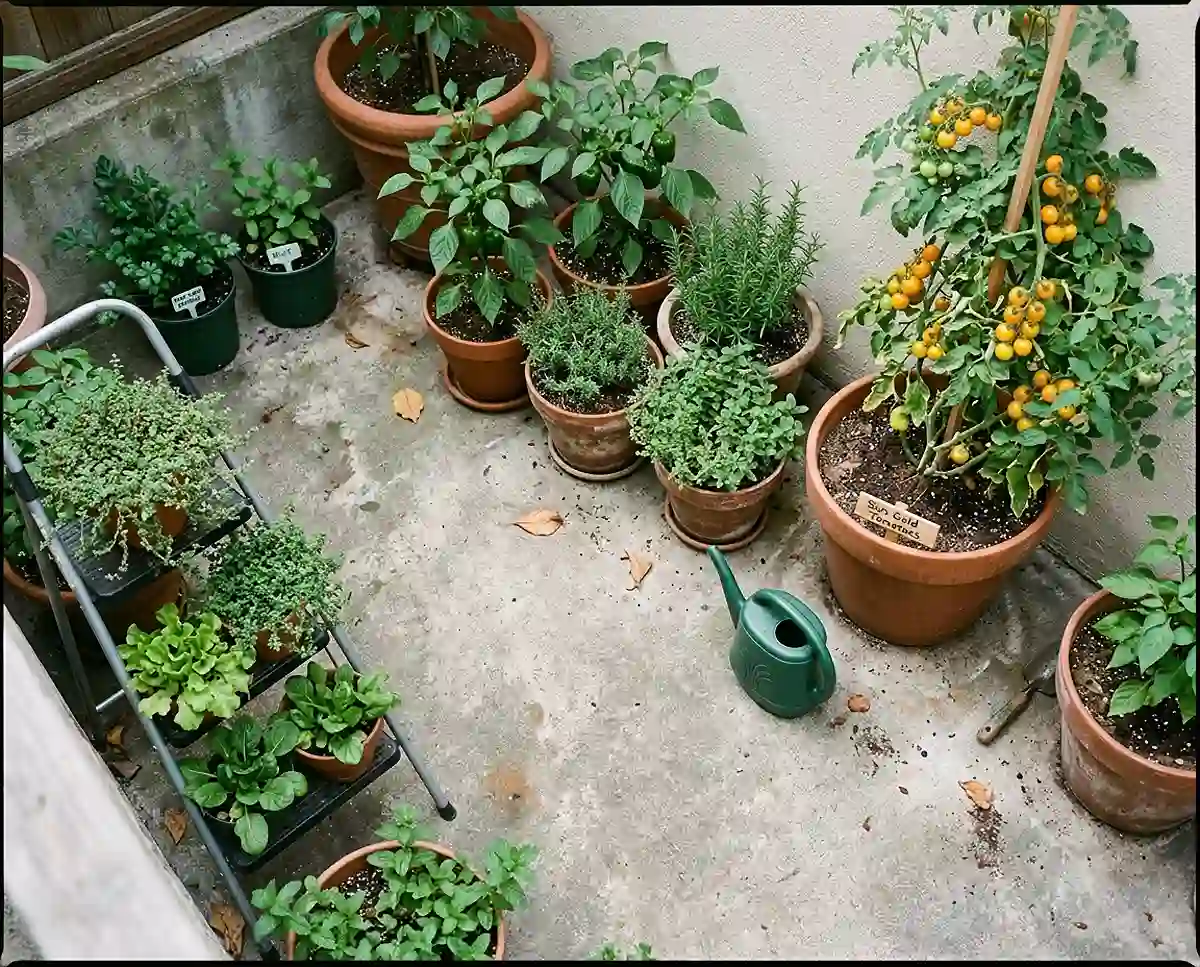
small patio garden layout for vegetables and herbs
A smart small patio garden layout for vegetables and herbs groups plants by sun and water needs, so even a 6×8-foot space can out-produce a full backyard bed.
I’ve grown food this way for six seasons on a 7×9-foot concrete patio in Sacramento, zone 9b, and the layout has mattered more than any single plant variety I’ve tried.
Table of Contents
Why a Smart Small Patio Garden Layout Boosts Your Harvest
Most small patio gardens fail because of bad layout, not bad luck. Cramming a tomato next to a lettuce plant means one of them suffers, since tomatoes want full sun and deep pots while lettuce wants part shade and shallow trays.
A real plan does three things: matches each plant to the right light, keeps thirsty herbs near your water source, and uses vertical space so you’re not limited to floor area. That’s the heart of small space gardening, working with what you’ve actually got instead of fighting it.
When my containers are grouped this way, I spend less time troubleshooting wilted leaves and more time harvesting. A good small garden layout pays you back in basil and tomatoes, not just tidiness.
Assess Your Patio Before You Plan
Before you buy a single pot, walk your patio at three points in the day: morning, noon, and late afternoon. Note where the sun actually lands, not where you assume it does.
Tracking Sunlight and Shade Patterns
Quick Answer: Track sun hours for a week using your phone’s camera timestamps, then map full-sun zones (6+ hours) for vegetables and partial-shade zones (3-5 hours) for leafy herbs.
On my own patio, the back corner near the building gets only 4 hours of direct sun in July. That’s exactly where my parsley and mint live now, after two summers of scorched mint up front.
Measuring Space, Access, and Weight Limits
Quick Answer: Measure your patio’s floor space, leave a clear 24-inch walking path, and check your building’s weight limit before lining a railing or upper floor with full containers.
This step gets skipped constantly, and it’s the one that causes real damage. A single 20-inch container filled with moist potting mix and a mature tomato plant can weigh close to 100 pounds, according to the University of Maryland Extension’s guide to container vegetables.
If you’re on a second-floor balcony, this matters even more. Our apartment balcony garden ideas guide covers railing weight limits in more detail.
Group Herbs and Veggies by Their Needs
Once you know your light map, sort your wish list into two camps: sun-lovers that want it hot and dry, and shade-tolerant plants that want it cool and moist. Mixing the two in one zone is the single biggest cause of patio failures I see.
Sun-Loving Vegetables and Mediterranean Herbs
Quick Answer: Tomatoes, peppers, and Mediterranean herbs like rosemary and thyme all want 6+ hours of direct sun and well-drained soil, so cluster them together in your brightest zone.
- Tomatoes (try ‘Sun Gold’ or determinate ‘Bush Early Girl’ for containers)
- Peppers, eggplant, and zucchini
- Rosemary, thyme, oregano, and sage
My ‘Sun Gold’ cherry tomato in a 20-inch pot against the south-facing wall gave me close to 9 pounds of fruit last August. Same plant, shadier spot the year before, barely cracked 2 pounds.
Shade-Tolerant Greens and Moisture-Loving Herbs
Quick Answer: Lettuce, spinach, mint, and parsley tolerate partial shade and prefer steadier moisture, making them ideal for the cooler side of your patio or under taller plants.
- Lettuce, spinach, and Swiss chard
- Mint, parsley, cilantro, and chives
Pro Tip: Mint spreads aggressively even in pots through surface runners, so give it its own container instead of sharing with anything else.
Best Small Patio Layout Ideas
Here are three ready-to-copy layouts, depending on how much floor space you actually have.
Vertical and Tiered Layouts
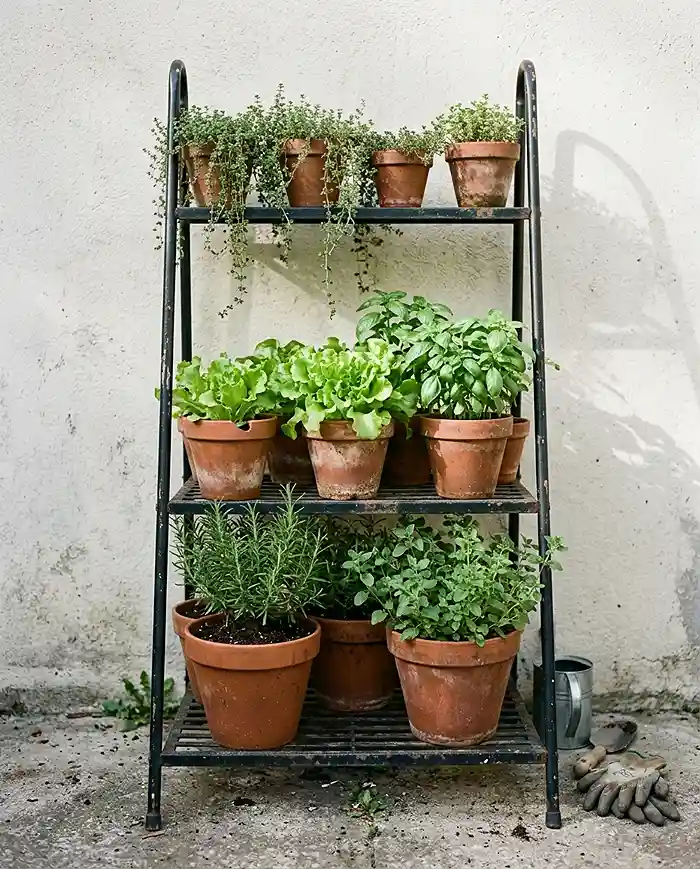
A 3-tier metal plant stand or wall-mounted shelf turns 4 square feet of floor into 12+ square feet of growing space. Put trailing herbs like thyme on top and heavier crops on the bottom shelf for stability.
Container Cluster and Grouped Pot Layouts
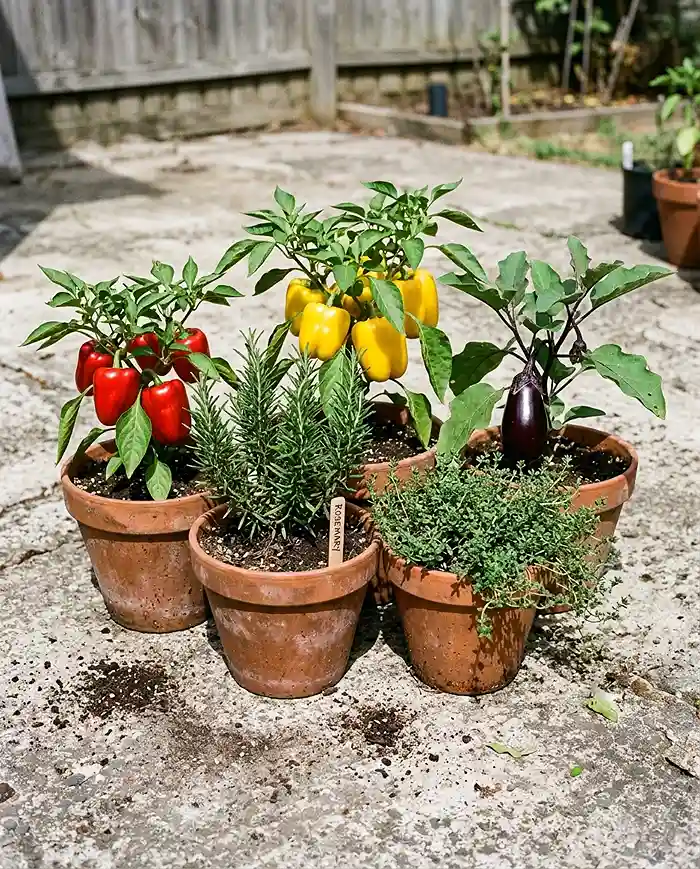
Cluster 4-6 pots into a tight zone by light and water needs, leaving a hand-width gap between pots for airflow. This is the easiest small patio garden layout for renters since nothing is permanent.
For more space-saving setups like this, our space-saving small garden ideas guide has additional configurations worth trying.
Raised Bed and Rail-Mounted Layouts
If your patio is 8×8 feet or larger, a single 2×4-foot raised bed (12 inches deep) can replace 6-8 separate pots and holds moisture far more evenly. Railing planters work well for shallow-rooted herbs on the perimeter.
Choosing the Right Containers
Container choice is where most beginner herb garden ideas fall apart, because people use the same pot size for every plant regardless of root depth.
Pot Size and Depth by Crop Type
| Crop | Minimum Pot Size | Depth Needed |
|---|---|---|
| Tomatoes, peppers, eggplant | 18-20 inches wide | 14-16 inches |
| Rosemary, sage, thyme | 12-14 inches wide | 10-12 inches |
| Lettuce, spinach, basil | 8-10 inches wide | 6-8 inches |
| Chives, cilantro, parsley | 6-8 inches wide | 6 inches |
Combining Plants vs. Separate Pots
Quick Answer: Combine plants in one pot only when they share light, water, and root depth needs, like basil with a determinate tomato; otherwise, give each plant its own container.
I tried combining basil and rosemary in one large pot in 2023. The basil wanted daily water and the rosemary wanted to dry out between waterings, so one of them was always unhappy. They’re separated now.
Tools and Materials You’ll Need
- Containers in the sizes listed above, with drainage holes
- A quality soilless potting mix (never straight garden soil, which compacts and drains poorly)
- Slow-release fertilizer plus a water-soluble feed for the season
- A watering can or soaker hose, plus a moisture meter if you tend to over or under-water
- Stakes, cages, or a small trellis for tomatoes and vining crops
- Pot feet or bricks to lift containers for drainage
Step-by-Step: Setting Up Your Patio Layout
Arranging Containers for Light and Access
Place sun-lovers in your brightest zone first, since that placement is the hardest to fake. Put your tallest plants toward the back or against a wall, and keep everything you’ll harvest often within easy arm’s reach.
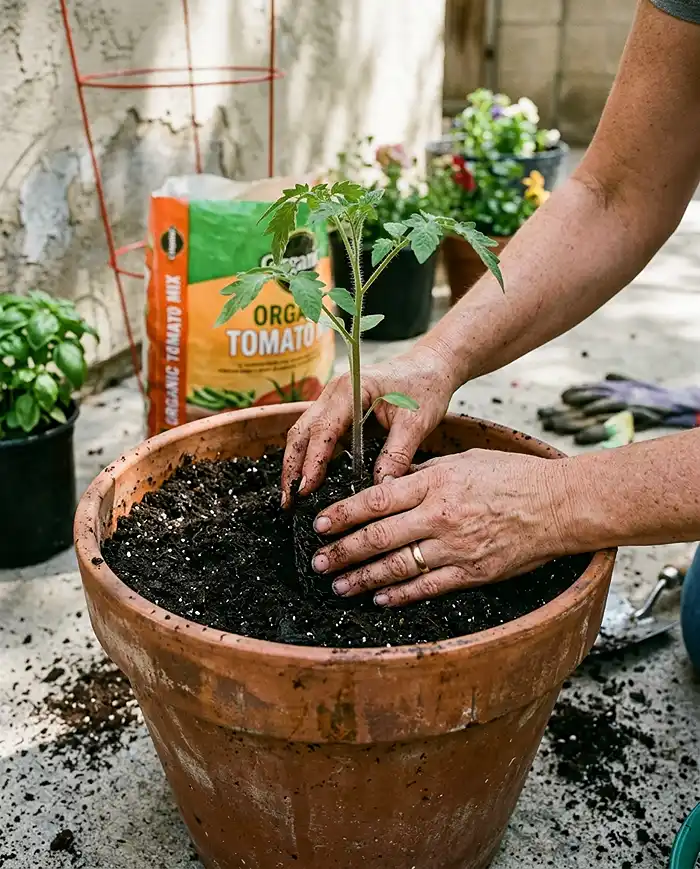
Planting and Spacing Your Crops
Fill each container with moistened potting mix to about an inch below the rim. Space transplants so mature outer leaves will just touch their neighbors, not overlap heavily.
Group pots with similar water needs side by side, even if they’re different plants. It turns watering day into a 10-minute task instead of a guessing game at each container.
Care and Maintenance for a Productive Patio
Watering and Feeding Schedule
Check soil moisture daily in summer by pushing a finger 2 inches deep. Water deeply when the top inch is dry, applying at the base of the plant rather than over the leaves.
Feed with a diluted liquid fertilizer every 2-3 weeks once seedlings establish, since container nutrients wash out faster than they would in garden soil.
Pruning, Harvesting, and Succession Planting
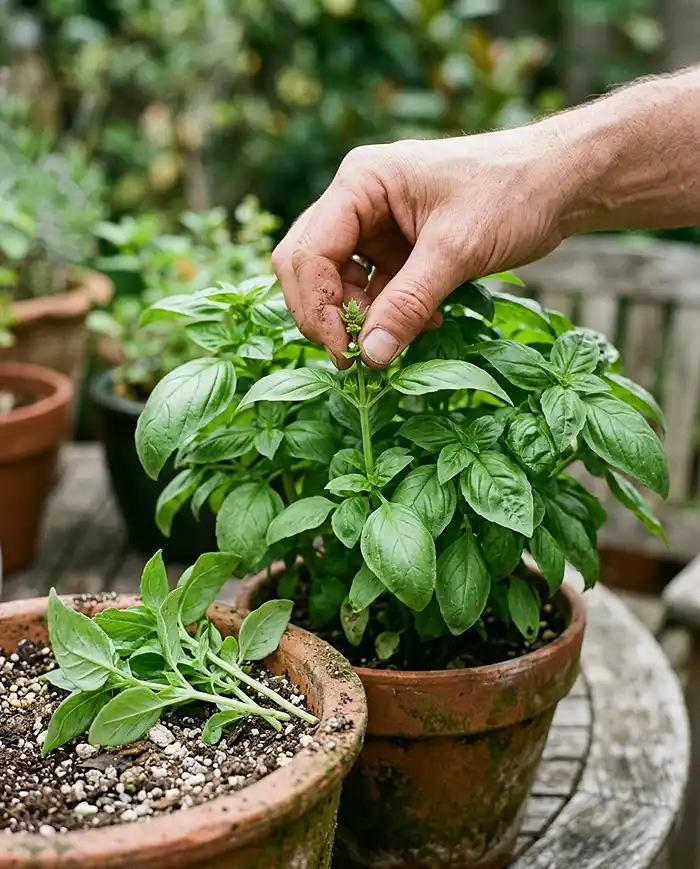
Pinch herbs like basil and mint regularly to keep them bushy instead of leggy, and harvest no more than a third of any plant at once. Replant quick crops like lettuce and radish every 2-3 weeks for a steady supply.
Real Example: I let my basil flower and go to seed in July 2024 thinking I’d get a second flush later. It never bounced back. Now I pinch flower buds the moment I see them.
Seasonal Patio Planting Guide
Spring Setup and Winter Protection
Set up your layout 2 weeks after your last frost date, hardening off seedlings outdoors for a few hours daily before full sun exposure. Increase watering frequency as summer heat rises, sometimes to twice daily in containers under 10 inches wide.
Before your first fall frost, move tender herbs like basil and rosemary indoors to a sunny window, or treat them as annuals if space is tight. As of the 2026 growing season, many gardeners are also using frost cloth to buy an extra 2-3 weeks outdoors.
Common Problems and Solutions
Overcrowded, Leggy, or Low-Yield Plants
This usually comes from too little light or too many plants per pot. Thin seedlings ruthlessly, relocate leggy plants to brighter spots, and resist the urge to squeeze in “just one more” container.
Uneven Watering and Drainage Issues
Group containers by water need, confirm every pot has working drainage holes, and use pot feet to keep water from pooling underneath. Soggy roots and dry, crispy leaves often share the same root cause: poor drainage.
Pests on Patio Crops
Aphids and spider mites show up fast in tight container groupings. Neem oil or insecticidal soap handles most outbreaks, and tucking marigolds or nasturtiums between vegetable pots helps deter pests naturally.
small patio garden layout FAQs
How do I arrange herbs and vegetables on a small patio?
Group plants by sun exposure and water needs, putting full-sun vegetables like tomatoes and peppers in your brightest zone and shade-tolerant herbs like mint and parsley in cooler corners. Use vertical shelving or tiered stands to multiply your usable space.
Which vegetables grow best in small patio containers?
Compact and dwarf varieties perform best, including determinate tomatoes, peppers, eggplant, lettuce, and bush beans. Look for seed packets labeled “bush” or “patio” for varieties bred specifically for container life.
How much sun do patio vegetables need?
Most fruiting vegetables like tomatoes and peppers need at least 6 hours of direct sun daily. Leafy crops such as lettuce, spinach, and herbs like mint and parsley tolerate partial shade with 3-5 hours.
Can I grow vegetables and herbs in the same container?
Yes, as long as they share similar light, water, and root depth needs, such as basil paired with a determinate tomato. Avoid combining plants with very different watering habits, like rosemary with basil.
What’s the best layout for a very small or narrow patio?
A vertical or tiered layout works best for narrow spaces, using wall-mounted shelves or a plant stand to stack pots upward instead of outward. Rail-mounted planters along an existing railing also add growing space without using any floor area.
Key Takeaways
- A solid small patio garden layout for vegetables and herbs starts with tracking your actual sun and shade patterns, not guesswork.
- Group plants by light and water needs first, then choose containers sized to each crop’s root depth.
- Vertical and tiered setups can triple your usable growing space without adding floor footprint.
- Check weight limits before loading up a railing or upper-floor balcony with full containers.
- Want more color along your container edges? Check out our best summer flowers for container edges guide for pollinator-friendly additions.