
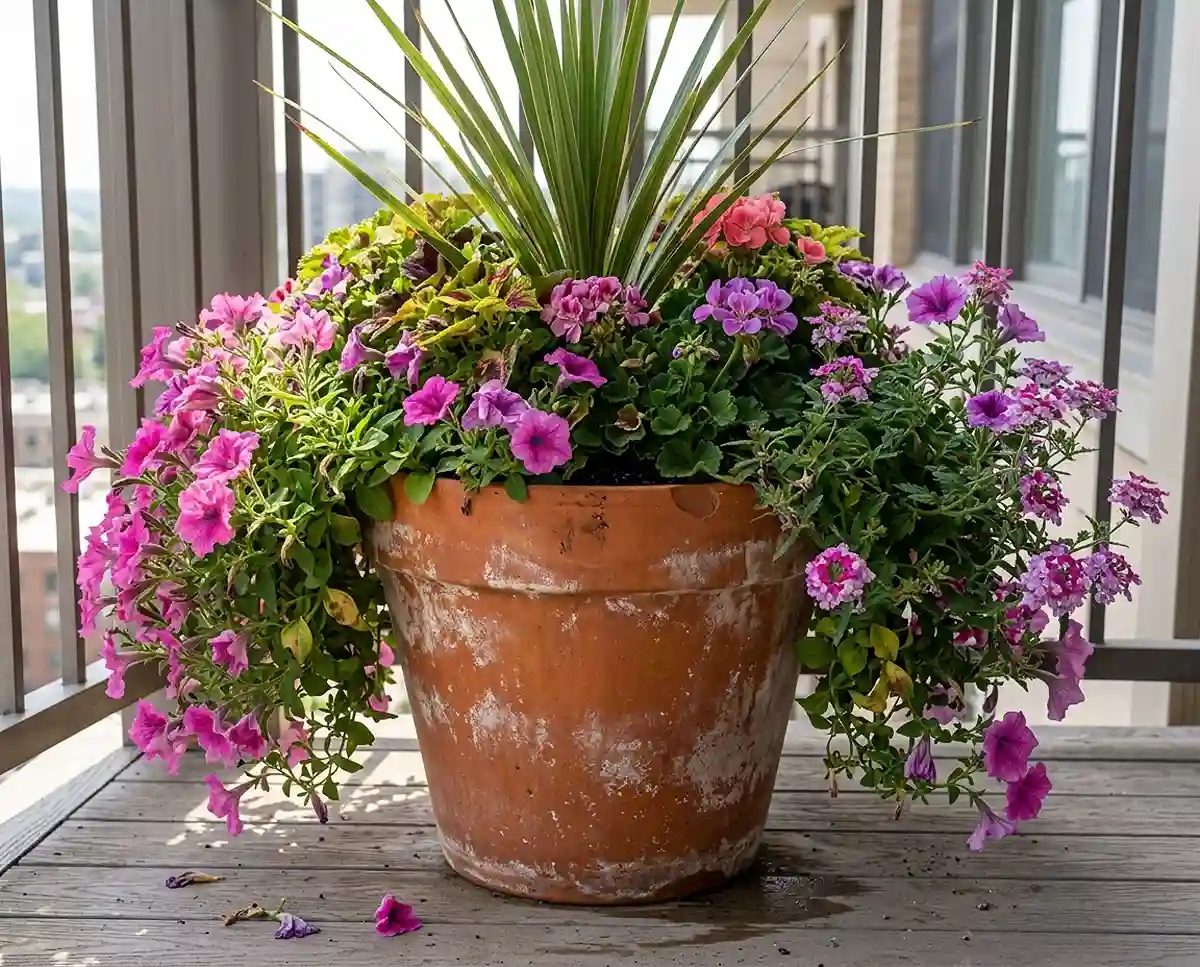
Best Summer Flowers for Container Edges
The best summer flowers for container edges are trailing and mounding plants that soften pot rims with cascading color. The right edgers turn a decent container into something that looks professionally planted.
I grow containers on a south-facing balcony in zone 6b, and the difference between a pot with edge flowers and one without is night and day. This guide covers what actually works through July heat and beyond.
Table of Contents
Why Edge Flowers Make Containers Look Fuller
A container without edge flowers looks like a pot of sticks. Trailing and mounding edgers do the heavy lifting that filler plants can’t — they cascade over the rim, hide the pot wall, and tie the whole planting together.
This is the classic thriller-filler-spiller formula. The thriller goes in the center (tall, dramatic). The filler surrounds it (mounding, bushy). The spiller — your edge flowers — hangs over the sides and pulls the eye downward.
Without spillers, containers look stubby and stiff. With them, even a simple three-plant combo reads as intentional and lush. For layout ideas on a patio or balcony, check out these renter-friendly patio garden ideas.
What to Look for in Container Edge Flowers
Not every flower works at the rim. Edge plants need a specific set of qualities to survive a summer in a container — and to actually look good doing it.
Trailing Habit and Spread
Quick Answer: Look for plants described as “trailing,” “cascading,” or “spreading.” Aim for a spread of at least 12 inches so they drape visibly over the rim rather than just sitting at the edge.
True trailers like Wave petunias or Superbells calibrachoa grow outward and downward, following gravity over the pot edge. Mounders like alyssum spread more horizontally but still soften the rim nicely.
Avoid upright compact plants labeled “edging” in a landscape context — in containers, they often sit too rigid and defeat the purpose.
Sun, Heat, and Drought Tolerance
Quick Answer: Container soil dries out two to three times faster than garden beds. Choose edge flowers rated for full sun and heat, and that recover quickly from a missed watering.
Containers sitting on concrete or a balcony can bake. I’ve lost bacopa in a single afternoon in peak July heat when I missed a watering. Heat-tolerant picks like calibrachoa and verbena are far more forgiving.
Look for terms like “heat-tolerant,” “drought-tolerant once established,” or USDA zone ratings that extend to zone 9 or 10 — that heat tolerance is what you need even in cooler zones during summer.
Best Trailing Summer Flowers for Container Edges
These are the true cascaders — plants that grow outward and downward over the rim to create that waterfall-of-flowers effect.
| Plant | Spread | Sun Needs | Heat Tolerance | Best For |
|---|---|---|---|---|
| Wave Petunia | 24-36 in | Full sun | High | Bold, fast coverage |
| Calibrachoa | 12-24 in | Full sun | Very high | Pollinator container garden |
| Bacopa | 12-18 in | Part sun | Moderate | Delicate, shaded rims |
| Trailing Lobelia | 12-18 in | Part sun | Low-moderate | Cool-season color |
| Trailing Verbena | 18-24 in | Full sun | High | Vivid summer color |
| Sweet Potato Vine | 24-48 in | Full sun to part shade | Very high | Foliage drama |
Petunias and Calibrachoa
Quick Answer: Wave petunias and Superbells calibrachoa are the most reliable trailing edge flowers for summer containers. Both bloom nonstop in full sun with minimal deadheading.
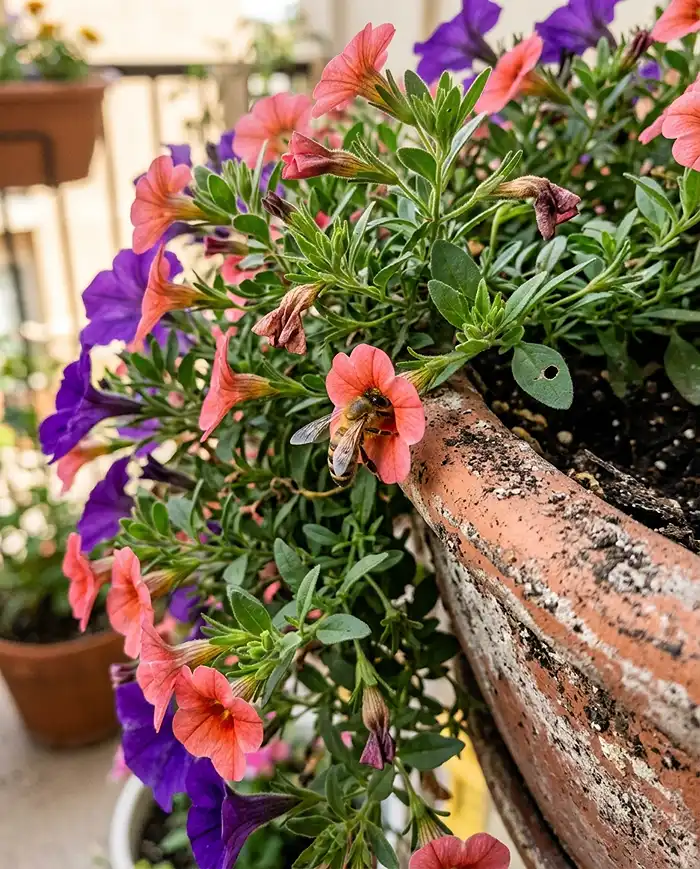
Wave petunias spread 24 to 36 inches in a single season — fast, bold, and available in every color from white to deep burgundy. Calibrachoa (often called Million Bells) produces smaller flowers but an equally prolific show, and it’s a magnet for bees in any pollinator container garden.
Calibrachoa doesn’t need deadheading at all. Petunias benefit from a light shearing mid-July to prevent legginess. I cut mine back by a third in early August and they bounce back fully within two weeks.
Pro Tip: Feed calibrachoa with a low-phosphorus, iron-rich fertilizer — they’re prone to yellowing in alkaline potting mix.
Bacopa and Lobelia
Quick Answer: Bacopa and trailing lobelia create soft, delicate edges perfect for shaded or part-sun containers. Both produce tiny flowers in white, lavender, or blue from spring through summer.
Bacopa (Sutera cordata) is incredibly fine-textured — tiny white or pink flowers on wispy stems that drape 12 to 18 inches. It shines in part-sun spots where heat-lovers like petunias would fry. Trailing Lobelia ‘Sapphire’ is my go-to for cool blue at the rim of a combination pot.
Both stall out in peak summer heat above 90°F. I pair them with heat-tolerant fillers so the combo still looks full when bacopa takes its midsummer pause.
Pro Tip: Shear bacopa back by half in mid-July and it typically rebounds with fresh blooms by August.
Trailing Verbena and Sweet Potato Vine
Quick Answer: Trailing verbena brings vivid, nonstop summer color in full sun. Sweet potato vine adds bold cascading foliage in chartreuse, purple, or bronze — a dramatic spiller even without flowers.
Verbena ‘Superbena Royale Peachy Keen’ was a standout on my balcony last summer — salmon-pink clusters that bloomed from May to October with just weekly deadheading. Sweet potato vine (Ipomoea batatas ‘Blackie’ or ‘Marguerite’) can trail 3 to 4 feet in a season, so size your container accordingly.
Pro Tip: Trim sweet potato vine aggressively every few weeks — it will swallow smaller companions if you let it run.
Best Edging Flowers for Fuller Borders
Not all great rim plants cascade dramatically. Compact mounders sit at the edge and fill in the gaps between spillers, giving containers a lush, layered look.
Alyssum and Lobularia
Quick Answer: Sweet alyssum (Lobularia maritima) is a low, honey-scented mounding flower that gently spills over container edges. It blooms in white, purple, and pink from spring through fall with almost no maintenance.
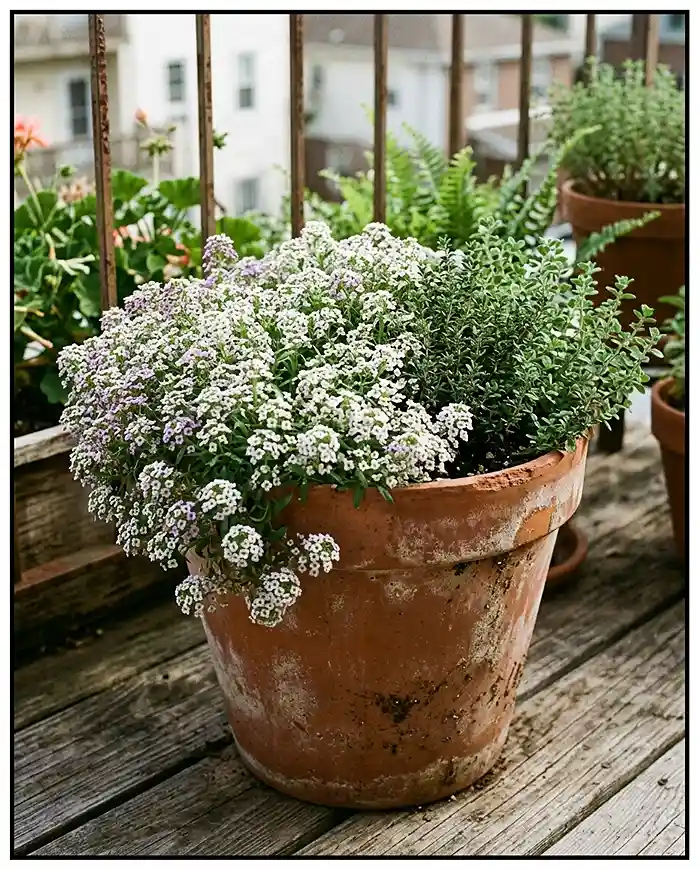
Alyssum grows 3 to 6 inches tall and spreads 6 to 12 inches, making it ideal for tucking around the rim of larger containers. The fragrance is a genuine bonus — on a warm morning it fills a whole patio.
It does slow down in intense heat. I’ve had great luck with ‘Snow Princess’ — it’s more heat-tolerant than the standard species and keeps going through July in zone 6b without cutting back.
Pro Tip: Alyssum self-sows freely — shake a spent flower head over a container and it’ll often come back on its own next spring.
Compact Marigolds and Begonias
Quick Answer: Dwarf marigolds and wax begonias are the most bulletproof edging flowers for summer containers. Both handle heat, tolerate irregular watering, and deliver color from planting to first frost.
‘Signet’ marigolds (Tagetes tenuifolia) are my top pick — finely textured foliage, tiny citrus-scented flowers, and an 8-inch mounding habit that never gets floppy. Wax begonias in the ‘BabyWing’ or ‘Whopper’ series take full sun and stay compact without deadheading.
Both work beautifully at the rim of a container herb garden too — marigolds deter some pests, and begonias add color without competing aggressively for root space.
Tools and Materials You’ll Need
Summer container gardening goes smoother with the right setup from the start. You don’t need much — but skipping any of these makes the whole season harder.
- Container with drainage holes: Minimum 12-inch diameter for edge combinations; 16-18 inches for a full thriller-filler-spiller planting
- Quality potting mix: Not garden soil — use a lightweight, well-draining mix formulated for containers
- Slow-release fertilizer granules: Work into the mix at planting; Osmocote or similar lasts 4-6 months
- Liquid bloom fertilizer: A water-soluble balanced feed (like 20-20-20) for supplemental feeding every 1-2 weeks
- Trowel and hand pruners: For planting and deadheading throughout the season
- Watering can or drip irrigation: Consistent moisture is the single biggest factor in container bloom performance
For containers that water themselves between your attention, see these self-watering ideas for small-space gardens — a game-saver in summer heat.
How to Plant Flowers Around Container Edges
Planting edge flowers takes about 20 minutes and makes a season-long difference. Get the basics right and your spillers will cascade from day one.
Preparing the Container and Soil
Quick Answer: Start with a clean container that has drainage holes, fill it with fresh potting mix, and mix in slow-release fertilizer granules before planting. Leave 1-2 inches of headspace at the top for watering.
If reusing a container from last year, dump the old soil and scrub it with diluted bleach to prevent disease carryover. Old potting mix compacts and loses drainage — fresh mix is worth it every season.
Fill to within about 3 inches of the rim before positioning plants. This gives you room to set the root balls at the right depth without mounding soil over the pot lip.
Spacing and Planting for Cascading Effect
Quick Answer: Position trailing plants at the container rim with the crown of the root ball angled slightly outward — about 15 degrees toward the edge. This encourages stems to grow over the rim from the start.
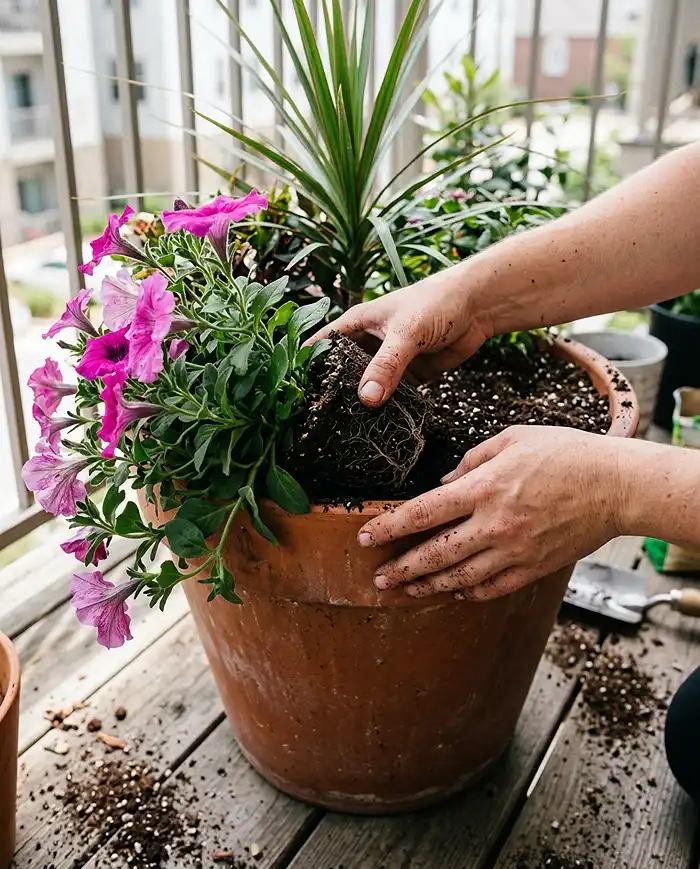
Space edge plants 6 to 8 inches apart around the rim, depending on expected spread. They’ll fill in fast — resist the urge to crowd them at planting. Crowded roots lead to poor drainage and disease by midsummer.
After planting, press soil firmly around each root ball to eliminate air pockets. Water thoroughly until it runs from the drainage holes — this settles the soil and starts the roots reaching out.
Real Example: Last May I planted a 16-inch pot with three Wave petunias spaced evenly at the rim and a single ‘Dracaena Spike’ in the center. By mid-June the petunias had cascaded 18 inches down the pot sides and the whole thing looked like a floral waterfall.
Caring for Container Edge Flowers
Edge flowers are some of the heaviest bloomers in the garden — which means they’re also the hungriest and thirstiest. Stay on top of these two routines and they’ll reward you all season.
Watering and Feeding for Continuous Bloom
Quick Answer: Check containers daily in summer — they often need water every 24 to 48 hours in heat above 80°F. Feed with a water-soluble fertilizer every 7 to 14 days throughout the growing season.
Stick your finger 2 inches into the soil. If it’s dry at that depth, water thoroughly. Shallow watering encourages shallow roots that stress faster.
I use a balanced 20-20-20 liquid feed every 10 days alongside slow-release granules. The combination keeps petunias, calibrachoa, and verbena flowering without interruption. Colorado State University Extension has solid research-backed guidance on fertilizing and watering container gardens if you want specifics by plant type. Skipping feeding is the most common reason containers fade by August.
Pro Tip: Water in the morning so foliage dries before evening — wet leaves overnight invite fungal problems like botrytis.
Deadheading and Pinching for Fullness
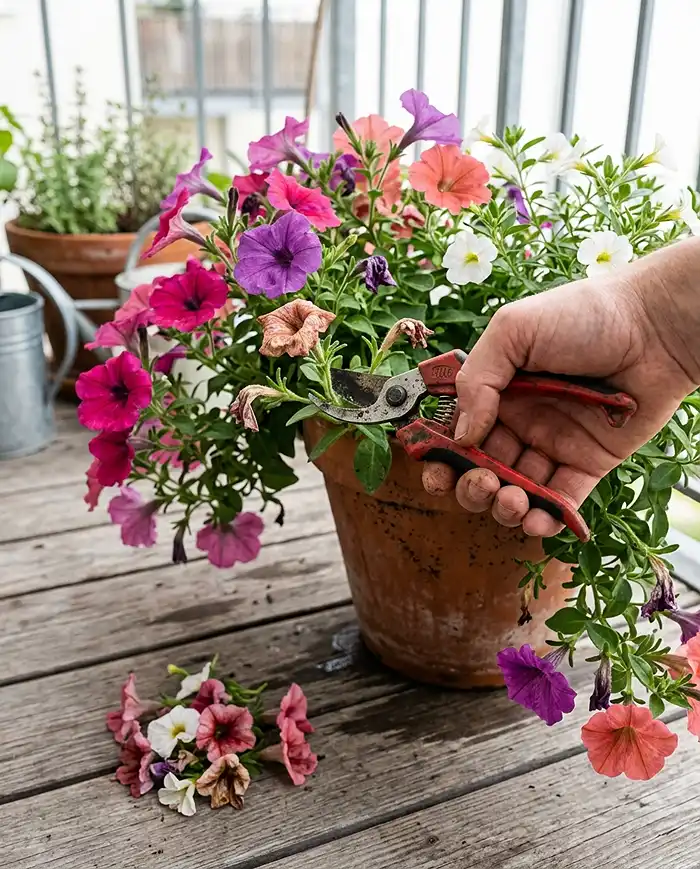
Quick Answer: Remove spent flowers on petunias and verbena weekly. Pinch back stems that have grown 6 or more inches without branching to force bushy, full growth.
Deadheading [removing spent flowers] redirects the plant’s energy from seed production back to blooming. For petunias, snap off the whole flower stem at the first leaf node below the spent bloom — not just the petals.
Pinching means removing the growing tip of a stem to force two new branches. Do this on any edge plant that’s getting long and straggly. It feels aggressive, but plants come back bushier within a week.
Seasonal Care and Color Through Summer
Getting edge flowers to peak in June is easy. Keeping them going through August takes a bit more attention — but it’s totally doable with a few targeted steps.
Keeping Flowers Blooming in Peak Heat
Quick Answer: In midsummer, increase watering frequency, give a boost of liquid fertilizer, and trim back any leggy growth by one-third. Most edge flowers will flush with new blooms within 10-14 days.
By late July, many containers look tired. Petunias get straggly. Verbena thins out. This is normal — not a failure. A hard shear back to 4-6 inches combined with a feeding resets them for a strong August through October finish.
For containers in full afternoon sun (as of summer 2025, many zones are seeing earlier heat spikes), consider moving pots to filtered afternoon shade during heat events above 95°F. This alone can preserve blooms for an extra two to three weeks.
For vertical planting ideas that take advantage of shade patterns across a small space, see these vertical garden wall ideas for small patios.
Common Problems and Solutions
Even well-planted containers run into issues. Here’s what to look for and how to fix it fast.
Leggy Growth With Few Blooms
Quick Answer: Leggy, sparse-blooming edge plants usually mean too little light, missed pinching, or underfeeding. Move the container to full sun, cut stems back by one-third, and fertilize.
Plants that stretch toward light produce long internodes with few branches — and few blooms. Petunias are especially prone to this. A hard pinch and a move to full sun usually fixes it within two weeks.
Wilting or Scorched Edge Flowers
Quick Answer: Wilting in morning signals underwatering. Wilting only in afternoon heat with moist soil is heat stress — move the container to afternoon shade and mist the foliage in the early morning.
Scorched leaf tips usually mean the container is sitting on a hot surface like dark concrete, which heats the root zone. Elevate pots on feet or move them to a surface that doesn’t absorb as much heat.
Pests Like Aphids and Whiteflies
Quick Answer: Blast aphids off with a strong water spray. For persistent infestations or whiteflies, apply insecticidal soap or neem oil in the early morning or evening — never in direct midday sun.
Check the undersides of leaves weekly, especially on petunias and begonias. Catching infestations early means a single treatment usually handles it. Avoid broad-spectrum pesticides — they kill the beneficial insects that visit your pollinator container garden.
best summer flowers for container edges FAQs
What flowers trail best over container edges?
Petunias, calibrachoa, trailing verbena, and bacopa are the top picks for cascading over container rims. Wave petunias spread the most aggressively (up to 36 inches), while calibrachoa stays tidier at 12-24 inches. For part-shade containers, bacopa and trailing lobelia are the go-to choices.
How do I keep edge flowers blooming all summer?
Consistent watering, feeding every 7-14 days with a water-soluble fertilizer, and regular deadheading are the three keys. In midsummer, cut back leggy stems by one-third and give a dose of liquid fertilizer to trigger a fresh flush of blooms through fall.
Which edge flowers handle full sun and heat?
Calibrachoa, trailing verbena, compact marigolds, and Wave petunias are the most heat-tolerant options for full-sun containers. Sweet potato vine also thrives in heat and is nearly indestructible. Avoid bacopa and lobelia in spots with intense afternoon sun above 90°F.
Can I mix edge flowers with herbs in the same container?
Yes. A container herb garden can easily include edging flowers around the rim. Compact marigolds pair well with basil and repel some pests. Alyssum works alongside low-growing herbs like thyme or parsley without competing aggressively for space.
How far apart should I plant trailing flowers at the container rim?
Space trailing edge plants 6 to 8 inches apart around the rim. They fill in quickly and closer spacing leads to crowded roots and poor drainage by midsummer. Angle the root ball slightly outward at planting to encourage stems to drape over the rim from the start.
Key Takeaways
- The best summer flowers for container edges are trailers and low mounders — petunias, calibrachoa, verbena, alyssum, and bacopa are the top performers.
- Position trailing plants at the rim with roots angled slightly outward to encourage cascading growth from the start.
- Water containers every 24-48 hours in peak heat and feed with liquid fertilizer every 7-14 days — edge flowers are heavy bloomers and need consistent nutrition.
- Deadhead and pinch regularly; a midsummer cutback of one-third refreshes leggy plants and triggers new blooms through fall.
- For a pollinator container garden, calibrachoa and trailing verbena are the strongest dual-purpose picks — prolific color and bee-friendly from June to frost.
For more ways to maximize a small outdoor space, explore these space-saving small garden ideas with container-first strategies.