
Black and White Balcony Garden Ideas
Want black and white balcony garden ideas that actually look polished, not patchy? A monochrome palette transforms even the tiniest apartment balcony into something magazine-worthy. Here’s exactly how to do it.
Table of Contents
Why a Black and White Balcony Garden Looks So Chic
A monochrome palette does something clever: it removes the guesswork. When every element shares the same two-color story, nothing clashes and nothing fights for attention.
The result is a small balcony garden that feels intentional and sophisticated — even if it’s only 4 feet wide.
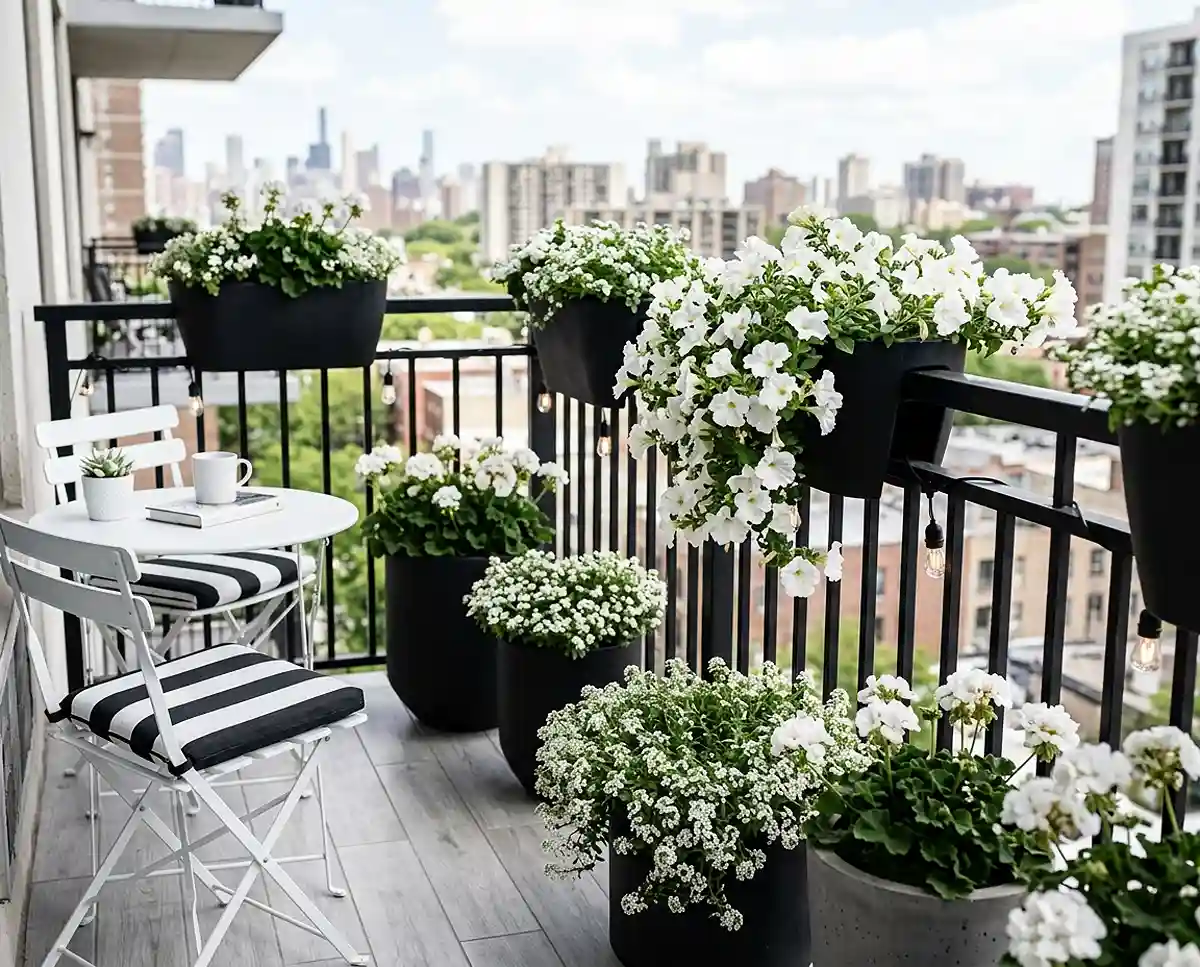
High contrast also creates visual depth. A white petunia spilling from a matte black planter reads as bold and deliberate. That same flower in a terracotta pot just looks ordinary.
Black and white balcony garden ideas work across styles too — minimalist, Scandinavian, classic. The palette adapts without losing its edge.
Quick Answer: The monochrome look works because it’s cohesive by default. Any plant or decor you add either reinforces the palette or gets swapped out — it keeps decision fatigue low and style impact high.
Planning Your Monochrome Balcony Design
Before you buy a single planter, spend one week observing your balcony. Note when sun hits it, how much wind comes through, and how much usable floor space you actually have.
Good planning saves money. Bad planning means buying the wrong plants, rearranging furniture three times, and ending up with a cluttered space instead of a chic one.
Defining Your Style: Modern, Scandi, or Classic
Quick Answer: Black and white balcony garden ideas suit three main aesthetics. Pick one before you shop so everything you buy pulls in the same direction.
| Style | Key Elements | Best For |
|---|---|---|
| Modern | Geometric pots, clean lines, minimal plants | Urban apartments, small balconies |
| Scandi | Natural wood, white blooms, simple textures | Relaxed, hygge-inspired spaces |
| Classic | Wrought iron, white roses, symmetry | Traditional homes, larger balconies |
Real Example: I went Scandi on my north-facing city balcony — white wooden furniture, black ceramic pots, white bacopa trailing over the edges. Cost under $120 to set up and got compliments from neighbors immediately.
Pro Tip: Save five images of balconies you love before buying anything — if four out of five share a style, that’s your direction.
Assessing Light, Space, and Layout
Quick Answer: Track your sun for at least three days before choosing plants. South-facing balconies get 6+ hours; north-facing may get only 2-3. That difference changes everything you can grow.
- Measure your balcony floor plan in feet — include railing depth and door clearance
- Check weight limits with your building if you plan multiple large planters
- Note wind exposure — high floors need wind-tolerant plants like bacopa or mondo grass
- Mark where you want seating first, then plan planters around it
Pro Tip: Sketch your layout on paper using a 1 inch = 1 foot scale before moving anything outside.
Building the Black and White Foundation
The “foundation” means your hard elements — planters, furniture, flooring. These stay year-round, so get them right first. Plants can be swapped seasonally, but a mismatched table is harder to fix.
Stick to a rough ratio: 60% white elements, 40% black. Pure 50/50 can feel flat. The slight imbalance creates visual rhythm without breaking the monochrome rule.
Choosing Planters, Furniture, and Flooring
Quick Answer: Matte finishes work better than glossy for a modern balcony garden. Gloss shows every water stain and fingerprint; matte stays looking clean longer.
| Element | Best Option | Watch Out For |
|---|---|---|
| Planters | Matte black ceramic or white fibreclay | Heavy ceramic on weak balconies |
| Furniture | White powder-coated metal, black rattan | Cheap rattan fades within one season |
| Flooring | Black/white interlocking deck tiles | Light-colored tiles show dirt quickly |
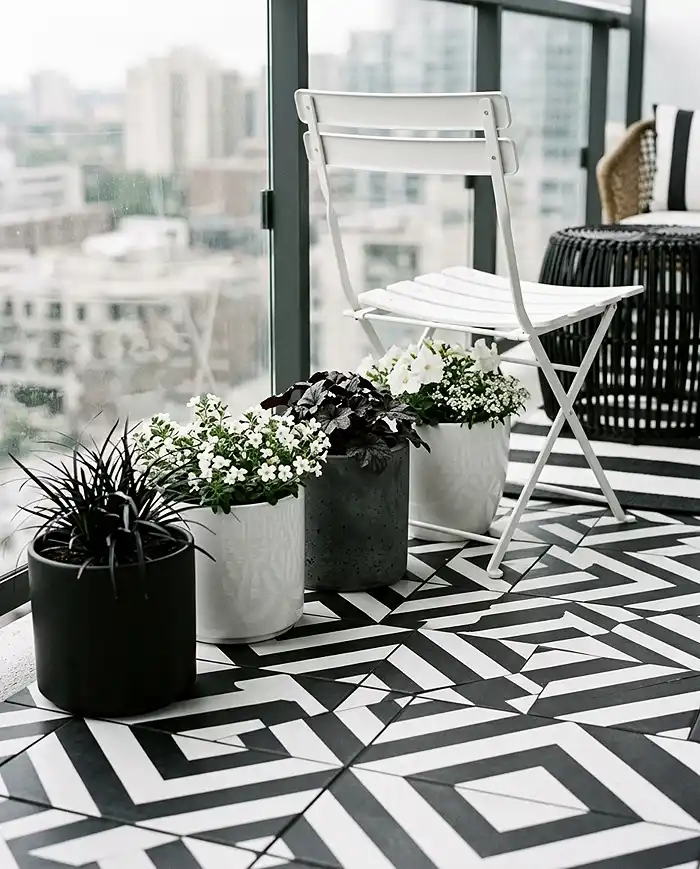
Real Example: I used lightweight white fibreclay pots from a garden center and black interlocking wood tiles from a home store. Total floor transformation for $65, and I could carry everything up three flights of stairs alone.
Pro Tip: Fibreclay mimics ceramic but weighs 60% less — ideal for apartment balcony gardening where floor weight matters.
Adding Texture With Materials and Patterns
Quick Answer: Texture stops a black and white scheme from looking sterile. You’re adding visual interest without adding color.
- Striped black-and-white cushions add pattern without breaking the palette
- Woven rattan introduces warmth and organic texture
- Geometric tiles or patterned decking tiles add floor interest
- Matte black metal shelving adds industrial texture for modern looks
- Concrete planters bring a raw, tactile quality that softens an all-polished scheme
Pro Tip: Mix at least three different textures — smooth ceramic, woven fabric, and natural wood — to keep the scheme from feeling flat.
Best Plants for a Black and White Theme
This is where small balcony garden ideas get fun. You’re choosing plants whose flowers or foliage directly reinforce your palette — white blooms, near-black leaves, and silver accents that tie it together.
Think in layers: tall anchor plants at the back or corners, mid-height bloomers in the middle, and low trailing plants at the front or in hanging planters. Check out these hanging herb garden ideas for balcony-friendly trailing plant inspiration.
White-Flowering Plants
Quick Answer: White-flowering plants are the workhorses of black and white balcony garden ideas. They brighten shaded spots and glow under evening lighting.
- White petunias — bloom spring through frost, trail beautifully from pots (USDA zones 10-11 as perennial, grown as annual elsewhere)
- Jasmine — fragrant climber for railings, thrives in zones 7-10, needs 6+ hours of sun
- Gardenia — glossy dark leaves with white blooms, ideal contrast plant, zones 8-11
- Bacopa — tiny white flowers, trails and fills gaps, tolerates partial shade well
Pro Tip: Bacopa is the most forgiving white-flowering plant for apartment gardening — it recovers quickly after drying out and keeps blooming all season.
Dark-Foliage and “Black” Plants
Quick Answer: No plant is truly black, but these cultivars come close and create dramatic contrast against white blooms and pale planters.
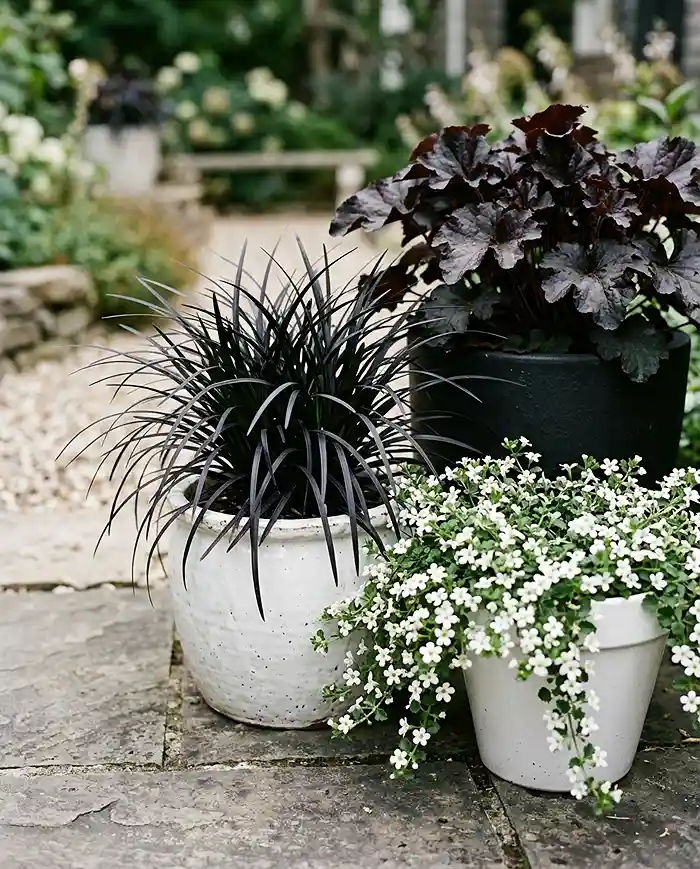
- Black mondo grass (Ophiopogon planiscapus ‘Nigrescens’) — near-black strappy leaves, slow-growing, zones 6-11
- Dark heuchera (‘Black Pearl’ or ‘Obsidian’) — rich purple-black leaves, great for shaded balconies, zones 4-9
- Black petunias (‘Black Velvet’) — deep burgundy-black blooms, pair directly with white varieties
- Black elephant ear (Colocasia ‘Black Magic’) — dramatic large leaves, zones 8-11 or grown as annual
Pro Tip: Plant black mondo grass in white ceramic pots for instant contrast — the pairing is a classic for a reason.
Green and Silver Accents That Work
Quick Answer: Pure black and white can look stark. Green and silver accents add life and softness without breaking your palette.
- Dusty miller — silvery-white foliage that bridges black and white elements perfectly
- Ferns — lush deep green softens the monochrome scheme and thrives in shade
- Silver falls dichondra — silver trailing plant, stunning in hanging baskets
- Hostas — variegated white-and-green varieties reinforce the palette in shade, zones 3-9
Pro Tip: Limit green to foliage only — no green-flowering plants. The palette stays clean when only leaves, not blooms, introduce the green tones.
Tools and Materials You’ll Need
Quick Answer: You don’t need much. The list below covers everything for a complete black and white balcony garden setup from scratch.
- Planters: 2-3 large black or white containers (12-16 inch diameter) plus 2-3 smaller accent pots
- Potting mix: High-quality peat-free container mix; add perlite for drainage on sun-heavy balconies
- Slow-release fertilizer: Granule form worked into the soil at planting
- Watering can or hose adapter: Essential for consistent container watering
- Plant ties or hooks: For climbing jasmine or wall-mounted planters
- Deck tiles: Interlocking black/white tiles for fast flooring transformation
- String lights: Warm white LED, 10-20 feet for a standard balcony
For a structured small balcony layout plan, measure your space before purchasing any of the above.
Styling Your Balcony Step by Step
Don’t just place things where they fit — compose the space like you’d compose a room. Step back every few minutes to check balance from the doorway.
Arranging Planters and Furniture for Balance
Quick Answer: The biggest mistake in small balcony garden design is cluttering the floor. Keep paths clear and use vertical space instead.
- Place your largest planters first — usually in corners or against the railing
- Alternate black and white pots so they’re never grouped by color
- Keep at least 18 inches of clear floor walkway at all times
- Use a wall-mounted shelf or tiered plant stand to go vertical without using floor space
Real Example: On my 6×8 ft balcony, I pushed two large black planters to opposite corners, centered a small white bistro table, and hung a wall planter between them. The floor stayed open and the space felt twice as big.
Pro Tip: Eye-level planters draw the gaze up and make low ceilings or cramped spaces feel taller.
Layering Plants for Contrast and Fullness
Quick Answer: A full, lush look comes from three layers — tall, mid, and trailing. Monochrome balcony garden ideas fall flat when everything is the same height.
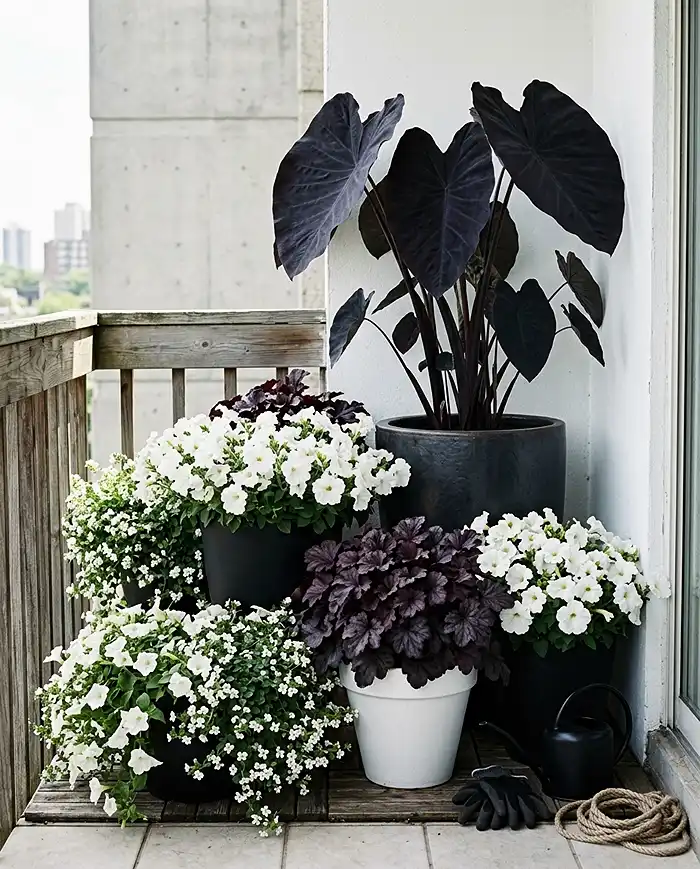
- Tall layer: Black elephant ear or tall ornamental grass at the back corners
- Mid layer: Gardenia, dark heuchera, or white petunias as the main feature plants
- Trailing layer: White bacopa or silver dichondra spilling over pot edges
This layering approach mirrors how professional designers build balcony garden ideas — always thinking in depth, not just width. See more plant layering examples in this balcony herb garden layout guide.
Pro Tip: Plant black and white varieties in the same pot for instant built-in contrast — black mondo grass with white bacopa is a reliable combo.
Adding Atmosphere and Finishing Touches
The finishing layer is what separates a planted balcony from a styled one. These details take an hour to add but completely change how the space feels after dark.
Lighting, Lanterns, and String Lights
Quick Answer: Warm white light flatters both black and white surfaces — it softens the contrast slightly and adds glow without going yellow. Avoid cool white LEDs; they feel clinical.
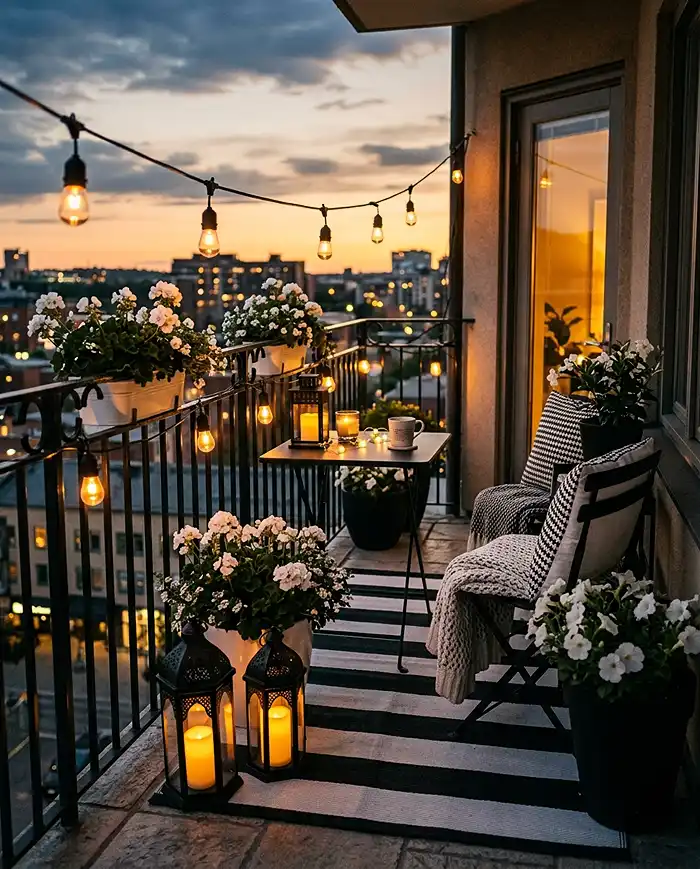
- Matte black lanterns with pillar candles or LED flameless candles anchor the palette
- Warm white string lights draped along the railing or overhead add instant atmosphere
- Solar stake lights in white or black work well for self-contained planters
- Wall-mounted black sconce lights suit modern balcony garden styles
Pro Tip: Use a smart plug timer so your string lights come on automatically at dusk — the ambiance is worth it every evening.
Textiles, Rugs, and Decorative Accents
Quick Answer: Textiles warm up a monochrome scheme fast. One outdoor rug and two cushions can completely transform the feel of an apartment balcony.
- Black-and-white striped or geometric outdoor rug ties the floor together
- Cushion covers in white with black piping, or vice versa, reinforce the palette
- One or two minimal black or white ceramic accents (a candle holder, a small sculpture) add personality
- Avoid cluttering with too many decorative items — the monochrome scheme works best when edited
Pro Tip: Store cushions indoors when not in use — outdoor fabrics hold their color far longer when protected from UV and damp.
Caring for Your Balcony Garden
A chic balcony garden stays chic only if the plants look healthy and the surfaces stay clean. Both take less effort than you’d think with the right routine.
Watering, Feeding, and Pruning
Quick Answer: Container plants dry out fast, especially on exposed balconies. Check soil moisture daily in summer — most containers need watering every 1-2 days in heat.
- Water in the morning to reduce evaporation and prevent fungal issues overnight
- Feed container plants with a balanced liquid fertilizer every 2 weeks during the growing season
- Deadhead [remove spent flowers] white petunias and bacopa weekly to keep them blooming
- Trim dark heuchera leaves that turn crispy or brown at the edges to keep the look sharp
Pro Tip: Self-watering inserts inside large containers cut watering frequency in half — worth it for busy apartment gardeners.
Keeping White Surfaces and Planters Clean
Quick Answer: White planters show algae, water marks, and soil stains quickly. A quick wipe-down every two weeks keeps the look crisp.
- Wipe white pots with a damp cloth and a small amount of diluted white vinegar to remove green algae
- Use pot liners or saucers to stop soil from staining exterior surfaces
- Wash cushion covers monthly or after rain — most outdoor fabrics are machine washable
- Sweep the balcony floor weekly; light-colored tiles show dirt and debris quickly
Pro Tip: A quick spray of outdoor stone sealer on white fibreclay pots after purchase makes them far easier to keep clean all season.
Seasonal Care and Refreshing the Look
The best black and white balcony garden ideas account for all four seasons. The palette stays the same; the plants rotate.
Swapping Plants and Decor by Season
Quick Answer: Plan one seasonal plant swap per year minimum — spring to summer or summer to autumn — to keep the balcony looking full and intentional.
- Spring: White tulips and dark muscari (grape hyacinth) for early color; add fresh cushions after winter storage
- Summer: White petunias, bacopa, black mondo grass at peak growth; maximum lushness
- Autumn: White chrysanthemums replace spent summer annuals; add cozy textiles in black-and-white patterns
- Winter: White cyclamen for cold-hardy color; wrap tender plants in fleece or move indoors; string lights become the main feature
Pro Tip: Keep two or three evergreen dark-foliage plants year-round — black mondo grass and heuchera — so the balcony never looks completely bare.
Common Problems and Solutions
Even well-planned monochrome balcony gardens run into issues. Here’s what to do when things go wrong.
The Space Feels Too Stark or Cold
Quick Answer: A stark feeling usually means not enough texture or green foliage. Add one lush fern, warm up the lighting, and introduce a woven textile.
- Add green foliage plants (ferns, hostas) to soften the high contrast
- Switch to warm white string lights if you’re using cool white
- Introduce a natural wood element — a teak tray, a bamboo shelf — to warm the palette
Pro Tip: A single warm-toned wooden accent piece (a small bench, a tray table) adds enough warmth to balance even the starkest monochrome scheme.
White Planters Staining or Discoloring
Quick Answer: Staining is almost always preventable. The culprits are algae from moisture, rust from metal fixtures, or soil overflow from over-watering.
- Use pot feet or stands to improve drainage and air circulation under planters
- Apply outdoor stone sealer to raw white fibreclay or concrete pots
- Clean stains early — diluted white vinegar handles algae; baking soda paste tackles stubborn marks
Pro Tip: Avoid placing white pots directly on dark timber decking — moisture trapped underneath stains both the pot and the deck.
Dark Plants Looking Dull or Leggy
Quick Answer: Dark-foliage plants lose their rich color when they don’t get enough light. Most need at least 4 hours of direct sun to stay deep and vivid.
- Move dark heuchera or black petunias to your sunniest spot if color is fading
- Prune leggy stems back by one-third to encourage compact, bushy growth
- Feed with a nitrogen-balanced fertilizer in spring to kickstart dark foliage color
Pro Tip: Black petunias especially need full sun — in shade, they fade to muddy purple and lose the dramatic contrast that makes them worth growing.
black and white balcony garden ideas FAQs
What plants are best for a black and white garden?
White petunias, bacopa, and jasmine deliver reliable white blooms. For dark contrast, black mondo grass and dark heuchera are the most low-maintenance picks. Together they hit both sides of the palette without needing specialist care.
How do I make a small balcony look chic on a budget?
Start with two or three affordable white fibreclay pots and one bag of black decorative gravel as mulch. Add a striped black-and-white cushion from a discount home store and a string of warm white LED lights. Total cost can stay under $60 and the effect is polished.
Do black-leaved plants need special care?
Not really — they follow the same care as their green cousins. The key difference is light: most dark-foliage plants need at least 4 hours of direct sun to maintain their deep color. In low light, the color fades to dull green or muddy brown.
Can I do a black and white balcony garden in a shaded space?
Yes. Choose shade-tolerant white bloomers like white impatiens or bacopa, and pair them with dark heuchera which thrives in partial shade. Use warm white string lights to brighten the space after dark and make it feel intentional rather than dim.
How many plants do I need for a full-looking balcony?
For a standard 6×8 ft balcony, plan for 2-3 large feature plants, 3-4 mid-size bloomers, and 2-3 trailing or ground-level plants. That’s roughly 8-10 plants total, which creates a lush look without overcrowding the space.
Key Takeaways
- Black and white balcony garden ideas work because the palette is cohesive by default — every element you add either reinforces the scheme or gets edited out
- Choose your style (modern, Scandi, or classic) before buying anything — it keeps all your decisions consistent
- Layer plants in three heights: tall anchors, mid-height bloomers, and low trailing plants for a full, lush look
- White fibreclay pots are the best value for apartment gardening — lightweight, affordable, and weather-resistant
- Small balcony garden success comes down to light tracking, weight-aware plant choices, and a simple weekly maintenance routine that keeps surfaces clean and plants thriving