
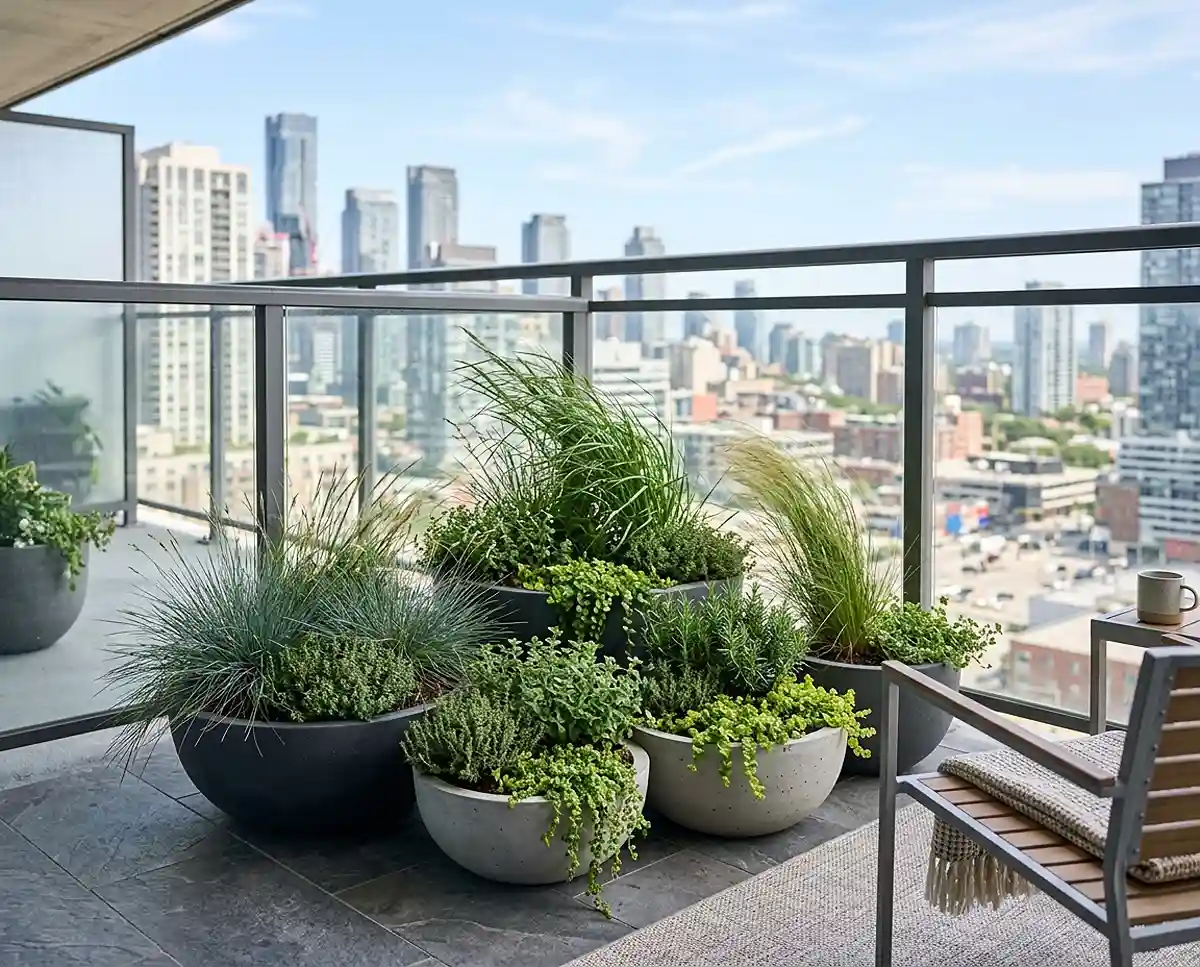
Best Containers for Windy Balconies
If wind keeps wrecking your balcony garden, you’re picking the wrong pots. The best containers for windy balconies are heavy, wide-based, and low to the ground — and the right choice stops tipping, snapped stems, and bone-dry soil for good.
Table of Contents
Why Wind Wreaks Havoc on Balcony Containers
Ground-level gardens are sheltered by fences, shrubs, and buildings. Balconies sit exposed — and that changes everything for container gardening.
Wind creates four problems most small space gardening guides ignore:
- Tipping: A gust catches a tall, narrow pot like a sail and sends it over the railing
- Stem snap: Repeated wind flex breaks stems at the base, especially in young transplants
- Moisture loss: Wind accelerates evaporation — a pot that needs watering every 2 days at ground level may need it daily on a high-rise balcony
- Root rock: Wind wobbles containers enough to tear fine feeder roots, stunting growth even when the plant looks fine above soil
This is why urban gardening on a balcony demands a different approach to containers than a backyard does. Container choice isn’t just aesthetic — it’s structural.
What Makes a Container Wind-Proof
Not every heavy pot is a good pot. Wind resistance comes down to four factors working together.
- Weight and base width: More mass = harder to tip. A wide base lowers the center of gravity
- Material durability: Some materials crack in freeze-thaw cycles or degrade in UV; both weaken structural integrity over time
- Drainage: Waterlogged soil adds weight at the top of a pot — the worst place for stability. Good drainage keeps weight balanced
- Low center of gravity: The taller and narrower a pot, the easier it tips. Bowl shapes and troughs beat column pots every time
The Weight-to-Height Ratio That Prevents Tipping
Quick Answer: A container’s width at the base should be at least half its height. If it’s taller than it is wide, it’s a liability on a windy balcony.
Here’s a simple mental test before buying: set the pot on a flat surface, press two fingers against the top rim, and push sideways. If it rocks easily or tips with light pressure, wind will finish the job.
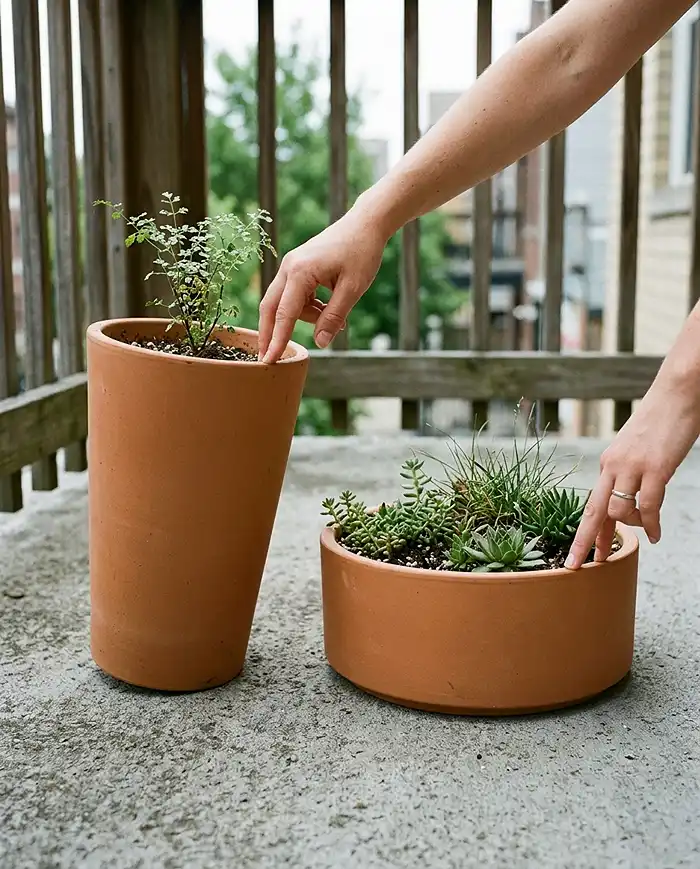
A good rule of thumb for tiny garden ideas on exposed balconies: choose pots under 18 inches tall, with a base at least 10–12 inches wide. Troughs and wide bowls pass this test almost automatically.
Pro Tip: Add 1–2 inches of gravel or coarse sand to the bottom before potting — it shifts the weight down exactly where you need it.
Materials Ranked for Windy Conditions
Quick Answer: Concrete and fiberstone lead the pack. Fabric grow bags and lightweight plastic are situational at best.
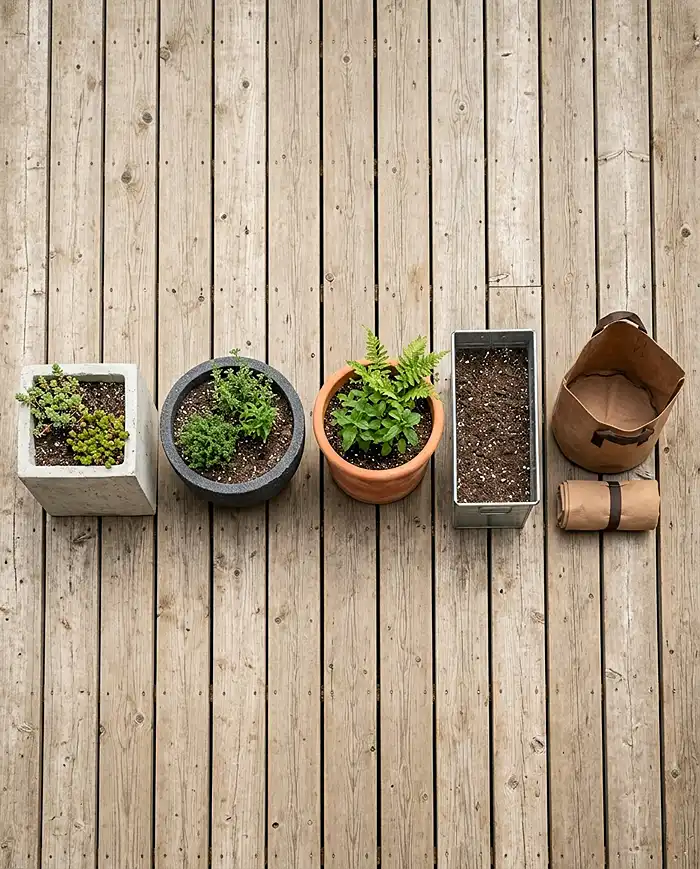
| Material | Best For | Watch Out For |
|---|---|---|
| Concrete | Maximum stability, permanent setups | Very heavy — check balcony load limits |
| Fiberstone | Weight + portability balance | Pricier than plastic |
| Thick terracotta | Breathable, classic look | Cracks in hard freezes (below USDA Zone 7) |
| Metal/galvanized | Durable, mountable | Overheats roots in full sun |
| Fabric grow bags | Lightweight with ballast added | Dry out fast; need anchoring |
| Lightweight plastic/resin | Budget option when wall-mounted | Blows away if freestanding |
Real Example: I switched my rooftop terrace from terracotta to fiberstone bowls one spring and lost zero pots the following winter — even through two nights with gusts above 45 mph.
Best Container Types for Windy Balconies
These are the container styles that actually hold up, matched to common balcony situations.
| Container Type | Best Scenario | Key Advantage |
|---|---|---|
| Heavy fiberstone planters | Open balconies, any floor | Weight without the back injury |
| Low concrete bowls | Permanent installs, ground floors | Near-zero tipping risk |
| Self-watering troughs | Herbs, salad greens, windy exposure | Reservoir fights evaporation |
| Railing-mounted boxes | Narrow balconies with no floor space | Eliminates tipping entirely |
| Weighted grow bags | Temporary setups, renters | Flexible and storable off-season |
For small space gardening, the railing box and trough combo is hard to beat. You get growing space without sacrificing floor room, and both styles are inherently stable.
If you’re growing bigger crops like peppers or eggplant in containers, go with the heaviest fiberstone planter you can move. Deep roots need deep, stable pots.
Self-Watering Containers for Fast-Drying Wind
Quick Answer: Self-watering containers have a built-in water reservoir that wicks moisture upward. On windy balconies, they can cut watering frequency by 30–50%.
Wind strips moisture from soil surface and plant leaves simultaneously. A standard pot on an exposed urban gardening setup can dry out in under 24 hours on a hot, breezy day.
The plants that benefit most from self-watering containers in wind:
- Lettuce and salad greens (wilts fast; see our container salad garden guide)
- Herbs like basil and parsley (shallow roots, moisture-sensitive)
- Tomatoes and peppers (consistent moisture prevents blossom drop)
Pro Tip: Fill the reservoir at dusk — overnight uptake is more efficient than daytime wicking in heat and wind.
Railing and Wall-Mounted Options
Quick Answer: Mounted containers can’t blow over because they’re attached to the structure. They’re the safest option for container gardening on high-exposure balconies.
Before installing, check two things:
- Bracket weight rating: Each bracket should handle at least 3x the filled pot weight
- Railing load limit: Most residential railings handle 200 lbs of lateral force — don’t exceed it with multiple heavy boxes
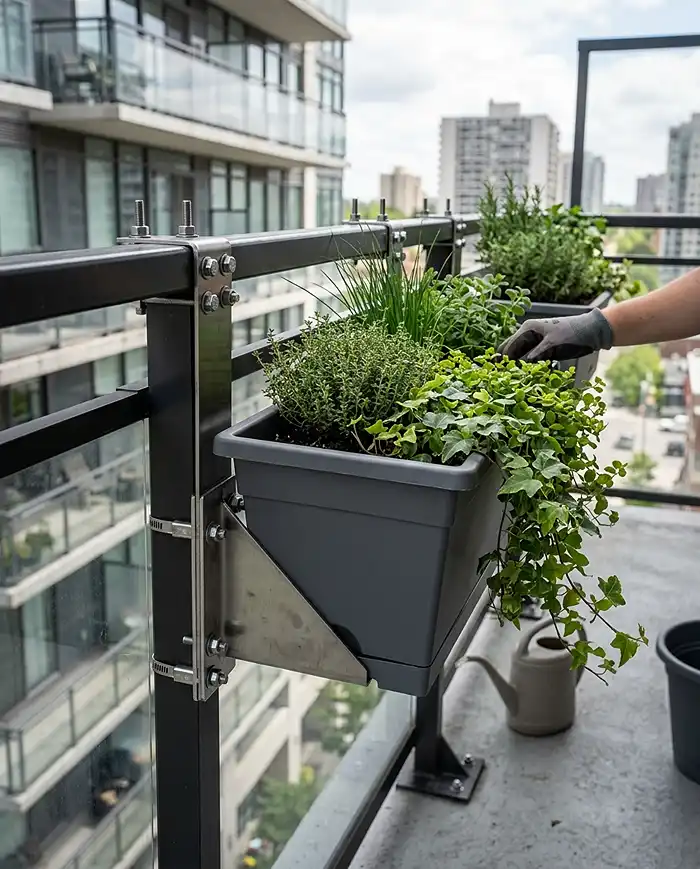
Use stainless steel or powder-coated brackets in coastal environments. Salt spray corrodes standard hardware within one season.
Real Example: I mounted four railing boxes on my east-facing balcony in Zone 7b. They’ve held through three storm seasons with zero bracket failures — but I replaced the original zinc bolts with stainless after year one.
Tools and Materials You’ll Need
Getting your best containers for windy balconies set up right takes more than just the pots. Here’s the full checklist:
- Containers: Fiberstone, concrete, or mounted railing boxes — matched to your exposure level
- Base ballast: Coarse gravel or horticultural sand (1–2 inches in pot base)
- Pot feet: Elevate pots 1 inch for drainage; use rubber-footed feet to prevent sliding
- Securing straps or bungees: For freestanding pots on high-exposure balconies
- Mounting brackets: Stainless steel, rated for 3x container weight
- Moisture-retentive potting mix: Look for mixes with coir or water-retaining crystals — standard mixes dry 40% faster in wind
How to Set Up Wind-Resistant Containers Step by Step
Placement matters as much as the pot itself. Even the best containers for windy balconies will fail if you position them wrong.
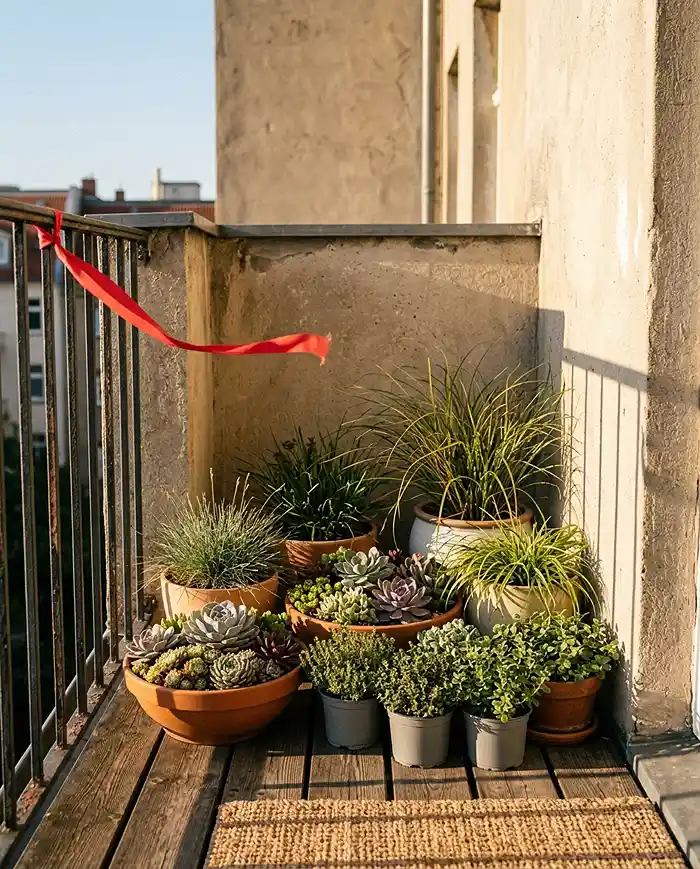
Step 1 — Position against walls or into corners: Walls block wind from one or two directions. Corner placement cuts exposure by up to 70% on a standard balcony.
Step 2 — Add base ballast: Before potting, lay 1–2 inches of gravel or coarse sand in the bottom. This drops the center of gravity and improves drainage.
Step 3 — Use a quality potting mix: Mix in water-retaining crystals or extra perlite. Standard mixes shrink from container sides when dry, increasing wind-rock.
Step 4 — Group containers together: Clustered pots act as mutual windbreaks. They also share humidity, which reduces evaporation across the whole group.
Step 5 — Anchor or strap freestanding pots: On exposed balconies above the 5th floor, strap pots to wall-mounted hooks or railing bars using heavy-duty bungee cords.
Step 6 — Top-dress with mulch: A 1-inch layer of bark mulch or decorative stone slows surface evaporation and prevents soil from blowing out in strong gusts.
Anchoring and Securing Techniques
Quick Answer: The right anchoring method depends on your balcony surface and railing type. Most setups need at least one of: straps, brackets, or ballast.
- Bungee cord loops: Thread through pot drainage holes and around a railing bar. Use two cords in an X-pattern for pots over 12 inches
- L-brackets on walls: Screw into masonry with anchor bolts; use a washer plate to distribute load across the pot rim
- Drill-through railing mounts: For metal railings — drill and bolt a hook plate, then hang a wire cradle beneath the pot base
- Ballast bags: Sandbags or gravel-filled mesh bags placed inside large decorative planters around a smaller inner pot
The Royal Horticultural Society’s balcony design guidance recommends always securing containers on balconies above the 3rd floor, regardless of pot weight.
Pro Tip: Check all anchor points after the first major storm of the season — hardware loosens under repeated vibration even when correctly installed.
Best Plants to Pair With Wind-Proof Containers
The right container helps, but planting tall, floppy things in it still creates problems. Choose plants with a low profile and flexible or sturdy stems.
Top picks for windy balcony container gardening:
- Ornamental grasses: Flex without snapping; their movement actually reduces wind-rock on neighboring pots
- Succulents: Low, heavy, drought-tolerant — perfect for the wind-driven moisture loss problem
- Low-growing herbs: Thyme, oregano, and chives stay compact. Check out herbs that grow in challenging conditions for more options
- Dwarf shrubs: Compact cultivars of lavender, rosemary, or boxwood anchor well and tolerate wind
- Trailing plants: Calibrachoa, nasturtium, and trailing thyme hug the pot rim rather than catching wind
Avoid tall dahlias, single-stem sunflowers, and large-leafed tropicals in exposed spots unless you’re prepared to stake them heavily.
Maintenance for Containers in Windy Spots
Wind makes containers higher-maintenance than ground beds. Build a routine around these key tasks.
- Water more often: Plan for daily checks in summer; use a moisture meter to stop guessing
- Check anchors after storms: Even well-secured pots shift; loose hardware is a safety risk on upper balconies
- Refresh mulch seasonally: Wind erodes surface mulch over months — top up to 1 inch every spring and fall
- Reposition for winter: Pull containers away from exposed railings in late fall; cluster against the most sheltered wall
- Inspect for root-rock damage: After sustained windy periods, gently tug plants — if roots are loose, firm the soil around the base and stake temporarily
For tiered setups on sheltered walls, repositioning is easier — and it keeps your small space gardening looking intentional year-round. Browse these tiered planter ideas for space-smart layouts that also reduce wind exposure.
Seasonal and Regional Considerations
Quick Answer: Balcony wind exposure varies dramatically by season, floor height, and coastal proximity. One setup rarely works year-round without adjustment.
- Winter wind: In USDA Zones 5–7, move terracotta indoors by November — freeze-thaw cracking is accelerated by wind chill
- Coastal salt spray: Within 1 mile of the ocean, use only plastic, fiberstone, or powder-coated metal — salt corrodes concrete and degrades terracotta glazes
- High-rise exposure (above 8th floor): Wind speeds increase significantly with height; treat every container as high-risk and anchor accordingly
- Low-rise balconies: Surrounding buildings create unpredictable wind tunnels — test your specific spot with a ribbon tied to the railing before finalizing placement
Common Problems and Solutions
Even well-chosen containers cause headaches on windy balconies. Here’s how to fix the most common issues fast.
Pots Keep Tipping or Blowing Over
Quick Answer: The problem is almost always top-heaviness or insufficient weight at the base.
Diagnose it: a pot that tips lengthwise is too tall and narrow. One that spins or slides is too light overall.
- Add 1–2 inches of gravel to the base immediately
- Group with two or three other pots to create mutual support
- Switch to a lower-profile container if the problem persists
- Anchor with bungee cords through drainage holes as a short-term fix
Soil Dries Out Too Fast
Quick Answer: Wind-driven evaporation is pulling moisture faster than you can replace it. Add a physical barrier and upgrade your mix.
- Top-dress with 1 inch of bark mulch or gravel — cuts surface evaporation by up to 30%
- Mix water-retaining crystals into your potting mix at planting time
- Switch to self-watering containers for moisture-sensitive plants
- Group containers together to raise local humidity
Plants Look Wind-Battered or Stunted
Quick Answer: You’re seeing windburn (brown leaf edges) or root-rock stress. Both are fixable with a few adjustments.
- For windburn: add a temporary windbreak using a bamboo screen or frost fleece on the exposed side
- For stunted growth: check root stability by gently pulling the plant — if it wiggles, firm up the soil and stake temporarily
- Long-term: swap to tougher plant choices (grasses, succulents, compact shrubs)
Frequently Asked Questions
What is the most stable container shape for a windy balcony?
Wide, low, and heavy-based shapes are the most stable. Bowl shapes and troughs are ideal because they keep the center of gravity close to the floor. Avoid anything taller than it is wide. For a practical rule: the base should be at least half the pot’s total height.
How do I stop my balcony pots from blowing away?
Three methods work best: add gravel ballast to the base (1-2 inches), anchor pots with bungee cords looped through drainage holes and tied to railing bars, or switch to railing-mounted containers that attach directly to the structure and eliminate tipping risk entirely.
Are plastic pots ever okay for windy balconies?
Yes, but only when wall-mounted or railing-mounted. A plastic pot screwed securely to a bracket can’t tip regardless of weight. Avoid freestanding plastic on any balcony above the second floor — even filled pots can catch wind and move.
How often should I water containers on a windy balcony?
Plan for daily watering checks in summer on exposed balconies. A moisture meter removes the guesswork — water when the top 1-2 inches are dry. Self-watering containers can extend that to every 2-3 days for most plants, even in consistent wind.
Do self-watering containers really help in wind?
Yes — they’re one of the best upgrades for windy balcony container gardening. The reservoir supplies consistent moisture from below, counteracting surface evaporation. The main limitation: in very heavy rain, overflow can occur if drainage holes aren’t clear.
Key Takeaways
- The best containers for windy balconies are wide, low, and heavy — fiberstone and concrete lead for freestanding pots
- Mounting containers on railings or walls eliminates tipping risk entirely and is the safest option for high-rise urban gardening
- Add 1–2 inches of gravel to any pot base before planting to lower the center of gravity
- Self-watering containers cut watering frequency significantly and are worth the investment for any wind-exposed container gardening setup
- Group pots together — clustering creates mutual windbreaks, raises local humidity, and is one of the simplest small space gardening wins available