
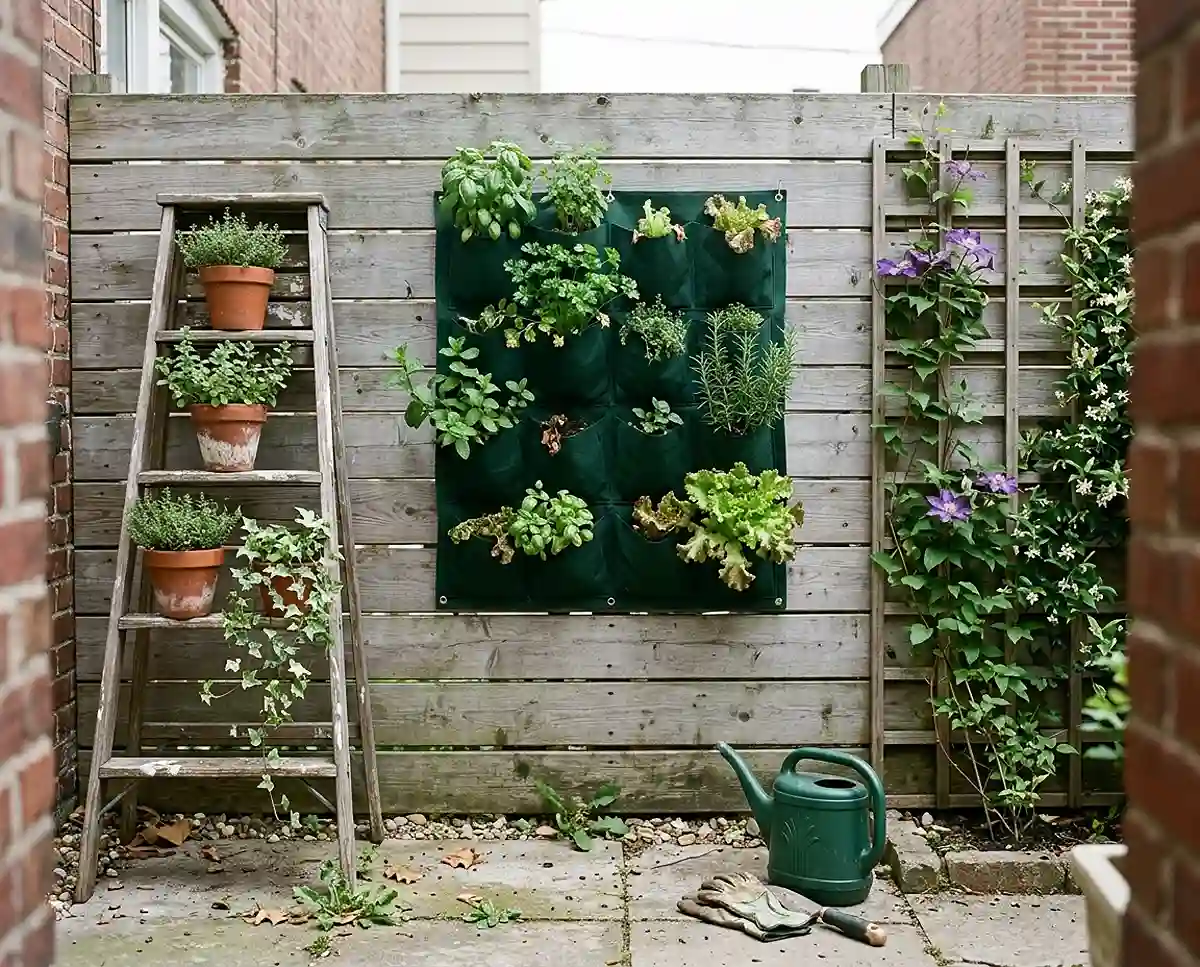
Vertical Garden Wall Ideas for Small Patios
If your patio is short on floor space, vertical garden wall ideas for small patios are the smartest move you can make. You get real greenery, real privacy, and a wall that actually does something — without sacrificing a single square foot of ground.
Table of Contents
Why Vertical Garden Walls Are Perfect for Small Patios
I garden on a 6×8 ft urban patio in zone 7a. Floor space is precious. The day I stopped thinking horizontally and started growing up, everything changed.
A vertical garden wall turns a bare fence or exterior wall into a living feature. It adds privacy from neighbors, softens hard surfaces, and creates the kind of lush backdrop that makes a tiny outdoor space feel intentional — not cramped.
For small space gardening, vertical setups also solve the “I want herbs but have no room” problem instantly. A single wall-mounted pocket planter can hold 12 to 20 plants in 2 square feet of wall space.
Vertical gardening also works as a windbreak, insulates walls slightly in summer, and attracts pollinators to tight urban spaces. For renters especially, many systems need zero permanent installation.
Plan Your Vertical Garden Before You Build
Rushing into a vertical setup is how you end up with a sagging structure and dead plants by July. Fifteen minutes of honest assessment saves hours of frustration later.
Assessing Wall Type, Light, and Weight Limits
Start by identifying your wall material: brick, wood fence, stucco, or vinyl? Brick and wood take anchors well. Stucco and vinyl need specialty fasteners or freestanding alternatives.
Track sun exposure for one full day. South-facing walls get 6+ hours — good for herbs and tomatoes. North-facing walls suit ferns, ivy, and shade-tolerant greens.
Weight is non-negotiable. A fully watered felt pocket planter holding 12 plants can weigh 30–50 lbs. A pallet garden with soil can hit 100+ lbs. Know your wall’s limits before you hang anything.
Choosing Freestanding vs. Wall-Mounted Systems
Wall-mounted systems anchor directly to a surface. They’re space-efficient and look intentional, but require drilling or strong adhesives. They’re ideal if you own your space and your wall can handle the load.
Freestanding structures — tiered shelves, leaning ladders, A-frame planters — stand independently and need zero hardware. For renters, these are the go-to. Check out these renter-friendly patio garden ideas for more no-drill options.
For balcony vertical gardens specifically, railing-mounted planters thread onto railings with no wall contact at all — perfect for apartments.
Best Vertical Garden Wall Ideas for Small Patios
Here are the setups I’ve tried, seen work consistently, and recommend without hesitation for a small patio garden.
Pocket Planters and Felt Wall Gardens
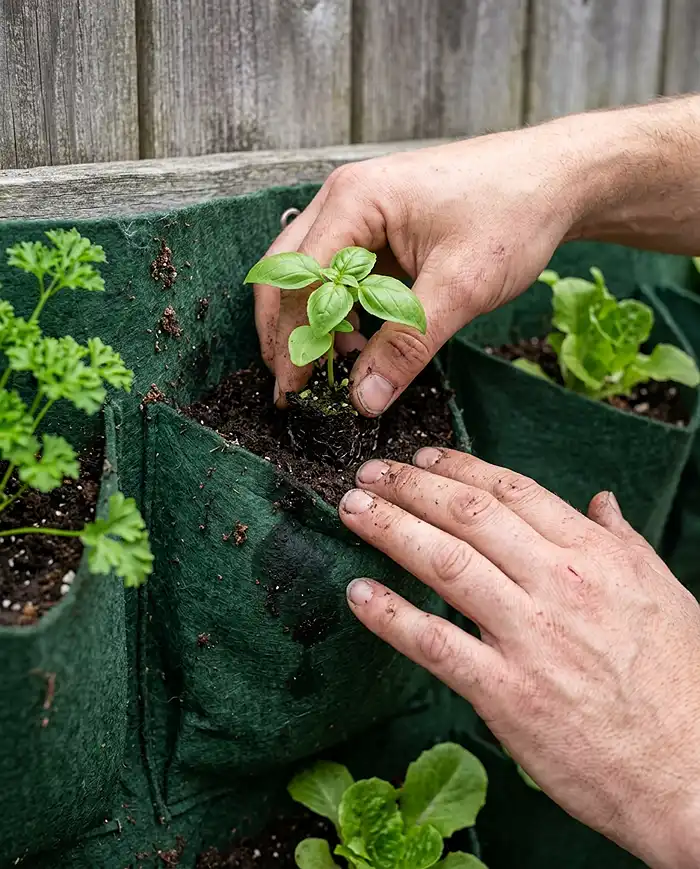
Felt pocket planters are my personal favorite for a balcony vertical garden. I hung a 12-pocket felt panel on my south-facing fence in spring 2023 and grew basil, parsley, cilantro, and ‘Little Gem’ lettuce through October.
They’re lightweight, breathable (which reduces root rot), and cost $15–$40 for a full panel. The fabric wicks moisture, so plants dry out faster than in plastic — factor that into your watering routine.
Felt systems work best for shallow-rooted plants: herbs, strawberries, pansies, and leafy greens. They’re not suited for tomatoes or peppers that need deeper root runs.
Trellises, Lattices, and Climbing Plants
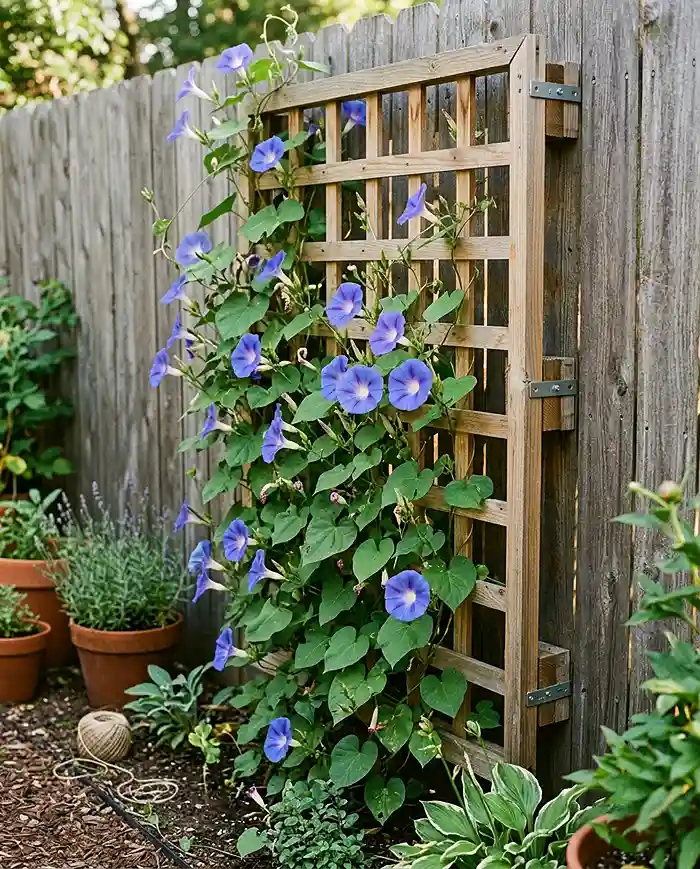
A simple cedar trellis leaned against a fence or mounted to a wall gives you a vertical canvas fast. Pair it with a fast-growing climber and you have a green wall in one season.
In zone 7a, I’ve had ‘Heavenly Blue’ morning glory cover a 4×6 ft trellis by mid-July from a mid-May sowing. Jasmine, black-eyed Susan vine, and clematis are other reliable options for small patio garden settings.
Lattice panels work similarly but create a denser weave — great for privacy. Mount them 2–3 inches off the wall so air can circulate behind the foliage and prevent mildew.
Pallet, Ladder, and Tiered Shelf Gardens
A reclaimed wood pallet lined with landscape fabric and filled with potting mix makes a surprisingly functional vertical planter. Sand the wood, seal it with exterior paint or stain, and it’ll last 3–5 seasons.
Leaning ladders with pots hung on each rung are even simpler — no soil in the structure, just swap containers as seasons change. Tiered plant stands do the same job with more stability and are especially good on windy balconies.
Budget tip: a 4-tier metal plant stand runs $25–$50 at most garden centers and holds 8–12 pots without any wall contact.
Best Plants for Vertical Patio Walls
Not every plant thrives in a vertical setup. Shallow roots, tolerance for container stress, and manageable size are what you’re looking for.
Trailing and Climbing Plants
Trailing plants cascade naturally and fill vertical space without much help. String of pearls, creeping Jenny, and bacopa spill beautifully from wall pockets and hanging planters.
For climbers, star jasmine (zones 8–10) and ‘Nelly Moser’ clematis (zones 4–9) are reliable performers. Both reach 6–10 ft and cover a trellis within one or two seasons.
On my north-facing wall, English ivy fills in fast — maybe too fast. I trim it every three weeks in summer or it starts looking scraggly. Beautiful, but plan for maintenance.
Compact Herbs, Succulents, and Greens
Herbs are the workhorses of vertical gardening. Basil, thyme, oregano, chives, and mint all thrive in 4–6 inch pockets with 4–6 hours of sun. Mint especially will take over if you let it — keep it in its own pocket.
Succulents like echeveria and sedum suit vertical walls well because they tolerate drought — a real advantage since vertical planters dry out fast. They prefer south or west-facing walls.
For edibles, ‘Tom Thumb’ lettuce, ‘Mignonette’ strawberries, and ‘Spicy Globe’ basil are compact cultivars bred for container and vertical growing. All three produce well in pockets as small as 4 inches deep.
Tools and Materials You’ll Need
You don’t need much to get started. Here’s the core kit:
- Mounting hardware: Stainless steel screws and wall anchors for permanent installs; heavy-duty adhesive hooks (rated 25+ lbs) for renters
- Planters: Felt pocket panels, rail planters, or individual 4–6 inch plastic pots with drainage holes
- Potting mix: Lightweight container mix — never garden soil, which compacts and suffocates roots in vertical setups
- Studfinder: Essential before drilling into any wall — always anchor into studs or use appropriate wall anchors
- Level: Even a small smartphone level app helps keep rows of planters straight
- Drip irrigation kit (optional): A gravity-fed drip kit makes watering uniform and saves significant time on larger setups
For pot sizing guidance by plant type, the vegetable pot size guide is a helpful reference before you buy containers.
How to Build and Install Your Vertical Garden
The installation process is straightforward if you work in order. Skipping steps — especially the structural ones — is how walls collapse mid-season.
Mounting and Securing Your System Safely
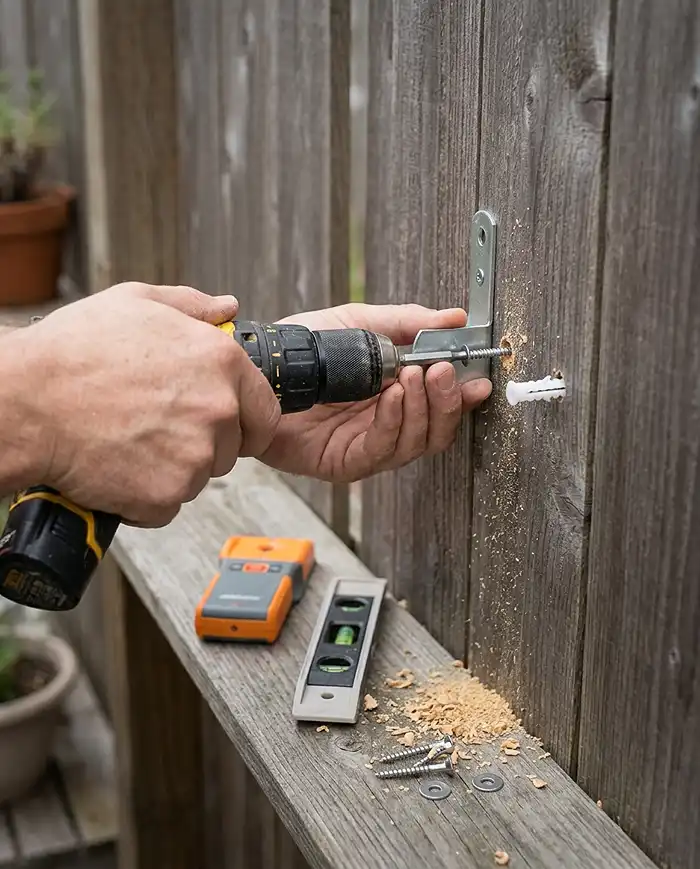
For wall-mounted systems, locate studs with a stud finder before drilling. In wood-frame construction, studs run every 16 inches. Anchor screws into studs, not just drywall or plaster — especially for anything holding soil weight.
On masonry walls (brick or concrete block), use masonry anchors rated for at least twice your expected load. A 40 lb planter should be on hardware rated for 80+ lbs.
For no-drill setups, 3M Command strips rated for outdoor use handle up to 16 lbs each. Use two per planter and check them monthly — adhesive degrades in heat and humidity.
Planting and Arranging for Healthy Growth
Place sun-loving plants at the top of the structure where light hits first and longest. Shade-tolerant plants go lower, where taller neighbors cast partial shade by afternoon.
Every planter needs a drainage hole. In felt pockets, drainage is built in. For hard-sided planters on a wall, drill a 1/4 inch hole in the bottom if one isn’t there, and hang a small tray beneath to catch runoff — important on balconies above neighbors.
Space plants so mature foliage doesn’t completely overlap. Crowded plants compete for light and airflow, which encourages fungal disease. As a rule, leave at least 4 inches of clearance between pocket centers for herbs and greens.
Watering and Maintaining a Vertical Garden
Watering is the trickiest part of vertical gardening. Gravity pulls water down, so top pockets drain into lower ones — which sounds helpful until the bottom row drowns and the top row desiccates.
Watering Evenly Without Waste
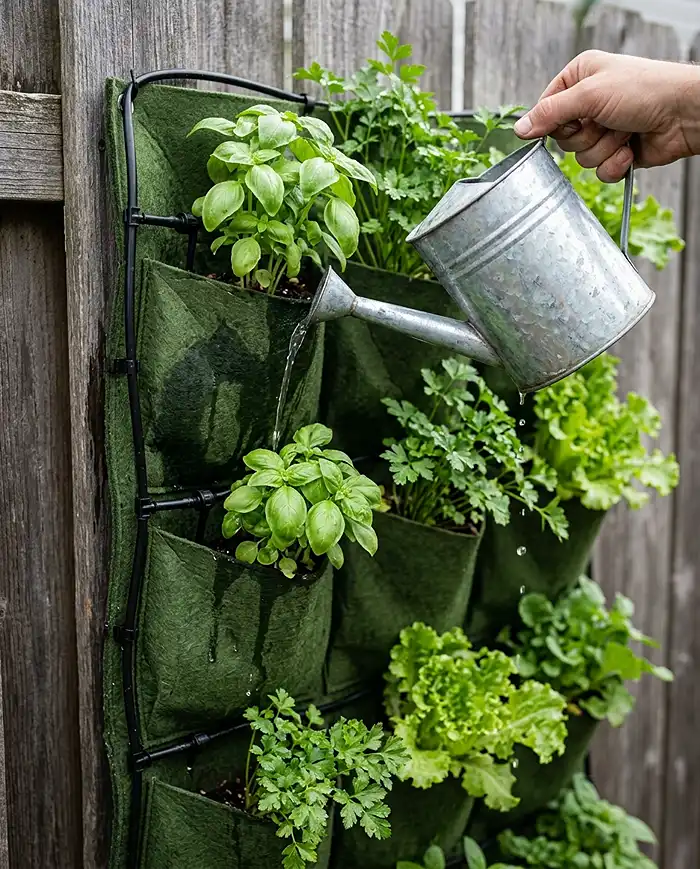
Quick Answer: Water vertical gardens slowly from the top in multiple passes, or install a simple drip irrigation line. This gives water time to absorb at each level rather than rushing straight to the bottom row.
A basic gravity drip kit — a reservoir at the top with emitter lines to each pocket — costs $20–$40 and makes a huge difference on systems with 10+ plants. The self-watering ideas for small space gardens page covers several DIY-friendly options.
On smaller setups (under 8 pockets), watering with a narrow-spouted can twice daily in summer is workable. Check moisture by pressing your finger an inch into the soil — water when it feels dry at that depth.
Pruning, Feeding, and Replacing Plants
Deadheading [removing spent flowers] keeps flowering plants producing longer. For herbs, pinch off flower buds as soon as they appear — once basil bolts, the leaves turn bitter.
Feed container plants every 2 weeks with a balanced liquid fertilizer (10-10-10 or similar) during the growing season. Vertical planters drain frequently, which leaches nutrients faster than in-ground beds.
Keep one or two backup plants in pots nearby. When a pocket plant fails — and occasionally one will — you can swap it out in five minutes and keep the wall looking full.
Seasonal Care for Vertical Patio Gardens
A vertical garden rewards you year-round only if you adjust with the seasons. The wall that grew basil in August needs a different game plan by November.
Protecting and Refreshing Through the Seasons
In summer, south-facing walls in zones 7 and above can get scorching hot. Move heat-sensitive plants to shadier pockets or use a shade cloth clipped over the top section during peak afternoon heat (2–5 PM).
In fall, swap out annuals for cold-tolerant plants: kale, Swiss chard, pansies, and ornamental cabbage all look great in vertical pocket planters and survive light frost. In zones 6 and below, bring felt pocket systems indoors or store them empty to prevent fabric degradation from freeze-thaw cycles.
In winter, evergreen climbers like star jasmine (in mild climates) and ivy keep trellises looking alive. For zones 5 and colder, use the off-season to clean, repair, and seal wooden structures before replanting in spring.
Common Problems and Solutions
Vertical gardens have a short list of recurring issues. All of them are fixable once you know what’s happening.
Top Plants Drying While Bottom Stays Wet
Quick Answer: This is an uneven watering problem. Water slowly in two or three passes, pausing between each, so upper pockets absorb before water reaches the lower ones. A drip system with individual emitters solves it permanently.
Plants Falling Out or Wall Sagging
Quick Answer: Sagging usually means the mount is in drywall, not a stud, or anchors are under-rated for the wet soil weight. Re-anchor into studs or masonry. For felt pockets, reinforce the top hanging bar with a second anchor point spaced 18 inches from the first.
Pests and Mold on Vertical Walls
Quick Answer: Poor airflow is the main culprit. Mount systems at least 2 inches off the wall surface and avoid overcrowding pockets. For pests, neem oil spray (diluted per label instructions) handles aphids and spider mites without harming beneficial insects.
Frequently Asked Questions
What is the easiest vertical garden for a small patio?
Felt pocket planters or freestanding tiered shelves are the easiest starting points. Felt panels require one nail or hook, cost under $30, and can hold 12 or more plants. Tiered shelves need no wall contact at all — just set them up and fill with pots.
How do I water a vertical garden evenly?
Water slowly from the top in multiple passes, pausing between each round so upper pockets absorb before water runs to the bottom. For larger setups (10+ plants), a gravity-fed drip irrigation kit with individual emitters is the most reliable solution and costs $20-40.
What plants grow best on a vertical wall?
Shallow-rooted plants perform best: herbs (basil, thyme, chives), compact greens (lettuce, kale), succulents, and trailing flowers like bacopa or creeping Jenny. For trellises, climbing plants such as clematis, jasmine, and morning glory create a lush green wall within one season.
Can renters install a vertical garden without damaging walls?
Yes. Freestanding structures like tiered shelves, leaning ladders, and A-frame planters need zero wall contact. Railing-mounted planters clip directly onto balcony railings. For light wall-mounted options, heavy-duty outdoor adhesive hooks (rated 25+ lbs) work well and leave no permanent damage.
How much weight can a vertical garden wall hold?
It depends on wall material and anchor type. Screws into wood studs typically hold 50-80 lbs per anchor. Masonry anchors in brick or concrete hold similar loads. Adhesive hooks max out at 16-25 lbs each. Always assume fully watered soil — wet soil is significantly heavier than dry.
Key Takeaways
- Vertical garden wall ideas for small patios let you grow 12–20 plants in as little as 2 square feet of wall space — no floor room needed.
- Always assess wall type, sun exposure, and weight limits before buying any system. This single step prevents most failures.
- Felt pocket planters and tiered shelves are the easiest entry points — low cost, low commitment, high visual impact.
- Shallow-rooted plants (herbs, lettuce, succulents, trailing flowers) perform best in vertical setups. Deep-rooted vegetables need larger containers at ground level.
- Uneven watering is the most common problem. Water slowly in passes or install a simple drip kit — your plants will thank you every day of the season.