
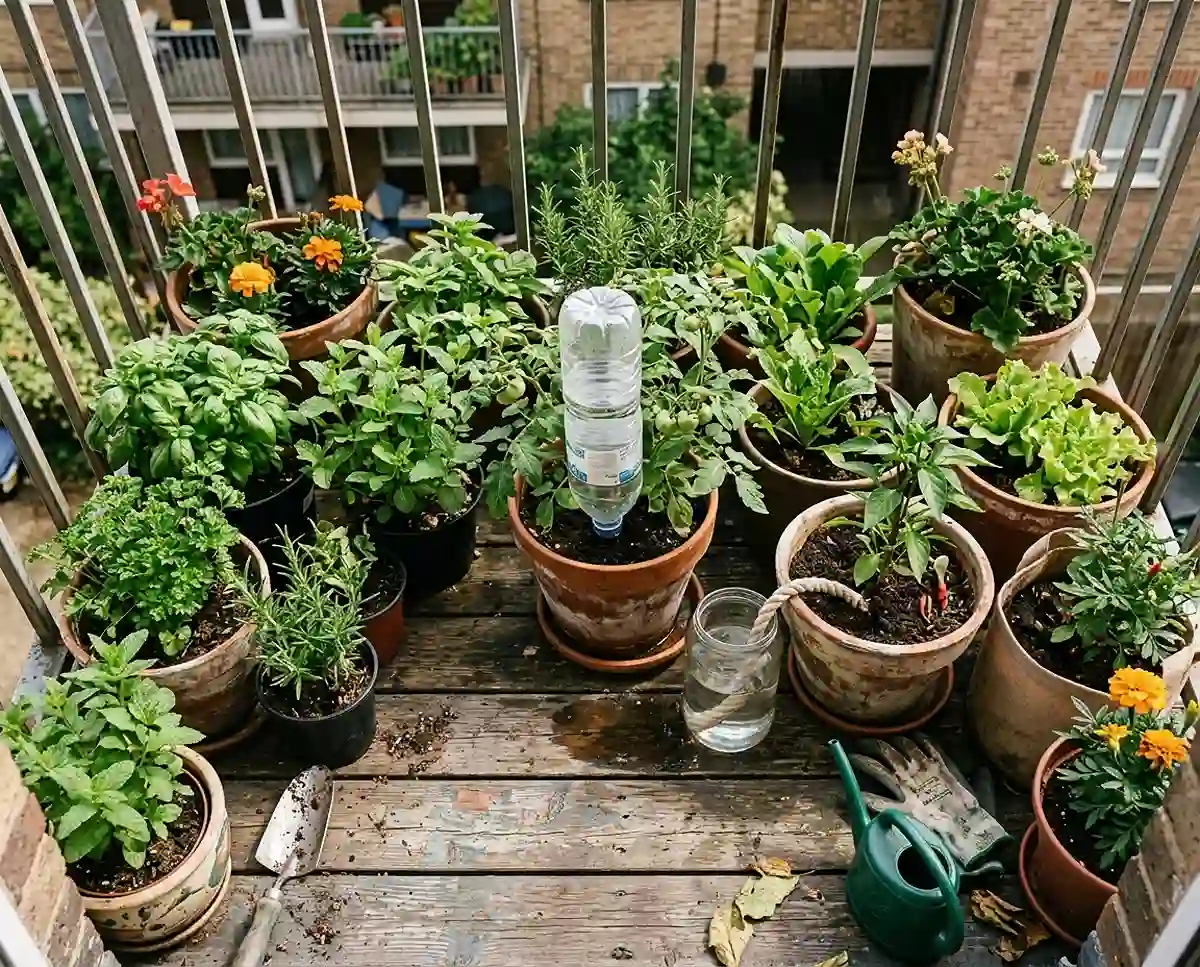
Self Watering Ideas for Small Space Gardens
Self watering ideas for small space gardens don’t have to be expensive or complicated. With a few simple container watering tips, you can keep plants thriving on autopilot — even when life gets busy.
I grow tomatoes, basil, and lettuce on a south-facing balcony in zone 7a. Daily watering used to mean dead plants every time I traveled. Once I switched to wicking systems and reservoir pots, I lost maybe one plant in two full growing seasons.
Table of Contents
Why Self-Watering Matters for Small Gardens
Container plants dry out fast — way faster than in-ground beds. A 6-inch pot in full sun can go bone dry in under 24 hours during a July heat wave.
Self-watering systems fix the two most common container problems: underwatering (plants wilt and stress) and overwatering (roots suffocate). Both kill plants, and both are avoidable.
They also just save time. Instead of watering every single pot every single day, you refill one reservoir every few days. For urban gardening and apartment gardening setups, that’s a real quality-of-life upgrade.
And during vacations? A well-sized reservoir can keep most container plants alive for 5–10 days without any help.
How Self-Watering Systems Actually Work
The core idea is simple: water sits in a reservoir below or beside the soil, and the roots pull it up as needed. The plant controls its own intake.
This is called passive irrigation, and it mimics how soil moisture works in the ground — consistent, available, never waterlogged.
Wicking, Reservoirs, and Capillary Action Explained
Capillary action is what moves water from a reservoir up into dry soil — the same physics that makes a paper towel soak up a spill.
A wick (cotton rope, fabric strip, or even the soil itself) acts as the bridge. One end sits in the water reservoir; the other is buried in the soil near the roots.
As soil dries, it pulls moisture through the wick. When the soil is already moist, wicking slows down naturally. It’s self-regulating, which is what makes it so reliable.
Which Plants Benefit Most From Self-Watering
Moisture-lovers thrive: tomatoes, peppers, lettuce, basil, kale, strawberries, and most herbs (except rosemary and thyme) love consistent moisture. These are perfect candidates.
Skip self-watering for: succulents, cacti, lavender, and rosemary. These plants need dry periods between watering. Constant moisture will rot their roots fast.
When in doubt, check if a plant is labeled “drought-tolerant.” If yes, skip the reservoir system.
Assess Your Space and Watering Needs
Before you build or buy anything, spend five minutes thinking through your actual setup. Small space gardening rewards planning — the right system depends on your containers, your plants, and how long you want to go between refills.
I wasted money on a drip kit my first year because I didn’t think through pot placement. Half my pots weren’t near a water source, so the tubing was a mess.
Pot Size, Plant Type, and Sun Exposure
Bigger pots hold more soil, which holds more moisture — so they need less frequent watering than small ones. A 5-gallon bucket grows a tomato plant in zone 7a; a 3-gallon pot needs refilling almost daily in August.
Full-sun spots evaporate moisture faster. If your balcony garden faces south or west, size your reservoir up — plan for at least 20–30% more water capacity than you think you need.
Check the pot size guide for vegetables if you’re unsure which container size fits your crop.
How Long You Need Watering to Last
Think in days, not cups. A weekend away needs 2–3 days of coverage. A two-week vacation needs a different solution entirely (more on that below).
A rough rule: 1 liter of reservoir water lasts about 2–3 days for a medium container plant in moderate heat. Double that in a heat wave; triple it in shade.
Start simple, test for a week, then scale up. You’ll learn your specific setup faster than any formula can predict.
Easy DIY Self-Watering Ideas
These are the methods I’ve tested on my own balcony. They cost almost nothing, work well for most container setups, and are among the most practical tiny garden ideas you can actually pull off in an afternoon.
Self-Watering Bottle and Spike Systems
The simplest method: flip a plastic bottle, punch a small hole in the cap, and push it into the soil. Water drips out slowly as the soil dries.
It works, but it’s not elegant. A wine bottle inverted into a ceramic watering spike looks much better and lasts longer.
Use a 1-liter bottle for small pots (4–6 inches). Use a 2-liter for larger containers. Punch the cap hole with a pin for slower release, a nail for faster.
Pro tip: Fill bottles with room-temperature water — cold water can shock heat-stressed roots in midsummer.
Wicking Systems With Rope or Fabric
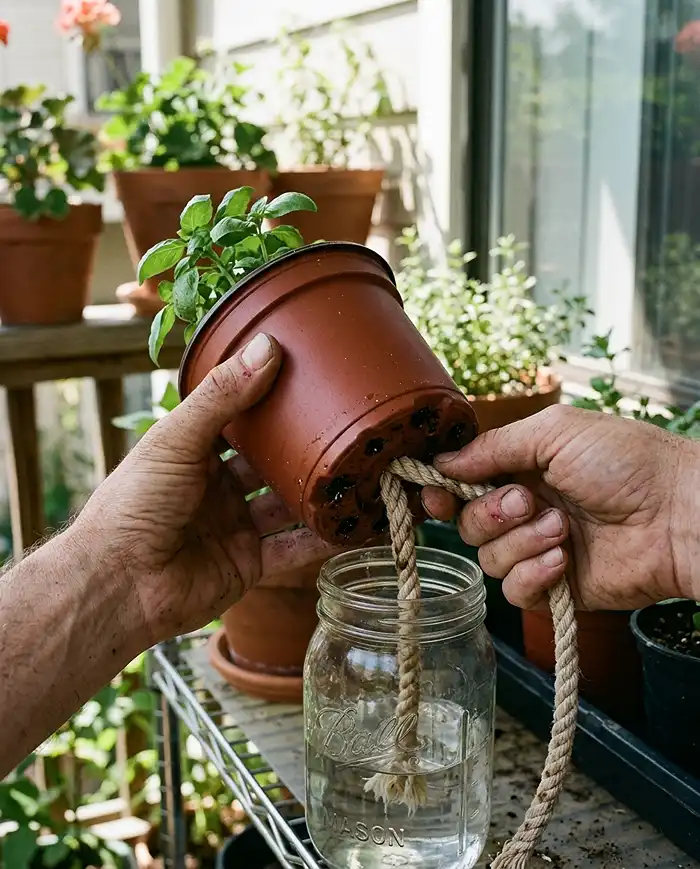
Cut a length of thick cotton rope (or an old cotton t-shirt strip) about 12 inches long. Thread one end through the drainage hole of your pot and into a water container below.
Bury the other end 3–4 inches into the soil near the plant’s root zone. As long as the reservoir stays full, the wick keeps the soil moist.
This is my go-to for herbs. I ran a single wick from a mason jar into each of my six herb pots. Refill the jars every 3–4 days in summer.
Pro tip: Use 100% natural cotton — synthetic rope doesn’t wick effectively and breaks down faster.
DIY Sub-Irrigated Planters and Reservoir Pots
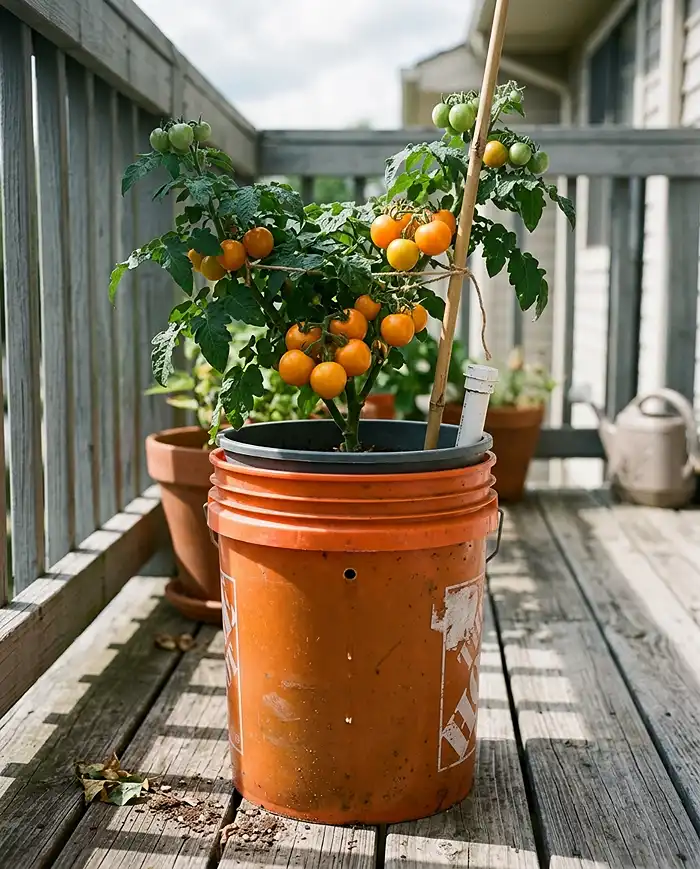
A sub-irrigated planter (SIP) is two containers stacked — a grow pot sitting above a water reservoir. The wick bridges them.
Use a 5-gallon bucket as the outer reservoir. Drill a fill hole 2 inches from the top (the overflow level). Set a smaller pot inside, add a wick, fill with soil. Fill the outer bucket through the hole.
This is the most effective DIY system. My ‘Sungold’ cherry tomatoes in a SIP outgrew the same variety in a standard pot by about 30% last summer.
Store-Bought Self-Watering Options
If you’d rather skip the DIY, there are solid ready-made options. They cost more upfront but save setup time and tend to look cleaner on a balcony or patio.
Self-Watering Pots and Globes
Built-in reservoir pots have a water chamber at the base with a fill tube. Brands like Lechuza and EarthBox make reliable versions for balcony gardens. Prices range from $20 to $80 depending on size.
Decorative watering globes (glass orbs you push into the soil) work for 1–2 weeks and look attractive. The downside: they’re fragile and the narrow neck clogs easily with hard water deposits.
Drip Kits and Timer Systems
For 5 or more containers, a drip kit with a battery-powered timer is worth every penny. The Raindrip or Claber kits (around $30–$60) connect to a faucet, run tubing to each pot, and drip on schedule.
Set it to run at dawn — less evaporation, and foliage dries by evening, which reduces disease risk. This setup saved my entire balcony garden during a 10-day trip in June 2024.
Tools and Materials You’ll Need
Here’s a no-fluff list for DIY setups:
- Cotton rope or fabric strips — 100% natural fiber only, 1/4 to 1/2 inch thick
- Plastic or glass bottles — 1-liter or 2-liter depending on pot size
- Two containers of different sizes — for sub-irrigated planters
- A drill with a 1/2-inch bit — for overflow and wick holes
- Reservoir container — mason jar, bucket, or tray
- Potting mix — not garden soil; it needs to drain properly for wicking to work
Total cost for a basic wicking setup: under $5 if you’re reusing bottles and containers you already own.
How to Set Up a DIY Self-Watering Planter
This step-by-step covers the simplest SIP version: a grow pot sitting above a water reservoir, connected by a cotton wick. Takes about 20 minutes.
Assembling the Reservoir and Wick
Choose a reservoir container that fits inside or below your grow pot. Drill a 1/2-inch hole near the base of the inner pot (or use the existing drainage hole).
Cut your cotton wick to about 12 inches. Thread 4 inches through the hole so it hangs down into the reservoir. Tie a loose knot at the pot end so it doesn’t slip through.
Set the inner pot on a platform (a plastic grate or upturned pot lid works) so it sits 1–2 inches above the reservoir bottom. This air gap prevents root rot.
Filling, Planting, and Testing the System
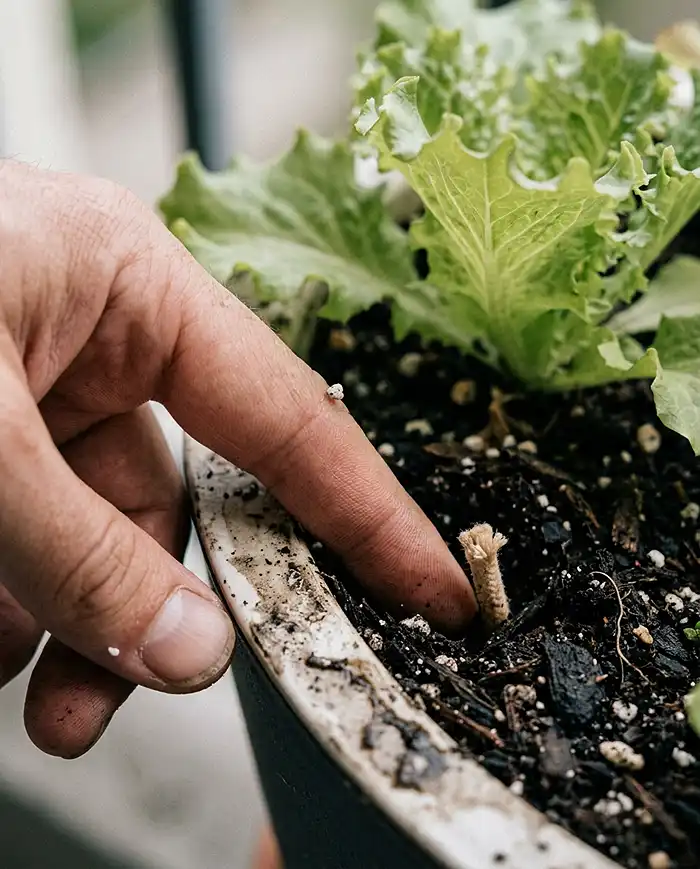
Add a layer of coarse gravel or perlite (1 inch) at the base of the inner pot, above the wick knot. This helps distribute moisture evenly.
Fill with potting mix, pressing it gently around the wick as you go. Plant your seedling or transplant as normal.
Fill the reservoir through the side hole or from the top (before the plant is in the way). Wait 24 hours, then check the soil 2 inches down. It should feel moist but not soggy. If it’s dry, the wick may need repositioning closer to the root zone.
Maintaining Your Self-Watering System
These systems are low-maintenance — not no-maintenance. A quick check every few days keeps everything running smoothly all season.
Refilling, Cleaning, and Preventing Clogs
Check reservoir levels every 3–5 days in summer, weekly in cooler months. Top up before the reservoir empties completely — a dry wick loses its capillary connection and takes 12–24 hours to re-establish.
Every 4–6 weeks, flush the reservoir with clean water to prevent algae and mineral buildup. If you see green slime, scrub with a diluted vinegar solution (1:10 ratio) and rinse thoroughly.
Replace cotton wicks every season. They break down over winter and wick poorly the following spring.
Adjusting for Plant Growth and Weather
A tomato seedling in April uses a fraction of the water it needs in August. As plants grow, increase reservoir refill frequency rather than wick size — oversized wicks can overwater young plants.
During heat waves above 95°F, check reservoirs daily. You may need to switch from a 3-day fill schedule to daily. Adding a layer of mulch (wood chips or straw) on top of the soil slows surface evaporation significantly.
Seasonal and Vacation Watering Tips
Heat and time away are the two biggest threats to container gardens. A few simple strategies handle both.
Keeping Plants Watered While Away
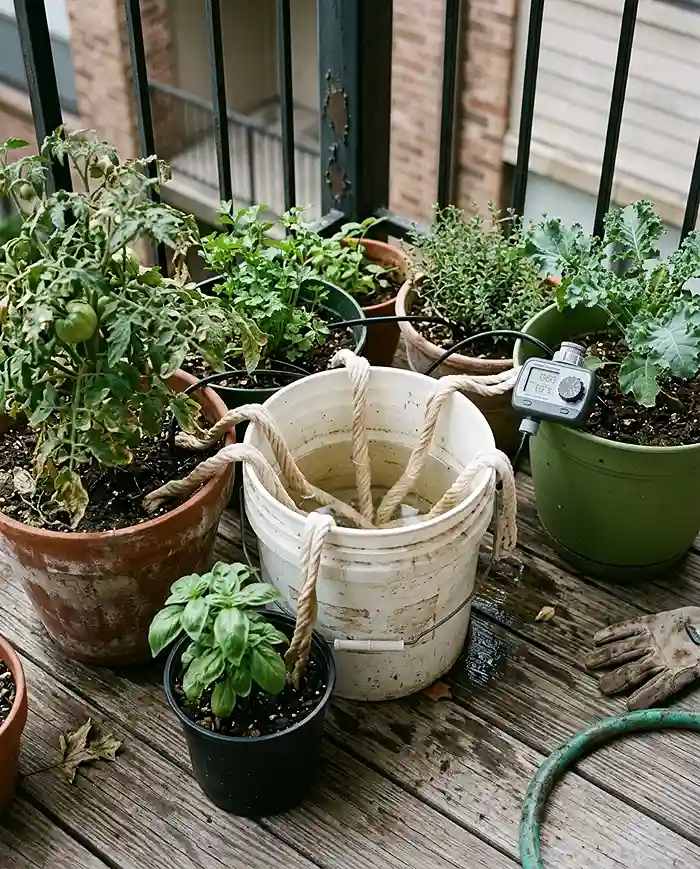
Before you leave, group all your pots together in the shadiest spot available. Clustered pots create a microclimate with higher humidity, which slows water loss.
Scale up reservoir size before you go — top everything off and consider adding a secondary reservoir (a bucket with a wick running to multiple pots). For trips longer than 5 days, a battery-powered drip timer is the most reliable solution.
For balcony color schemes and pot groupings that also optimize shade, see these balcony plant palette ideas — strategic placement isn’t just aesthetic.
As of summer 2025, several affordable gravity-fed drip kits (under $25) have strong reviews for 7–14 day coverage without a faucet connection — worth searching for if you travel frequently.
Common Problems and Solutions
Most self-watering issues come down to one of three things: the wick, the reservoir level, or the wrong plant in the wrong system.
Soil Staying Too Wet or Too Dry
Too wet: The wick is too thick or the reservoir is too close to the root zone with no air gap. Try a thinner wick or lower the reservoir by an inch.
Too dry: The wick has lost contact with the soil or reservoir. Pull it out, re-soak it in water for 10 minutes, and reposition it 3–4 inches deep in the root zone.
Algae, Mold, or Clogged Wicks
Green algae in reservoirs is caused by light exposure. Wrap the reservoir in dark tape or use an opaque container. It won’t harm plants, but it does clog wicks faster.
Mold on the soil surface is usually a ventilation issue, not a watering one. Improve air circulation and reduce watering slightly. Replace any visibly degraded wick material immediately.
Reservoir Draining Too Fast
If your reservoir empties in under 24 hours, the wick is too thick, the plant is very large and thirsty, or both. Switch to a thinner wick and double-check that the reservoir has an air gap from the soil.
In extreme heat, some water loss is just evaporation. Shading the reservoir container (not the plant) helps slow this down significantly.
self watering ideas for small space gardens FAQs
How do self-watering planters work?
Self-watering planters use a water reservoir below the soil and a wick (rope, fabric, or porous material) to draw moisture upward through capillary action. The soil pulls water as it dries out, and the plant controls its own uptake. This keeps roots consistently moist without overwatering.
How long can plants go without watering with these systems?
Most self-watering setups last 3–7 days between refills for medium container plants in warm weather. Larger reservoirs, cooler temperatures, and shade can extend this to 10–14 days. Heat waves above 90°F may reduce coverage to 1–2 days for thirsty plants like tomatoes.
Are self-watering pots good for all plants?
No. Self-watering systems work best for moisture-loving plants like tomatoes, peppers, lettuce, basil, and strawberries. Drought-tolerant plants such as succulents, cacti, lavender, and rosemary need dry periods between watering and will suffer root rot in a constant-moisture system.
What is the best wick material for a DIY self-watering planter?
100% cotton rope or strips cut from an old cotton t-shirt work best. They absorb and transfer water effectively and are biodegradable. Avoid synthetic materials — they don’t wick water reliably and tend to break down faster without improving moisture transfer.
Can I use self-watering systems indoors?
Yes, wicking setups and self-watering pots work well indoors. Use a tray or sealed reservoir to avoid water damage to floors. Choose moisture-loving houseplants like pothos, peace lily, or herbs. Avoid placing reservoirs near electronics or wood surfaces as a precaution.
Key Takeaways
- Self watering ideas for small space gardens range from free DIY bottle systems to $60 drip kits — match the method to your budget and setup.
- Cotton wicking is the most reliable low-cost method; sub-irrigated planters give the best results for large, thirsty crops like tomatoes.
- Moisture-loving plants thrive with consistent reservoirs; never use these systems for succulents, cacti, or drought-tolerant herbs.
- Size your reservoir based on days between refills — 1 liter lasts roughly 2–3 days for a medium pot in summer heat.
- Replace wicks each season and flush reservoirs monthly to prevent clogs, algae, and poor water transfer.